


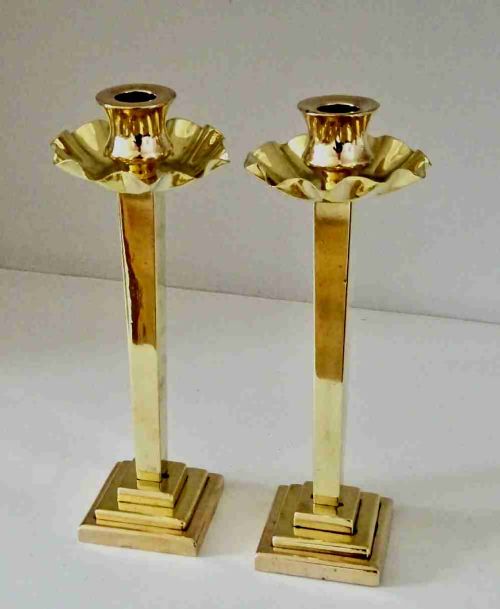

Tall Brass Candle Sticks
These tall brass candle sticks bring height and presence to a room, forged primarily during the Victorian and Georgian eras.
Tall Brass Candle Sticks
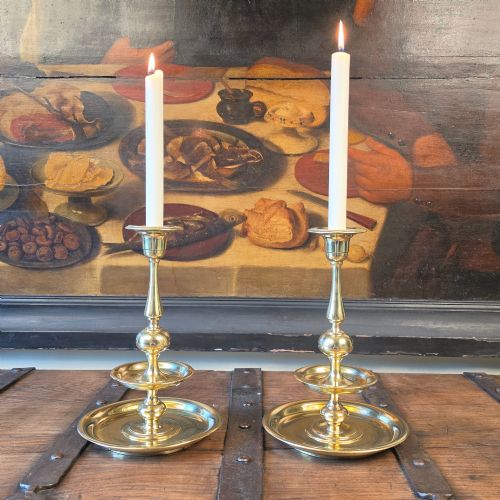
Most examples appearing here belong to the Victorian and Georgian periods, alongside Regency and Edwardian variants. They range from simple domestic pairs to heavy church fixtures and combinations incorporating mahogany, oak, or bronze elements.
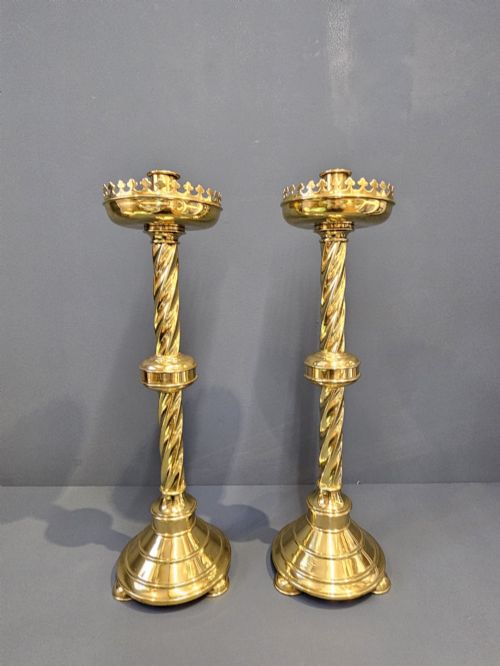
The dominant forms include barley twist columns, beehive turnings, and classical orders reflecting Baroque and Gothic Revival influences. Buyers frequently find matching pairs intended for mantlepieces, sideboards, and altars.
What varies in quality
Quality in these items rests on the weight of the casting, the crispness of the turning, and the integrity of the joins. Heavier examples display deeper relief in decorative details and maintain superior stability.
Subtleties in proportion and the precision of multi-component construction separate standard production items from finer specimens. The integration of mixed materials like mahogany or bronze further distinguishes workshop standards.
Listings demonstrate a strong representation of Victorian church candlesticks alongside eighteenth-century seamed brass and nineteenth-century twist columns.
James Clews
The Tall Brass Candle Sticks Glossary
- Pricket candlestick
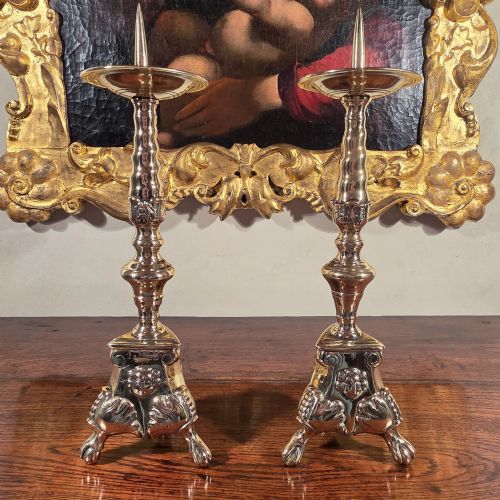
- A candlestick featuring a central spike upon which a large candle is impaled, common in church and chapel settings. These pieces often possess substantial height and heavy bases.
- Barley twist
- A helical turning resembling a twisted rope, carved or cast into the column of the candlestick. This decorative form gained popularity during the seventeenth century and saw a strong revival in the Victorian period.
- Seamed brass
- Brass sheet metal formed into a cylinder and joined along a vertical seam, typical of earlier manufacturing methods before advanced extrusion techniques. This construction method leaves a visible line down the shaft.
- Ormolu
- Finely ground high-carat gold applied to a bronze base using a mercury amalgamation process, creating a rich golden finish. The technique was widely utilised during the Regency and Neoclassical periods.
- Beehive candlestick
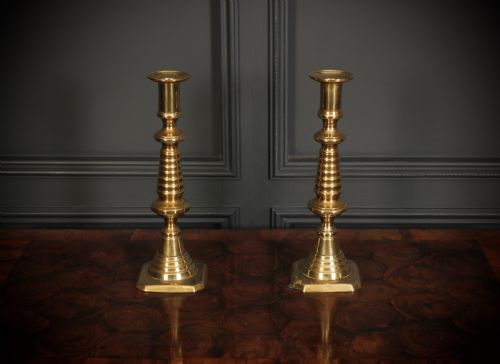
- A domestic candlestick featuring concentric rounded rings on the stem that resemble a traditional beehive. This design provides a tactile grip and distinct silhouette characteristic of late nineteenth-century production.
Tall Brass Candle Sticks: Frequently Asked Questions
How tall are these candlesticks usually?
Most examples classed as tall measure upwards of ten inches, with some church models reaching twenty inches or more.
Their elevation allows them to project light effectively across large dining tables and grand mantlepieces.
Were these used in churches or homes?
The inventory contains both domestic pairs for household dining and substantial church candlesticks designed for altars.
Ecclesiastical pieces generally feature heavier castings and wider drip pans to catch excess wax during long services.
How do I identify a Georgian pair?
Georgian pieces often display simpler neoclassical columns, seamed brass construction, or tapered stems with square bases.
They tend to feel lighter than heavy Victorian castings and frequently incorporate mahogany sections or simpler spool turnings.
What is an open twist design?
An open twist involves a helix where the central core is hollowed out, leaving an intricate spiral of brass or wood.
This technique requires precise lathe work and casting skill, making such pieces particularly prized by collectors.