
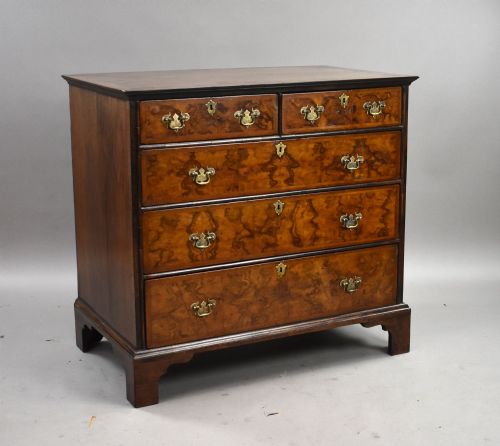
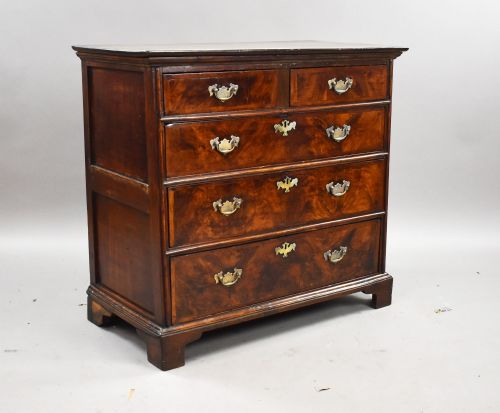


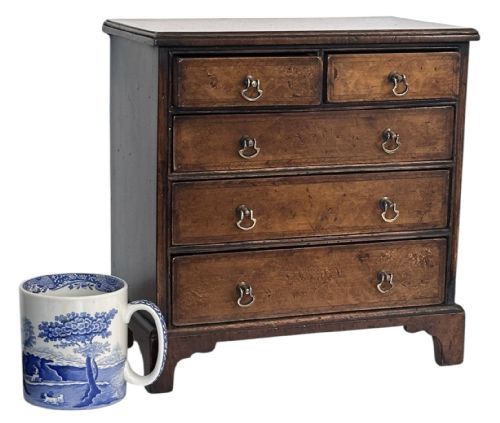


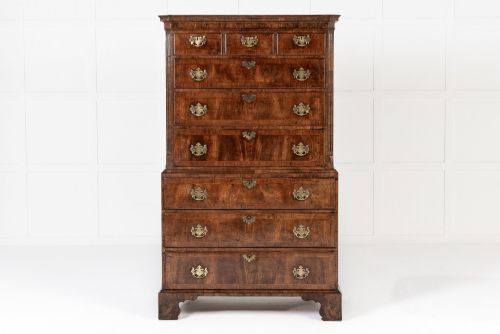

Bracket Foot Walnut Cabinet
A bracket foot walnut cabinet offers rich figured grain and sturdy architectural support, standing as a versatile staple of traditional British rooms.
Bracket Foot Walnut Cabinet
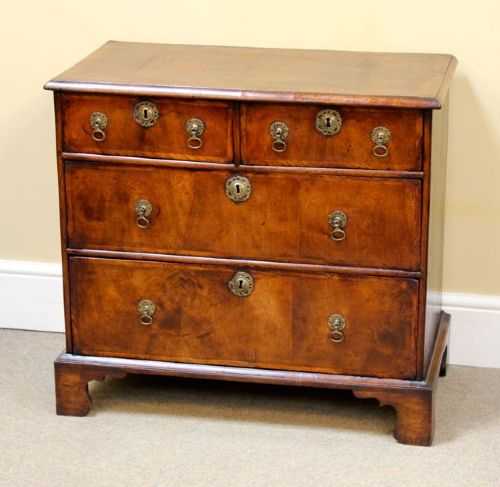
A bracket foot walnut cabinet encompasses a variety of compact storage forms, most commonly appearing as chests of drawers, bedside tables, and small cupboards. Buyers seeking this phrase usually encounter Georgian and 18th-century pieces alongside later revival styles from the 19th and early 20th centuries.
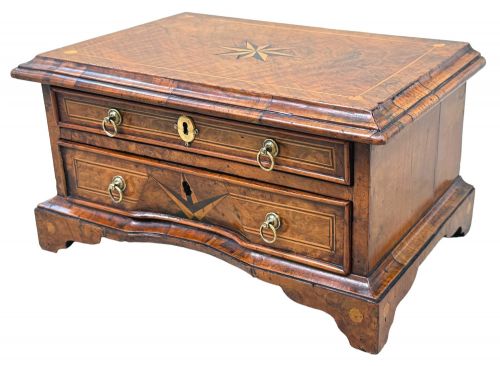
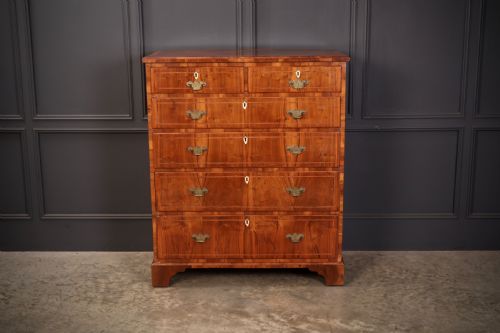
The selection frequently spans diminutive apprentice pieces and miniature chests of drawers alongside grander bureau forms and tallboys. Walnut veneer and solid timber bodies dominate the inventory, supported on characteristic bracket feet that anchor the proportions.
Originating largely from the 18th century through to Victorian and later revival periods, these items combine practical storage with decorative wood figures. The typical piece balances restrained architectural lines with warm brown tones suited to period and modern interiors alike.
How they were made
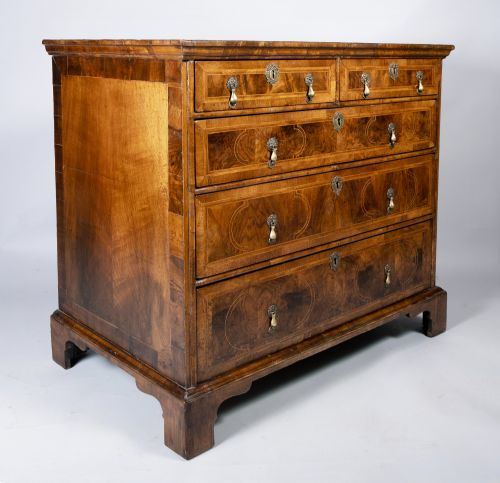
Cabinet makers utilised prime timber boards, applying walnut veneer and burr walnut over secondary woods such as oak and fruitwood to create striking patterns on the drawer fronts and top surfaces. Inlaid details and poker work occasionally added further decoration to the primary faces.
Construction relied on traditional joinery methods, housing drawers within solid carcases and mounting the entire structure upon shaped bracket feet. Brass handles and escutcheons provided functional hardware that complemented the dark grain of the timber.
Materials recorded across the inventory include solid walnut, burr walnut veneer, oak, fruitwood, brass, and bone.
What varies in quality
The visual appeal of a bracket foot walnut cabinet depends significantly on the choice of timber figure, with matched burr veneers commanding greater attention than plain grain. The crispness of the bracket foot profile and the subtlety of the proportions determine the overall refinement of the form.
Construction integrity and the survival of original brass hardware and surface patination separate standard examples from finer ones. The handling of inlaid work and the neatness of the dovetail joints reveal the skill of the original workshop.
The Bracket Foot Walnut Cabinet Glossary
- Bracket foot
- A simple corner foot shaped like a bracket, often mitred at the corner and used to support case furniture from the late 17th century onwards.
- Burr walnut
- Wood taken from a growth on a walnut tree, yielding highly figured patterns of swirling grain favoured for decorative veneer panels.
- Chest on chest
- A tall storage unit comprising one chest stacked directly on top of another, sometimes known as a tallboy.
- Bureau
- A desk featuring a sloping flap that opens to reveal a writing surface and small interior compartments, frequently raised on bracket feet.
- Poker work
- A decorative technique using a heated tool to burn designs into the surface of wood, seen on select 18th-century panels.
Bracket Foot Walnut Cabinet: Frequently Asked Questions
What is a bracket foot?
A bracket foot is a corner support shaped in an L-profile that sits beneath case furniture like chests of drawers and cabinets. It lifts the piece slightly off the floor while maintaining a stable, grounded appearance.
This style became common in the 18th century and remains a defining feature of Georgian cabinet work.
How do I style a walnut cabinet?
Walnut cabinets pair well with neutral walls and traditional textiles, bringing warmth and texture to living spaces or bedrooms. Their compact proportions allow them to fit easily into smaller rooms as bedside tables or accent storage.
Mixing these wooden pieces with modern lighting creates a balanced interior without overwhelming the room.
How can I tell an 18th-century piece apart from a later copy?
Early pieces show hand-cut dovetails, timber shrinkage appropriate to age, and secondary woods consistent with period workshop practices. Revival pieces from later centuries often display machine-cut elements or different secondary timber choices inside the carcase.
Examining the drawer linings and the construction of the bracket feet reveals much about the date of manufacture.