




Bracket Feet Desk
A bracket feet desk offers practical writing space raised on distinct bracket feet, pairing functional storage with compact proportions.
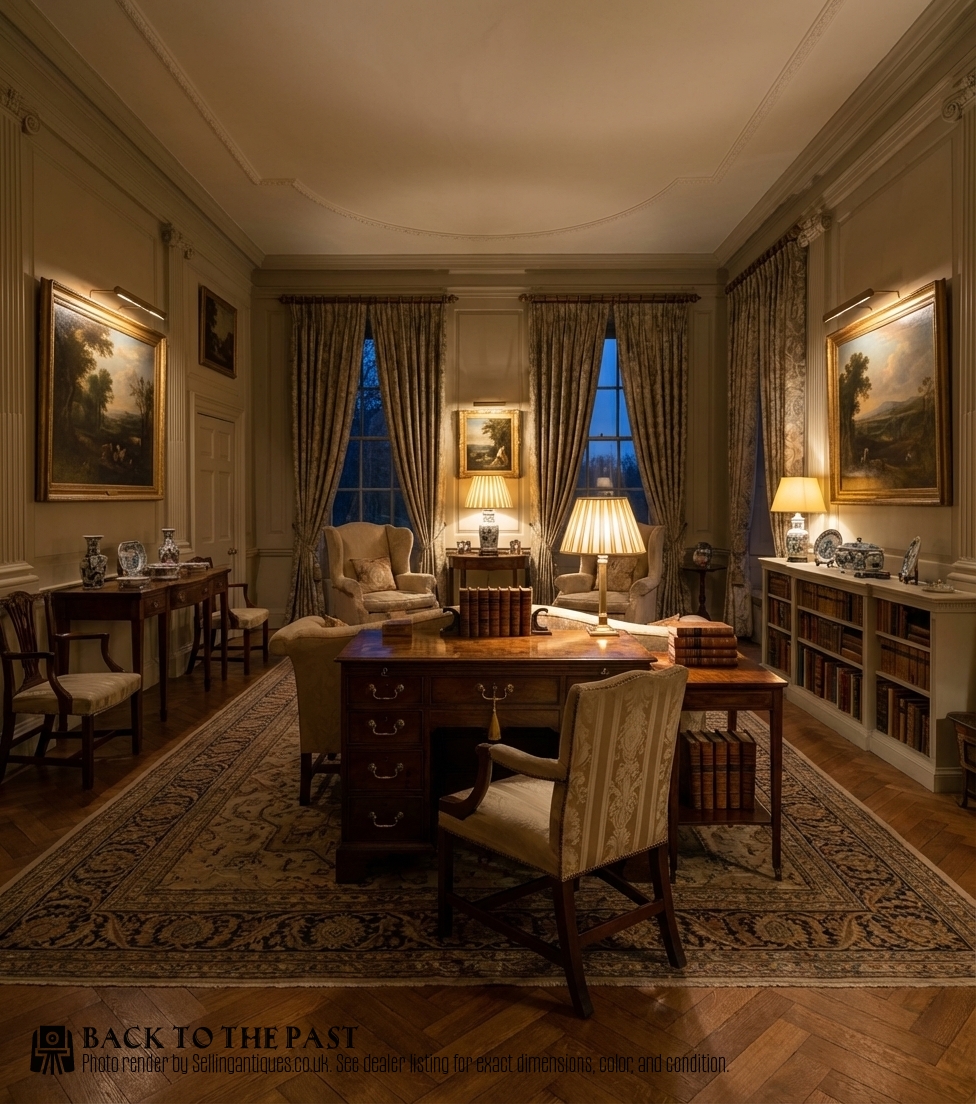
Bracket Feet Desk
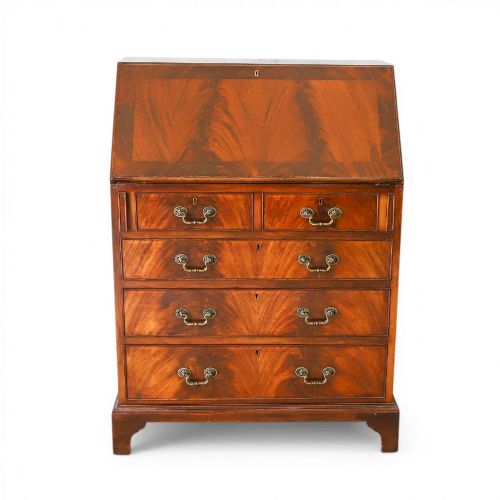
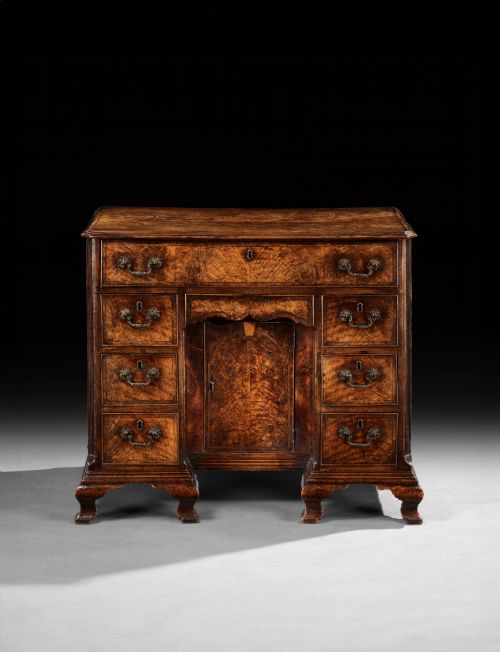
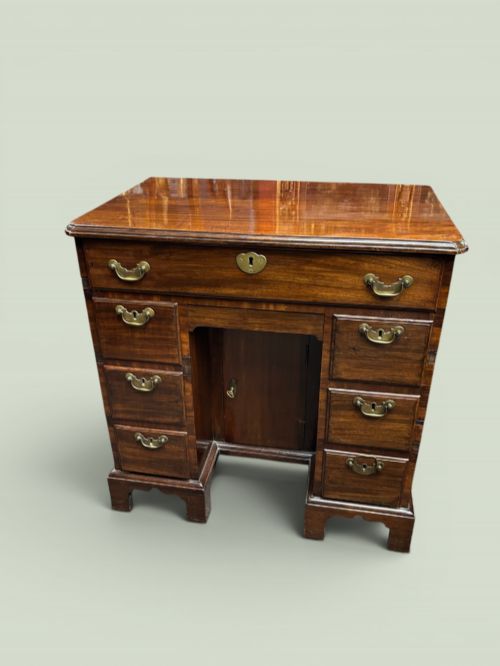
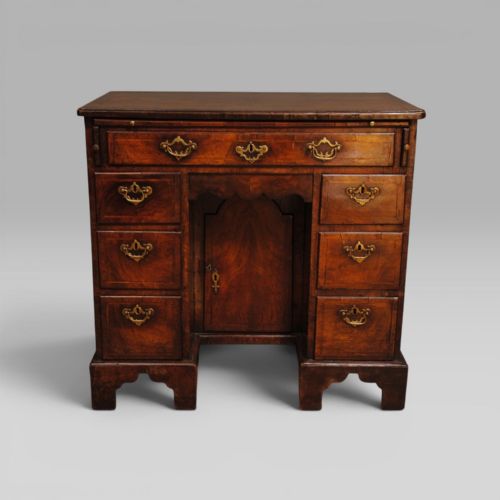
A bracket feet desk encompasses practical writing furniture built across the eighteenth and nineteenth centuries, including kneehole desks, writing chests, and sloping front bureaux. Buyers hunting for a bracket feet desk meet walnut, mahogany, and oak examples spanning the Georgian, Queen Anne, and Victorian periods.
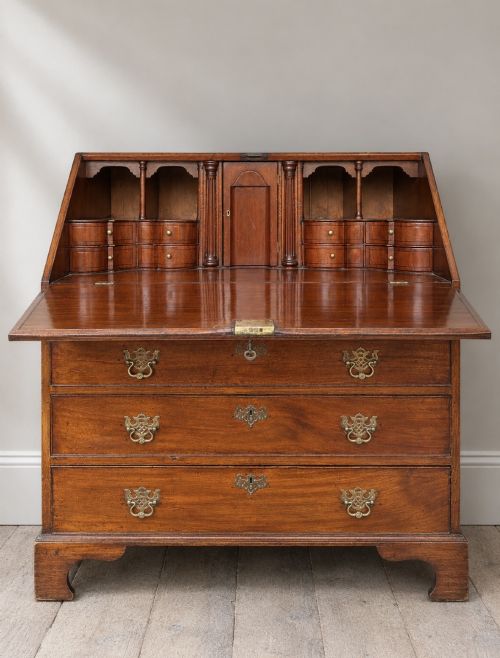
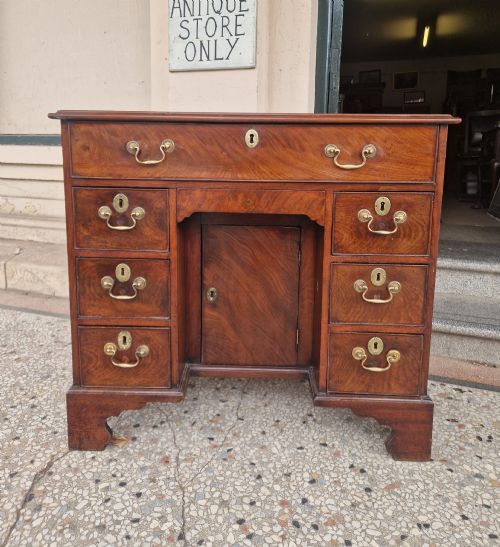
The prevailing form on this page is the compact kneehole desk or bureau resting on corner bracket feet, offering central recessed kneeholes flanked by banks of small drawers. Such pieces reflect domestic writing habits of earlier centuries, housing correspondence and papers within dedicated compartments.
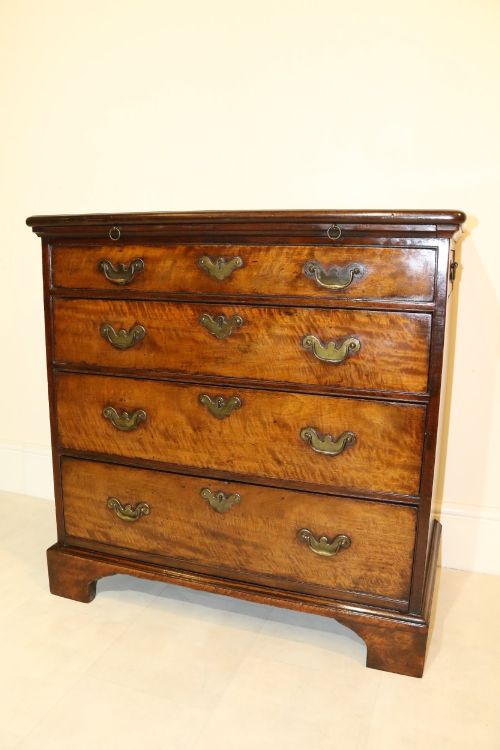
Variations range from early eighteenth century walnut and burr walnut specimens to later Georgian mahogany designs and revival pieces. Each variant preserves the essential character of raised bracket supports beneath a structured writing surface.
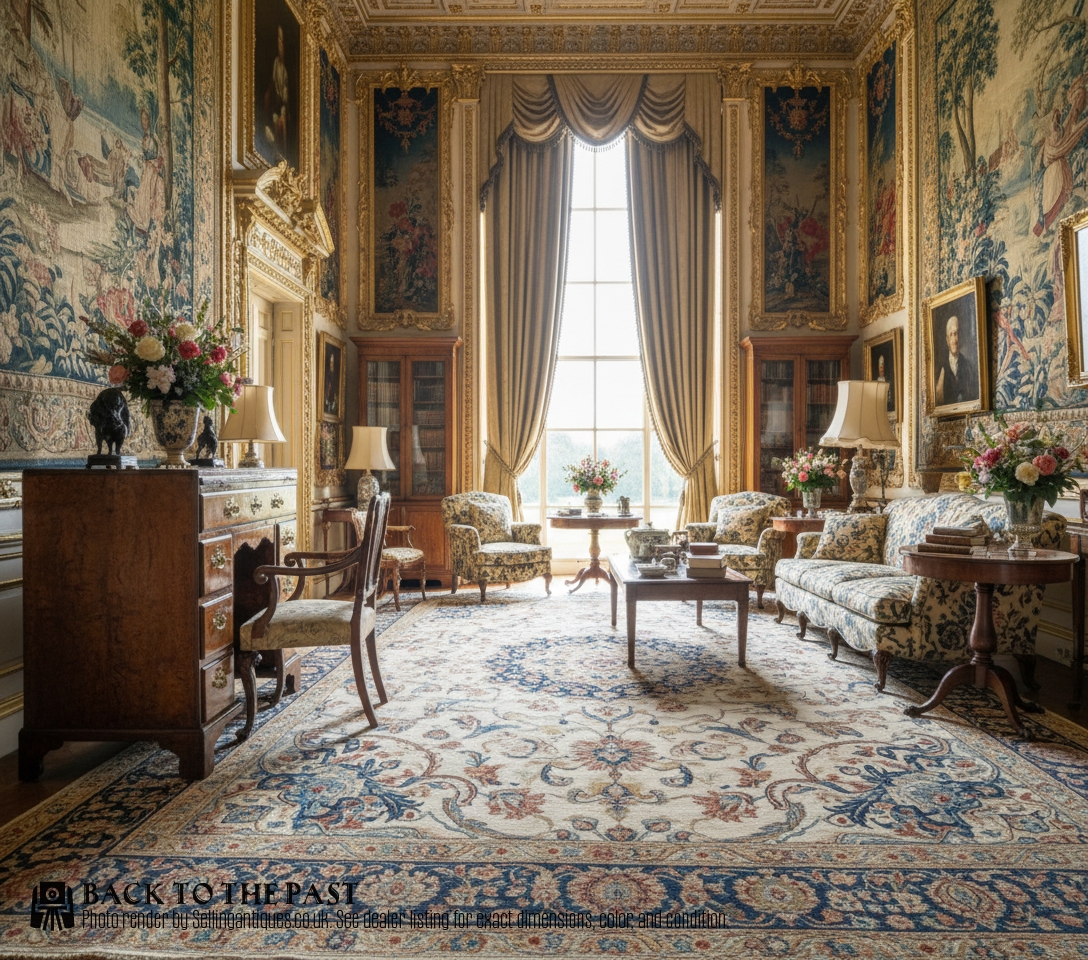
Materials and construction
Cabinet makers utilised dense native and imported timbers, notably mahogany, walnut, burr walnut, oak, and elm, often applying fine veneers over secondary woods. Timber selection dictated the visual weight and grain pattern of the writing surface and drawer fronts.
Construction relied on traditional joinery methods, incorporating solid timber drawer linings, hand-cut dovetails, and pegged frames. Bracket feet were mitred and secured to the base corners to provide stable elevation for the heavy timber carcase above.
Bracket Feet Desk Retail Price Guide 2026
Typical asking prices for bracket feet desk among the pieces listed under this phrase on Sellingantiques today, from the lower quarter to the upper quarter. They describe what is for sale here now, not the wider market.
Object forms span kneehole desks, writing chests, sloping front bureaux, and library clocks.
Assessing quality
Quality rests in the crispness of the timber selection, such as figured mahogany, flame-fronted mahogany, or matched burr walnut veneers. Superior examples display thoughtful grain continuity across drawer fronts and harmonious proportions suited to smaller domestic spaces.
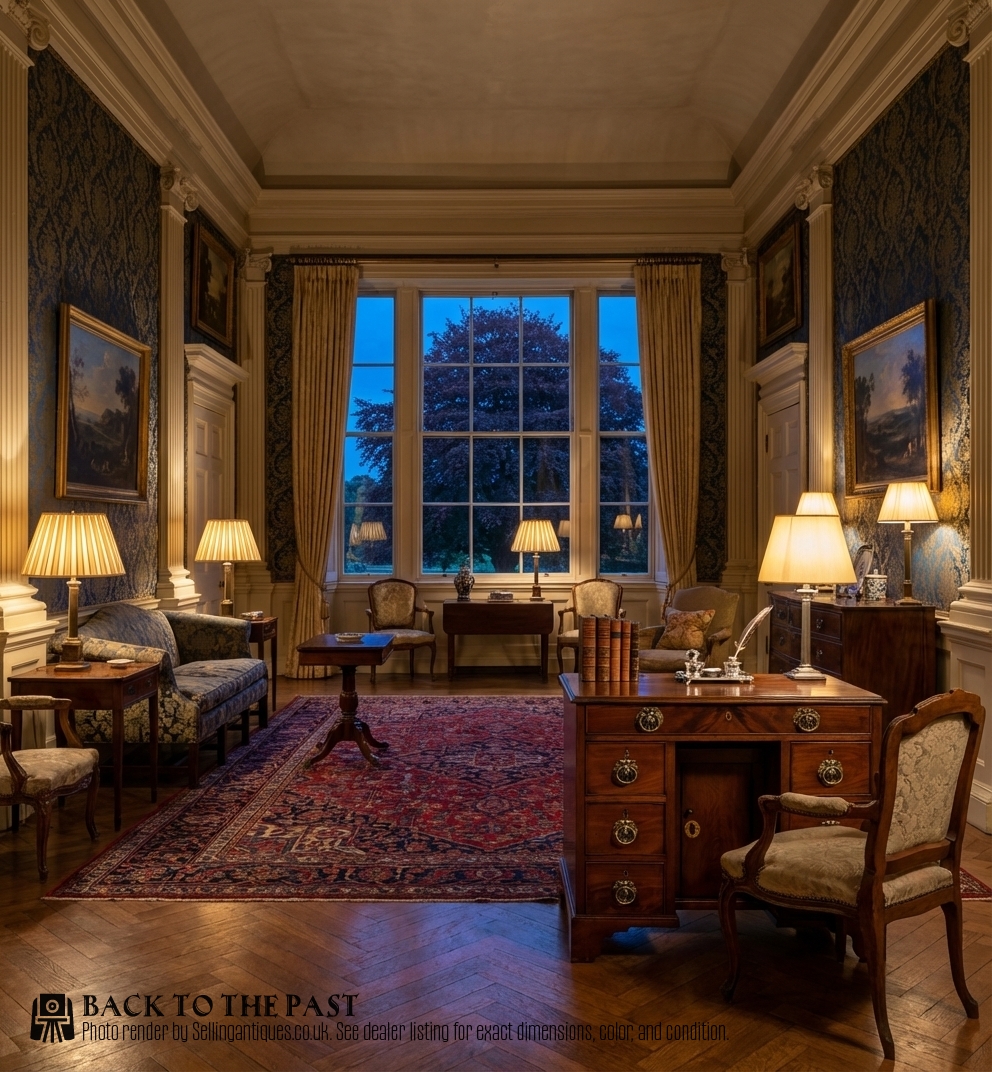
Bush of London·Joseph Jump of London·Plumbly and Tupman
The Bracket Feet Desk Glossary
- Bracket feet
- Corner feet formed of two mitred pieces meeting at an angle, shaped like an L in profile to support a case piece. They lift the carcase off the floor while maintaining a stable, solid base.
- Kneehole desk
- A compact writing desk featuring a recessed cupboard or space for the legs beneath the top drawer, flanked by two vertical tiers of smaller drawers. This form became popular during the seventeenth and eighteenth centuries.
- Bureau
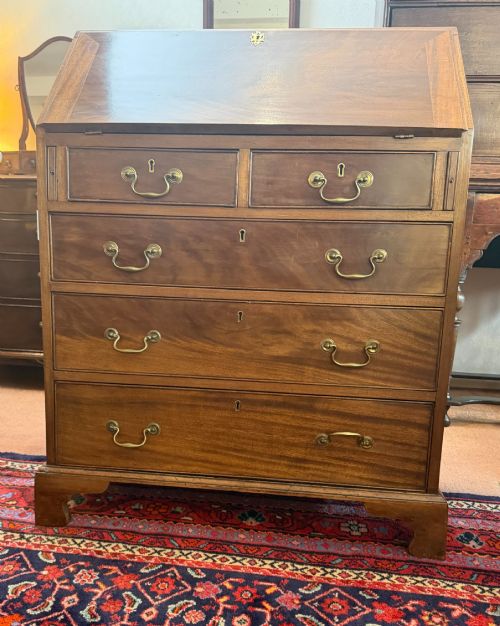
- A slant-front writing desk that opens to reveal a fitted interior of pigeonholes and small drawers. The writing flap folds down for use.
- Veneer
- A thin layer of figured wood applied over a secondary timber carcase to create a decorative surface. Craftspeople often selected burr walnut or flame mahogany for this purpose.
- Featherbanding
- A decorative inlay technique using small strips of veneer arranged in a herringbone pattern around drawer edges. It frames the primary wood grain with precise geometric contrast.
Bracket Feet Desk: Frequently Asked Questions
What is a bracket feet desk?
A bracket feet desk is a traditional writing table or bureau supported by corner bracket feet, designed for domestic correspondence and paperwork.
These pieces typically date from the eighteenth or nineteenth centuries and combine compact storage drawers with a dedicated writing surface.
How do I identify a Georgian desk?
Georgian desks are identified by their proportion, timber choice such as mahogany or walnut, and characteristic hardware like brass drop handles.
They often feature hand-dovetailed drawer construction and period specific details like bracket feet or ogee bracket feet.
Where were these desks used?
These desks served as functional writing and storage furniture in domestic libraries, parlours, and private chambers.
Their smaller proportions allowed them to fit comfortably against walls in rooms where space was valued.
How do I care for antique mahogany?
Antique mahogany requires gentle dusting with a soft, dry cloth and protection from direct sunlight and sudden temperature changes.
Applying occasional appropriate wax preserves the polished finish without building up heavy residues on the timber.