

Boxed Sterling Silver Rings
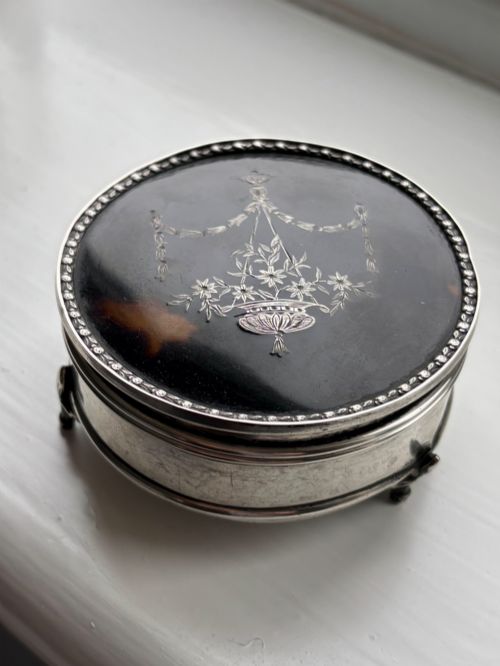
When buyers seek boxed sterling silver rings, they find cased napkin rings and ring boxes spanning the Victorian, Edwardian and George V periods.
Boxed Sterling Silver Rings
Searches for boxed sterling silver rings lead buyers to a distinct group of cased silver items, primarily containing napkin rings or dedicated ring and trinket boxes. These pieces emerge predominantly from the late Victorian, Edwardian and George V eras, running from the 1880s through the 1930s.
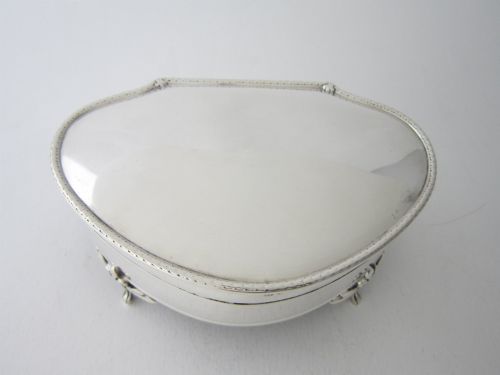
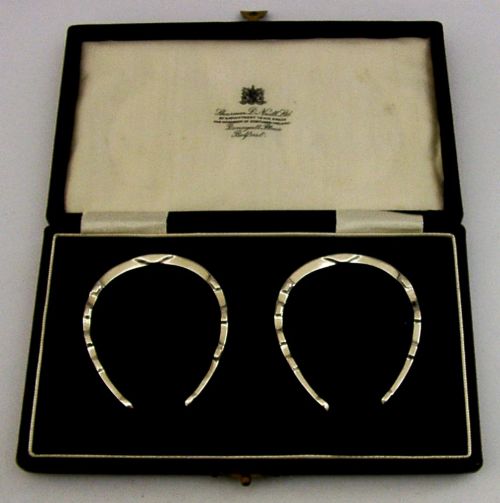
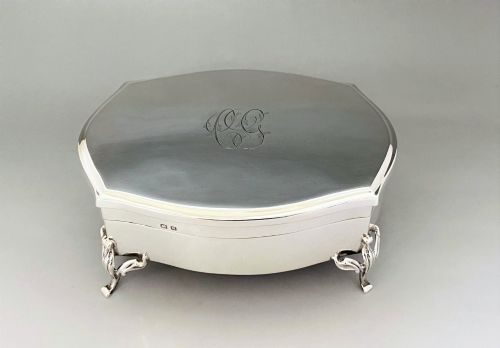
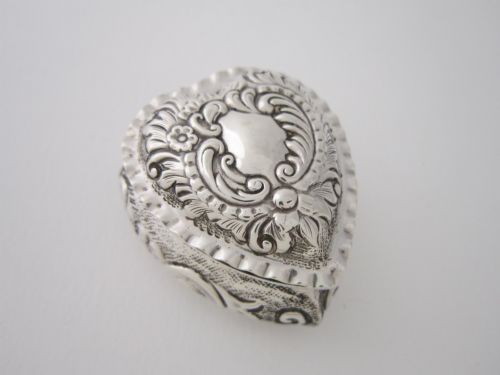
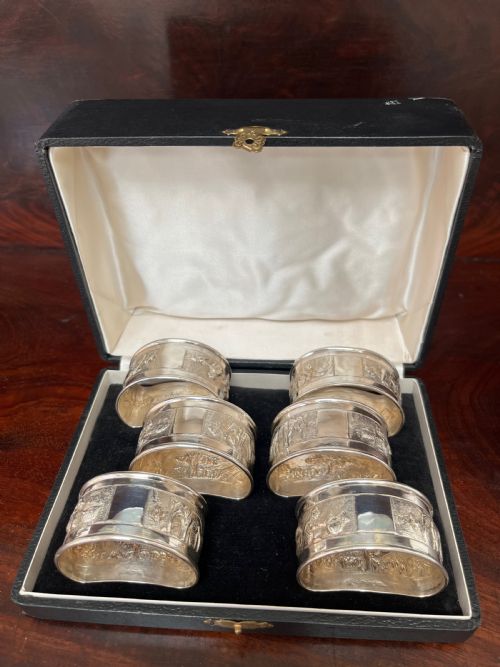
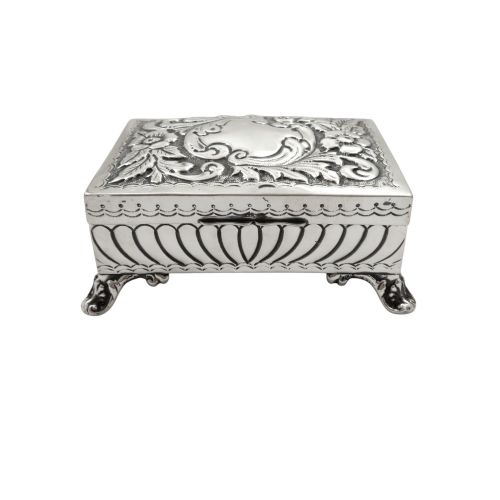
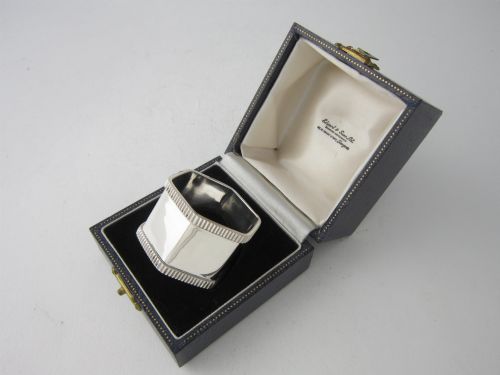
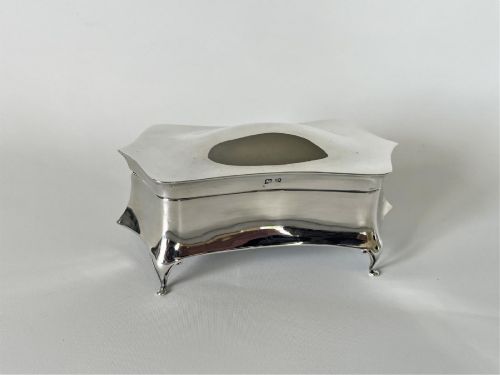
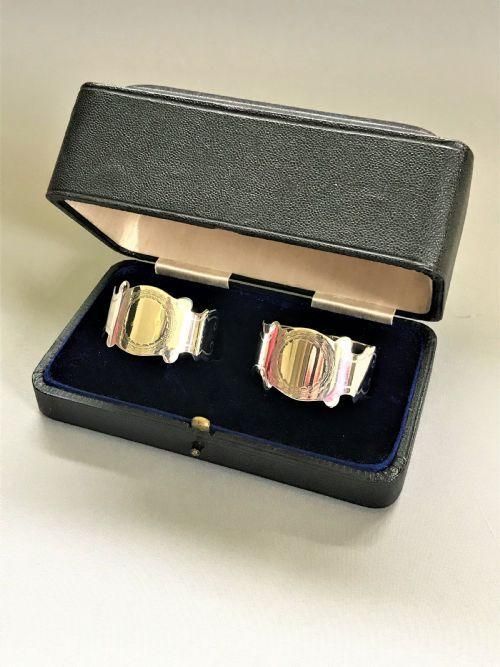
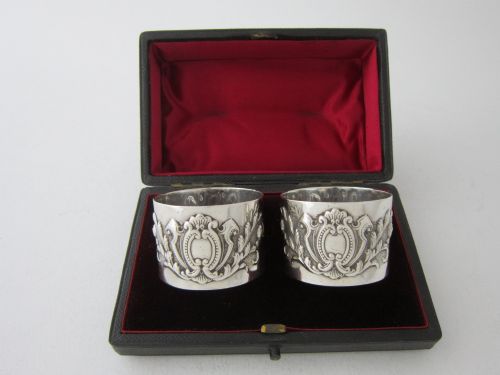
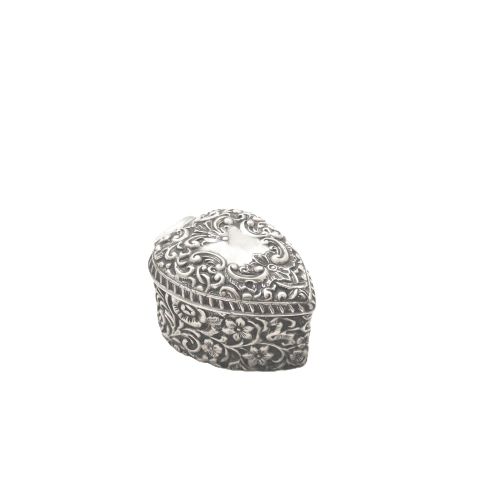
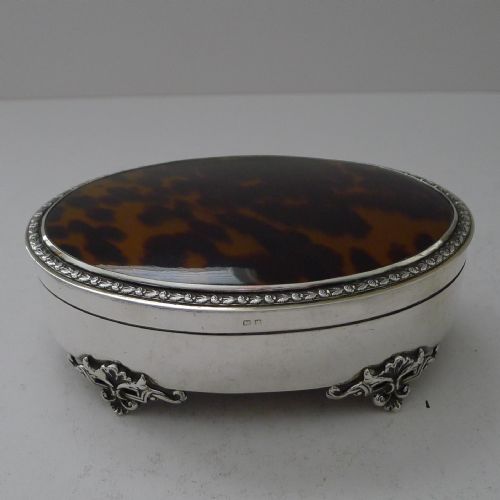
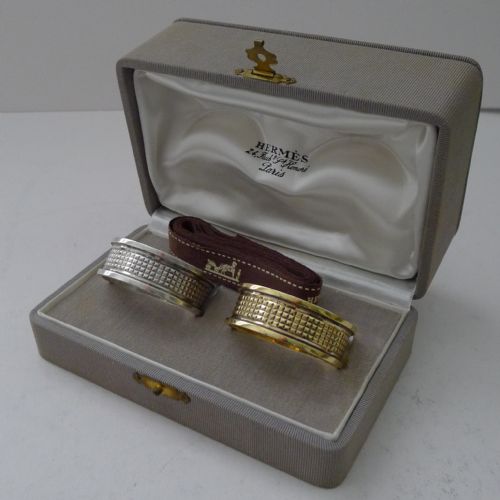
Napkin rings appear singly, in pairs or in fitted sets of four and six, often housed in custom presentation cases. Dedicated ring boxes and heart-shaped trinket vessels form the alternative category commonly encountered under this search phrase.
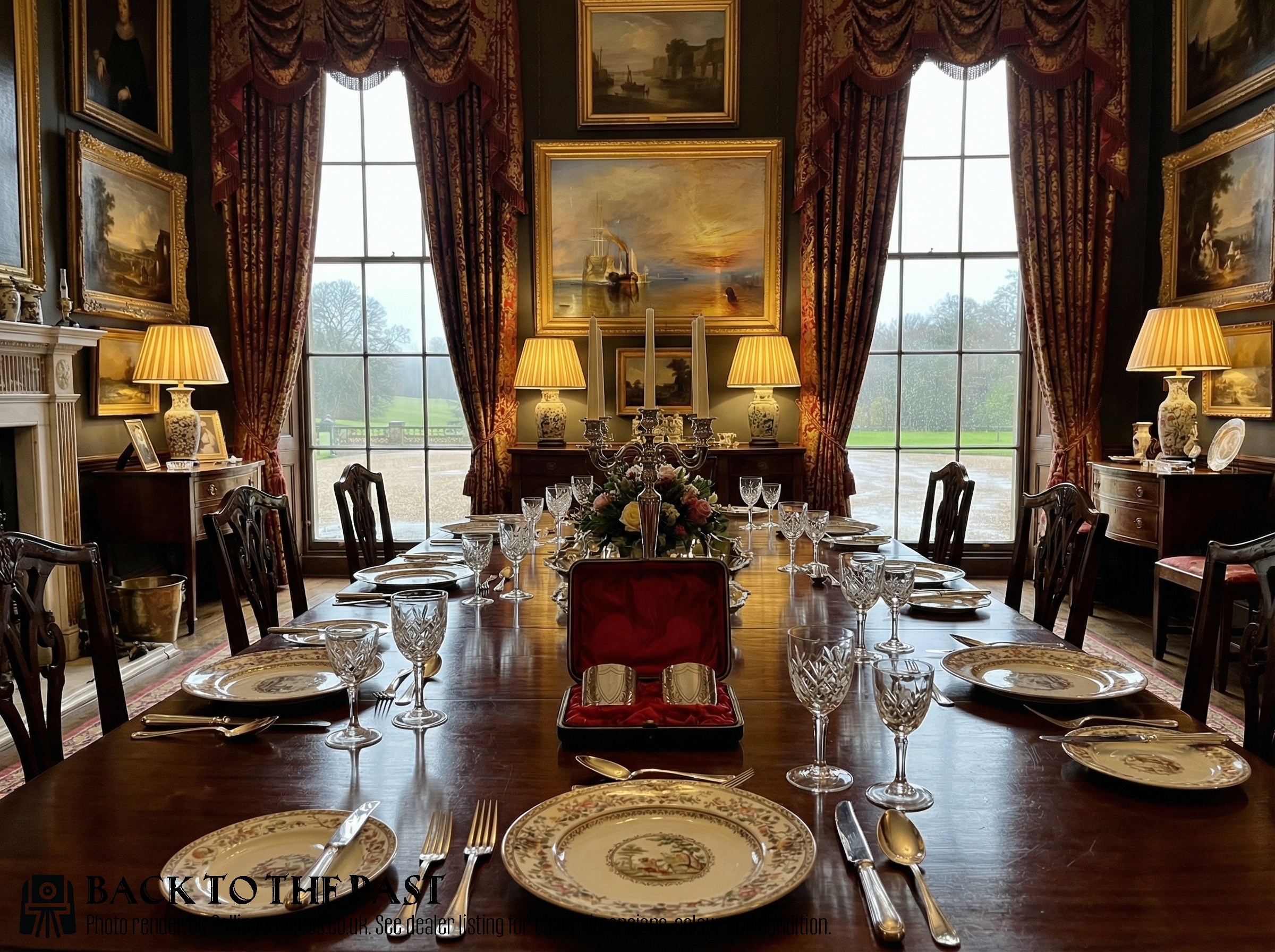
The objects stem from English silversmithing traditions, carrying hallmarks from assay offices in London, Birmingham and Chester. Original fitted cases lined with silk, velvet or satin accompany many of these surviving examples.
How they were made
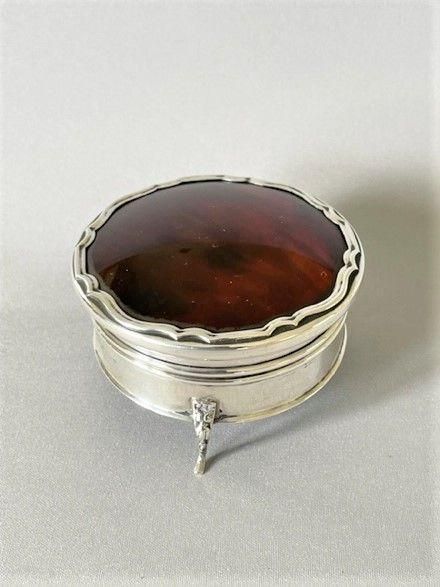
Silversmiths formed the napkin rings and boxes using solid sterling silver, applying techniques such as stamping, repoussé relief work and engine turning for surface patterns. Makers integrated faux tortoiseshell or genuine shell panels into dressing table boxes alongside the silver components.
Fitted presentation cases utilised rigid leather, leatherette or card exteriors lined internally with tailored silk, satin or plush velvet slots designed to cradle each silver piece securely.
Listings feature items spanning the 1880s to the 1950s, incorporating materials such as tortoiseshell, velvet, silk and sterling silver.
What varies in quality
The standard of design and execution separates basic items from superior examples. Hand-engraved motifs, cast cherub reliefs and substantial metal weight distinguish finer napkin rings and boxes from plain, thin-walled alternatives.
The condition and originality of the presentation case strongly influence the overall character. Complete sets retaining their branded silk-lined interior and functioning brass clasps represent higher levels of original preservation.
Ollivant & Botsford·C.T. Burrows & Sons·Tiffany & Co·William Comyns·Mappin & Webb·Cartier·Asprey·Walker & Hall
The Boxed Sterling Silver Rings Glossary
- Sterling silver
- A silver alloy containing 92.5 percent pure silver and 7.5 percent other metals, usually copper, ensuring structural durability for daily use. This composition forms the standard material for British silver items.
- Hallmark
- An official mark stamped onto precious metals indicating the assay office, standard of purity and year of manufacture. These small stamps provide the primary method for dating antique silver.
- Repoussé
- A metalworking technique where the silversmith hammers and pushes the design from the reverse side to form a raised relief on the front. This method creates decorative scenes such as cherubs or floral scrolls.
- Engine turned
- A geometric surface pattern mechanically engraved into the metal using a lathe. This technique produces precise, repeating lines across napkin rings and box lids.
- Leatherette
- A synthetic material mimicking leather, commonly used for the outer covering of presentation cases during the Edwardian and Art Deco periods. It protected the interior velvet or silk lining.
Boxed Sterling Silver Rings: Frequently Asked Questions
How do I identify a Victorian ring box?
Victorian ring and trinket boxes usually feature hallmarks corresponding to London, Birmingham or Chester between the 1880s and 1900. Heart shapes and hinged lids dominate this period.
The interiors contain shaped velvet or satin pads specifically designed to hold small rings securely when closed.
Are original presentation cases important?
Original boxes protect the silver and confirm that the items remain together as a matched set from the period of manufacture. Silk and velvet linings often bear maker stamps.
Finding pieces in their fitted cases adds historical context and preserves the items in the condition intended by the original retailer.
How should I clean silver napkin rings?
Polishing requires a soft microfiber cloth and a mild, non-abrasive silver cleaner to preserve engraved details and hallmarks. Avoid harsh dipping solutions that strip antique patination.
Storing the items back inside their lined presentation cases prevents tarnishing and protects the metal from atmospheric moisture.