





Victorian Silver Napkin Holders
Victorian silver napkin holders are small dining accessories designed to keep table linen in order, offering charm and utility for the collector of domestic silver.
Victorian Silver Napkin Holders
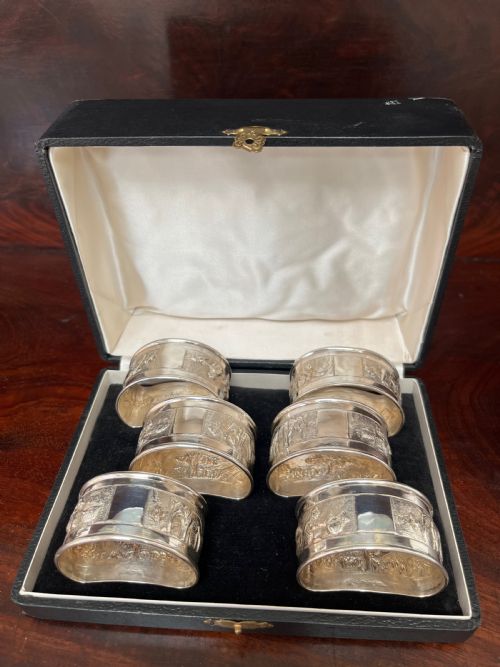
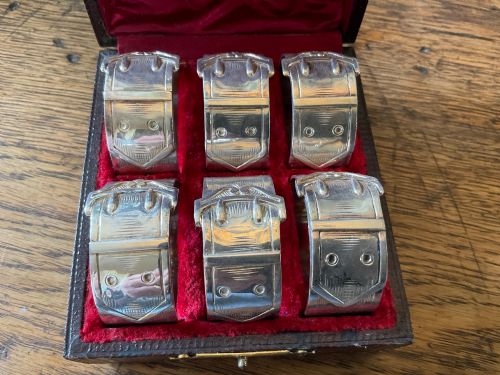
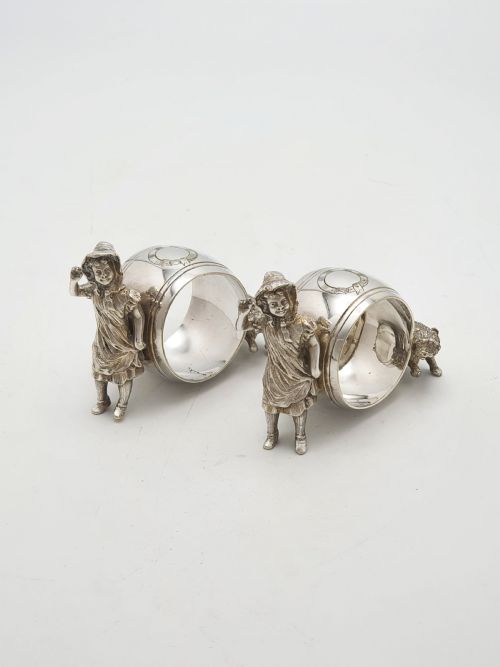
Buyers will most frequently encounter individual pieces or matched pairs originating from the late nineteenth century, including specific designs modelled as belt buckles or figural subjects. These domestic accessories reflect the detailed metalwork characteristic of the Victorian and Edwardian periods.
The assortment extends across various manufacturing hubs, with pieces bearing regional assays such as Chester and London. Alongside standard cylindrical rings, the inventory includes occasional examples from the Aesthetic Movement and associated modernist designs.
Materials and construction
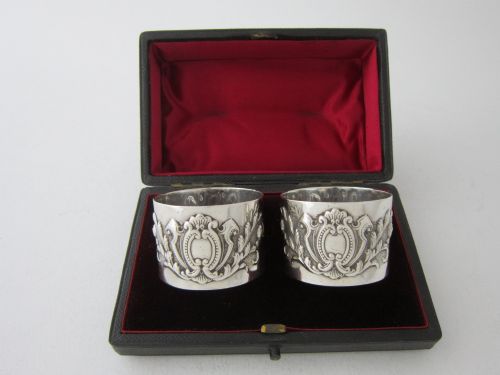
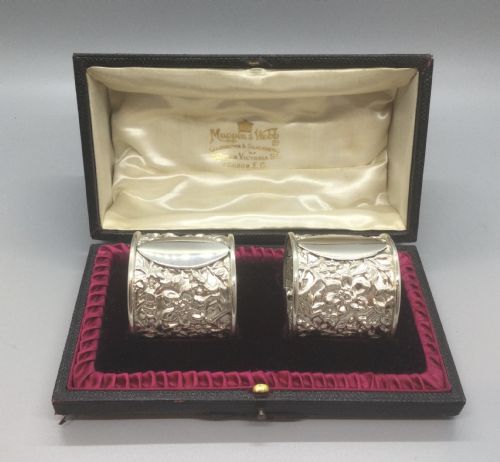
These pieces are constructed primarily from sterling silver or silver plate over a base metal, housed within protective presentation boxes lined with velvet, silk, or leatherette. The metal components are shaped through forming and joining techniques, often finished with engraved or applied ornamentation.
Specialised examples incorporate distinct structural elements, such as hinged clips for garments or rigid frames designed to hold toast. Cased sets frequently utilise fitted wooden interiors covered in textured materials to secure each individual ring.
Current listings demonstrate a concentration of items from the late nineteenth century, predominantly utilising sterling silver and silver plate.
Assessing quality and finish
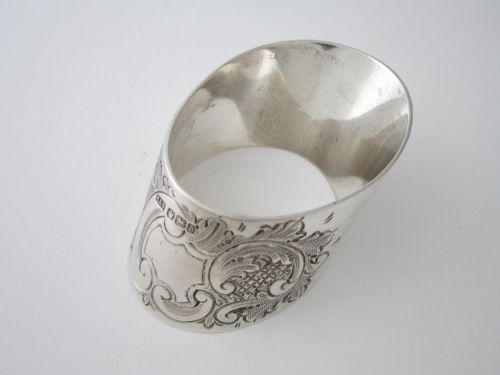
The standard of a piece rests upon the crispness of its engraving and the structural integrity of any applied motifs, such as belt buckles or figural elements. Heavier gauge metal provides a more substantial feel in the hand compared to lighter, more flexible constructions.
The preservation of original fitted cases, complete with intact silk and velvet linings, influences the overall character of cased sets. Plated items show variation in the retention of the silver layer over the underlying metal.
The Victorian Silver Napkin Holders Glossary
- Sterling silver
- A standard alloy consisting of ninety-two point five percent silver by mass, with the remainder comprising copper or other metals. This material provides the primary medium for high-grade nineteenth-century dining accessories.
- Silver plate
- A base metal object coated with a thin layer of silver through electroplating or older techniques. This finish offered a durable and accessible alternative to solid silver.
- Assay mark
- A stamp or series of stamps indicating the purity of the metal, the place of testing, and the date of manufacture. These official marks help verify the origin of British silver.
- Napkin clip
- A functional device featuring a spring mechanism or hook to secure a cloth to a diner's clothing. These items represent a less common variation of table linen holder.
- Toast rack
- A domestic metal frame designed to hold slices of toast upright on the breakfast table. These tableware pieces share period manufacturing techniques with napkin rings.
Victorian Silver Napkin Holders: Frequently Asked Questions
What is the difference between sterling and plated holders?
Sterling silver items are made from solid precious metal throughout and typically bear official hallmarks designating their composition. Silver-plated versions utilise a base metal substrate covered by a thin external layer of silver.
Over time, plated pieces may reveal the underlying metal where handling has caused wear, whereas solid silver maintains its material consistency through repeated polishing.
How were napkin holders used at the table?
These accessories served to identify individual napkins between meals in larger households where laundry was not washed after every single use. Each family member or guest was assigned a specific ring for the duration of its stay on the sideboard.
Displaying them in cased sets of six or more suggests they formed part of larger dining table services intended for formal entertaining during the period.
How do I date a Victorian silver holder?
Dating relies heavily upon the maker's marks, date letters, and assay office symbols stamped directly into the silver components. Comparing these punch marks against standard reference tables reveals the exact year of testing.
Stylistic indicators such as Aesthetic Movement engraving or figural belt motifs also help narrow down the period of manufacture when hallmarks are rubbed or absent.
How should I care for silver table accessories?
Regular, gentle dusting with a soft, dry cloth prevents the accumulation of atmospheric grime on detailed engraved surfaces. When tarnishing occurs, use a specialist silver polish sparingly to avoid removing thin highlights or wearing down hallmarks.
Store pieces away from high humidity and avoid prolonged contact with rubber or certain synthetic box linings that can accelerate metal discoloration.