



Pair Silver Napkin Rings
Pair silver napkin rings bring matching elegance to the dining table, often arriving complete with fitted presentation cases ready for gifting.
Defining Pair Silver Napkin Rings
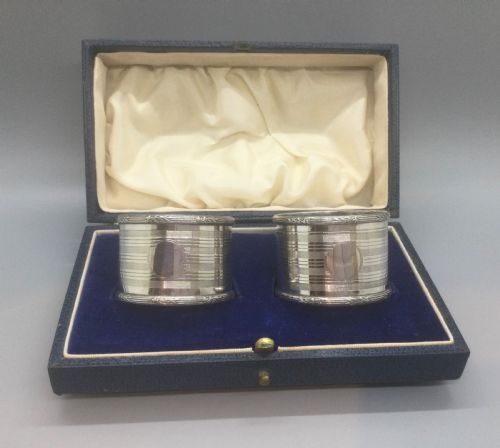
A search for pair silver napkin rings uncovers matching sets intended for formal dining, typically preserved together in fitted cases lined with velvet or leather. These accessories span multiple decades and design movements, reflecting changing tastes at the dinner table.
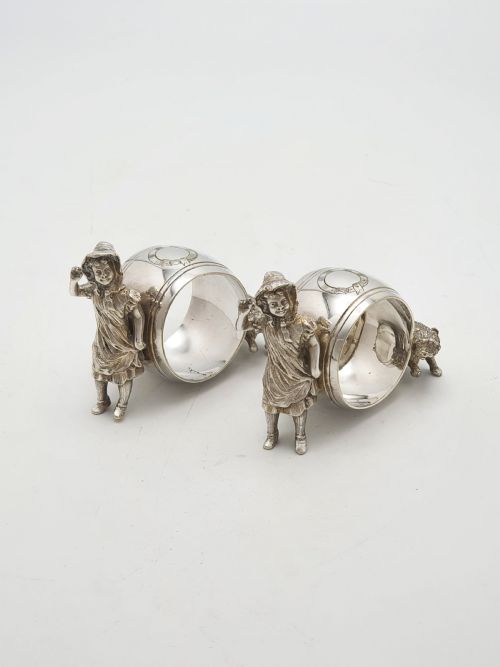
The most common examples encountered on this page date from the Victorian, Edwardian, and George V periods. Makers utilised solid sterling silver and silver plate to shape these small cylindrical items, frequently employing pierced work or figural motifs.
Sets from the late nineteenth century lean towards ornate floral themes such as grape and vine designs or Aesthetic movement patterns. Later twentieth century iterations shift toward cleaner geometric lines associated with the Art Deco style.
Materials and Methods
Silversmiths constructed these pieces primarily from sterling silver or silver plate, sometimes incorporating colourful enamel details or cairngorm stones. Metalworking techniques included piercing, casting figural elements, and applying niello decoration.
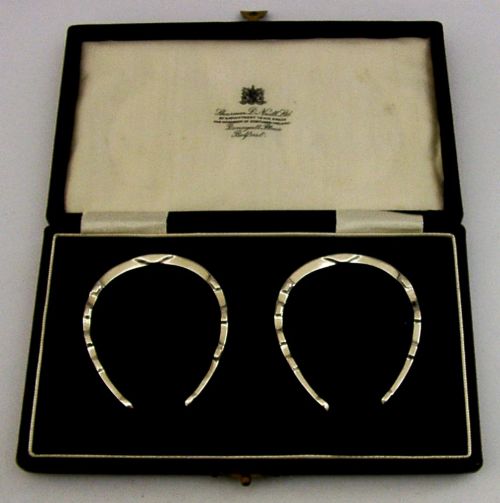
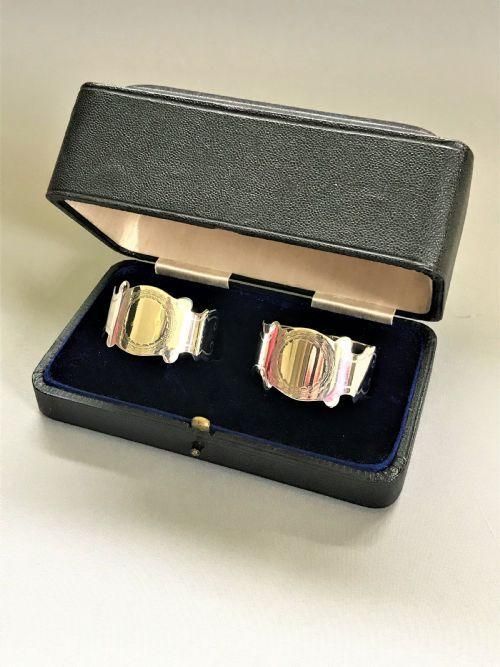
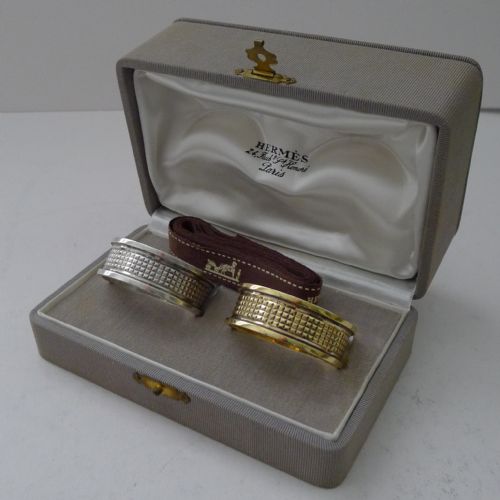
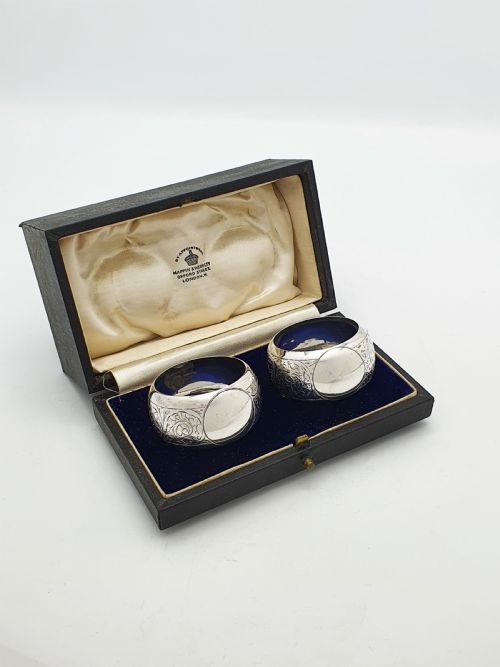
Many sets owe their survival to fitted storage boxes lined with protective fabrics like velvet and leather. These interior linings safeguarded the polished metal surfaces from tarnishing and physical damage over generations of use.
Materials recorded across the archive include sterling silver, silver plate, enamel, leather, and velvet.
Distinctions in Quality
The division between standard items and superior examples rests upon the depth of the craftsmanship and the presence of original packaging. Hand-pierced decoration, intricate figural casting, and substantial metal weight elevate certain pairs above plain cylindrical counterparts.
The survival of a matching fitted case lined in velvet or leather adds significant appeal. Complete sets featuring clear hallmarks and renowned maker marks demonstrate greater attention to detail during production.
Ernest W Haywood·Liberty & Co·Archibald Knox·James Dixon & Sons·Asprey & Co·T Bishton
The Pair Silver Napkin Rings Glossary
- Sterling silver
- A standard alloy consisting of silver and other metals, typically copper, designated by specific hallmarks. This composition guarantees the metal purity of the item.
- Silver plate
- A base metal coated with a thin layer of pure silver. This technique offered a decorative finish at a lower cost than solid sterling alternatives.
- Pierced work
- A decorative technique involving the cutting or piercing of patterns through the metal wall. It creates openwork designs such as lattice or scroll motifs.
- Hallmark
- An official stamp applied by an assay office indicating metal fineness, place of origin, and date of manufacture. These marks allow collectors to trace the exact history of a piece.
- Aesthetic movement
- A late nineteenth century design style emphasising visual beauty over narrative subject matter. Pieces from this period often display stylised natural forms.
Frequently Asked Questions
What periods do these come from?
The available selection spans from the late nineteenth century through the mid twentieth century. Victorian, Edwardian, and George V eras represent the primary periods of manufacture.
Design characteristics shift across these decades, moving from ornate floral and pierced Victorian styles toward streamlined Art Deco geometric forms.
Are they usually found in boxes?
Many examples survive within their original fitted cases, which were lined with velvet or leather to protect the metal. These presentation boxes often match the contours of the rings.
Finding a set complete with its period case remains a frequent occurrence for Edwardian and George V productions.
How are they decorated?
Decoration varies widely, encompassing pierced openwork, cast figural motifs, and engraved initials or patterns. Some items incorporate coloured enamel or specific stones like cairngorm.
Victorian examples frequently display naturalistic themes such as vines or angels, while later pieces favour geometric shapes.
How do I read the hallmarks?
British hallmarks typically show a standard mark for silver purity, an assay office symbol, and a date letter indicating the year of manufacture. Additional marks may identify the specific maker or sponsor.
These tiny stamped symbols provide the most reliable method for dating and attributing silver items.