





Boxed Napkin Rings
Boxed napkin rings bring together polished silver and fitted velvet-lined cases, offering a complete set ready for the dining table.
Boxed Napkin Rings
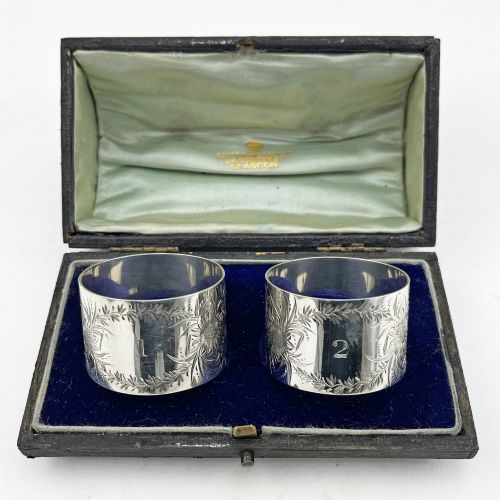
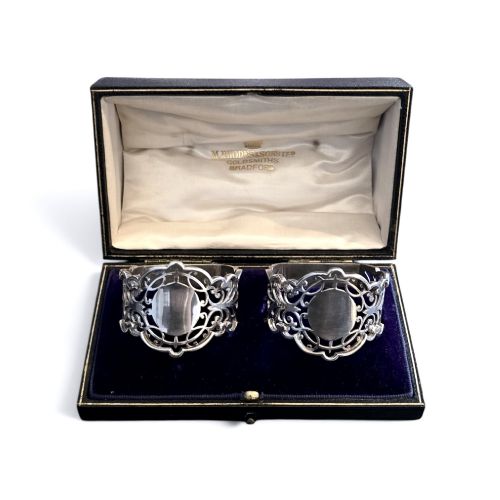
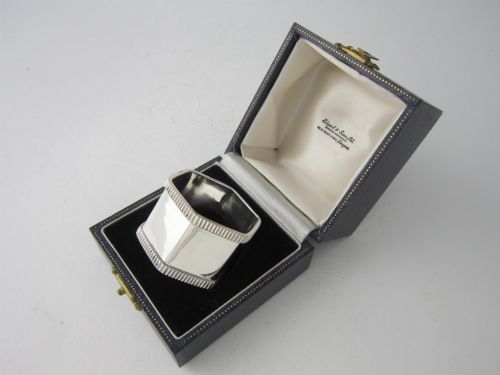
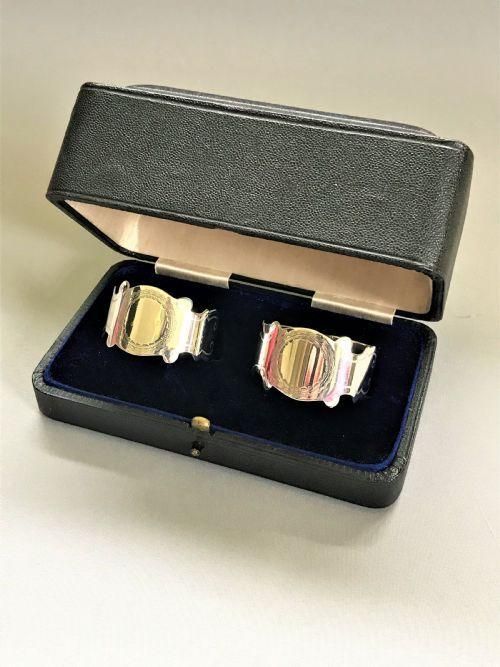
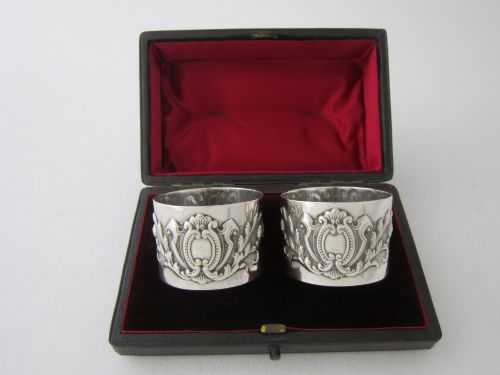
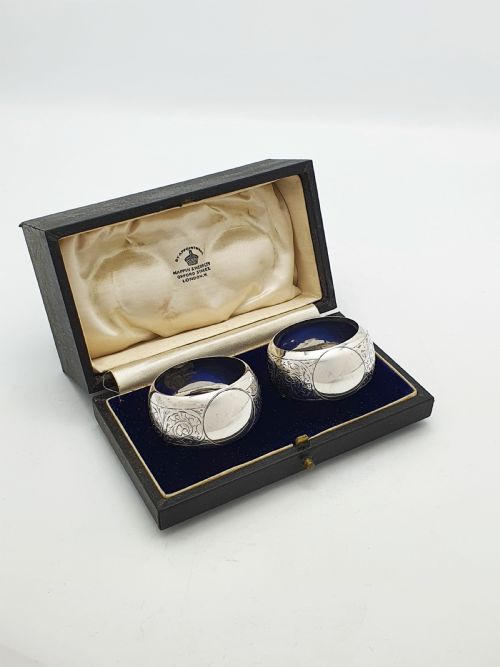
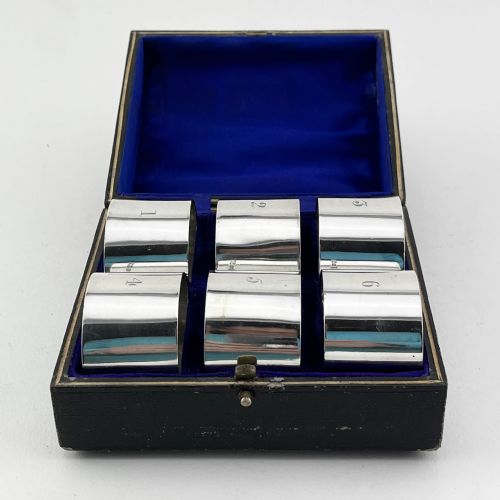
When you search for boxed napkin rings, you encounter sets and pairs made for formal dining, largely spanning the late nineteenth century through the mid twentieth century. These pieces appear in fitted receptacles lined with silk or velvet, preserving the metal within secure leatherette or leather cases.
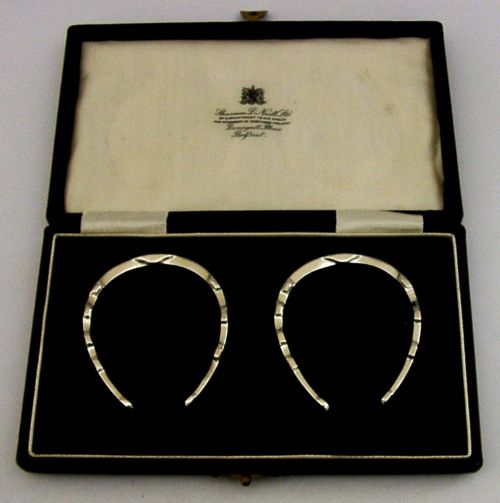
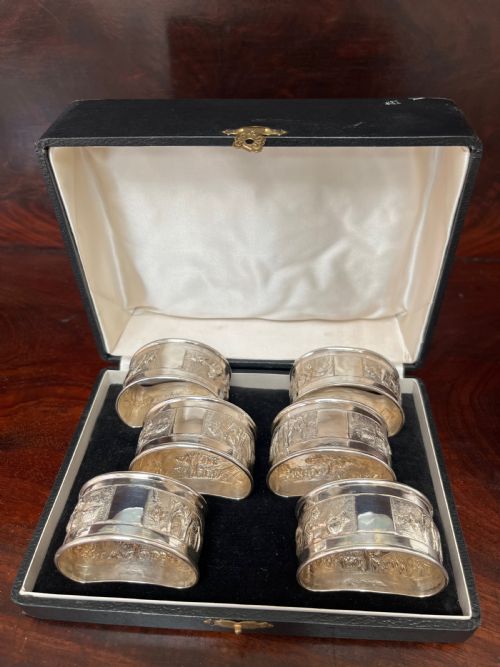
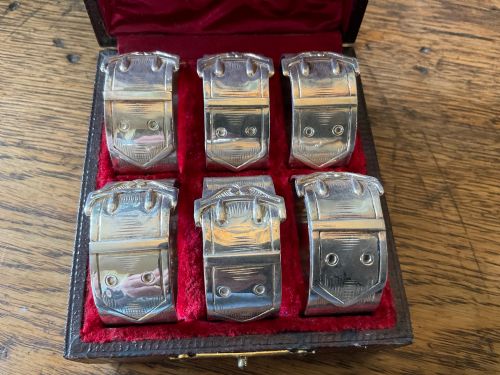
The most common form on this page is the Edwardian or George V sterling silver pair or set of six, often hallmarked in Birmingham or Sheffield. Alongside these, Victorian examples emerge alongside occasional christening sets and novelty designs modelled as belt buckles or horseshoes.
Materials and Construction
Makers shaped solid sterling silver or silver plate into cylindrical bands, frequently applying engine-turning, chased borders, or embossed motifs. Workshops employed silver gilt for interior contrast on select pairs, pairing the metal with robust construction techniques typical of silversmithing hubs.
The presentation boxes rely on wooden or card foundations covered in leather or leatherette, then fitted with internal beds of silk or velvet to hold each ring snugly in place. Hinges and clasps secure the housing, protecting the polished metal surfaces from tarnishing and friction during storage.
Boxed Napkin Rings Retail Price Guide 2026
Typical asking prices for boxed napkin rings among the pieces listed under this phrase on Sellingantiques today, from the lower quarter to the upper quarter. They describe what is for sale here now, not the wider market.
Several Victorian silversmiths decided that holding a napkin required the structural integrity of a horse shoe or a belt buckle.
Distinctions in Quality
The distinction between standard utility items and finer pieces rests on the weight of the silver and the crispness of the decoration, such as hand-engraved monograms or sharply cast horseshoe and buckle motifs. Substantial gauge metal resists denting during use, maintaining a clean cylindrical shape over decades.
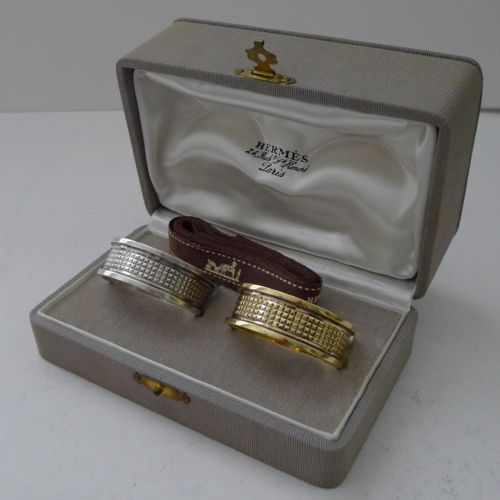
The integrity and originality of the presentation case also govern overall appeal, with intact silk linings and well-preserved outer leatherette housing adding considerable context. Sets that retain their matching fitted box from makers such as Tiffany or Cartier demonstrate superior original commissioning.
Martin Hall & Co·C.T. Burrows & Sons·Tiffany & Co·Mappin & Webb·Cartier·Hermes
The Boxed Napkin Rings Glossary
- Sterling silver
- A silver alloy containing 92.5 percent pure silver by mass and 7.5 percent other metals, usually copper, ensuring durability for tableware.
- Silver plate
- A layer of silver applied to a base metal core, such as nickel silver or copper, offering the appearance of solid silver at a different scale of production.
- Hallmark
- An official mark stamped onto precious metals in the United Kingdom, indicating the standard of purity, the assay office, and the date letter.
- Silver gilt
- Sterling silver that has been coated with a thin layer of gold on its surface, often used to line the interior of napkin rings for decorative contrast.
- Leatherette
- A form of imitation leather made by covering a fabric base with plastic or polyurethane, commonly utilised for twentieth-century presentation boxes.
Boxed Napkin Rings: Frequently Asked Questions
What are boxed napkin rings used for?
These items were traditionally used at family dining tables to distinguish individual napkins between meals, keeping each person's linen organised over several days.
Today, they function as both functional tableware and decorative collectables, often brought out for formal dinners or given as wedding and christening gifts.
How do I know if they are solid silver?
You can identify solid silver by searching for British hallmarks stamped directly onto the metal surface, which typically include a lion passant indicating sterling standard alongside assay office symbols and date letters.
Silver plated items will lack these official silver marks, often showing maker stamps or plate designations instead.
How should I store them?
Keep the napkin rings inside their original fitted boxes when not in use, as the silk and velvet linings help buffer against moisture and atmospheric tarnishing.
Store the cases in a dry environment away from direct sunlight to protect the outer leatherette and internal fabrics from degradation.
Are original boxes important?
The original box provides historical context and keeps the set complete, often bearing retailer stamps or silk-lined interiors tailored specifically to the dimensions of the rings.
While loose rings are common, finding a matching set resting within its designated period case offers a higher degree of preservation.