




Engraved Sterling Napkin Bands
Engraved sterling napkin bands are practical silver table accessories used to mark individual places, spanning Victorian, Edwardian, and mid-century periods.
Engraved Sterling Napkin Bands
When you search for engraved sterling napkin bands, you encounter small circular table articles designed to hold cloth napkins at meals. The pieces recorded here include Victorian, Edwardian, and later mid-century British examples, often appearing as pairs or single rings.
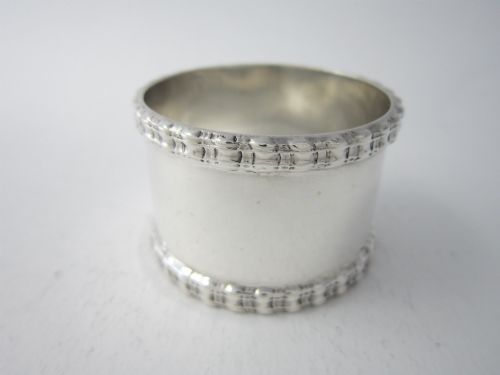
Most items on this page take the form of standard cylindrical bands, though novelty shapes and buckled belt designs also occur. They date from the late nineteenth century through to the mid-twentieth century, reflecting changing dining customs across successive decades.
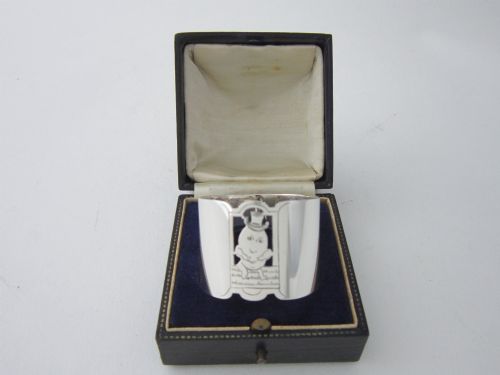
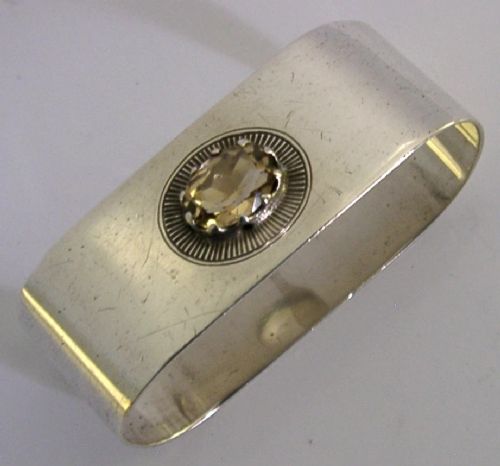
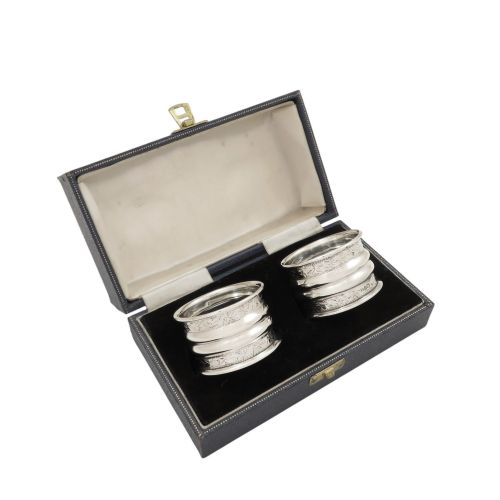
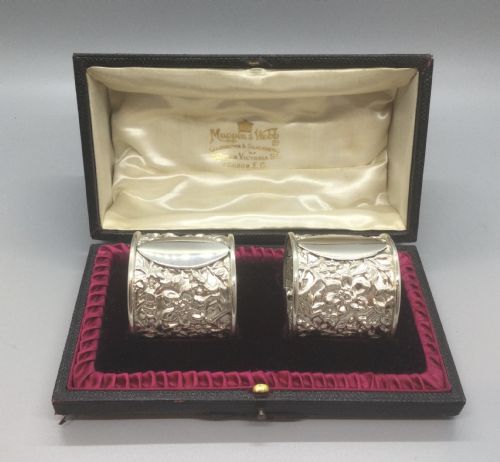
Makers produced these bands in solid silver, sometimes housing them in fitted cases lined with velvet, silk, or leatherette. Certain examples incorporate gemstones such as citrine alongside traditional metalwork.
Materials and construction methods
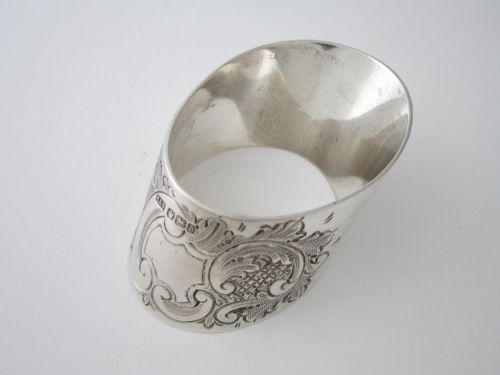
Silversmiths constructed these bands primarily using sterling silver, shaping sheet metal into solid cylindrical forms. They applied hand engraving techniques to decorate the exterior surfaces with floral, geometric, or monogrammed patterns.
Presentation sets often included fitted cases manufactured from leatherette and lined with soft fabrics like silk and velvet to protect the silver surfaces. Structural joins were soldered carefully to ensure durability during daily use at the dining table.
Some Victorian diners preferred buckling their napkins into tiny silver belts rather than rolling them into plain tubes.
Assessing quality in silver bands
Quality rests upon the crispness of the hand engraving and the gauge of the silver used in the band. Thicker silver sheets resist denting and maintain their circular geometry far better over generations of handling.
The presence of original fitted presentation cases and matched pairs elevates the desirability of certain pieces. Finer specimens display precise hallmarks and cleanly executed decorative motifs rather than mass-produced stamping.
The Engraved Sterling Napkin Bands Glossary
- Sterling silver
- A silver alloy containing 92.5 percent pure silver and 7.5 percent other metals, usually copper, chosen for strength. This standard alloy provides the durable foundation for nearly all pieces on this page.
- Hallmark
- An official stamp applied to precious metals indicating the standard of purity, the assay office, and the year of manufacture. These small marks allow collectors to date pieces accurately.
- Novelty napkin ring
- A napkin band shaped to represent an animal, figure, or object rather than a simple geometric cylinder. These imaginative forms often command greater attention from collectors.
- Fitted case
- A storage box custom-made with interior recesses to hold a specific napkin ring or pair securely. They are frequently lined with materials like velvet, silk, or leatherette.
- Belt ring
- A napkin band styled to resemble a buckled belt, a popular decorative motif during the Victorian period. This design symbolised fidelity and binding attachment.
Engraved Sterling Napkin Bands: Frequently Asked Questions
How were napkin bands used?
These bands held individual napkins between meals in family households, ensuring each person retained their own linen.
Servants or diners placed them on the dining table to keep the table organised and tidy.
How do I identify Victorian pieces?
Victorian bands often feature heavy ornamentation, floral engraving, or buckle motifs typical of the nineteenth century.
Checking the hallmarks inside the band confirms the exact year of assay during the Victorian era.
Are pairs common?
Many listings include pairs of matching napkin rings, often housed together in original presentation cases.
Single rings also appear frequently, reflecting how sets became separated over time.
What is the Arts and Crafts style?
Arts and Crafts pieces emphasise hand-craftsmanship and simpler, honest designs rather than mass-produced factory ornamentation.
Such items may incorporate stones like citrine alongside hammered or hand-engraved sterling surfaces.