


Cased Sterling Napkin Rings
Cased sterling napkin rings are fitted presentation sets pairing solid silver markers with bespoke velvet and silk interiors.
Cased Sterling Napkin Rings
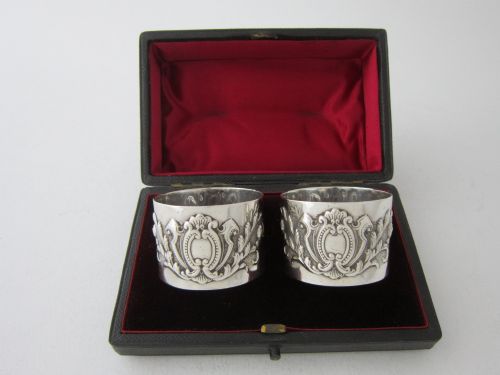
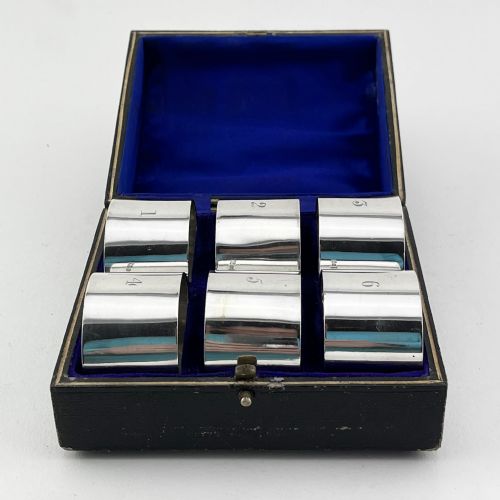
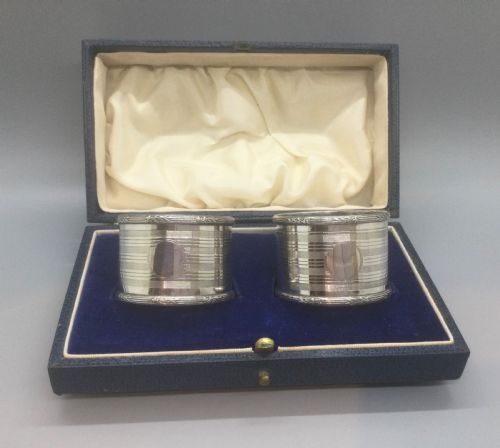
Cased sterling napkin rings are matching sets of solid silver table markers sold alongside their original fitted presentation boxes. When you search for cased sterling napkin rings, you encounter pairs and sets of six spanning the Victorian, Edwardian, George V and Art Deco periods. These items combine functional tableware with purpose-built receptacles lined in protective fabrics.
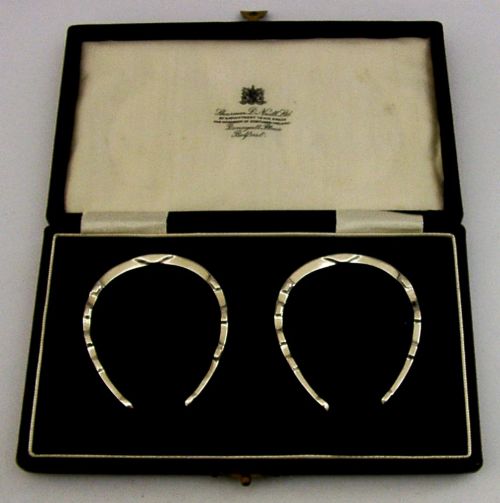
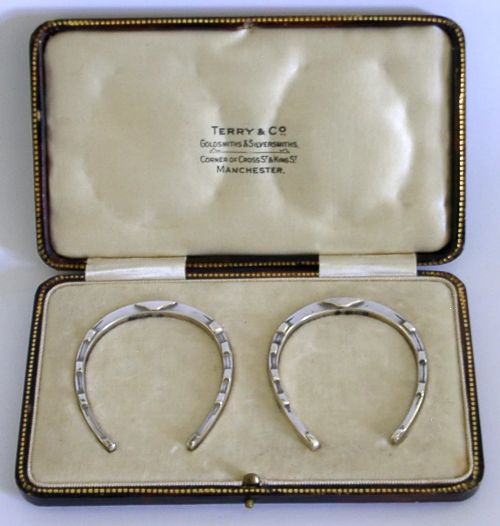
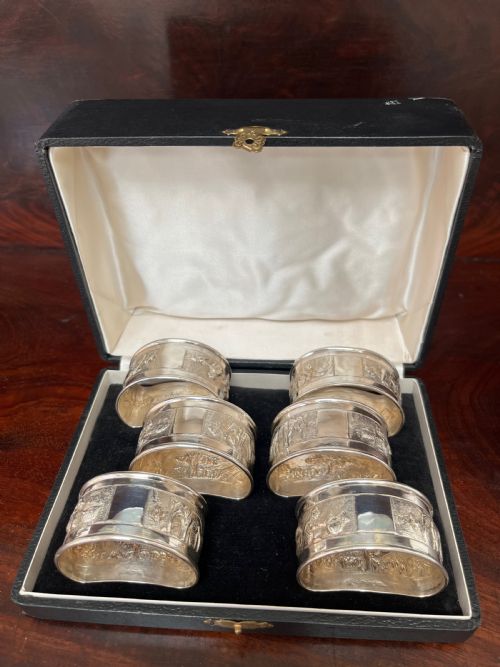
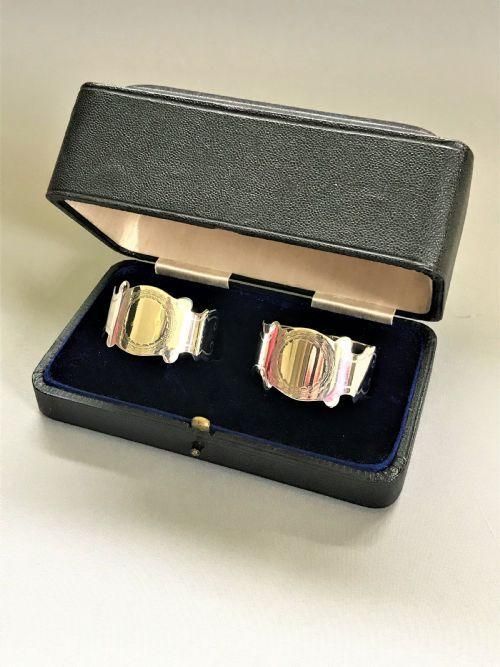
The form appears most frequently as sets of four or six pieces, or as pairs housed in compact velvet and silk fitted trays. Examples range from plain polished bands to chased naturalistic motifs such as horse shoes, pine cones and ferns. Alongside standard table sets, the selection includes matched three piece christening sets that incorporate a napkin ring.
How they were made
Makers shaped the napkin rings from solid sterling silver using sheet metal fabrication and casting techniques, applying decorative details through hand chasing or engraving. The silver surfaces received a polished finish to highlight the metallic lustre against contrasting interior linings.
Presentation boxes utilise wooden or card carcases covered in leatherette, leather or cloth. The interiors feature tailored recesses lined in silk, satin or velvet to secure each individual ring during storage and transit.
Lucky horse shoe motifs trot straight out of the 1920s and 1930s to hold your dinner table napkins firmly in place.
What varies in quality
Quality separates through the integrity of the silver work and the preservation of the original housing. Superior examples feature crisp, deep chasing on motifs like pine cones or horse shoes rather than shallow machine stamping.
The condition and completeness of the presentation case drive differentiation. Boxes that retain their original silk and velvet linings without tearing or staining complement the silver pieces inside.
C.T. Burrows & Sons·Mappin & Webb·Asprey & Co.
The Cased Sterling Napkin Rings Glossary
- Sterling silver
- A silver alloy containing ninety-two point five percent pure silver by mass, with the remainder consisting of other metals like copper. This standard composition provides durability for domestic tableware.
- Leatherette
- A form of imitation leather made from a cloth base covered with a plasticized PVC coating. It appears frequently as the protective outer covering on presentation boxes.
- Chasing
- A metalsmithing technique where the artisan pushes metal from the front using hammer and punches to create raised surface decoration. This method creates tactile designs on silver napkin rings.
- Christening set
- A matched group of items gifted to a child upon baptism, often comprising a fork, spoon and napkin ring. These sets are housed together in fitted velvet or silk lined boxes.
Cased Sterling Napkin Rings: Frequently Asked Questions
How were cased sterling napkin rings used?
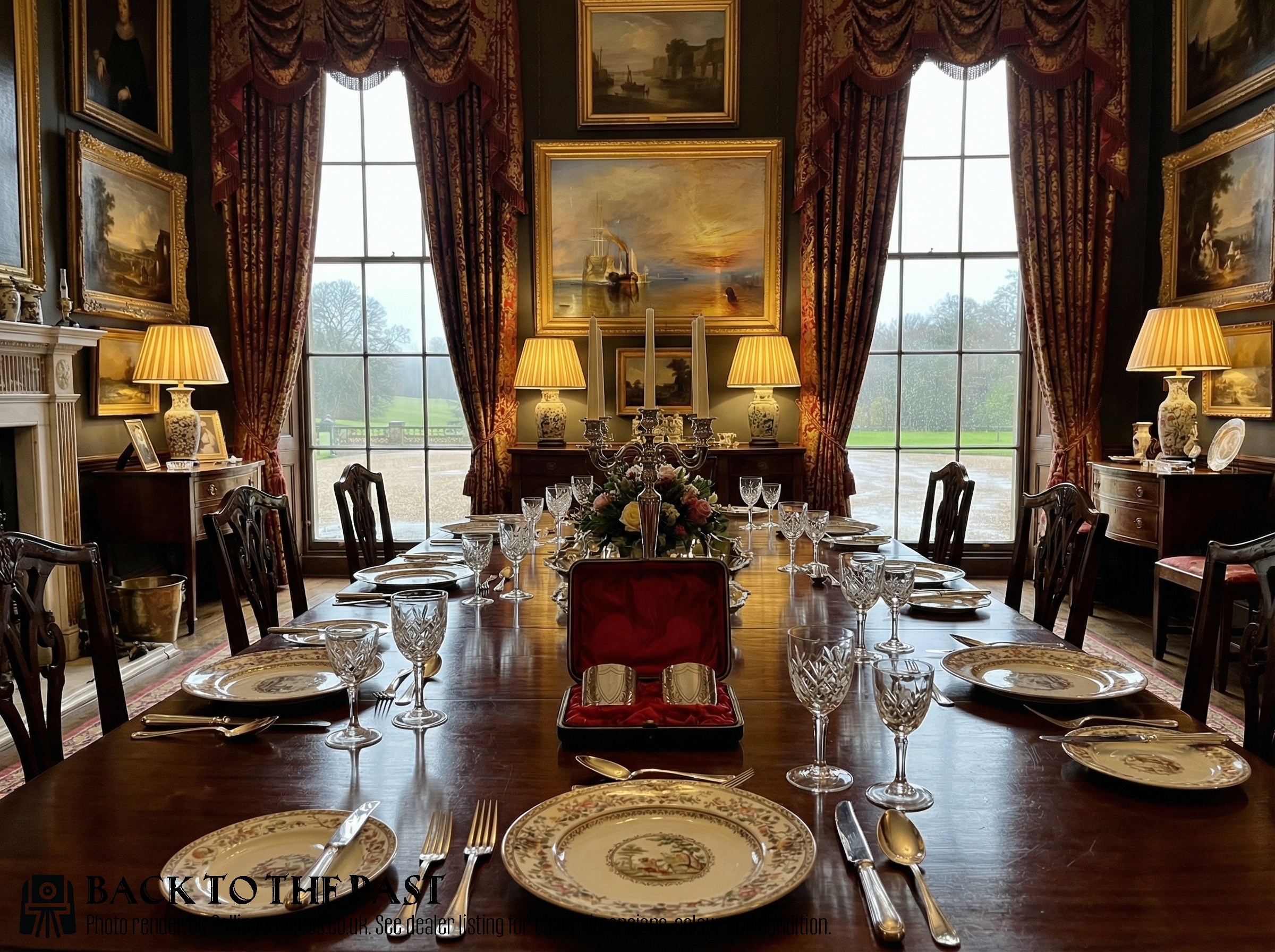
These items served a practical purpose at the dining table by identifying individual cloth napkins between meals. Families placed them at designated seats during formal lunches and dinners.
Beyond domestic utility, the fitted cases indicate these sets functioned as presentation gifts for weddings, anniversaries and christenings. The protective boxes kept the silver polished and organised when not in active use.
How do I date a set?
Dating relies on hallmarks stamped directly into the silver surface of each ring. These assay marks reveal the specific town office, purity standard and year letter.
Stylistic indicators such as Edwardian proportions, Victorian chasing or Art Deco geometric lines provide a secondary guide. The interior materials and typography on the box lid lining offer further chronological context.
How should I store them?
Keep the silver inside the original fitted box to prevent surface scratching and minimise exposure to atmospheric tarnish. Store the cases in a dry environment away from direct sunlight.
Avoid stacking unprotected items against the fabric linings to preserve the delicate silk and velvet interiors. Proper storage maintains both the silver and the housing in stable condition.
Are pairs or sets more common?
Pairs appear frequently alongside larger sets of four or six pieces. The survival rate depends on original manufacturing output and subsequent family use.
Smaller paired configurations typically originate from domestic dining settings, while larger sets of six often reflect more formal entertaining requirements. Complete sets in original boxes remain desirable finds.