

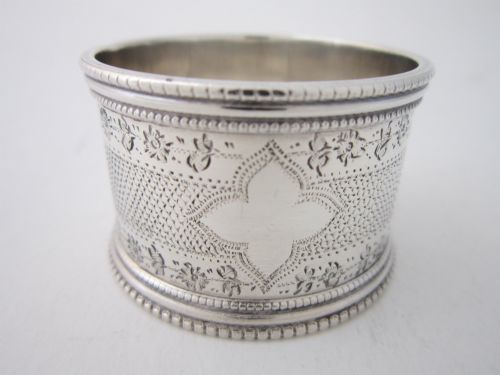
British Silver Napkin Holders
These British silver napkin holders bring centuries of dining tradition to the table, offering lasting metalwork and fitted presentation cases.
British Silver Napkin Holders
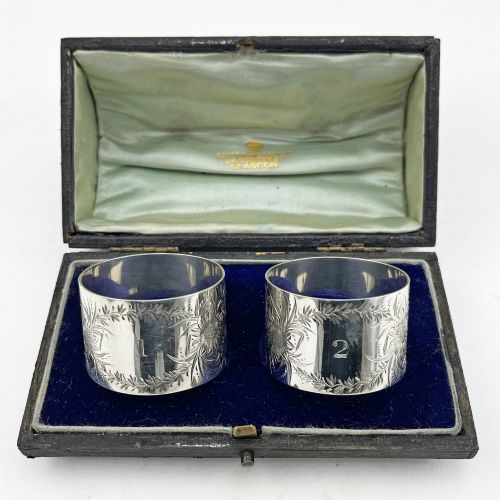
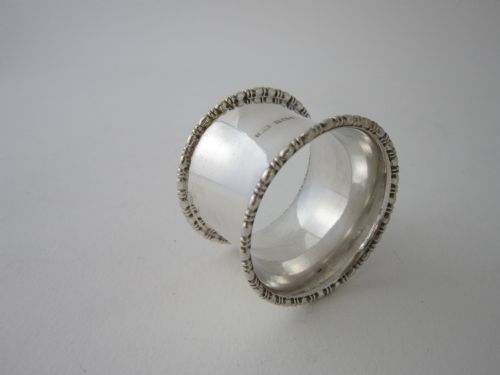
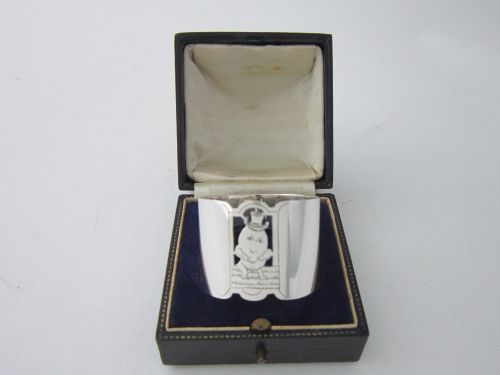
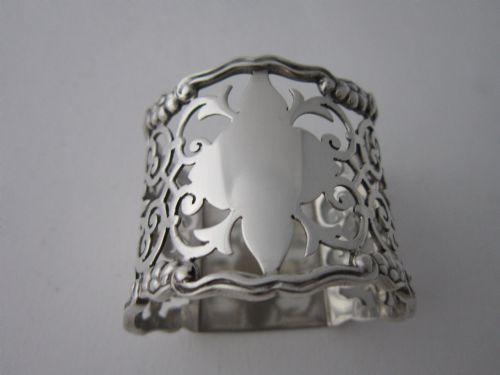
British silver napkin holders span several distinct reigns and eras, bringing functional table silver into domestic settings from the Victorian period onwards. These items typically take the form of individual rings or paired sets, often housed in original fitted presentation boxes lined with silk or velvet.
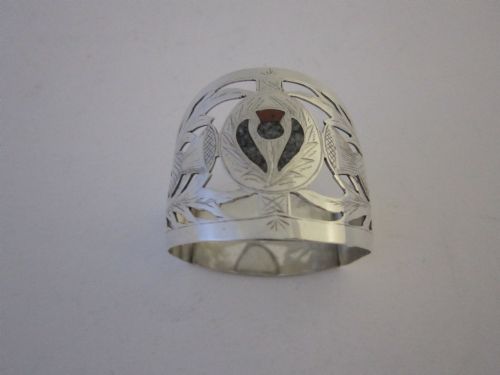
Buyers encountering this selection will frequently find examples dating from the Edwardian and George V periods, alongside Victorian pieces and later mid-century designs. Sterling silver serves as the primary medium, sometimes paired with decorative stones like agate.
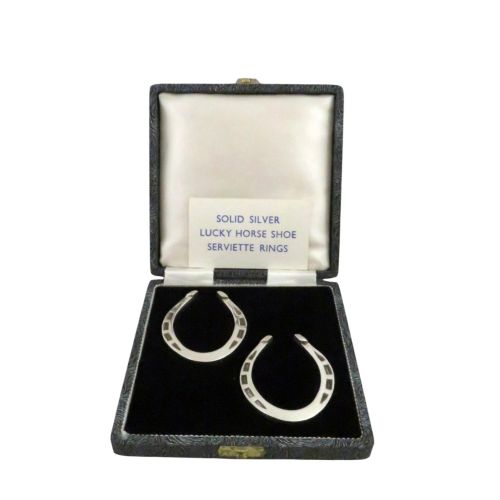
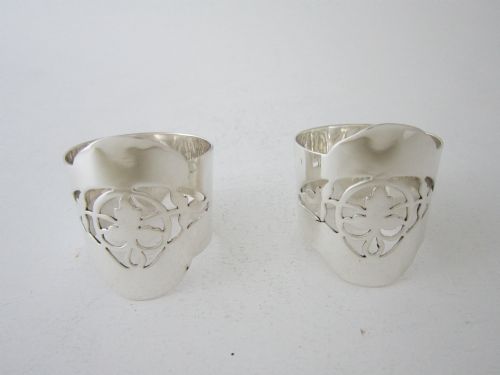
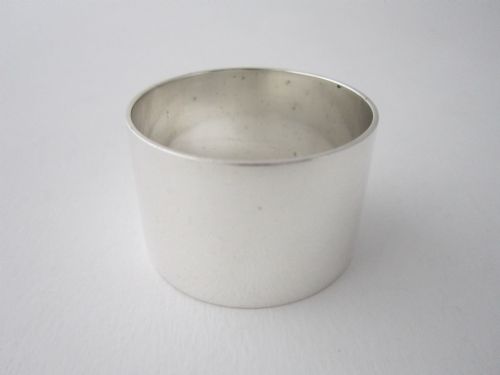
The objects vary from plain heavy bands to novelty shapes such as horseshoes, reflecting changing aesthetic preferences across the decades. Sets often include matching multiples, while single heavy rings showcase the substantial gauge of metal favoured in earlier workshops.
How they were made
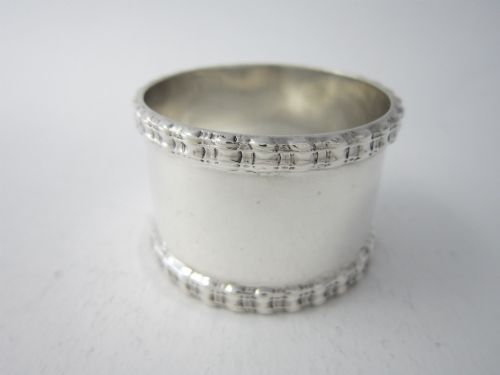
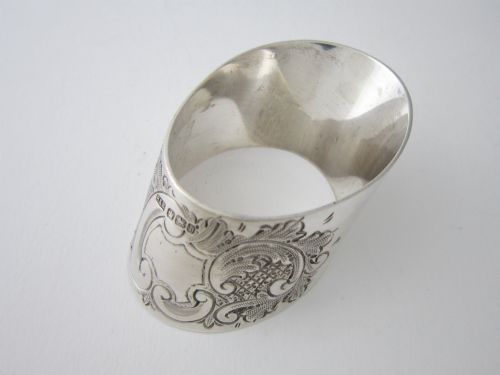
Makers utilised sterling silver as the foundational material, shaping the metal into sturdy cylindrical forms designed for daily dining use. Silversmiths employed techniques such as stamping, engraving, and applied border work to decorate the exterior surfaces.
Fitted cases accompanying these pieces were constructed from materials like leatherette, lined internally with soft velvet or silk to protect the silver finish. Individual components were hallmarked to denote the metal standard, manufacturing year, and origin office.
British Silver Napkin Holders Retail Price Guide 2026
Typical asking prices for british silver napkin holders among the pieces listed under this phrase on Sellingantiques today, from the lower quarter to the upper quarter. They describe what is for sale here now, not the wider market.
Some Edwardian diners clearly needed extra luck at the table, evidenced by horseshoe-shaped silver napkin rings tucked snugly inside velvet-lined leatherette boxes.
What varies in quality
Quality in these pieces is dictated by the weight and gauge of the sterling silver used in construction, with heavier examples offering a more substantial feel in the hand. The crispness of hand-engraving and the presence of complete, legible hallmarks further distinguish finer items.
The inclusion of a well-preserved original presentation case lined with silk or velvet adds to the integrity of a set. Novelty shapes and specialised material combinations, such as integrated agate, represent higher levels of design ambition.
R. E. Stone
The British Silver Napkin Holders Glossary
- Sterling silver
- A silver alloy containing 92.5 percent pure silver and 7.5 percent other metals, usually copper, ensuring durability for tableware.
- Hallmark
- An official stamp applied to precious metals indicating the standard of purity, the assay office, and the year of manufacture.
- Novelty ring
- A napkin ring fashioned into a distinct figurative or thematic shape, such as a horseshoe, rather than a standard circular band.
- Leatherette
- A simulated leather material commonly utilised for the exterior of protective presentation cases housing antique silver sets.
British Silver Napkin Holders: Frequently Asked Questions
How are these silver napkin rings dated?
Dating relies upon official hallmarks stamped directly onto the sterling silver body during manufacture. These marks reveal the specific year letter and assay office.
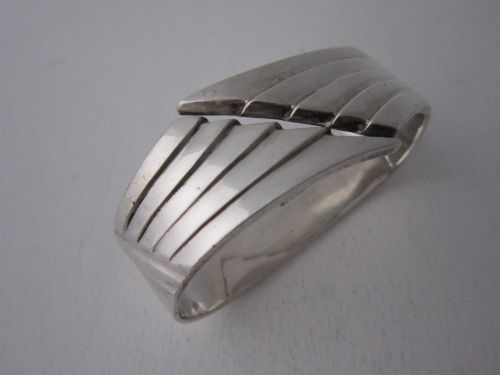
Additional dating clues come from the overall style, such as Victorian scrollwork or later Art Deco geometric forms.
Were these rings always sold in pairs?
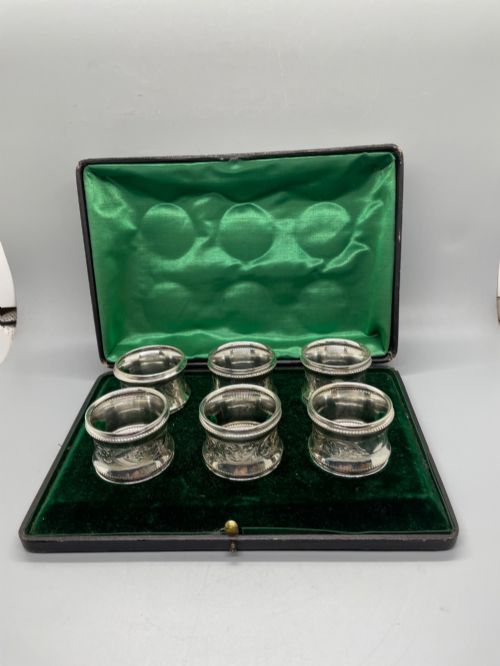
Napkin holders appeared both as individual pieces and in matched sets of various quantities. Complete boxed sets of six are frequently encountered from the Edwardian era.
Single heavy rings were also produced for individual household use throughout the Victorian and George V periods.
What is the purpose of the fitted box?
Fitted presentation boxes lined with silk or velvet protected the polished sterling silver from tarnish and scratching when not in use. These cases often feature leatherette exteriors and secure clasps.
Surviving boxes add context and preservation to paired or multi-piece sets.
How do I care for antique silver rings?
Gentle cleaning with a specialist silver cloth removes tarnish without damaging the underlying metal or rubbing away engraved details. Avoiding abrasive pastes preserves the original finish.
Storing pieces away from moisture helps maintain both the silver and any original presentation case linings.