


Boxed Silver Spoons
When you search for boxed silver spoons, you find fitted cases holding matched sets of flatware preserved against tarnish and wear.
Boxed Silver Spoons
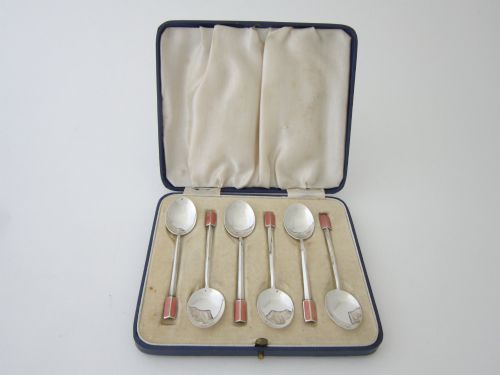
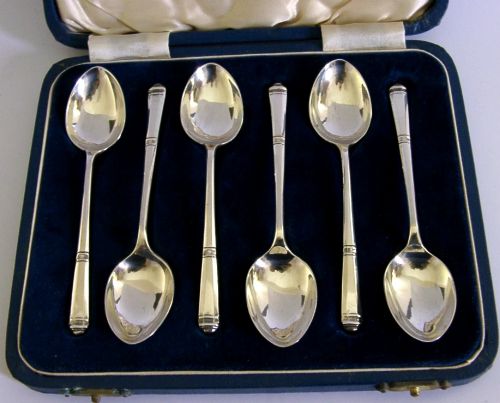
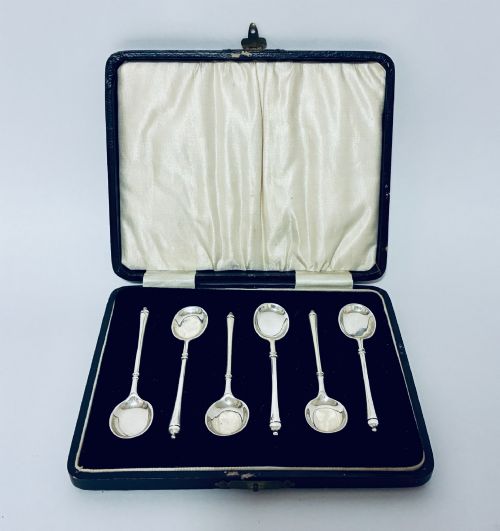
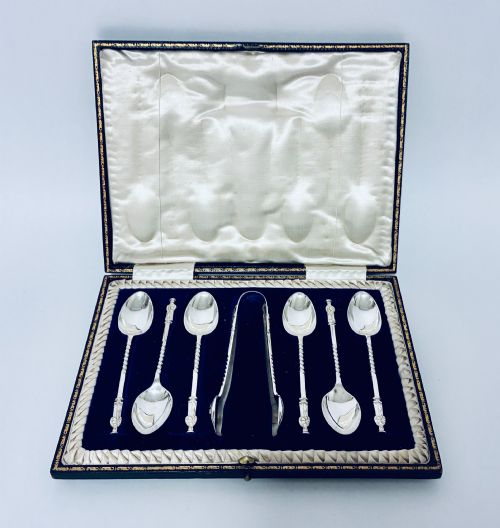
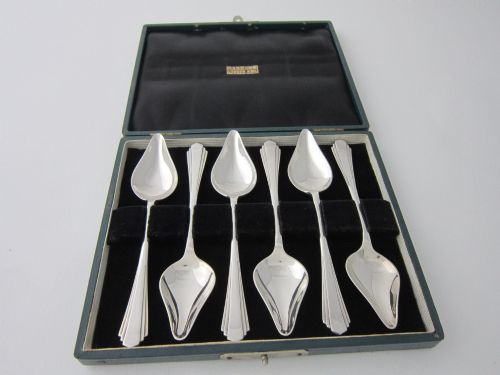
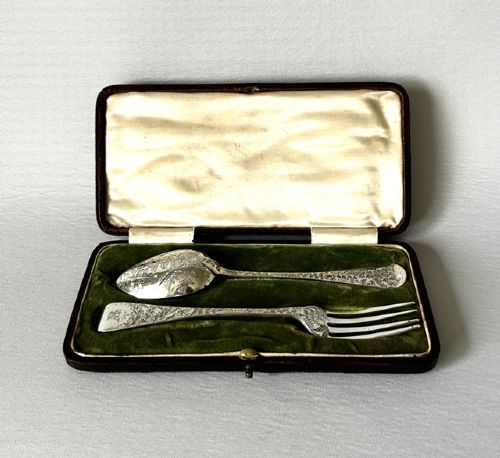
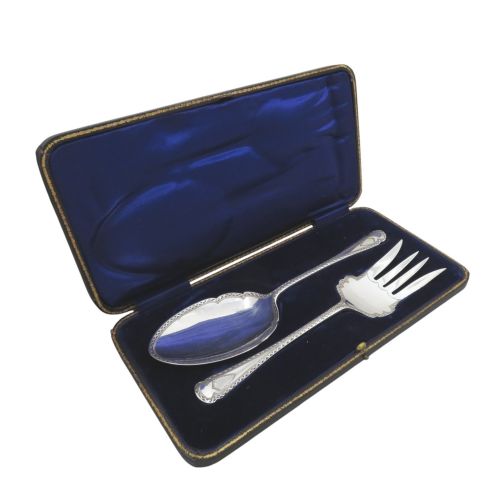
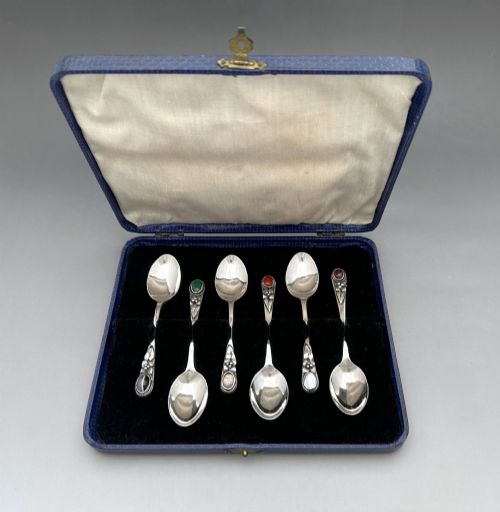
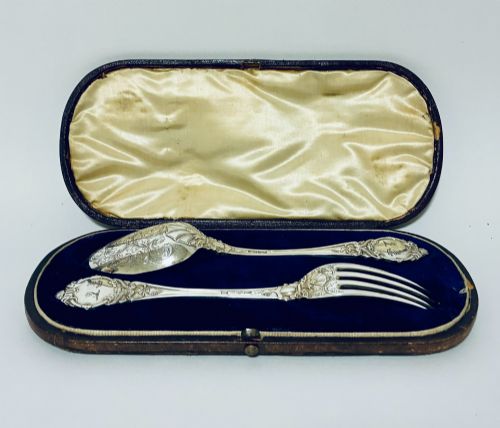
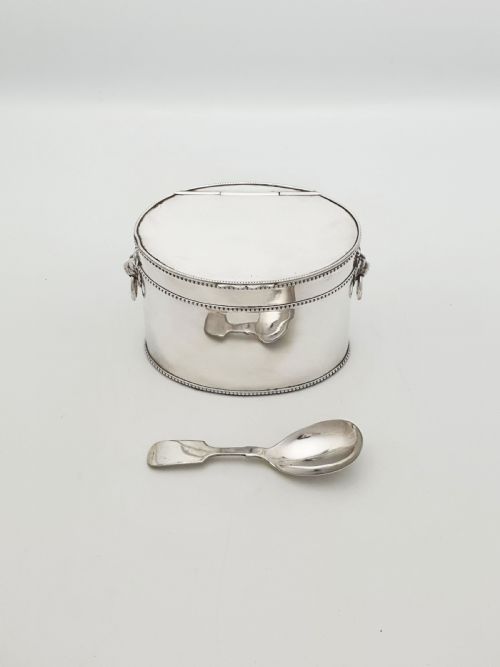
When searching for boxed silver spoons, collectors encounter fitted presentation cases holding sets created for tea, coffee, desserts, or christening gifts. These sets span periods from the Georgian era through Victorian, Edwardian, and Art Deco times, often containing tongs or forks alongside the spoons.
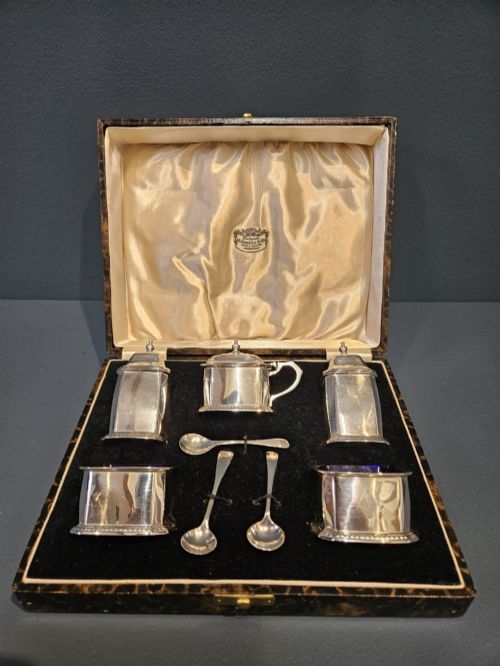
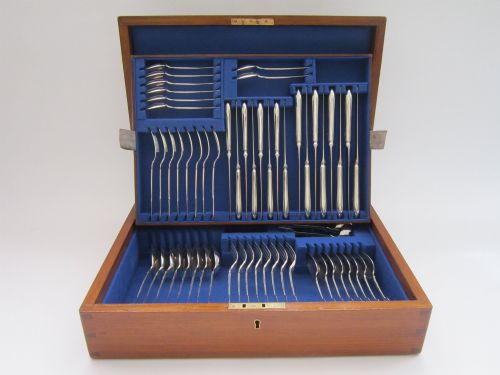
The most common formats on this page are sets of six teaspoons or coffee spoons, frequently accompanied by matching sugar tongs. Larger presentation boxes often hold fruit knives, berry spoons, or complete cruet and condiment sets fitted neatly into velvet or satin channels.
Originating largely from British workshops and retailers, these fitted boxes protect the softer metal of the spoons from surface scratches. The containers themselves range from simple leatherette covered wood to silk lined presentation boxes stamped by high end department stores.
How They Were Made
The spoons themselves are shaped from sterling silver or silver gilt, utilising casting, hammering, and piercing techniques to achieve detailed stems and bowls. Many Art Deco and Edwardian examples incorporate colourful enamel work fused directly to the metal surface, while Arts and Crafts pieces occasionally feature semi-precious stones set into the terminals.
Fitted presentation boxes are constructed from sturdy wood framing covered in materials such as textured leatherette, morocco leather, or smooth cloth. The interiors are moulded to the exact contours of the cutlery, lined with plush velvet, satin, or silk to cradle each piece securely.
Boxed Silver Spoons Retail Price Guide 2026
Typical asking prices for boxed silver spoons among the pieces listed under this phrase on Sellingantiques today, from the lower quarter to the upper quarter. They describe what is for sale here now, not the wider market.
Some sets even include dedicated spoons for grapefruit and coffee beans.
What Varies in Quality
Quality in these boxed sets depends heavily on the crispness of the hallmarks, the preservation of the original lining, and the integrity of the fitted case itself. Heavy gauge silver resists bending during use, whilst finer decorative techniques such as hand painting on enamel or intricate cast chasing display superior artisan skill.
The synergy between the cutlery and its container dictates the overall desirability of the set. Complete sets retaining their original silk lining, hinges, and working latches command greater appreciation than mismatched spoons gathered into a later replacement box.
Wilmot Manufacturing Co·Hukin & Heath·Elkington & Co·Walker and Hall·Mappin & Webb
The Boxed Silver Spoons Glossary
- Hallmark
- Official stamps struck into precious metals to indicate the maker, standard of purity, assay office, and year of production.
- Demi-tasse
- A small spoon designed specifically for drinking espresso or strong black coffee from a small cup.
- Silver gilt
- Sterling silver that has been coated with a thin layer of gold on its surface, sometimes referred to as vermeil.
- Fiddle pattern
- A nineteenth century flatware design characterised by a stem that widens towards the terminal in the shape of a violin.
- Apostle spoon
- A decorative spoon featuring the figure of an apostle cast or engraved on the handle terminal, popular in commemorative sets.
Boxed Silver Spoons: Frequently Asked Questions
What were boxed silver spoons used for?
These cased sets were primarily kept for formal dining, serving afternoon tea, or marking significant life milestones such as christenings and weddings. They provided households with a coordinated service ready for guests.
Because the utensils remained stored in their dedicated cases away from daily use, many surviving examples retain their original polish and sharp decorative details.
How do I clean tarnished silver spoons?
Cleaning requires a soft microfiber cloth and a mild silver polish formulated to lift tarnish without abrading the delicate metal surface. Harsh scrubbing should be avoided, particularly on gilded or enamelled portions.
Storing the spoons back inside their original lined boxes helps slow down future oxidation by limiting exposure to air and handling.
How do I identify the period of the spoons?
Dating relies heavily on the stamped hallmarks found on the reverse of the stems, which correspond to specific assay office date letters. Stylistic clues such as geometric enamel work or naturalistic floral motifs also point towards distinct eras like Art Deco or Art Nouveau.
The typography and construction style of the presentation box can offer supporting evidence for the manufacturing date.
Are original boxes important?
The presentation box protects the contents and adds historical context, often bearing the name of the original retailer on the satin interior lid. Sets that retain their fitted container are typically more collectible than loose flatware.
Even when boxes show external wear, their interior linings preserve the spoons from shifting and scratching during storage.