


Boxed Silver Cutlery Set
A boxed silver cutlery set delivers dining elegance directly to the table, combining polished metal with fitted presentation cases.
Boxed Silver Cutlery Set
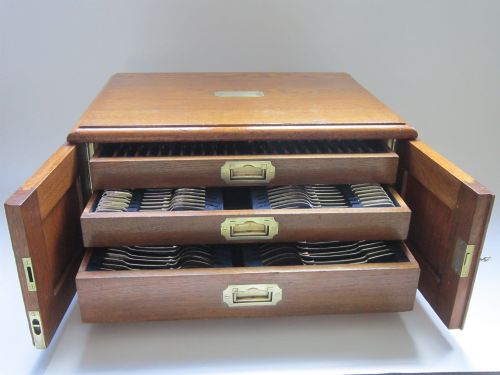
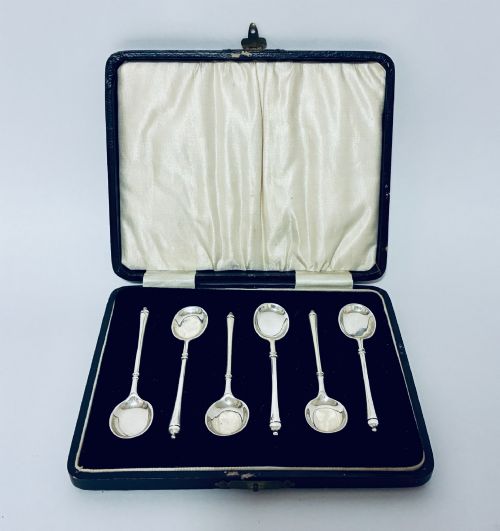
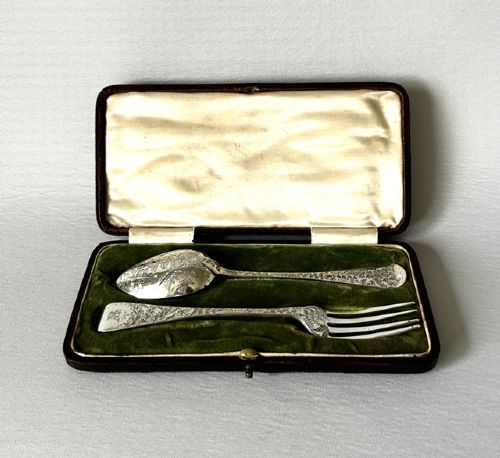
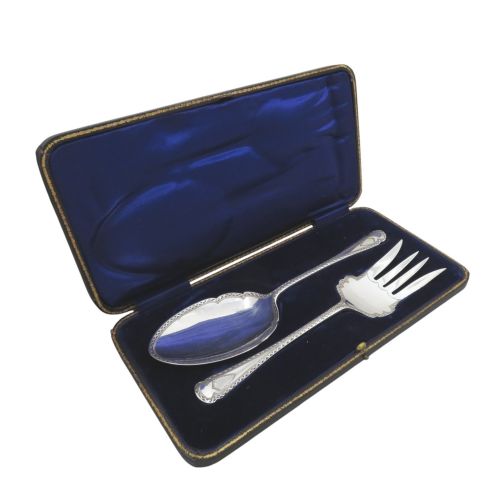
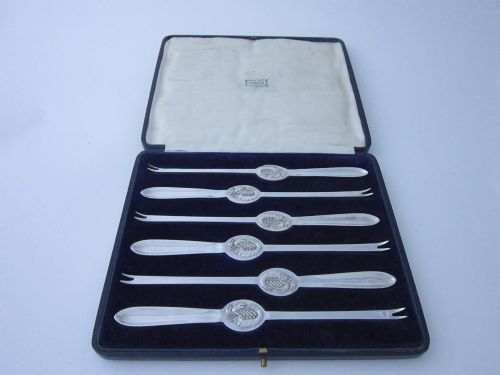
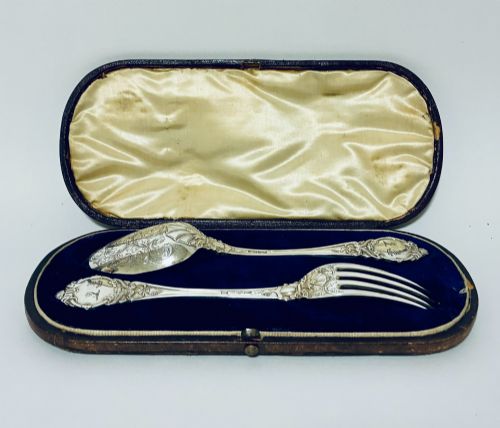
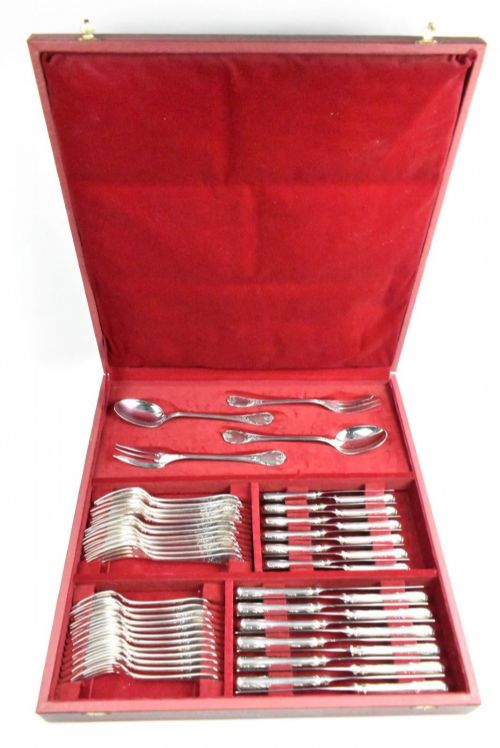
A boxed silver cutlery set comprises matched eating implements housed within a protective fitted case lined with materials such as velvet or silk. These collections range from individual christening pieces to extensive dining services.
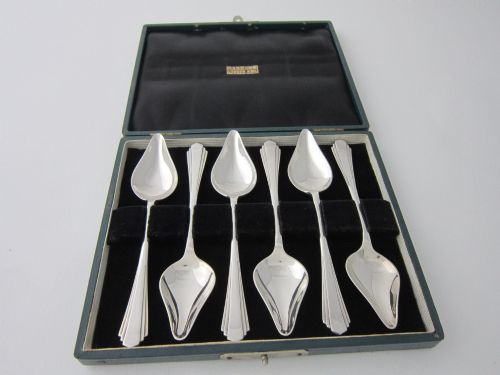
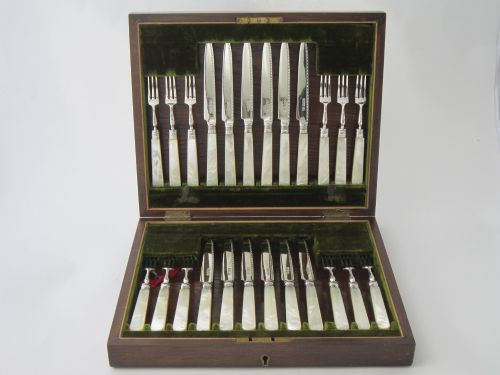
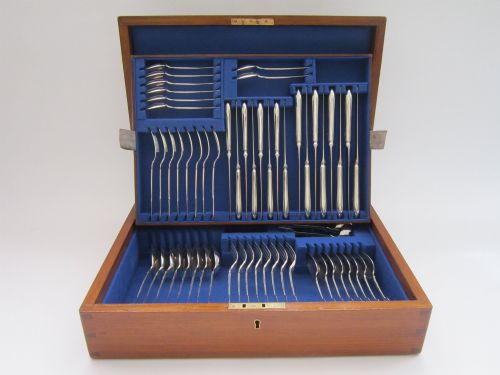
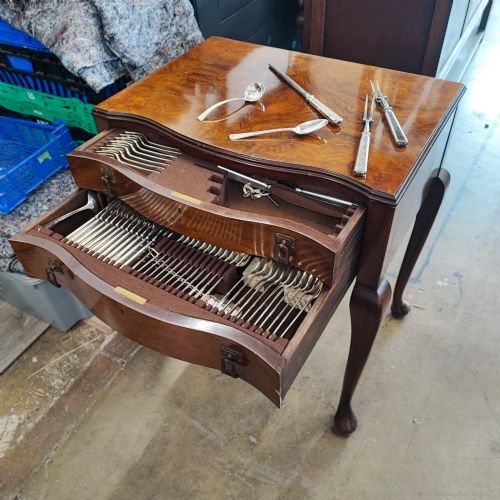
The selections encountered span several decades, featuring Victorian christening sets, French Rococo style services, and geometric Art Deco patterns. Formats accommodate varying dining requirements, from small coffee spoon collections to large twelve-place settings.
Origins vary across European traditions, including English sterling silver, continental silver gilt, and silver-plated manufactures. Cases utilise wood, leatherette, and fabric exteriors to safeguard the contents.
How they were made
Items are fashioned from sterling silver, silver plate, or lower-purity silver such as eight-hundred grade, paired occasionally with metal blades or pistol grips. Metals undergo shaping and hammering to create specific utensil forms.
Presentation boxes utilise robust wooden or fabric foundations covered in leatherette, then lined internally with plush fabrics like silk and velvet to cradle each individual implement securely.
Listings feature periods from 1890 to 1930, utilising materials like sterling silver, silver plate, velvet, and leatherette.
What varies in quality
The distinction between ordinary and exceptional sets rests on the weight of the silver, the integrity of the fitted case, and the completeness of the service. Superior examples retain every original utensil within an undamaged, bespoke housing.
Artistry in the handles and decorative motifs defines the upper tier, where intricate patterns like French Rococo or Cactus designs exhibit crisp detailing. Lesser examples display worn plating or generic stamped decoration lacking depth.
Christofle Marly·Georg Jensen·Jules Albrecht Geneve
The Boxed Silver Cutlery Set Glossary
- Sterling silver
- A silver alloy containing 92.5 percent pure silver by mass, valued for durability in tableware. It forms the primary metal for high-grade British cutlery.
- Silver plate
- A base metal coated with a thin layer of pure silver through electroplating or older techniques. This method provides the appearance of solid silver at a lower production cost.
- Silver gilt
- Silver objects coated with a thin layer of gold on the surface, creating a two-tone golden sheen. Fruit cutlery sets frequently employ this finish to resist fruit acid corrosion.
- Pistol grip
- A handle shape resembling the butt of a flintlock pistol, popular on antique knives. It offers an ergonomic grip and distinctive silhouette.
Boxed Silver Cutlery Set: Frequently Asked Questions
What is a boxed silver cutlery set?
A boxed silver cutlery set is a matched collection of eating implements stored inside a dedicated, lined presentation case.
These sets protect delicate pieces from tarnish and damage while keeping complete place settings organised together.
How do I clean tarnished cutlery?
Cleaning requires specialist silver polish and a soft cloth to remove oxidation without scratching the metal surface.
Harsh abrasives and dipping solutions should be avoided, particularly on plated items or pieces with delicate gilding.
How do I identify the period?
Period identification relies on assay marks, maker stamps, and stylistic details such as Victorian engraving or Art Deco geometry.
Case materials and interior lining styles also offer strong clues to the decade of manufacture.