



Vintage Silver Dessert Spoons
These vintage silver dessert spoons span Georgian origins to Art Deco lines, offering the refined weight of sterling silver and silver plate for the modern table.
Vintage Silver Dessert Spoons
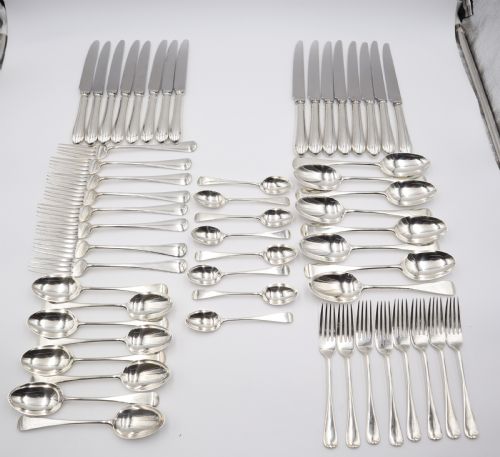
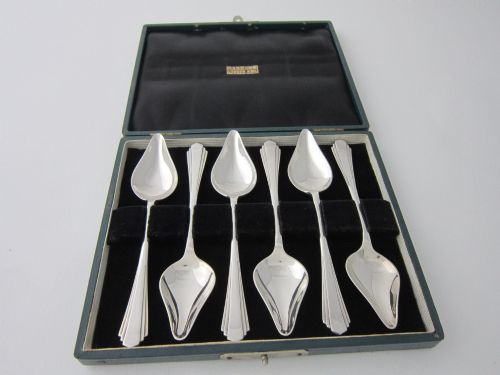
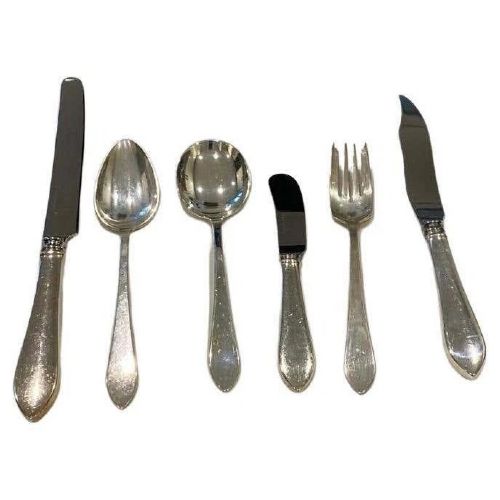
When searching for vintage silver dessert spoons, you encounter table implements originating across the Georgian, Victorian, and Art Deco periods. These pieces range from individual serving spoons and boxed fruit sets to extensive cutlery canteens intended for twelve persons.
How they were made
Makers shaped these spoons from solid sterling silver or applied silver plating over base metals, often employing steel for functional cutting edges in fitted fruit sets. Techniques such as ornate engraving, piercing, and enamel work decorate the handles and bowls.
Production methods span traditional hand-forged Georgian techniques to industrial Art Deco stamping and silversmithing. Fitted presentation boxes utilise wood covered in leatherette, housing silk and velvet interiors tailored to each utensil.
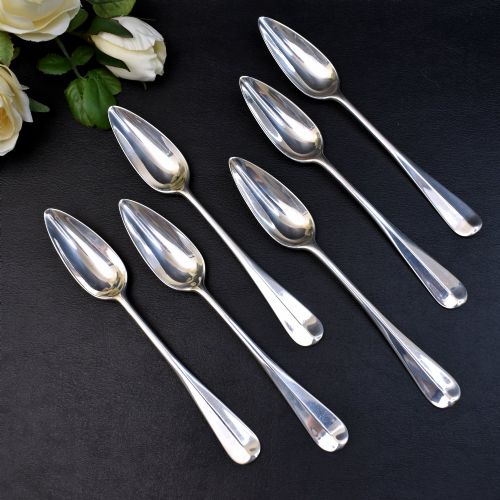
Victorian dining culture demanded dedicated cutlery for every conceivable foodstuff, producing pierced spoons specifically for preserved berries.
What varies in quality
Quality rests upon the purity of the metal, distinguishing solid sterling silver from silver-plated items, alongside the crispness of hand-engraved or pierced details. Maker attribution significantly elevates a piece, particularly when bearing marks from established workshops or renowned silversmiths.
The integrity of supplementary materials, such as undamaged enamel work or original fitted presentation boxes lined with intact silk and velvet, separates standard service spoons from collector pieces.
Hamilton & Inches·Tiffany·Georg Jensen·Christofle·Hukin & Heath
The Vintage Silver Dessert Spoons Glossary
- Sterling silver
- A silver alloy containing 92.5 percent pure silver and 7.5 percent other metals, usually copper, ensuring durability for cutlery. This standard is frequently verified by official hallmarks.
- Silver plate
- A base metal coated with a thin layer of silver through electroplating or older manufacturing methods. It offers the appearance of solid silver at a different tier of production.
- Hallmark
- An official stamp or series of marks applied to precious metals in Britain and other countries, indicating the maker, assay office, and year of testing. These marks provide historical dating for antique cutlery.
- Canteen
- A fitted box, chest, or cabinet designed to store a complete set of cutlery securely. These often feature fitted slots lined with velvet or cloth to protect the silver pieces.
- Sifter spoon
- A specialised spoon featuring a bowl pierced with holes, traditionally used for dusting sugar over fruit or desserts. These appear in various historical periods with decorative engraving.
Vintage Silver Dessert Spoons: Frequently Asked Questions
How do I clean vintage silver dessert spoons?
Wash the spoons gently in warm soapy water using a soft cloth, avoiding harsh abrasive dips that strip the natural patina. Dry them thoroughly with a lint-free cloth to prevent water spots.
Store sterling silver in anti-tarnish rolls or lined boxes when not in use. Regular, gentle use often maintains a better finish than aggressive polishing.
Are silver-plated spoons durable for daily use?
Silver plate withstands regular dining use provided the base metal remains fully covered by the plating layer. Hand washing preserves the plating far longer than mechanical dishwashers.
Over decades, heavy friction can wear through the silver layer on high-contact areas, revealing the base metal underneath. Inspecting the bowls and edges helps determine the remaining plate thickness.
How can I date my silver spoons?
Examine the handle style, decorative motifs, and any stamped hallmarks found on the reverse of the stem. Georgian pieces often display different maker and date ciphers compared to Victorian or Art Deco items.
Boxed sets sometimes retain original retailer labels or documentation inside the lid. Comparing stylistic elements like Faneuil patterns or enamel inlay aids in narrowing down the decade.
What is the difference between dessert and teaspoons?
Dessert spoons are traditionally sized between a tablespoon and a teaspoon, specifically proportioned for eating puddings and sweet courses. They offer a larger bowl capacity suited to crumbles and fruit.
Teaspoons measure shorter in length and feature smaller bowls intended for stirring hot beverages. Both forms appear frequently in historical cutlery canteens and matched dining sets.