





Silver Presentation Case Spoons
Silver presentation case spoons unite fine silversmithing with fitted boxes lined in silk, velvet or satin.
Silver Presentation Case Spoons
Silver presentation case spoons comprise matched sets and single pieces housed in fitted boxes lined with velvet, silk, satin, leather or leatherette. When you search for silver presentation case spoons, you are looking at items designed for gifting, special occasions or formal dining.
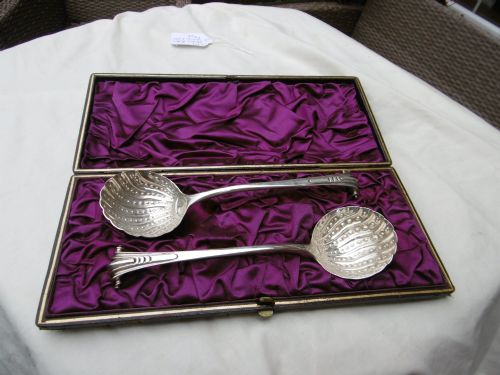
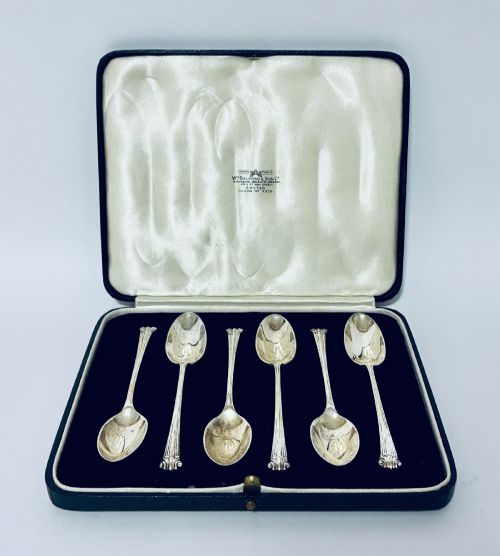
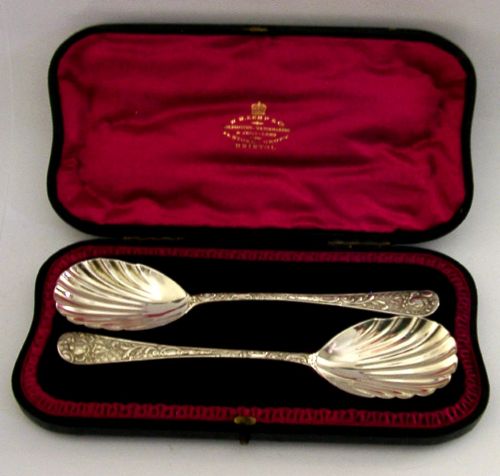
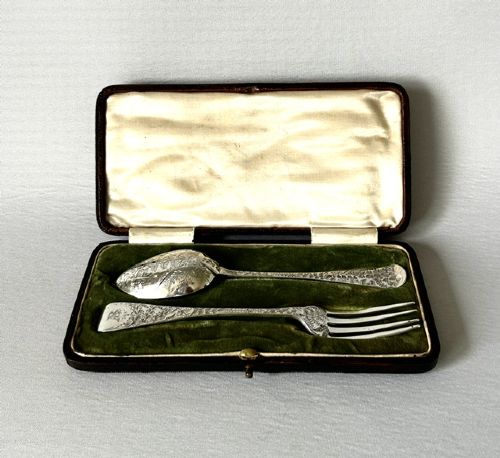
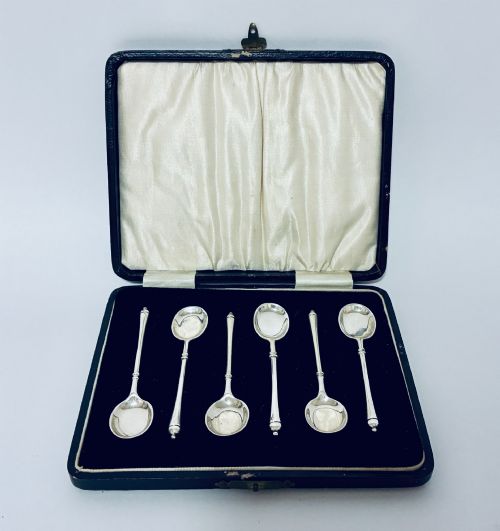
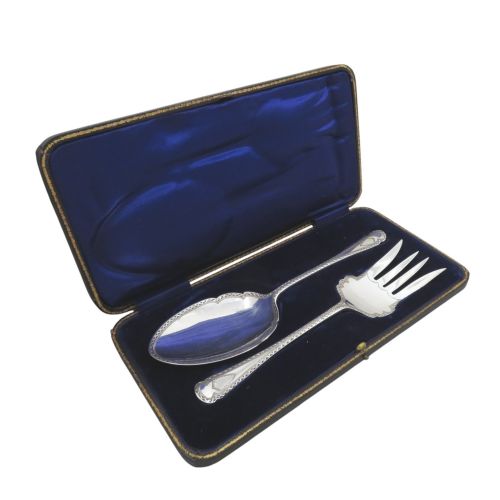
The pieces on this page span Victorian, Edwardian, Georgian, Art Deco and 1920 to 1930 periods. You will encounter pairs of serving spoons, coffee spoons, Christening sets, sugar bowls with sifter spoons, and butter knives.
Origin points include London, Exeter and Sheffield. The most common forms on this page are Victorian pairs and sets of serving spoons or coffee spoons nestled in their original cases.
Materials and construction
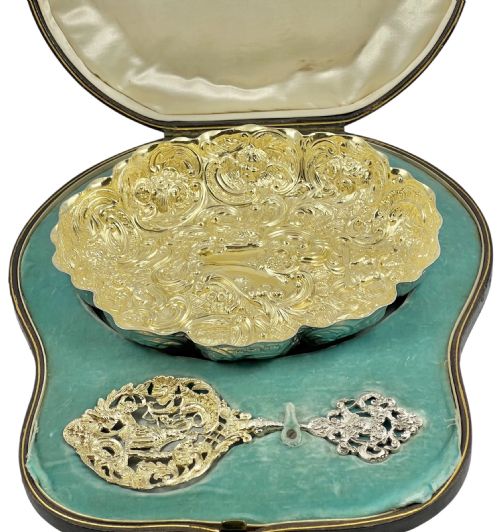
The silverware is fashioned from sterling silver or silver gilt, employing traditional smithing techniques. Makers shaped the metal into serving spoons, flatware and cutlery sets with detailed handles.
Presentation containers combine leather, leatherette or wood frames with interiors of velvet, satin or silk. These fitted cases protected the silver and displayed the contents for formal presentation.
Silver Presentation Case Spoons Retail Price Guide 2026
Typical asking prices for silver presentation case spoons among the pieces listed under this phrase on Sellingantiques today, from the lower quarter to the upper quarter. They describe what is for sale here now, not the wider market.
A solitary silver stag watches over tea tables from an 1877 presentation spoon.
Distinctions in quality
Quality rests in the weight of the silver and the crispness of the handle decoration, alongside the survival of the original case. Sturdier gauge metal and well-defined hallmarks indicate superior manufacture.
The integrity of the interior lining and the exterior leather or leatherette casing distinguishes better examples. Complete sets with undamaged fitted compartments hold greater interest than mismatched contents.
Robert Stebbings·John Round
The Silver Presentation Case Spoons Glossary
- Sterling silver
- An alloy of silver containing 92.5 percent pure silver and 7.5 percent other metals, usually copper. This standard is marked by traditional hallmarks.
- Silver gilt
- Sterling silver that has been coated with a thin layer of gold on the surface. This technique produces a rich golden finish.
- Presentation case
- A fitted box lined with silk, velvet, satin or leather designed to hold and display silverware. These cases often bear retailer details on the interior lid.
- Hallmark
- A official stamp applied to silver articles indicating the standard of purity, the assay office, and the date letter. British silver bears these marks for identification.
- Sifter spoon
- A spoon with a bowl pierced with holes, used for sprinkling sugar onto fruit or desserts. These frequently appear in cased sets alongside sugar bowls.
Silver Presentation Case Spoons: Frequently Asked Questions
What are silver presentation case spoons used for?
These pieces were created for formal dining, serving meals, or marking significant life events such as Christenings and weddings. They functioned as both practical tableware and ceremonial gifts.
The fitted cases allowed the silver to be stored safely between uses or displayed on special occasions. Many sets remained unused in their boxes, preserving their condition over generations.
How do I know the age of the silver?
Age is determined by reading the hallmarks stamped onto the metal, which include date letters and assay office marks. London, Sheffield and Exeter marks help pinpoint the origin.
Staging styles and case construction also offer clues to the period. Victorian and Edwardian boxes often feature distinct exterior textures and interior fabrics.
Are the cases original to the spoons?
Most cases are original to their contents, fitted precisely to the shape of the spoons, bowls or forks. Retailers sold them as complete presentation units.
Signs of original pairing include exact impressions in the velvet or satin lining that match the contours of the silverware. Linings should fit the pieces without crowding.
How should I store cased silver?
Keep the presentation cases in a dry, temperature-controlled environment away from direct sunlight to protect the exterior leather and interior silk or velvet. Stable conditions prevent the wood and glue in the boxes from warping.
Avoid storing silver in damp areas which can tarnish the metal and degrade the fabric linings. Minimal handling preserves the finish of both the case and the spoons.