





Bowfront Writing Table
A bowfront writing table offers curved elegance and practical surface space, making it a sophisticated addition to any study or bedroom.
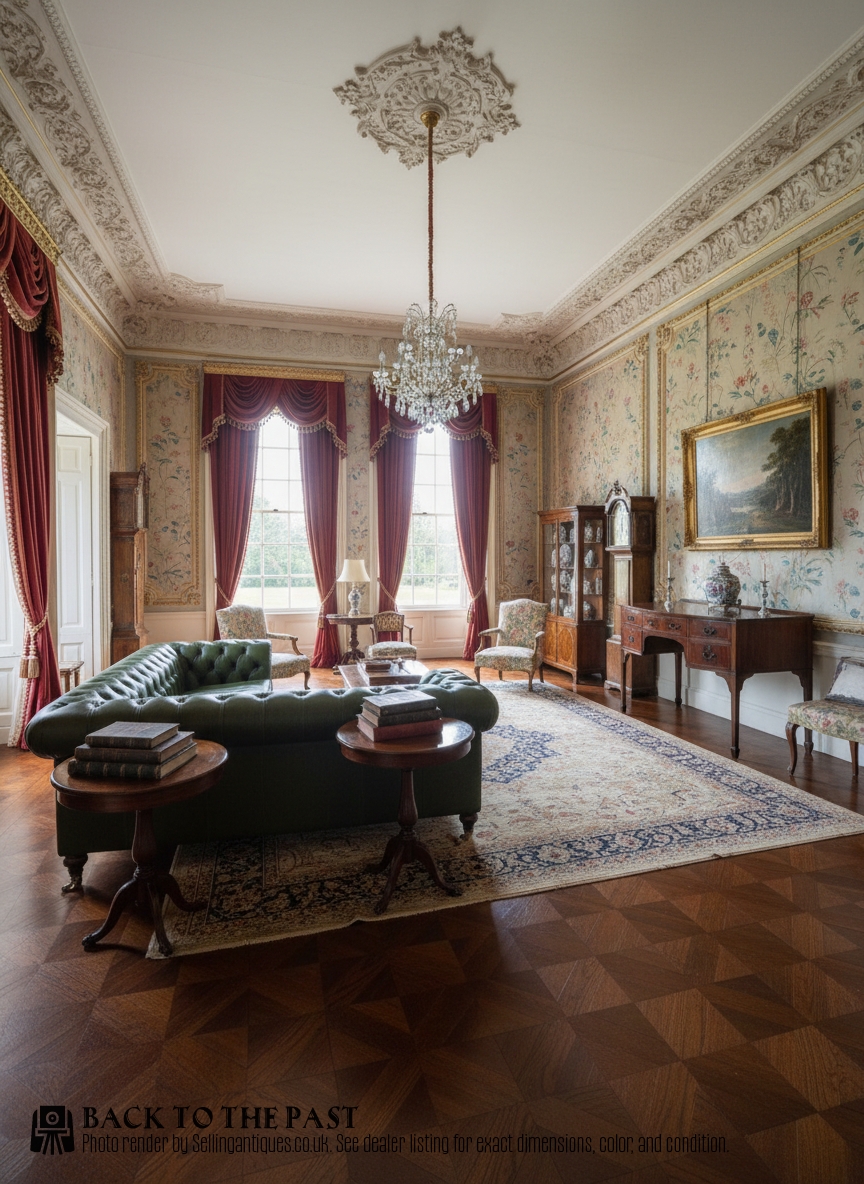
Bowfront Writing Table
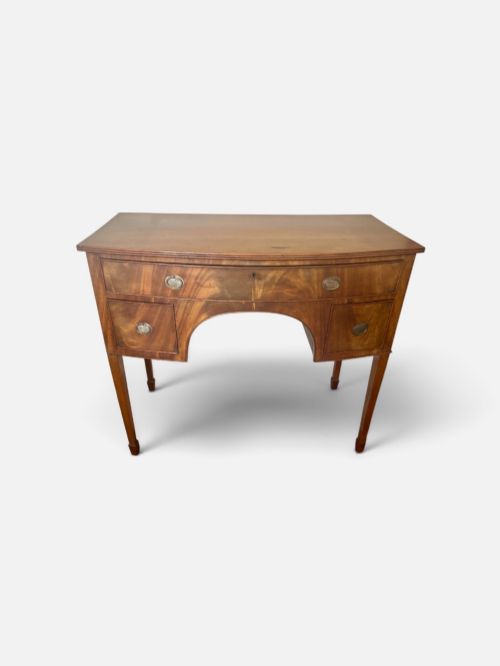
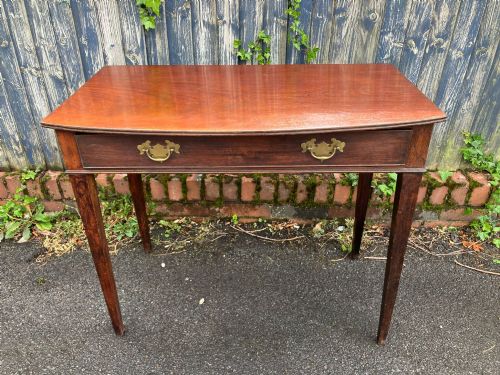
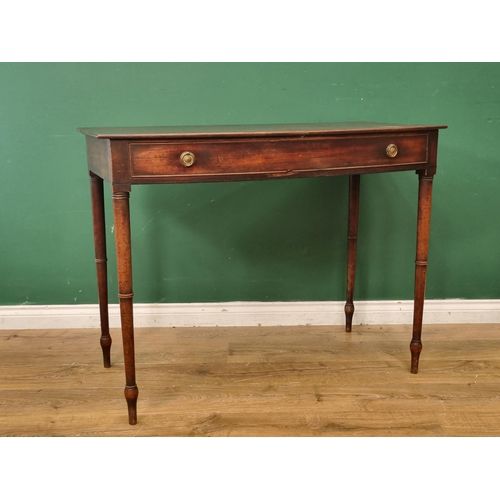
A bowfront writing table combines a graceful curved front with the functional surface required for correspondence and daily study. When you search for a bowfront writing table, you encounter forms that span several historic eras, predominantly originating from the Georgian, Regency, and Victorian periods.
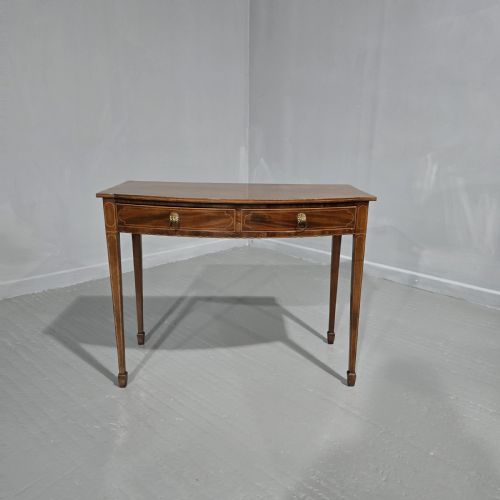
The pieces available on this page typically manifest as side tables, desks, dressing tables, and occasionally sideboards adapted for writing. Mahogany forms the backbone of these selections, frequently enriched with details such as satinwood, ebony, and line inlay.
Most examples date from the Georgian and Regency periods, alongside later 19th-century interpretations and early 20th-century revivals. The curved facade softens the room while providing practical kneehole spaces and multiple drawers for storage.
Materials and construction
Makers relied heavily on solid mahogany and flame mahogany veneer to achieve rich grain patterns across the curved drawer fronts. Brass hardware, such as handles and escutcheons, provides structural contrast and functional detail.
Inlaid stringing using satinwood and ebony defines the Regency and Sheraton styles, requiring precise woodworking techniques to bend and fit veneers to the convex shape. Leather inserts frequently top the writing surfaces of desks, offering a durable and traditional working area.
One unexpected Victorian pedestal desk arrived with enough drawers to misplace your keys in five different places simultaneously.
Assessing quality
The caliber of a piece rests upon the crispness of its wood inlay and the selection of timber veneers on the curved drawer fronts. Flame mahogany with deep, matched figuring elevates an example above plain timber surfaces.
Construction integrity shows in the dovetailing of drawers and the smooth operation of the curved facade. Original brass handles and well-preserved leather inserts further distinguish the finer pieces from simpler workshop productions.
Maples
The Bowfront Writing Table Glossary
- Bowfront
- A curved convex front facade that projects outward in a smooth arc. This shape was particularly favoured by cabinetmakers during the Georgian and Regency eras to soften rectangular furniture silhouettes.
- Flame mahogany
- A highly figured wood veneer displaying undulating, flame-like patterns. Cabinetmakers utilised this timber on prominent surfaces like drawer fronts to create dramatic visual movement.
- Stringing
- Narrow inlay lines of contrasting wood, such as satinwood or ebony, embedded into the primary timber. This technique outlines drawers and table edges to accentuate the geometric form.
- Kneehole
- A recessed central space beneath a desk or table designed to accommodate the user's legs while seated. It is often flanked by stacks of smaller storage drawers.
Bowfront Writing Table: Frequently Asked Questions
What is a bowfront writing table?
A bowfront writing table is a desk or table featuring a convex curved front and a surface designed for writing or correspondence. These pieces combine decorative elegance with practical storage through integrated drawers.
They appear across various periods including Georgian, Regency, and Victorian eras. The curved design helps soften the geometry of a room while offering a functional workspace.
How do I identify a Georgian piece?
Georgian pieces typically display solid mahogany construction, precise dovetail joinery, and restrained classical proportions. Cabinetmakers during this era focused on timber quality and subtle aesthetic details rather than heavy ornamentation.
Look for hand-cut joints in the drawers and traditional hardware styles. The presence of fine line inlay often points toward Sheraton influence within the Georgian period.
Where should I place this table?
These tables suit studies, living rooms, and bedrooms due to their compact footprints and finished backs. They function effectively as writing desks, dressing tables, or console surfaces against a wall.
The curved front allows the piece to sit comfortably in spaces where sharp rectangular corners might disrupt the flow of movement.
What maintenance do leather tops need?
Leather writing surfaces benefit from occasional conditioning with specialist leather balm to prevent drying and cracking. Keep them away from direct sunlight and excessive moisture to preserve the material.
Using blotters and coasters protects the surface from ink stains and liquid rings during daily use.