
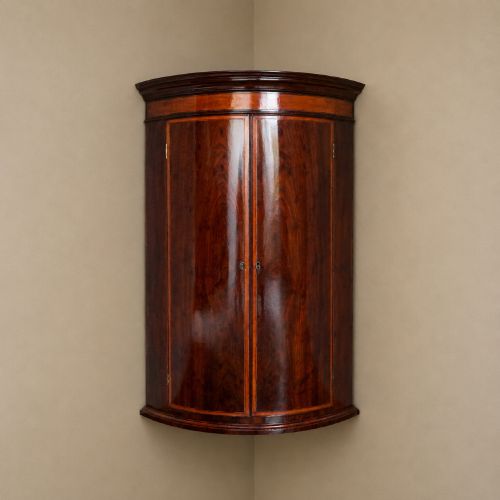
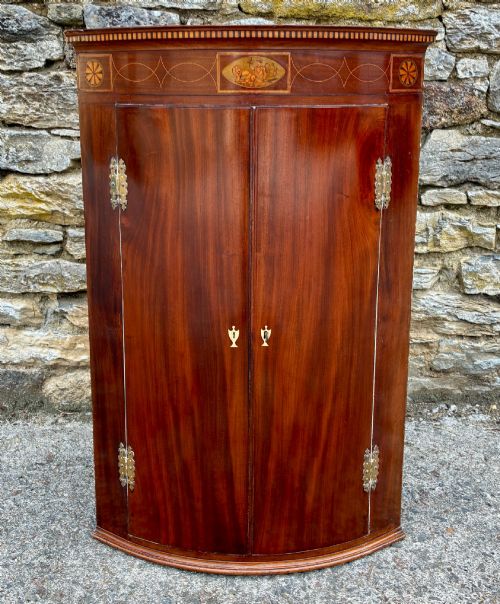
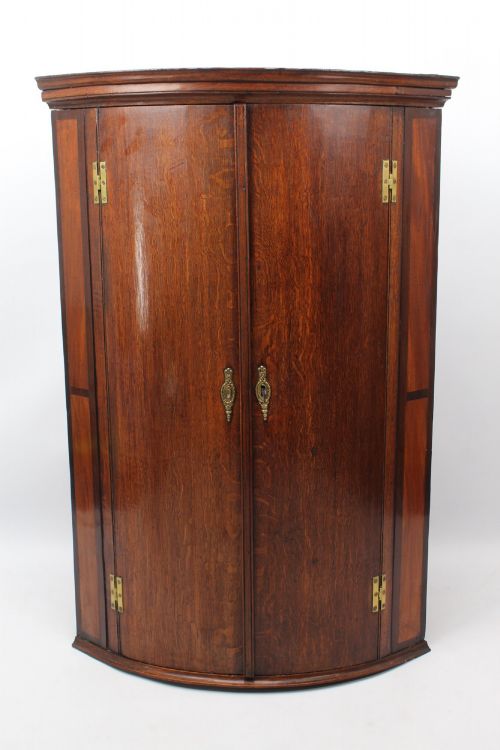
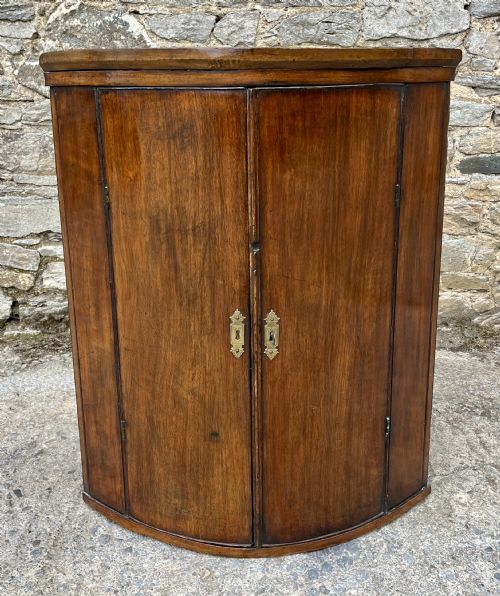
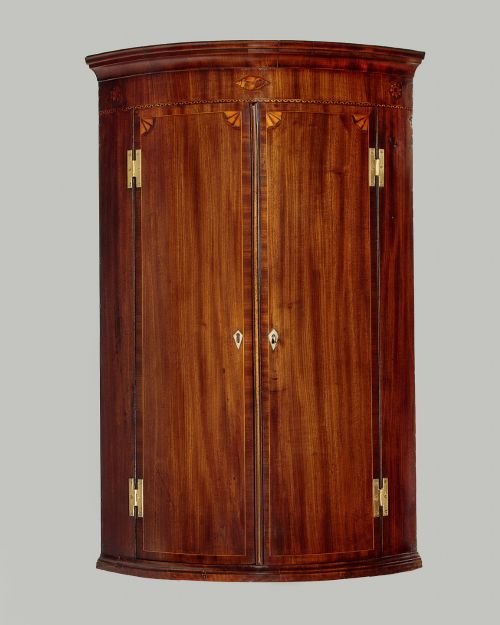
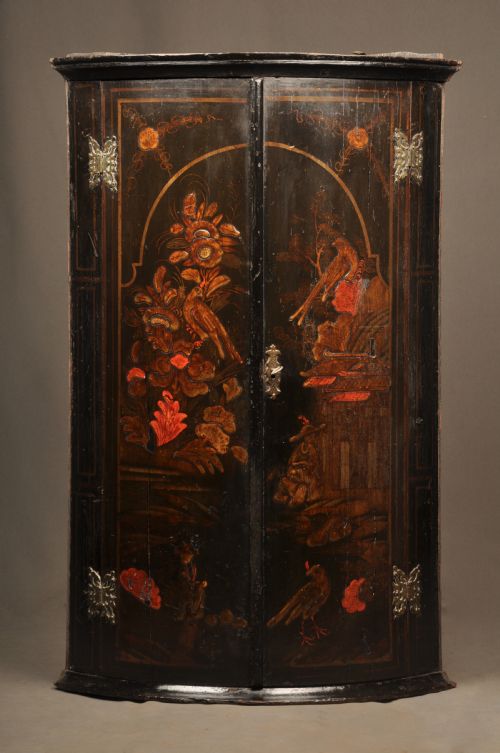
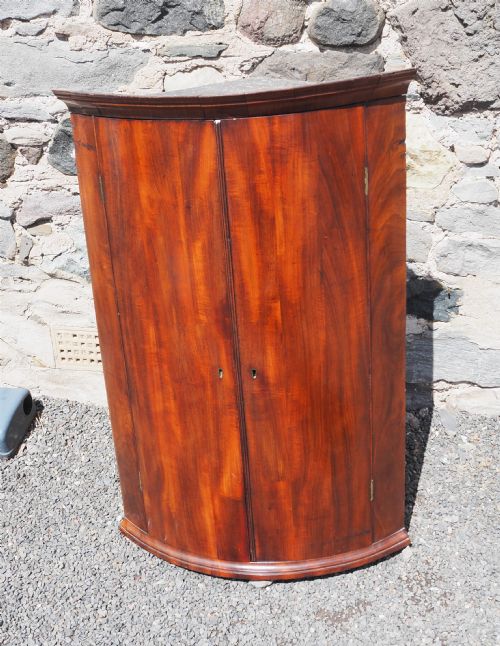


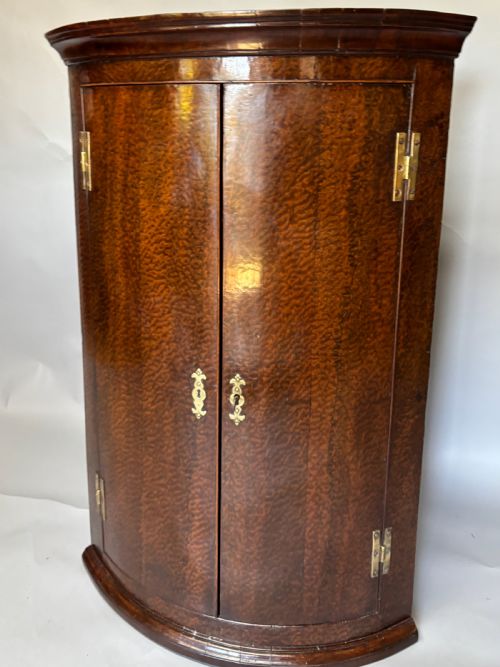
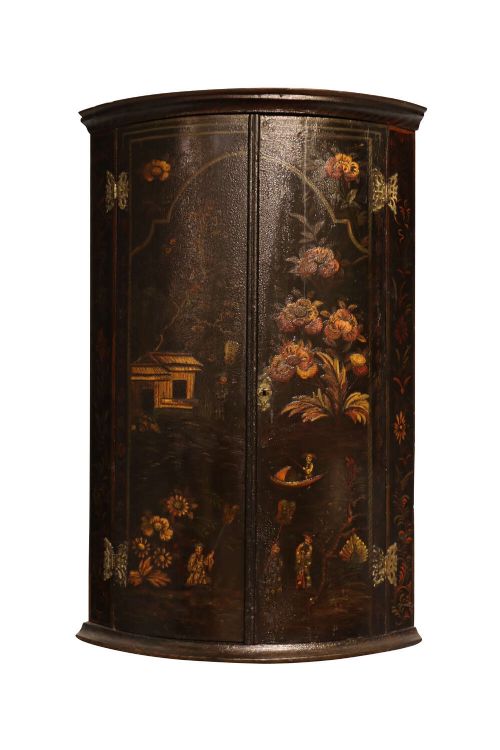
Bowfront Wall Cabinet
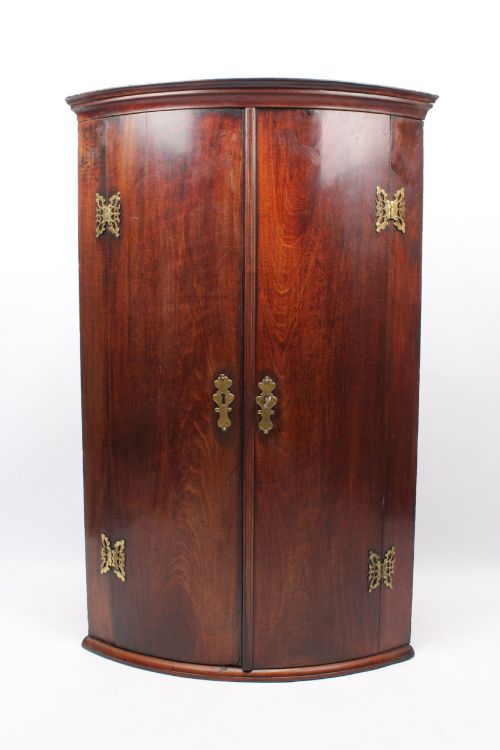
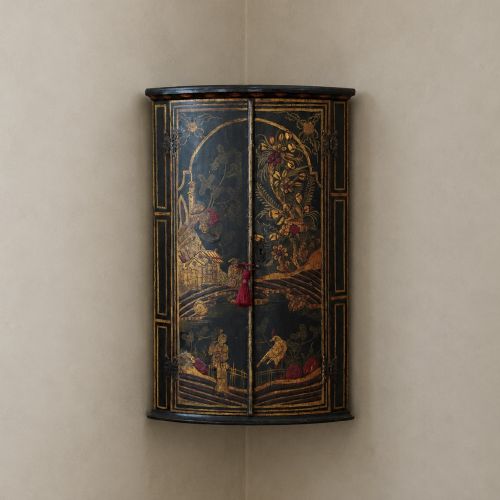
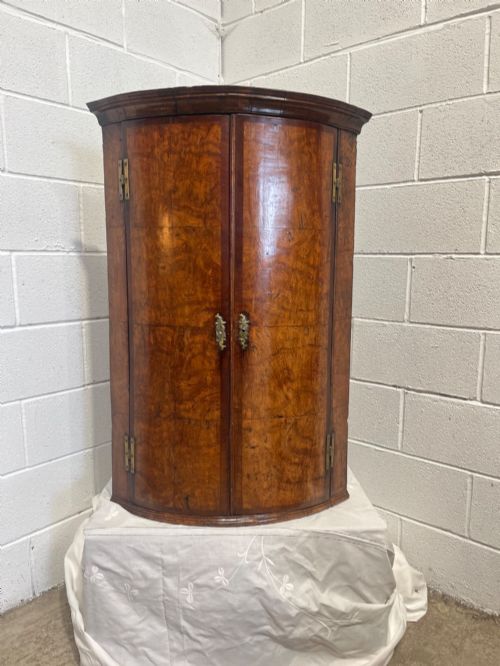
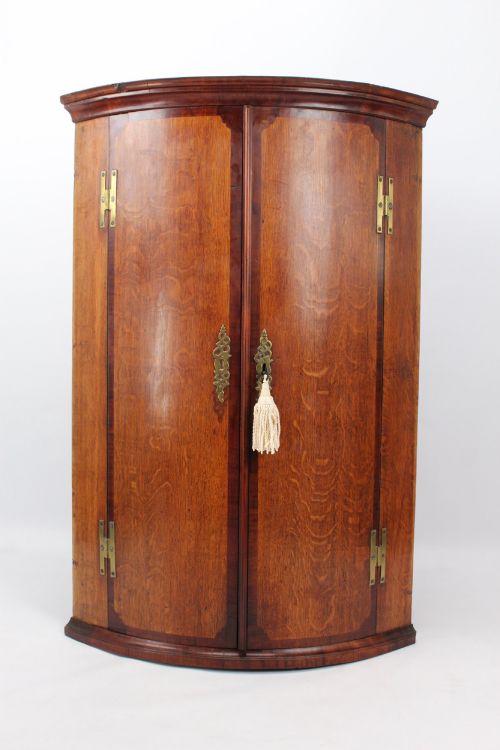
A bowfront wall cabinet brings warmth and practical storage to a corner, and these Georgian examples offer lovely mahogany and oak construction.
What these pieces are
A bowfront wall cabinet is typically formed as a corner cupboard or hanging corner cabinet designed to utilise neglected room angles. The pieces found here span the Georgian era, including George II and George III periods, alongside 18th century and 19th century items.
Most examples function as hanging wall cupboards, though the selection also includes corner cabinets and wall shelves. The dominant form is the wall-mounted corner cupboard with a curved bow front to soften the room's geometry.
How they were made
Construction relies heavily on timbers such as mahogany, oak, and red walnut, often enhanced with veneer and decorative satinwood inlay. Cabinet makers incorporated brass hardware and iron fittings to secure doors and hinges.
The curved bow fronts required skilled woodworking techniques to bend or shape solid timber and veneer accurately. Boxwood details frequently appear as stringing or inlay accents on the cabinet surfaces.
Retail Price Guide 2026
Typical UK retail prices for bowfront wall cabinet, calculated from the Sellingantiques database of over a million retail prices indexed since 2003. This retail price guide relies exclusively on Sellingantiques data; no external sources or auction records are used, so the figures do not describe the wider market.
Current listings exclusively feature Georgian, 18th century, and 19th century pieces constructed from mahogany, oak, and red walnut.
What varies in quality
Quality differences rest primarily on the choice of primary timbers and the fineness of the decorative inlay. Cabinets fashioned from figured mahogany or red walnut with crisp satinwood stringing stand apart from plainer oak variants.
The sophistication of the brass and iron hardware also signals a higher grade of manufacture. Cabinet work that maintains tight corner joints and well-fitted curved doors demonstrates superior craftsmanship.
The Bowfront Wall Cabinet Glossary
- Bow front
- A convex curved front that projects outward from the centre of the cabinet. This shape softens the hard angles typically found in room corners.
- Hanging corner cupboard
- A wall-mounted storage unit built specifically to fit into the internal angle of a room. These pieces utilise space that standard flat-wall furniture cannot reach.
- Satinwood inlay
- A contrasting light-coloured wood inserted into the primary timber surface for decoration. It creates fine lines and geometric borders on the cabinet exterior.
- Red walnut
- A rich-toned timber utilised in cabinet making during the earlier Georgian periods. It provides a distinct reddish hue compared to standard brown walnut.
Frequently Asked Questions
How do I hang a bowfront wall cabinet?
These cabinets mount directly to wall studs using internal fixing points or sturdy brackets hidden within the interior. Ensure the wall structure can support the weight of the solid timber before hanging.
Professional installation is often recommended to keep the curved doors hanging level and operating smoothly.
Where should I place a corner cupboard?
A corner cupboard belongs in the unused angle of a dining room, hallway, or sitting room. It draws the eye into the corner while providing enclosed storage.
Positioning the piece away from direct sunlight protects the antique mahogany and veneer surfaces from fading.
How do I distinguish Georgian from later pieces?
Georgian pieces date from the reigns of the Georges, typically defined by specific construction traits and timber choices like solid oak or early mahogany. Examining the interior secondary woods and joinery helps confirm the period.
Later 19th-century interpretations often show subtle differences in the cut of the timber and the style of the brass hardware.
What is the difference between a cupboard and a cabinet?
In this context, the terms are often used interchangeably to describe enclosed wall storage units with doors. Both variants feature the characteristic curved bow front designed for room corners.
Some listings distinguish open wall shelves from fully enclosed cupboards, though all share the same space-saving corner format.