
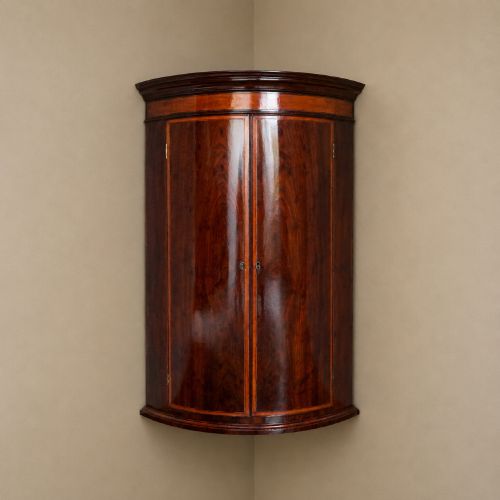
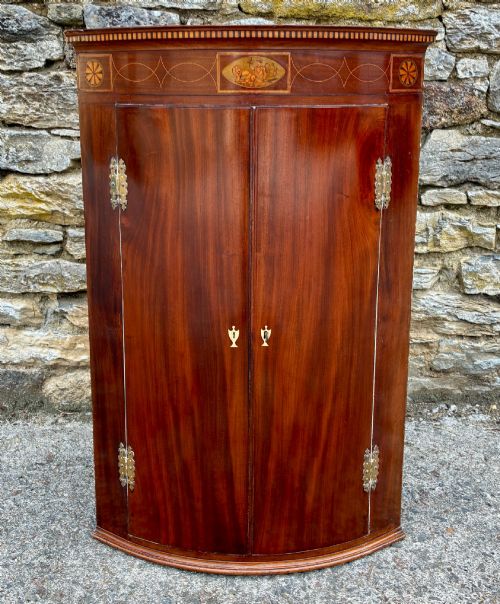
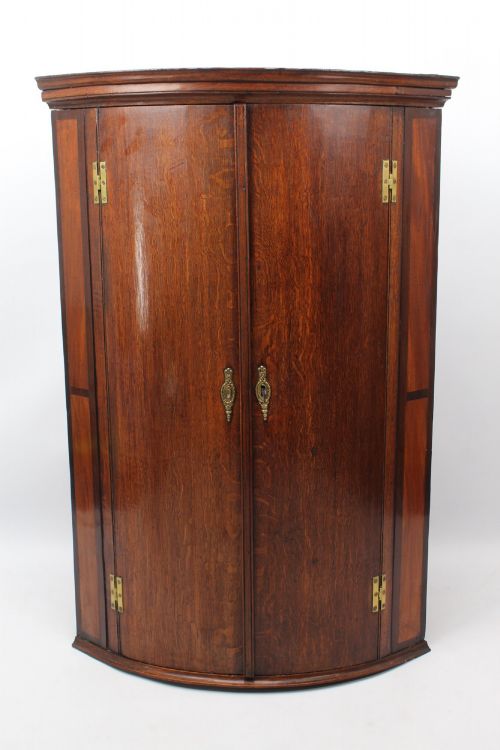
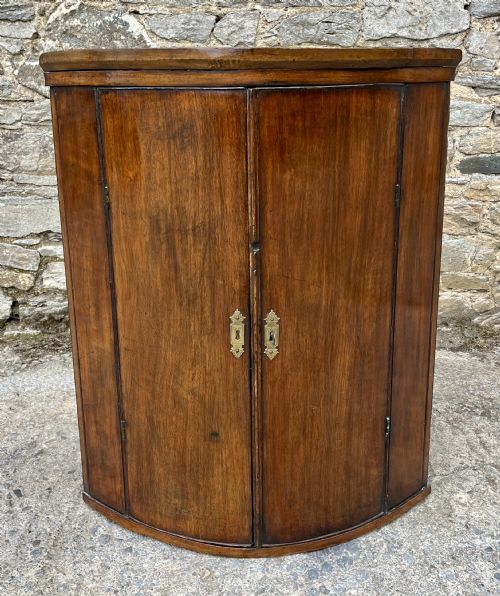


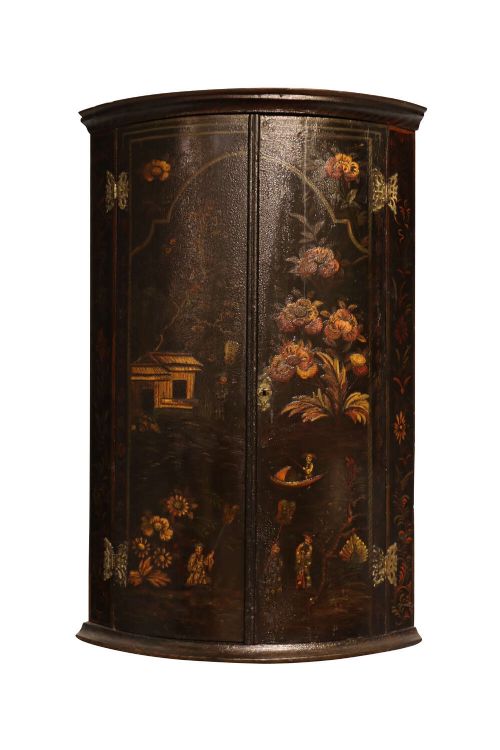
Bowfront Hanging Corner Cupboard
A bowfront hanging corner cupboard makes use of overlooked rooms by turning dead wall space into architectural storage.
Bowfront Hanging Corner Cupboard
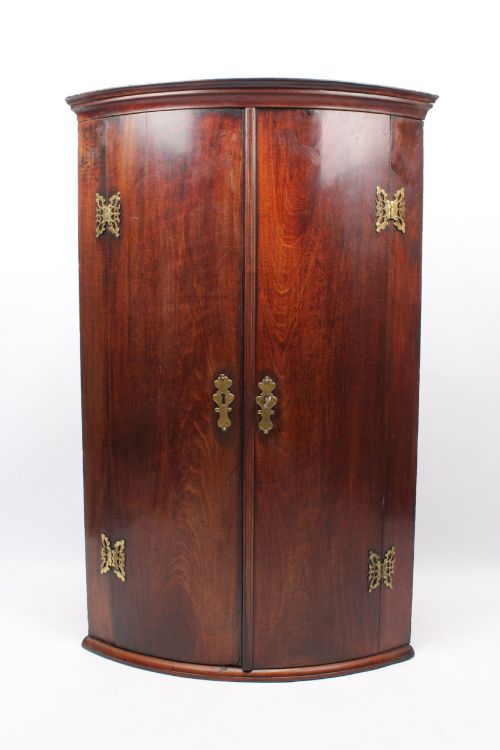
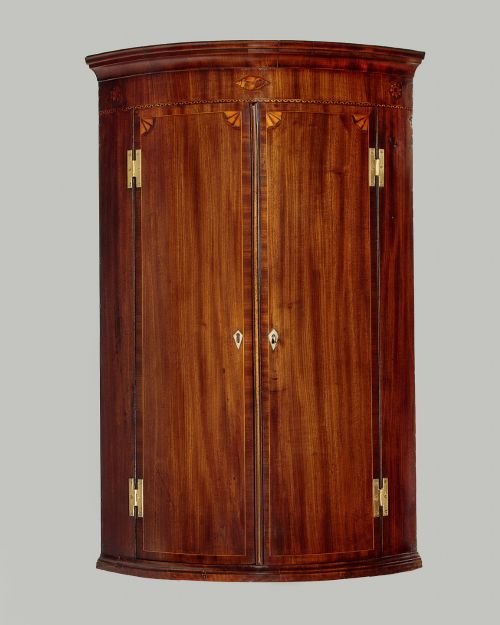
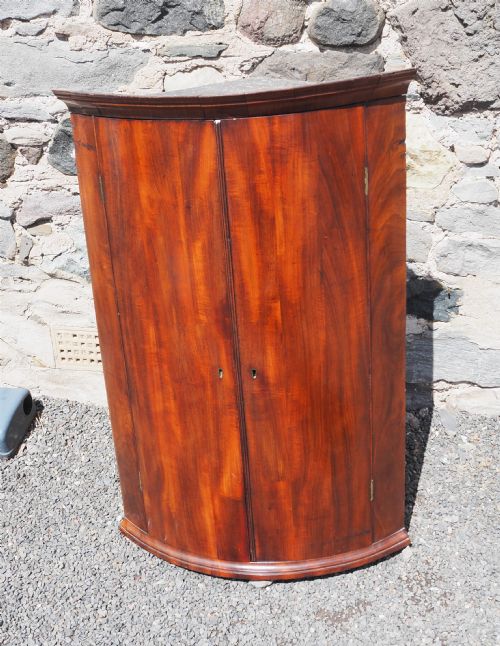
A bowfront hanging corner cupboard is a wall-mounted storage cabinet designed to fit snugly into a room intersection while presenting a curved, convex front. When you search for this phrase, you meet wall-mounted storage forms engineered specifically for domestic interiors from the Georgian, 18th century, and Victorian periods.
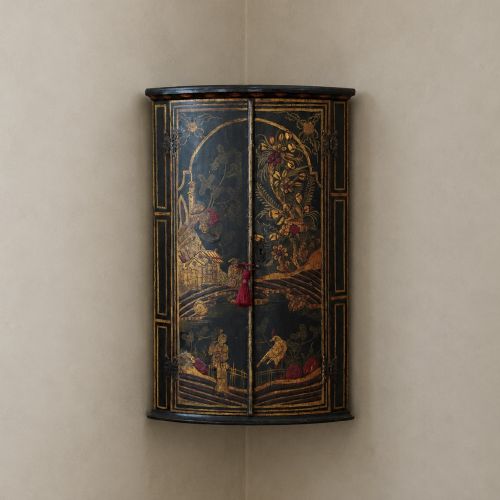
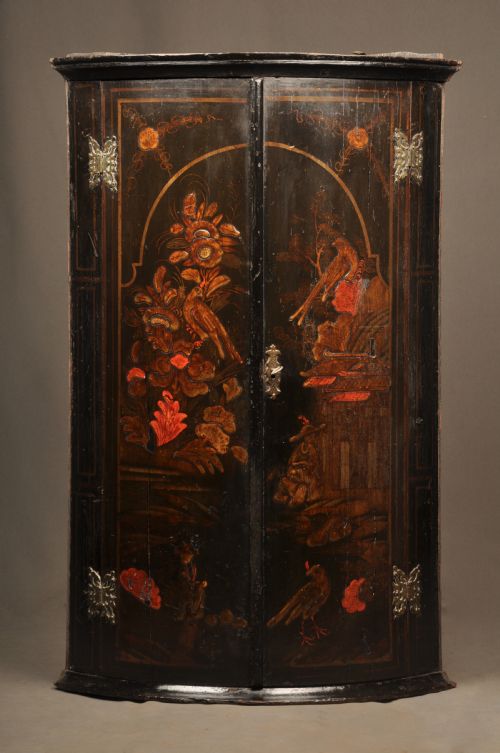
The versions most commonly encountered on this page are constructed from mahogany, oak, or walnut, often displaying George III styling or painted japanned finishes. These pieces function primarily as corner cabinets or wall cabinets designed to maximise space without cluttering floor plans.
How they were made
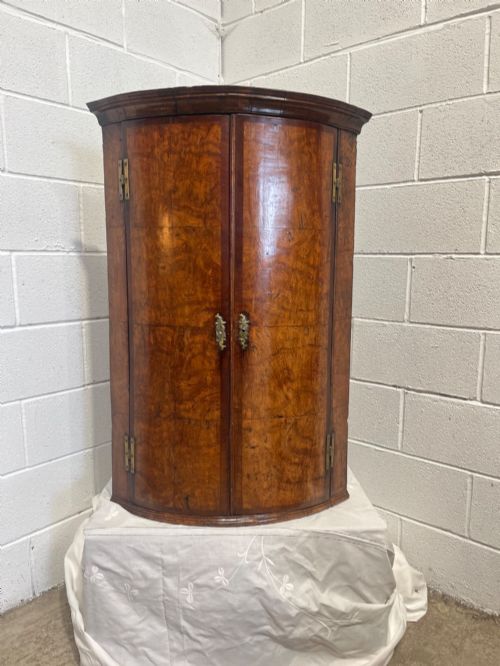
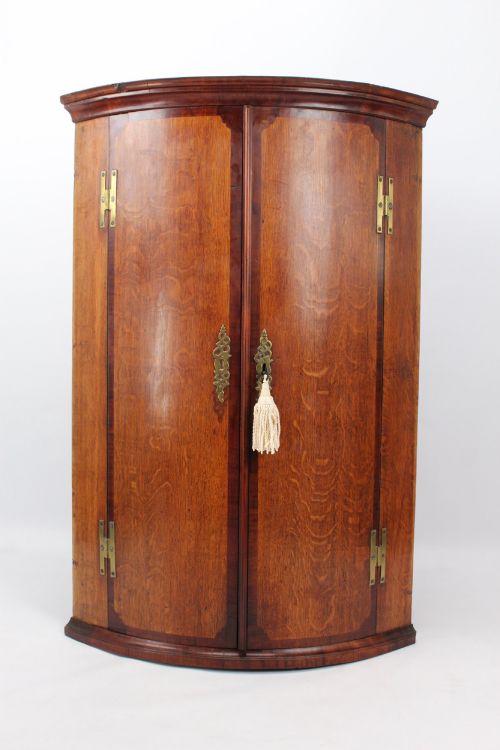
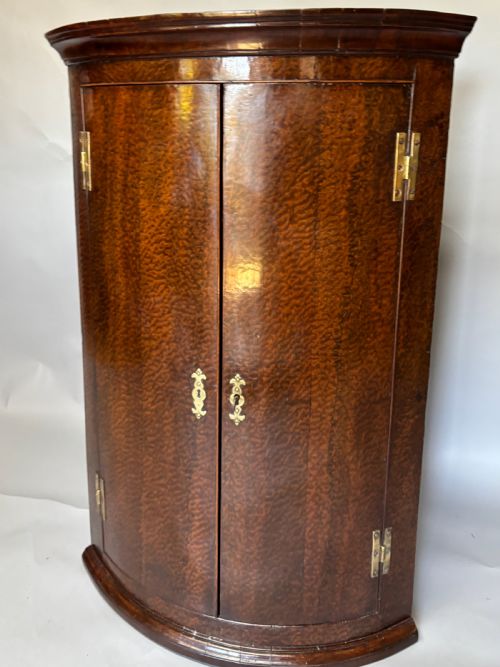
Makers construct these cabinets using timbers such as mahogany, oak, walnut, and elm, frequently incorporating decorative veneers like plum pudding mahogany, flame mahogany, or burr oak on the curved door fronts. Cabinetmakers utilise boxwood stringing and brass H-hinges or escutcheons to finish the exterior structure.
Surface treatments range from clear polish on timber grain to black lacquer and paint in chinoiserie schemes, applying gilt decoration over japanned grounds. Construction involves wall-hanging brackets integrated into sturdy timber frames built to bear the weight of stored contents.
Some past examples sport plum pudding timber patterns so lively the cabinet door looks ready to bake.
What varies in quality
The choice of timber grain dictates much of the visual standard, with highly figured plum pudding or flame mahogany commanding greater interest than plain stock. The crispness of inlaid boxwood lines and the depth of hand-painted chinoiserie motifs separate standard examples from finer commissions.
Proportion and cabinetwork finesse also determine worth, particularly in how smoothly the curved bowfront door matches the surrounding frame and how cleanly the internal shelving is housed.
The Bowfront Hanging Corner Cupboard Glossary
- Bowfront
- A convex curved front that projects outward from the corners of the cabinet. This shape softens the angular geometry typical of furniture built for room intersections.
- Japanned
- A European imitation of East Asian lacquerwork using dark resin finishes and raised metallic decoration. Artisans apply this technique to create glossy black or coloured decorative surfaces.
- Chinoiserie
- European artistic styles reflecting Chinese motifs, figures, and landscapes. This style appears frequently on painted and lacquered cabinet doors.
- Stringing
- Thin inlaid lines of contrasting timber used to outline panels and doors. Makers utilise boxwood for this contrasting detail against darker woods like mahogany.
- Plum pudding mahogany
- A highly figured timber variety showing dense, mottled markings resembling the interior of a traditional Christmas pudding. Cabinetmakers reserve this prized wood for prominent door panels.
Bowfront Hanging Corner Cupboard: Frequently Asked Questions
How do I hang a bowfront corner cupboard safely?
These cabinets mount directly to wall studs using internal fixing points or heavy-duty brackets attached through the backboards.
Professional installation ensures the substantial weight of solid timber and stored items remains secure against plaster walls.
What periods do these cupboards date from?
The pieces span the 18th century and the Georgian era, with particular representation from the George III period around 1780 to 1800.
Victorian and later 1920s examples also appear, carrying earlier revival designs or simpler regional construction.
How do I clean lacquered chinoiserie surfaces?
Dusting with a soft, dry cloth prevents particulate buildup on painted and lacquered finishes without risking the underlying gilt work.
Harsh chemical polishes and moisture damage delicate lacquer layers, so conservation requires gentle maintenance methods.
Where were these cupboards placed originally?
Domestic interiors utilised these cabinets in dining rooms, parlours, and hallways to store glassware, ceramics, and personal items.
Their corner placement saved floor space while keeping everyday utilities within easy reach of occupants.
How do I identify George III mahogany pieces?
George III pieces feature dense mahogany timbers, traditional brass hardware, and often subtle boxwood stringing around the curved door.
Interior configurations usually include shaped wooden shelving behind a single solid or glazed door.