
Bowed Front Tallboy
The bowed front tallboy brings together generous proportions and a distinct curved profile that suits both traditional and modern bedrooms.
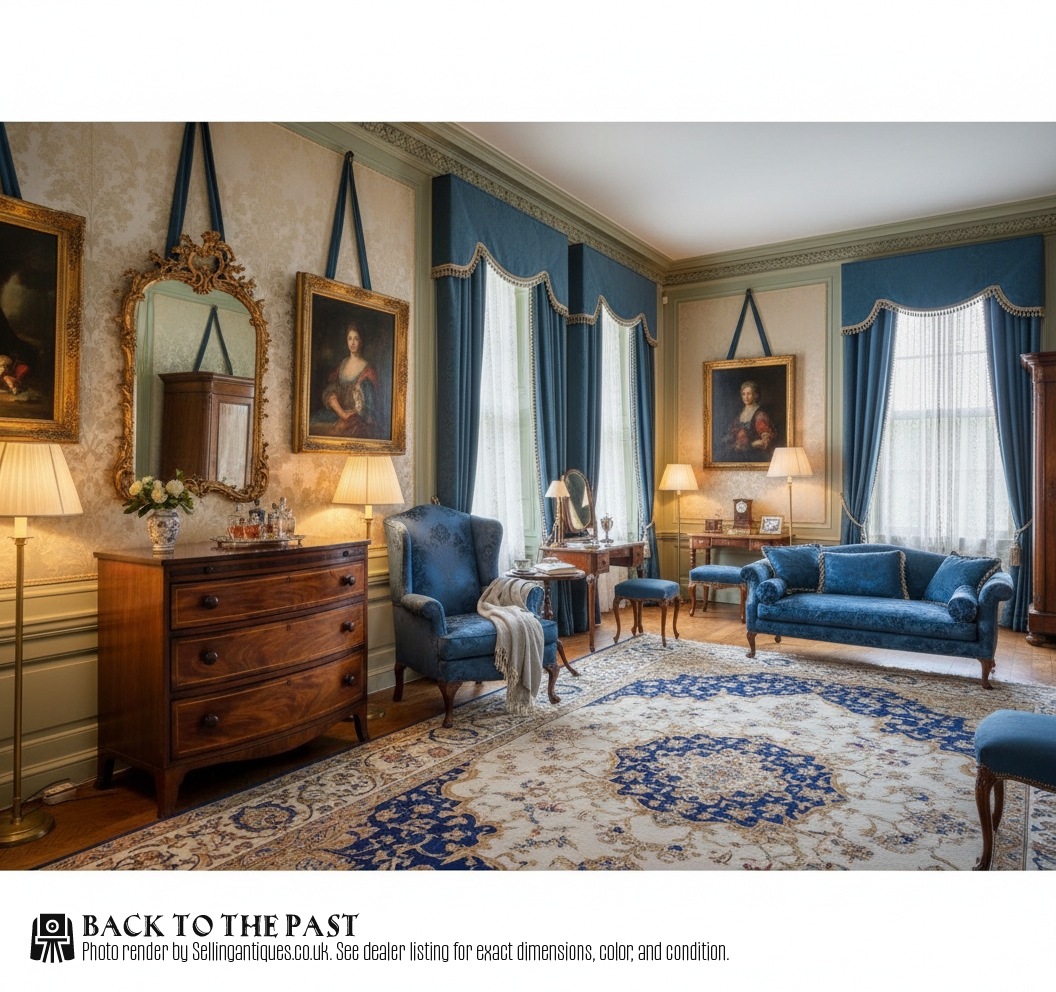
Bowed Front Tallboy
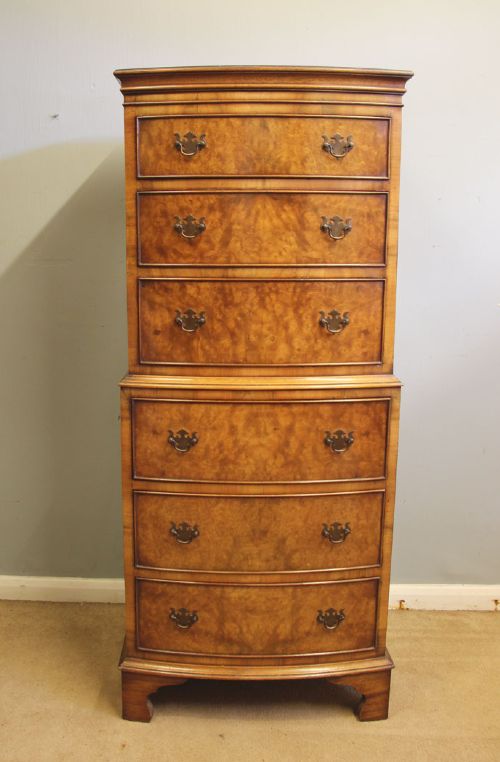
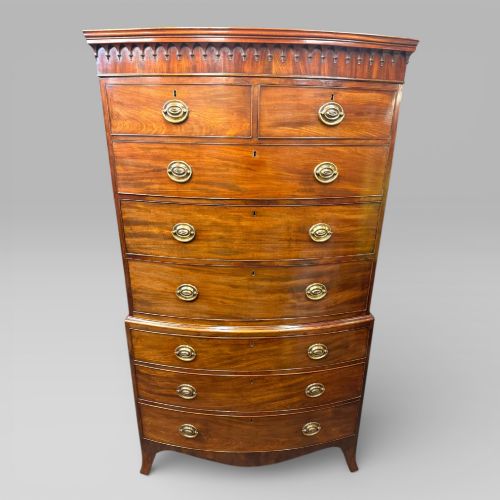
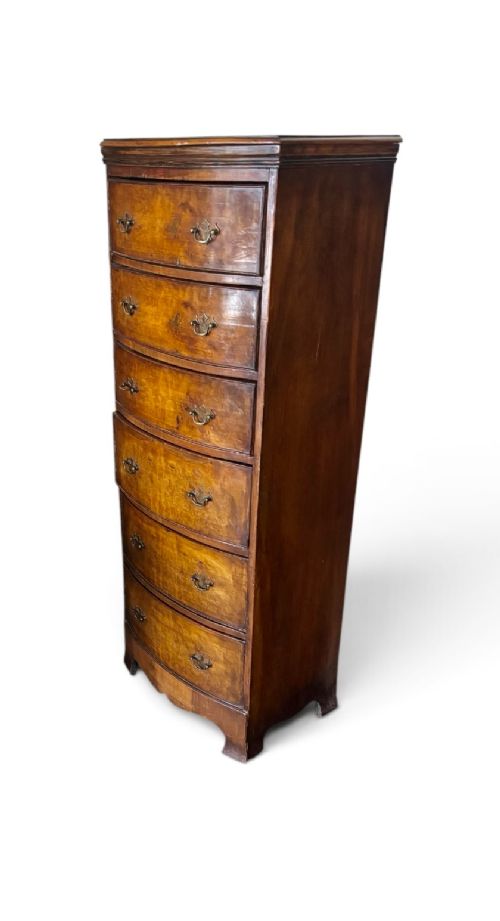
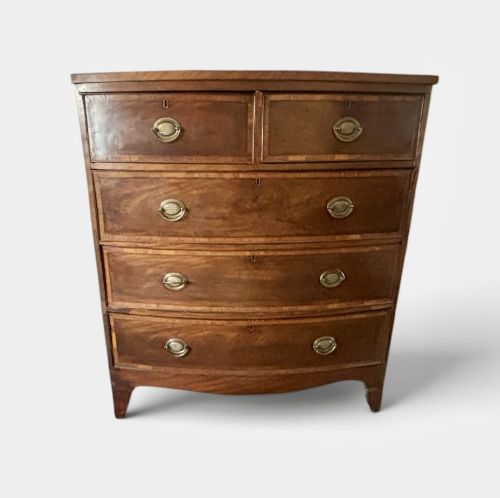
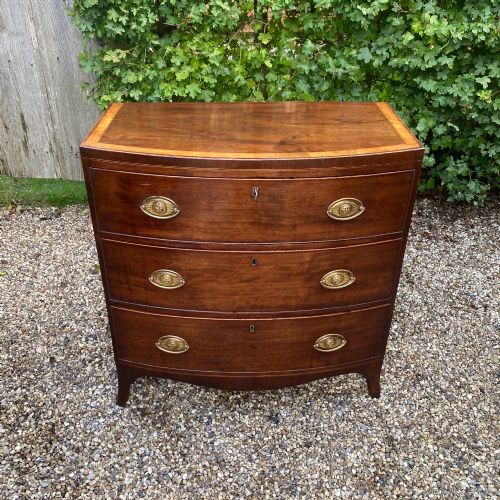
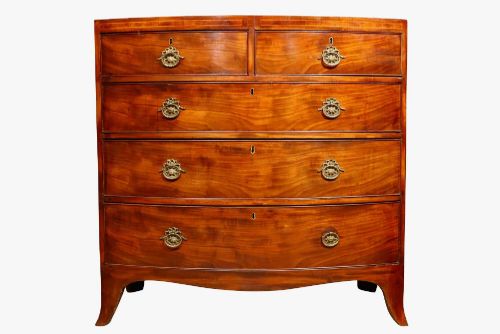
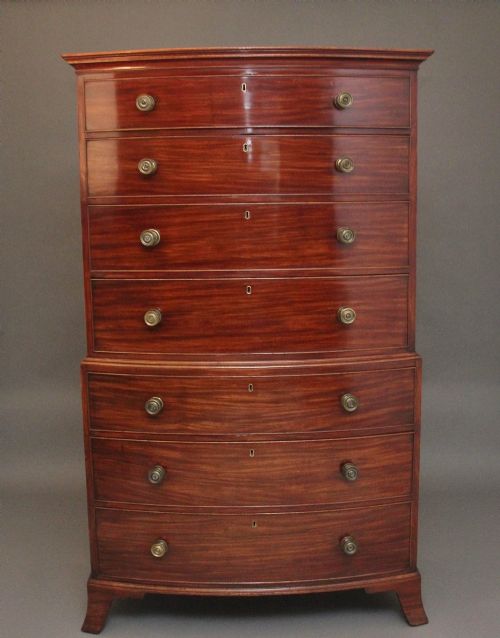
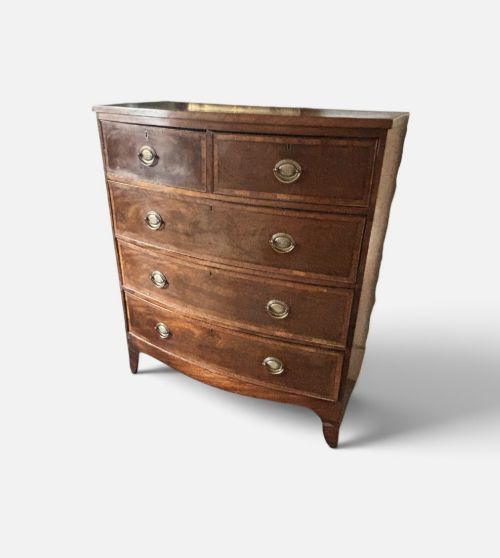
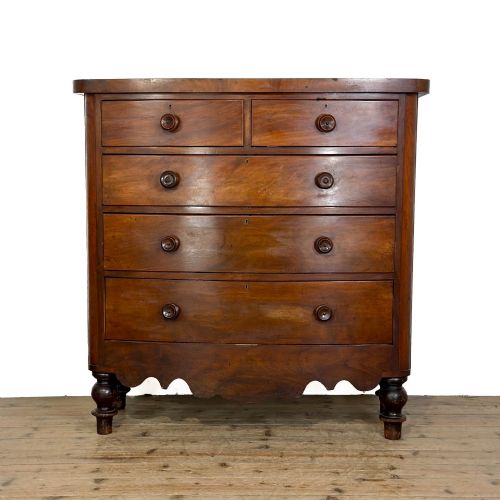
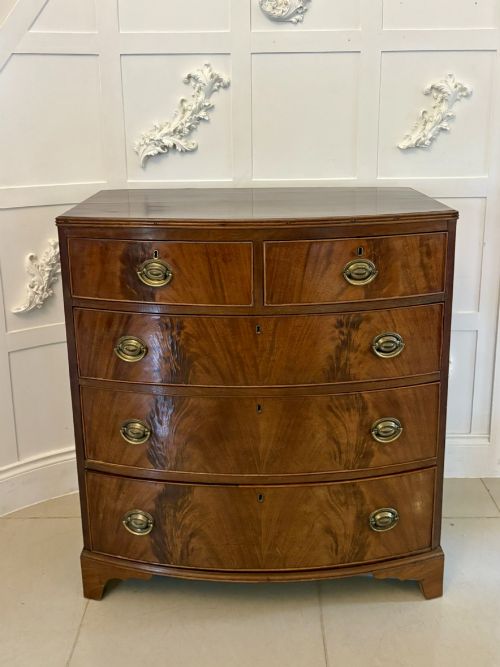
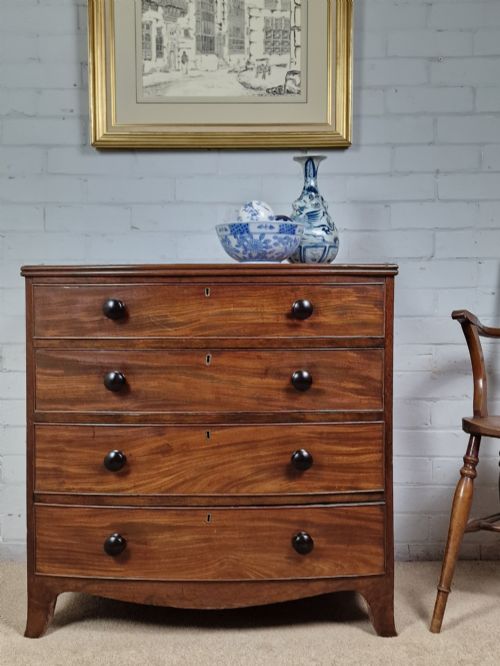
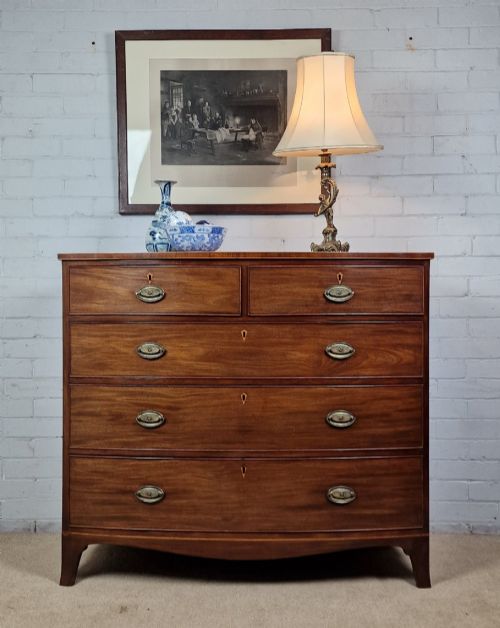
A bowed front tallboy is a substantial storage piece defined by its protruding, curved drawer fronts and stacked vertical capacity. These pieces appear across Georgian, Regency, Victorian, and later twentieth century periods, reflecting shifting tastes in domestic furniture.
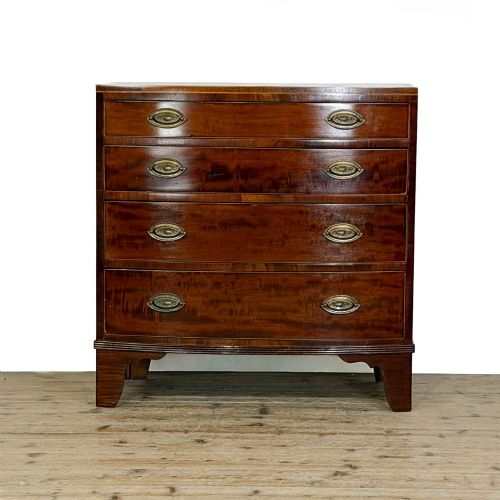
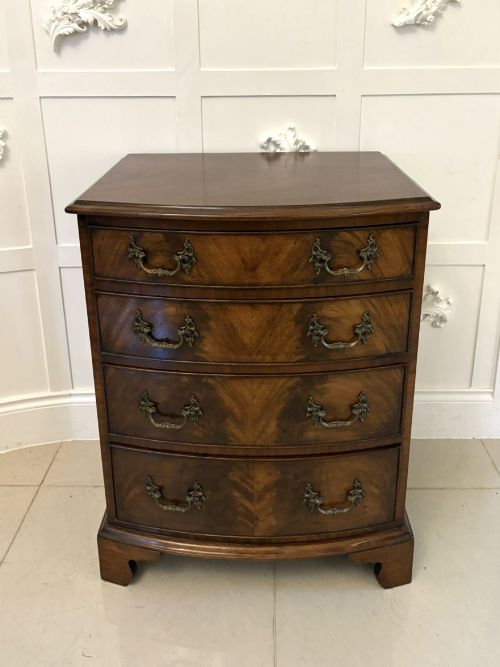
The most common form on this page is the mahogany chest of drawers with a curved front, alongside taller chest on chest configurations and linen presses. Variations span compact small versions up to large Scottish examples.
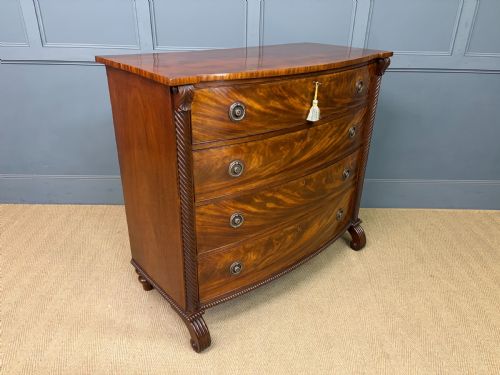
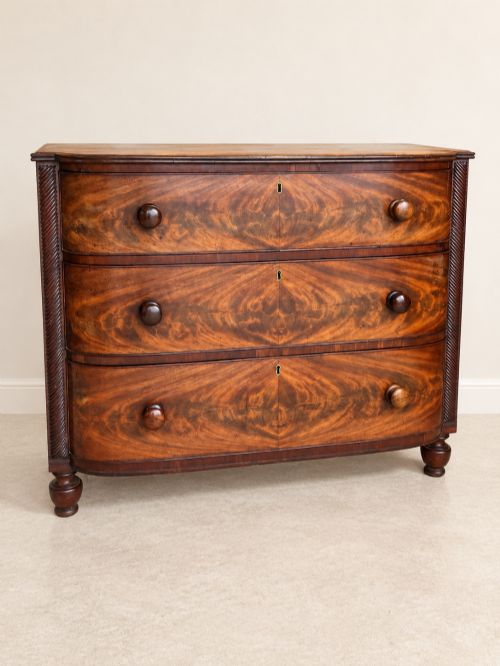
Makers and joiners utilised woods such as flame mahogany, burr walnut, and satinwood banding to accentuate the swelling curve of the front elevation. Brass hardware and pine secondary woods frequently support the primary construction.
Materials and construction
Cabinet makers built these pieces using solid timbers alongside decorative veneers like flame mahogany and burr walnut applied to drawer fronts and top surfaces. Satinwood banding and crossbanding provided contrasting borders on Regency and Georgian iterations.
Drawer construction typically involved closely fitted pine linings with hand cut joints, held within carcases that accommodated the convex curve. Brass handles and escutcheons were countersunk into the drawer faces to complete the design.
Current listings demonstrate periods ranging from George III and Regency through to nineteen thirty, utilising mahogany, walnut, and satinwood.
Distinguishing quality
Quality rests in the selection of figured veneers and the precision of the curved drawer fronts, where tight joints indicate superior cabinet work. Well proportioned carcases and original brass fittings elevate certain examples above standard production pieces.
The choice of secondary timbers and the consistency of the polish across the curved surfaces also separate finer workshop output from simpler domestic furniture.
The Bowed Front Tallboy Glossary
- Tallboy
- A tall chest of drawers, often constructed in two stacked sections known as a chest on chest. These pieces maximise vertical storage space.
- Crossbanding
- A strip of veneer applied across the grain of the primary wood to form a decorative border around drawer edges. This technique requires precise woodworking skill.
- Satinwood
- A durable, yellowish timber utilised for contrasting inlay work and banding on Regency and Georgian furniture. It provides a bright visual accent.
- Flame mahogany
- A highly figured cut of mahogany displaying a distinctive flickering grain pattern resembling flames. Cabinet makers reserved this timber for principal drawer fronts.
Bowed Front Tallboy: Frequently Asked Questions
What is a bowed front tallboy?
A bowed front tallboy is a tall storage chest featuring a curved, outward-projecting front facade. These items combine vertical capacity with decorative curved drawer arrangements.
They emerged across Georgian, Regency, and Victorian periods as practical bedroom furniture designed to hold linens and garments.
How do I date a bowed front tallboy?
Dating relies on examining the secondary timbers, construction methods, and hardware styles visible on the piece. Georgian and Regency examples often display distinct timber selection and hand cut joinery.
Later twentieth century pieces from the nineteen thirties show different internal framing and veneer application techniques.
Where were these pieces used?
These chests served primarily in bedrooms and dressing rooms for storing folded clothes and personal linens. Their tall footprint provided maximum storage without occupying excessive floor area.
Today they function similarly in domestic interiors, offering substantial drawer space while serving as a focal point.
How do I care for mahogany and walnut surfaces?
Maintenance involves dusting with a dry cloth and occasionally applying traditional beeswax to nourish the timber. Direct sunlight and excessive heat sources should be avoided to protect the veneer.
Regular care preserves the polished finish and natural grain patterns of the wood over time.