
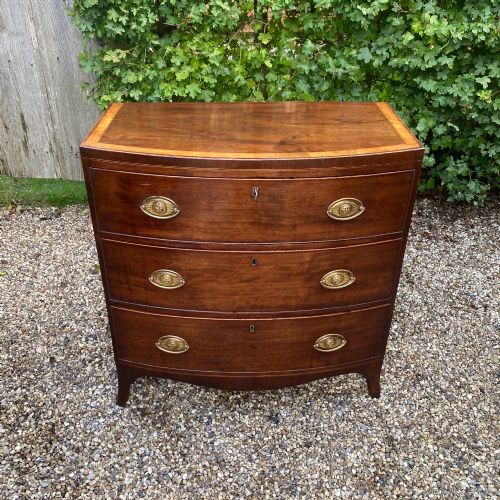
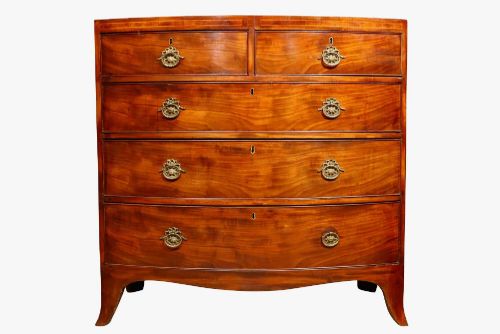
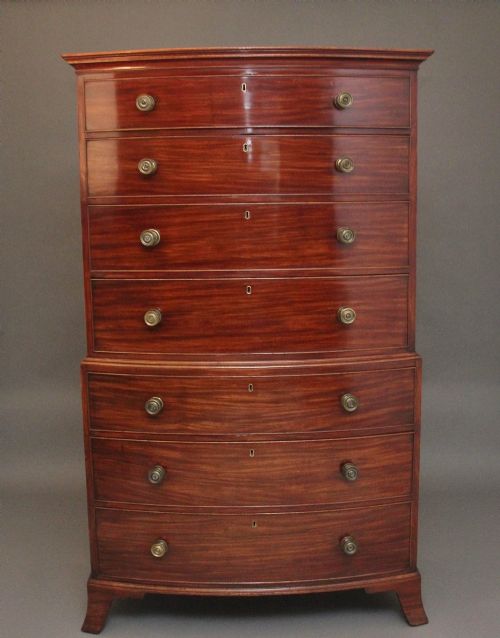
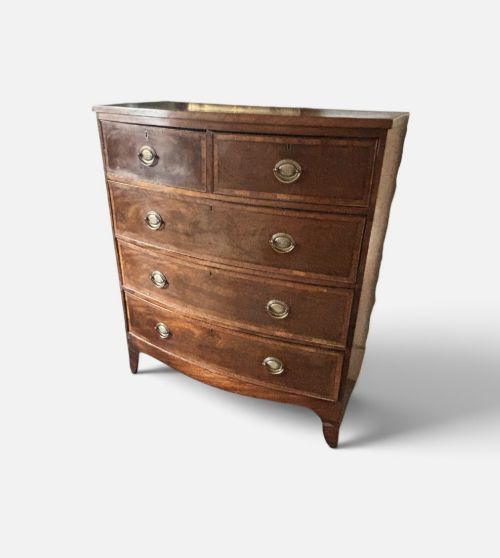
Bow Fronted Tallboy
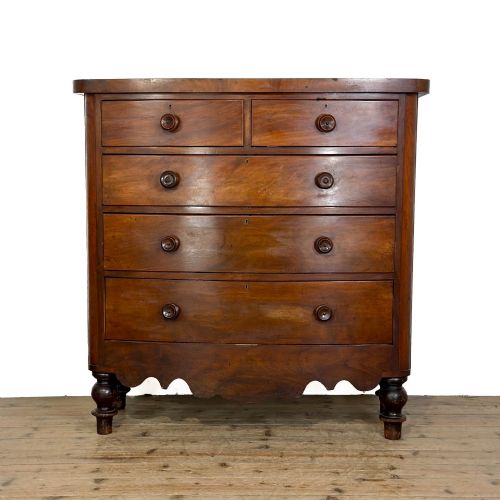
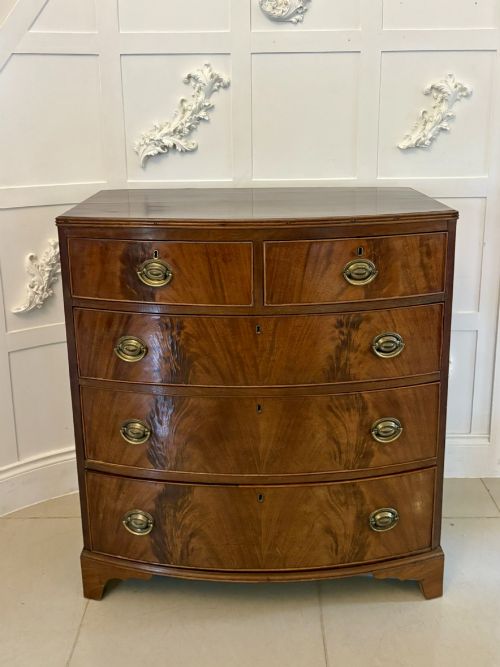
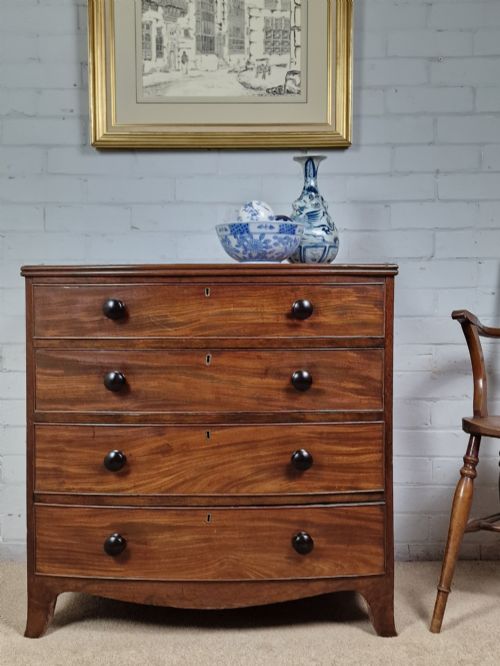
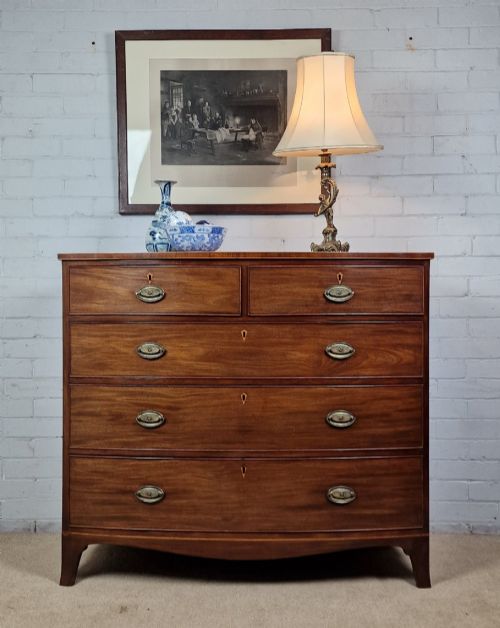
A bow fronted tallboy combines the soaring vertical presence of a tall chest with the gentle, curved projection of a bow front.
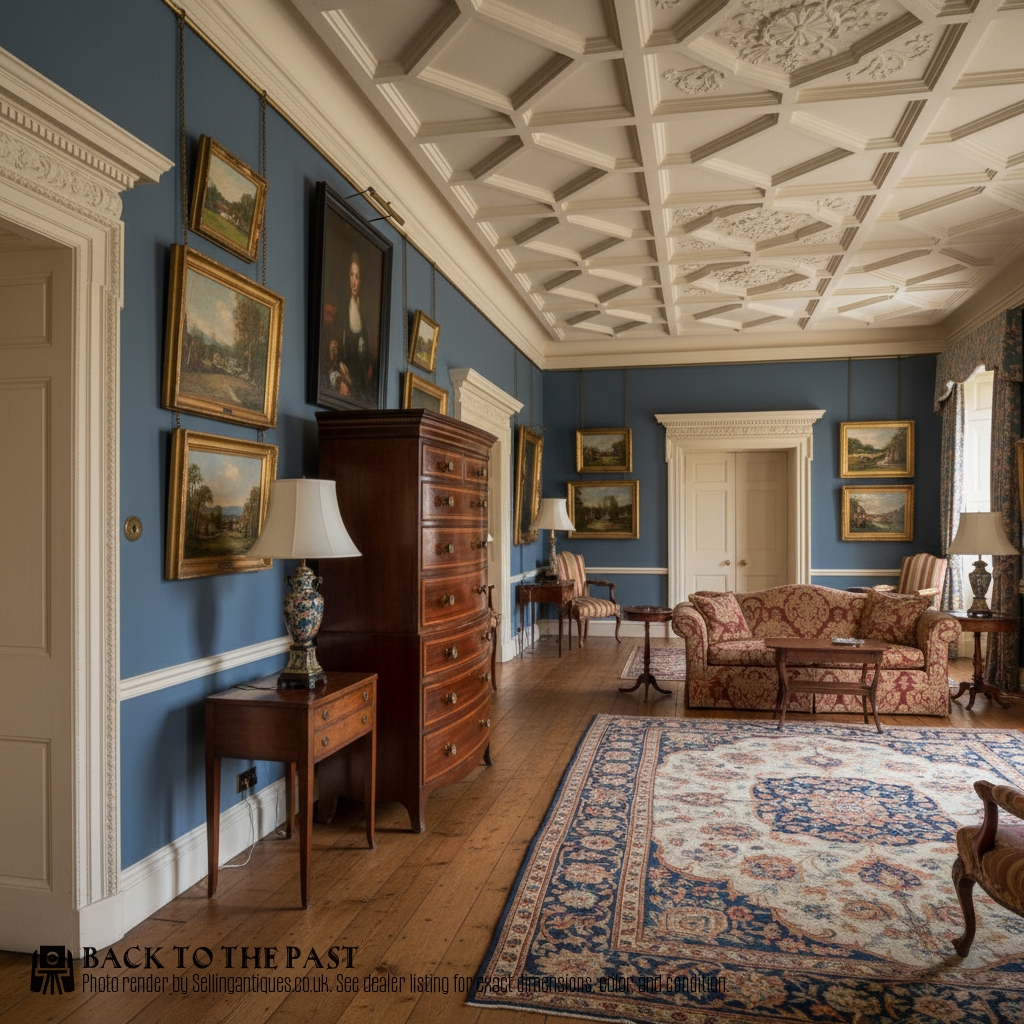
Bow Fronted Tallboy
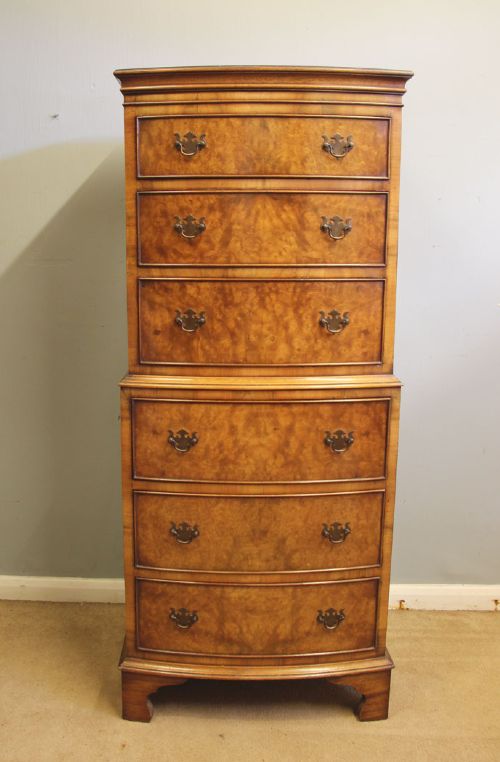
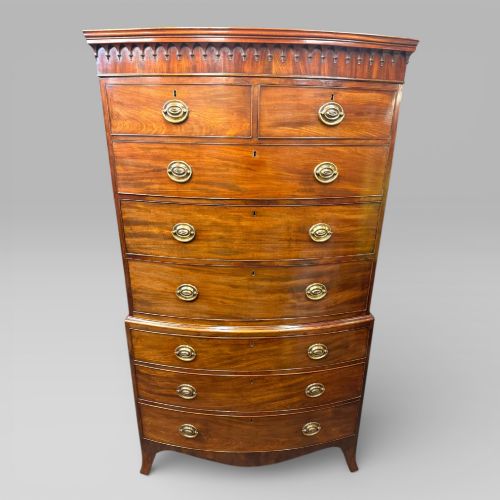
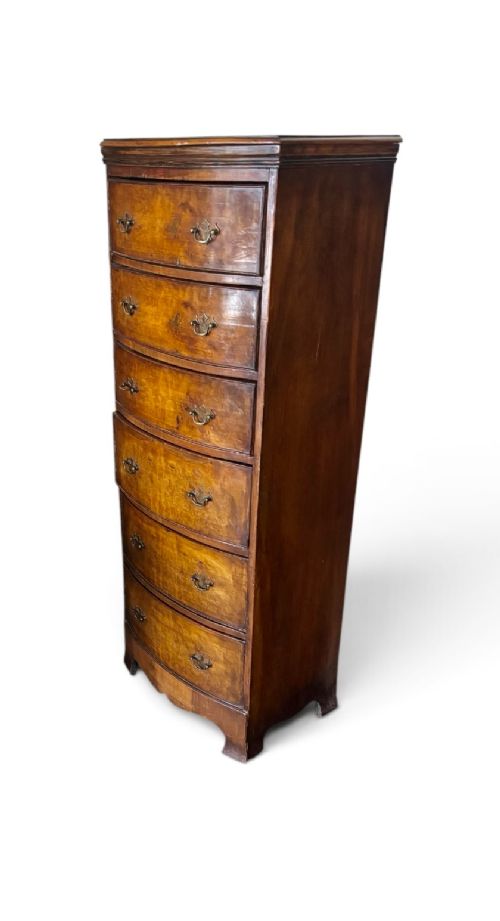
A bow fronted tallboy stands as a commanding piece of storage furniture, uniting the height of a chest on chest or tall cabinet with a convex curved front. When exploring this search phrase, buyers encounter examples spanning the Georgian, Regency, and Victorian periods, alongside later walnut revivals from the early twentieth century.
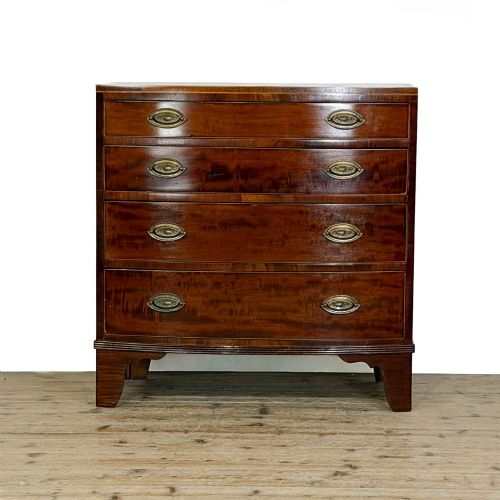
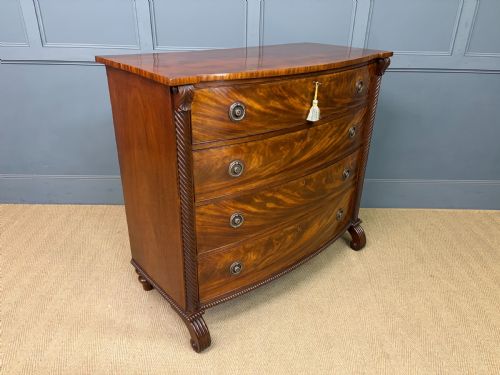
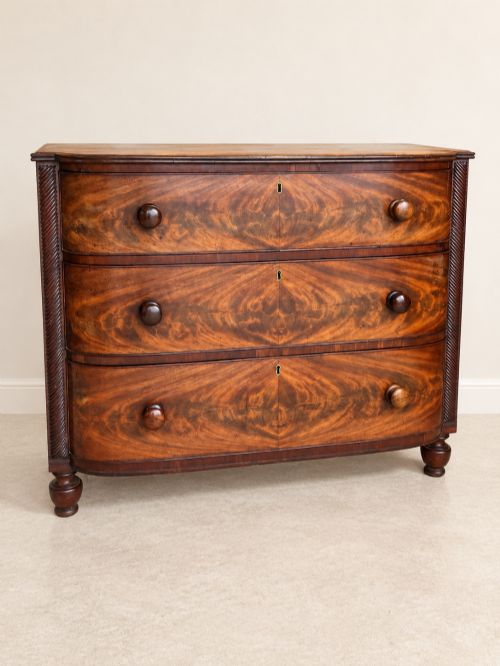
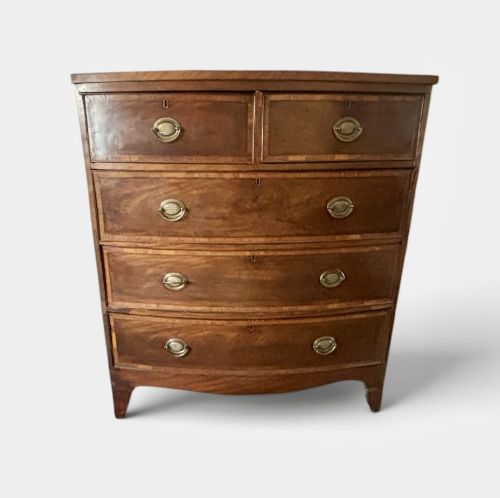
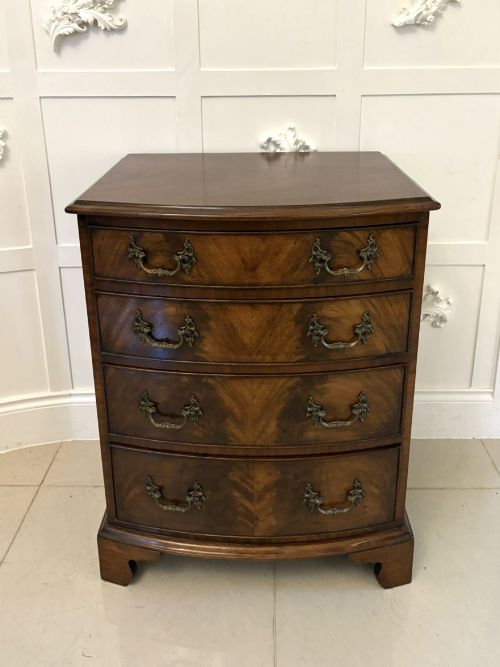
The primary forms on this page include tall chests in two sections, alongside compact four-height and five-height chests of drawers carrying the signature rounded profile. Timbers range from rich mahogany to figured walnut and burr walnut, frequently accented with contrasting satinwood banding.
Originating largely from British workshops, these pieces served as substantial bedroom storage for linens and garments. The combination of vertical proportions and curved drawer fronts maximises interior capacity whilst softening the room's angles.
Distinctions in craftsmanship
The distinction between standard examples and superior pieces rests on the choice of timber and the precision of the veneering. Flame mahogany and burr walnut with matched grain symmetry across the curved drawer fronts indicate higher workshop ambition.
Structural integrity reveals itself in the execution of the drawer linings and the dovetail joints connecting the carcase. Subtle details, such as fine satinwood crossbanding and original brass fittings, separate standard utility furniture from pieces produced for formal domestic settings.
Listings feature mahogany and walnut timbers across Georgian, Regency, and early twentieth-century periods.
The Bow Fronted Tallboy Glossary
- Bow front
- A convex curved front projecting outward from the plane of the cabinet carcase. This profile softens the rectangular geometry typical of standard chests.
- Tallboy
- A tall chest of drawers, often constructed in two stacked sections as a chest on chest. It provides substantial vertical storage without occupying a large floor footprint.
- Crossbanding
- A narrow strip of veneer applied across the grain of the primary panel to form a contrasting border. It frames the drawer fronts on many Regency and Georgian pieces.
- Flame mahogany
- Timber cut from the branch junction of a mahogany tree, yielding a distinctive ripple pattern resembling flickering flames. Cabinetmakers reserved this veneer for principal drawer facades.
- Burr walnut
- Wood taken from a growth knot on a walnut tree, producing swirling patterns of intense figuring. It gained particular favour during the Georgian period and later twentieth-century revivals.
Bow Fronted Tallboy: Frequently Asked Questions
What is a bow fronted tallboy?
A bow fronted tallboy is a tall storage chest featuring a convex, rounded front profile that projects outward. These pieces combine vertical height with curved drawer construction.
They serve as prominent bedroom or dressing room furniture, offering deep drawers for garments and linens whilst presenting a refined architectural silhouette.
How do I date a tallboy?
Dating relies on timber choice, construction techniques, and stylistic markers such as bracket feet or cornice mouldings. Georgian and Regency examples typically utilise solid mahogany or flame veneers.
Later twentieth-century revivals often incorporate figured walnut and different interior secondary woods. Comparing handle styles and dovetail construction helps clarify the period of manufacture.
Where were these pieces used?
These chests were placed in principal bedrooms and dressing rooms of large townhouses and country homes. Their height provided extensive storage capacity for fine garments.
The vertical format allowed owners to store multiple categories of clothing within a single footprint whilst maintaining floor space.
How do I care for walnut veneer?
Walnut veneer requires protection from direct sunlight and excessive humidity to prevent warping or fading. Regular dusting with a soft, dry cloth preserves the polished surface.
Occasional application of appropriate wax polish maintains the moisture and lustre of the timber without building up heavy residue.