




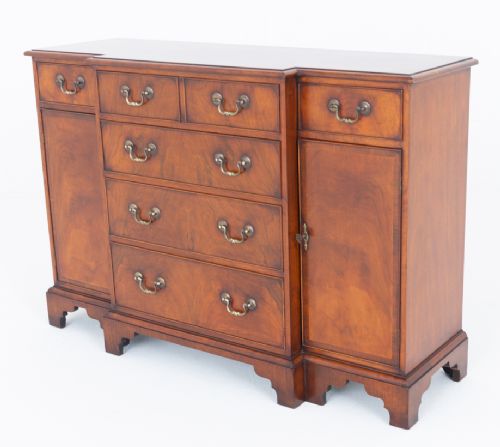
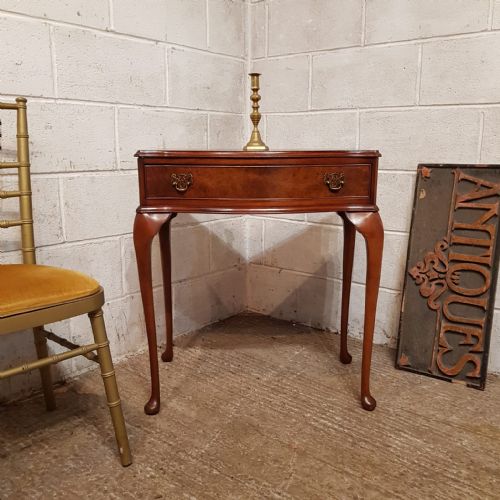


Georgian Revival Drawers
Georgian revival drawers bring eighteenth-century proportion into twentieth-century rooms, offering generous storage wrapped in figured veneers and polished mahogany.
Georgian Revival Drawers
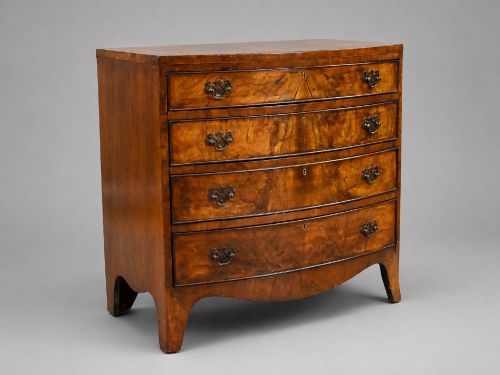
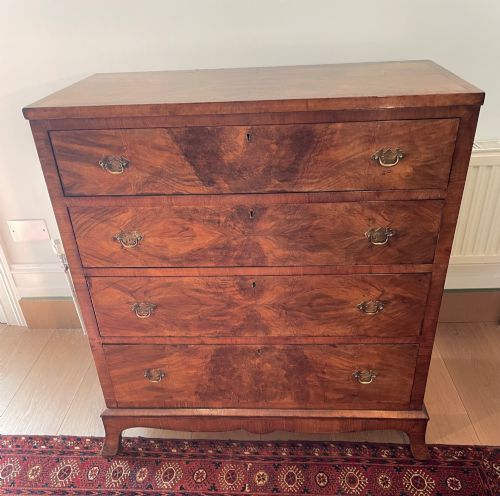
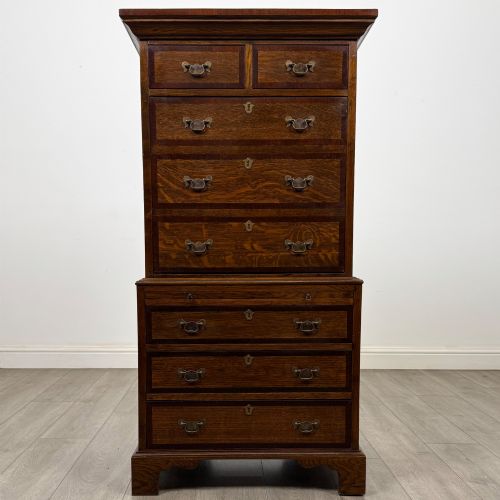
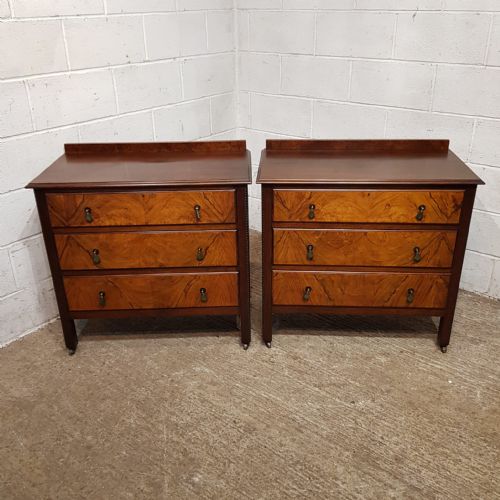
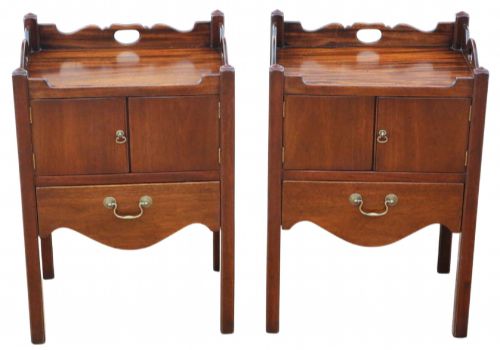
When buyers search for georgian revival drawers, they encounter case furniture built during the late nineteenth and early twentieth centuries that reinterprets eighteenth-century forms. The pieces met most frequently on this page are compact chests of drawers, tallboys, and side tables dating from the Edwardian era through the nineteen-thirties.
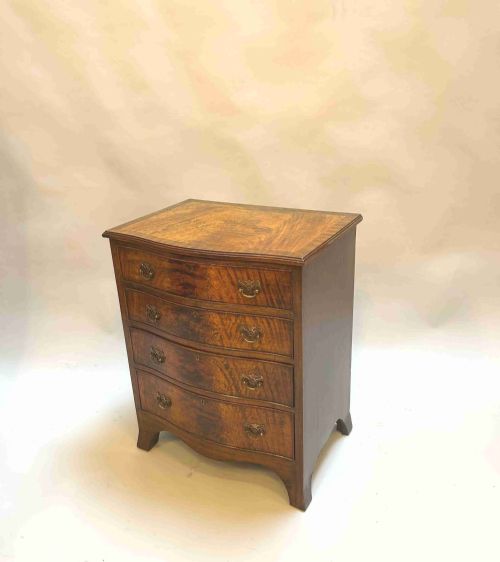
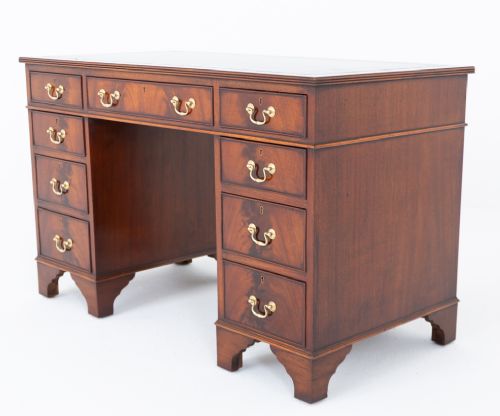
Cabinet makers of this period drew heavily on Chippendale, Sheraton, and Queen Anne designs to create proportions suited to modern bedrooms and halls. Standard chests share space here with specialised forms such as bachelor chests, lowboys, and serpentine-fronted writing desks.
Origins trace principally to British workshops operating between eighteen-ninety and nineteen-thirty, reproducing the classical lines and practical storage capacities of earlier centuries. The resulting furniture blends historical architectural vocabulary with the sturdier joinery methods of the twentieth century.
Factors of Quality
The distinction between ordinary and superior pieces rests on timber selection and the precision of the veneer matching. Cabinets featuring book-matched burr walnut or uninterrupted flame mahogany command attention through the deliberate symmetry placed across the drawer layout.
Execution of secondary details, such as hand-cut dovetailing, smoothly operating brushing slides, and well-fitted brass hardware, separates utilitarian production from finer workshop output. Structural integrity remains paramount, shown in flat tops, true-running drawers, and stable bracket or ogee feet that bear weight evenly.
Listings feature case furniture spanning the nineteenth century through the nineteen-thirties, dominated by mahogany, walnut, and oak.
Edwards and Roberts·Whytock & Reid
The Georgian Revival Drawers Glossary
- Caddy top
- A raised, moulded tabletop profile with stepped edges reminiscent of eighteenth-century tea caddy lids. This shaping adds a refined linear border to the top surface of a chest.
- Brushing slide
- A pull-out shelf positioned above the top drawer, traditionally used for folding clothes or writing notes. It slides flush into the carcase when not in use.
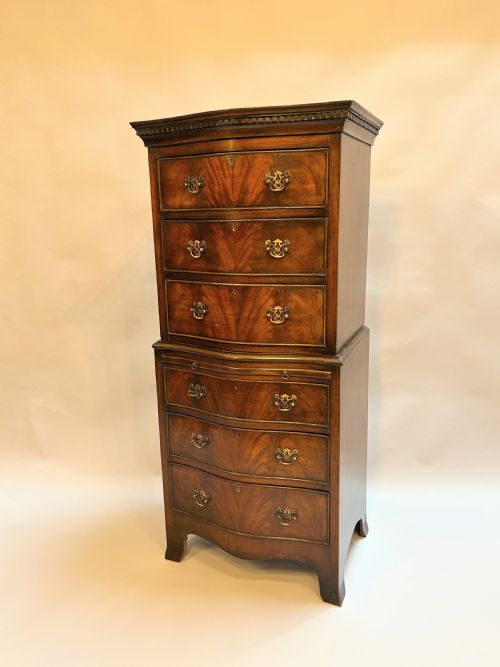
- Serpentine front
- A cabinet face shaped with a convex centre flanked by concave curves, or vice versa. This flowing contour requires expert joinery and careful veneer application.
- Lowboy
- A small side table featuring one or more rows of drawers supported on four tall legs. They functioned historically as dressing tables or hall storage.
- Tallboy
- A tall storage unit comprising a chest of drawers stacked vertically, often in two distinct sections. They maximise vertical capacity while retaining a compact footprint.
- Dovetail
- An interlocking woodworking joint formed by alternating wedge-shaped pins and tails. It provides exceptional tensile strength for drawer construction.
Georgian Revival Drawers: Frequently Asked Questions
What is a georgian revival chest?
A georgian revival chest is a piece of storage furniture manufactured primarily around the late nineteenth to early twentieth century, mimicking the proportions and decorative motifs of the seventeen-hundreds. These items utilise traditional timbers like mahogany and walnut to recreate classic silhouettes.
Such chests offer functional storage paired with historical styling, making them versatile additions to contemporary domestic interiors. They bridge the gap between antique aesthetics and modern durability.
How do I date these drawers?
Dating involves examining secondary woods, internal construction methods, and hardware styles. Edwardian and early twentieth-century pieces often display machine-planed interior boards alongside hand-cut dovetails.
Matching the veneer types and decorative motifs against known revival periods helps narrow down the decade of manufacture. Maker stamps or labels, when present, provide definitive chronological markers.
Where should I place a tallboy?
A tallboy suits bedrooms, dressing rooms, or wide hallways where floor space is limited but vertical storage is required. Its elevated profile draws the eye upward while housing significant volumes of clothing or linens.
Ensure the piece is anchored securely if placed in high-traffic areas or homes with children. Pairing it with lower furniture balances the visual weight within the room.
What distinguishes a bachelors chest?
A bachelors chest is a compact drawer unit traditionally fitted with a pull-out brushing slide directly beneath the top surface. This configuration provided a convenient writing or sorting space in smaller rooms.
Their smaller scale makes them adaptable as bedside tables or lamp tables in sitting rooms. The presence of the sliding shelf remains their defining functional characteristic.