

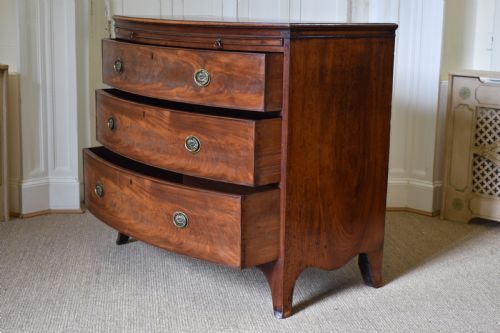
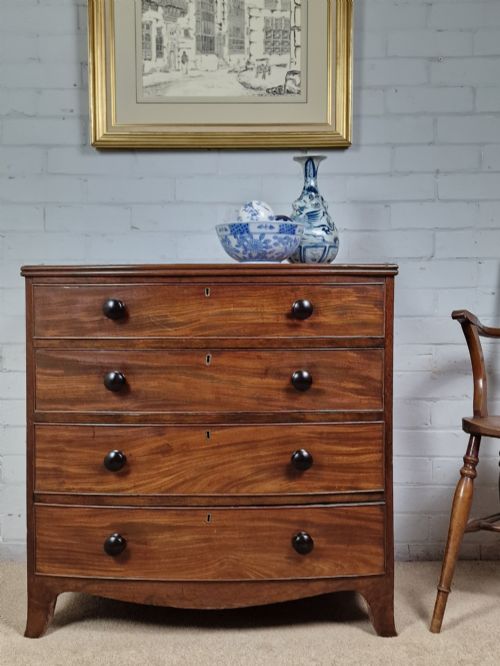
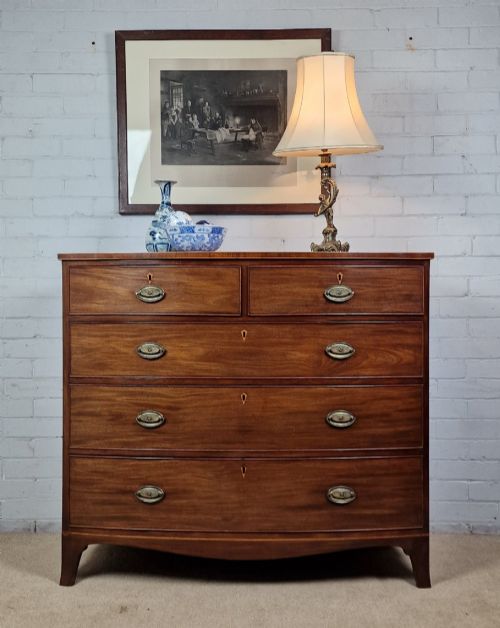
Bow Fronted Dresser
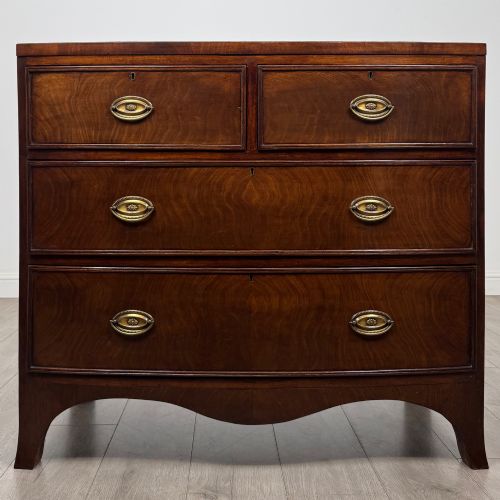
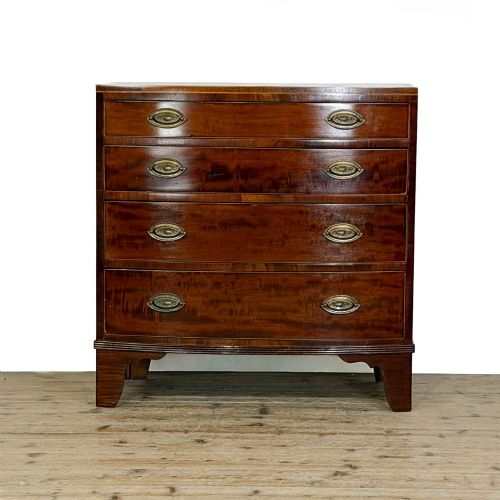
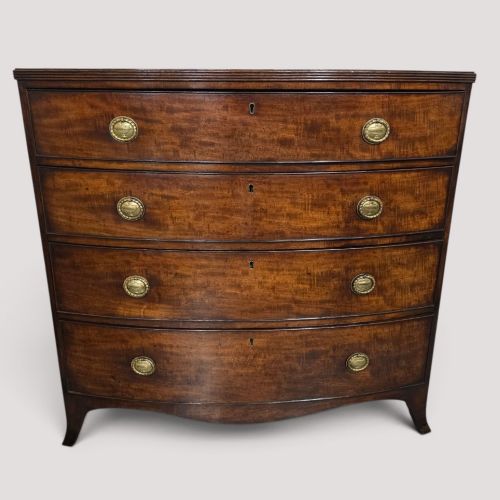
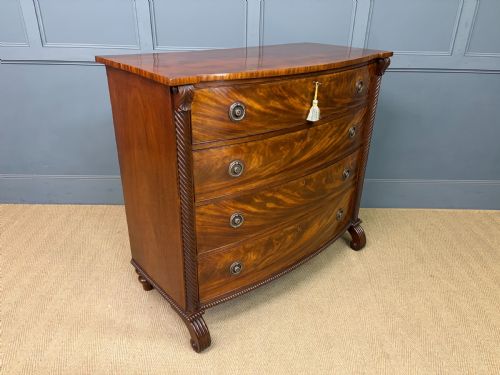
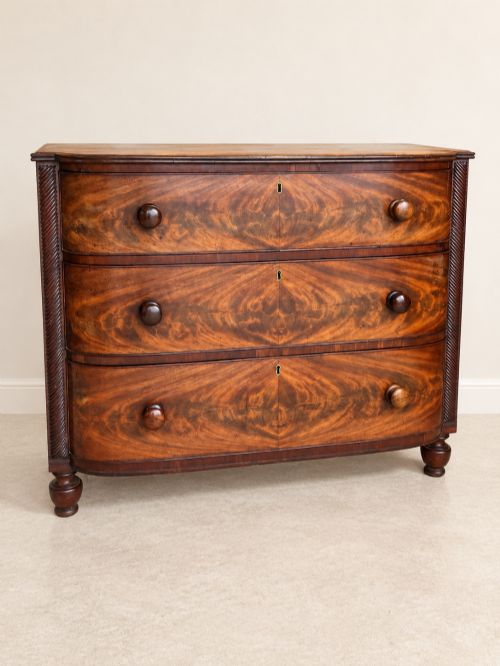
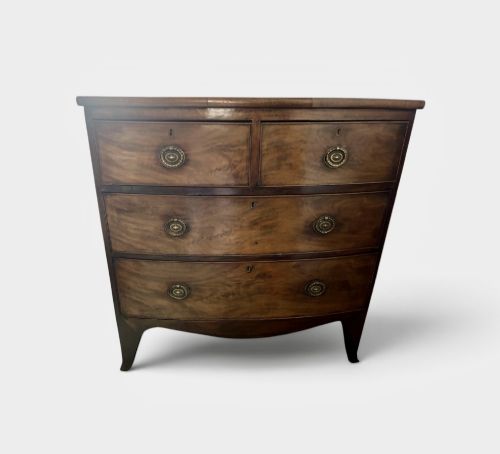
A bow fronted dresser brings a generous curved facade into a room, offering deep storage within compact proportions.

Bow Fronted Dresser
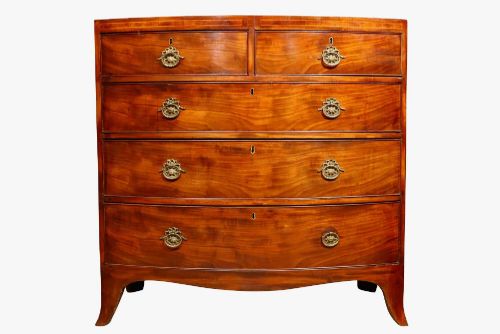
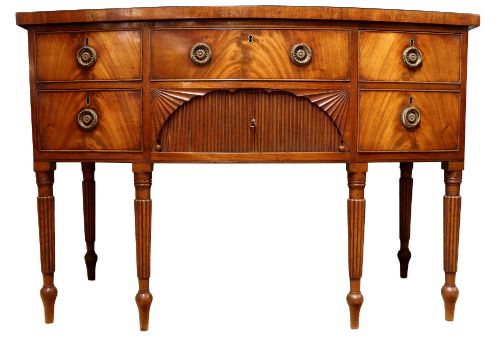
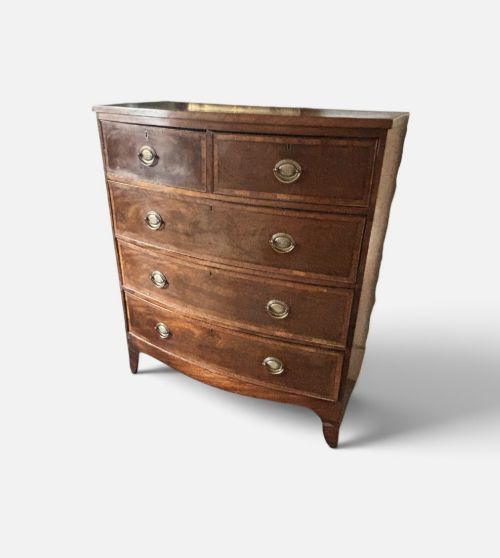
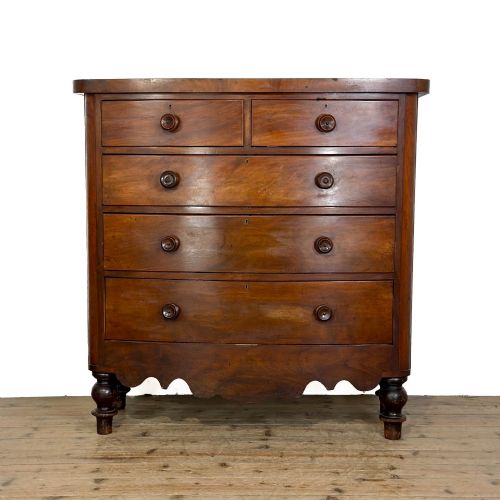
A bow fronted dresser primarily takes the form of a chest of drawers or a sideboard, shaped with a rounded, convex front that projects outward. These pieces date across the Georgian, Regency, Victorian, and Edwardian periods, stretching from the late eighteenth century into the early twentieth century.
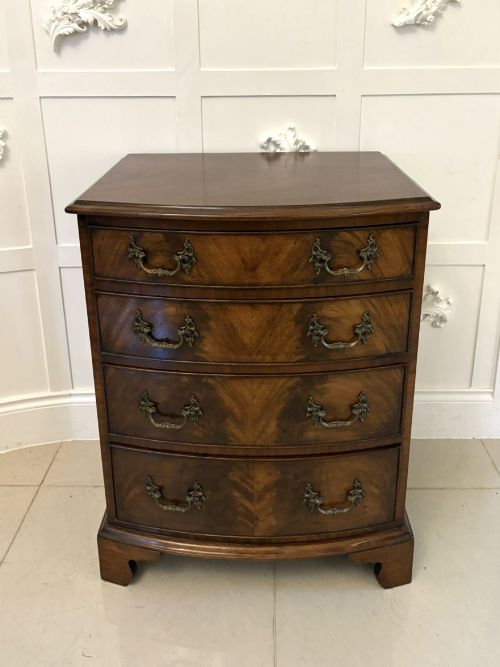
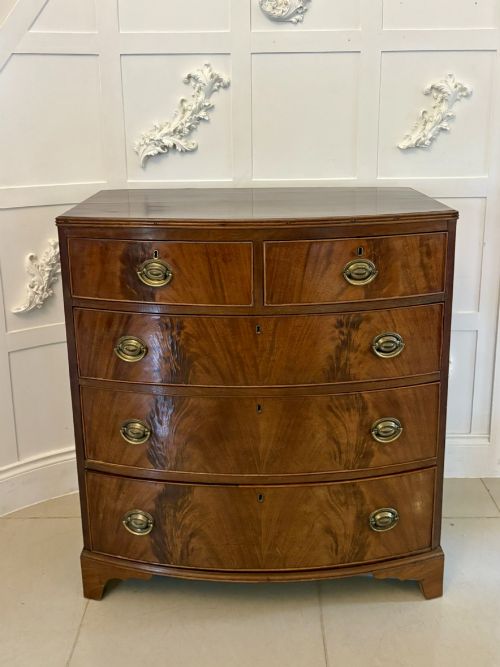
The version most commonly encountered on this page is the mahogany chest of drawers, often constructed in smaller proportions or neat Scottish formats. Makers built these storage items using various woods, pairing them with sideboards and buffets for dining and living spaces.
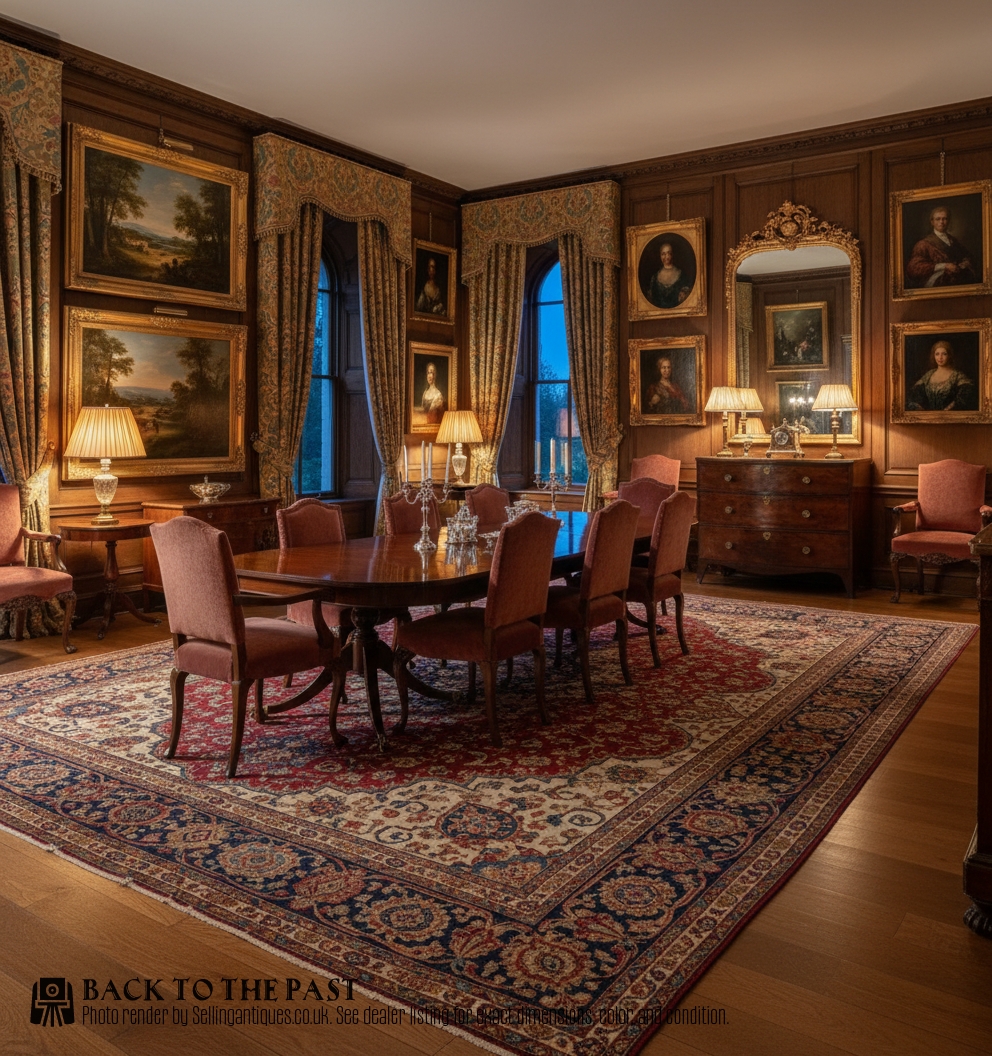
How they were made
Cabinet makers utilised solid timbers and applied veneers, notably flame mahogany and satinwood, to construct the curved carcass of a bow fronted dresser. Surfaces often feature crossbanding and brass hardware, relying on traditional joinery to shape the protruding drawer fronts.
Materials recorded across the inventory include brass, mahogany, flame mahogany veneer, satinwood, pine, wood veneer, and walnut.
What varies in quality
Quality rests heavily on the selection of timber veneers, where highly figured flame mahogany or contrasting satinwood crossbanding elevates a piece above plain surfaces. The crispness of the curved drawer fronts and the retention of a rich, deep patina mark superior cabinet work.
Proportion and scale distinguish finer examples, particularly neat or small formats that maintain balanced dimensions. The integration of original brass fittings and the smooth graduation of the drawers further separate standard items from the finest work.
The Bow Fronted Dresser Glossary
- Crossbanding
- A border strip of veneer laid around the perimeter of a drawer front so the grain runs perpendicular to the main panel. This decorative technique frames the curved surface of a bow fronted dresser.
- Flame mahogany
- A distinct wood veneer cut from branches or fork joints of the mahogany tree, displaying a flickering flame-like pattern. It provides striking visual movement across cabinet drawers.
- Satinwood
- A dense tropical timber with a luminous golden sheen used for inlay and banding. Cabinet makers paired it with darker woods to create sharp contrast.
- Graduated drawers
- A set of drawers decreasing in depth from bottom to top within a chest. This arrangement creates a balanced visual weight on a curved facade.
- Patina
- The deep surface sheen and mellow colour developed by aged wood over centuries of handling and polishing. It serves as an indicator of age and careful maintenance.
Bow Fronted Dresser: Frequently Asked Questions
What is a bow fronted dresser?
A bow fronted dresser is typically a chest of drawers or sideboard featuring a convex, outward-curving front facade. These items provide practical storage while softening the angles of a room.
Originating largely in the Georgian and Regency eras, they combine functional storage with decorative timber veneers like mahogany and satinwood.
How do I date a bow fronted dresser?
Dating relies on observing construction methods, timber choices, and overall design characteristics. Pieces from the Georgian and Regency periods often feature hand-cut dovetails and fine crossbanding.
Later Victorian and Edwardian examples tend to show heavier proportions and different interior secondary woods like pine. Examining the handles, drawer linings, and backboards helps narrow down the decade of manufacture.
Where should I place a bow fronted dresser?
These items suit hallways, living rooms, and bedrooms due to their curved profile, which removes sharp corners in busy walkways. Their compact or neat proportions allow them to fit against walls where standard rectangular furniture might protrude.
Pare them with simple table lamps or mirrors to highlight the figured wood grain on the top surface.
Are all bow fronted dressers made of mahogany?
While mahogany and flame mahogany veneer dominate the surviving pieces, other timbers appear across different periods. Walnut and oak examples are found alongside pieces incorporating satinwood details.
Secondary woods like pine commonly form the internal drawer boxes and carcase linings regardless of the primary exterior timber.