
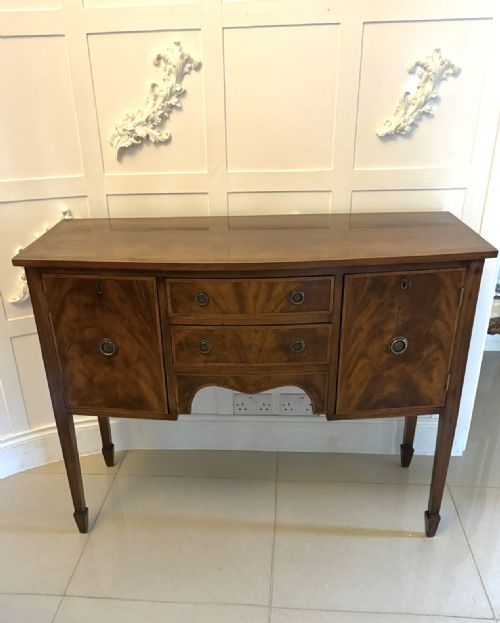
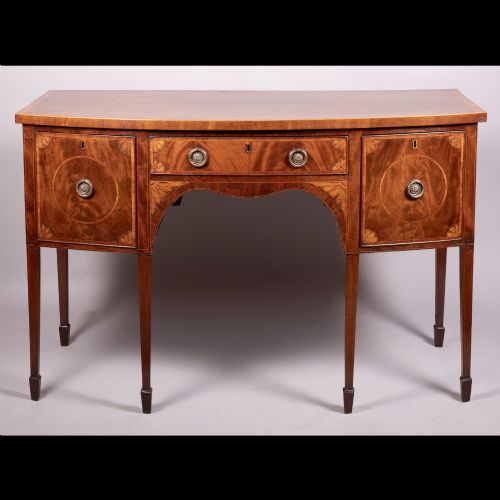
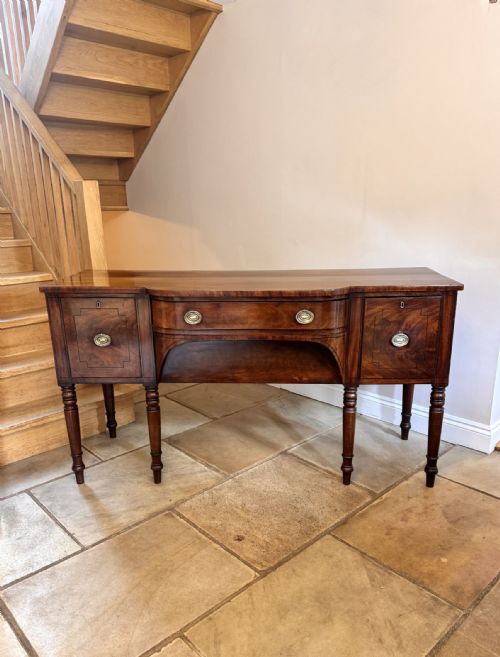


Bow Fronted Buffet Table
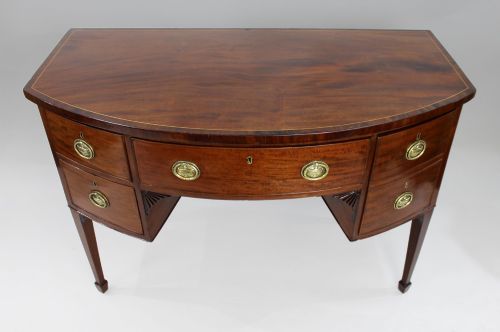
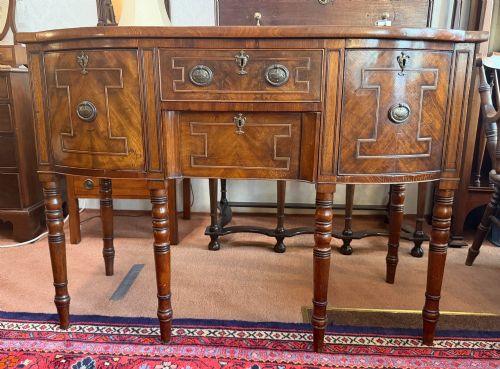
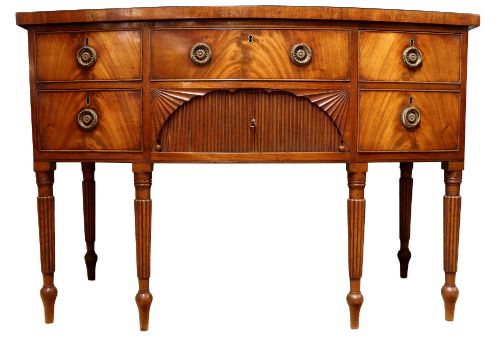
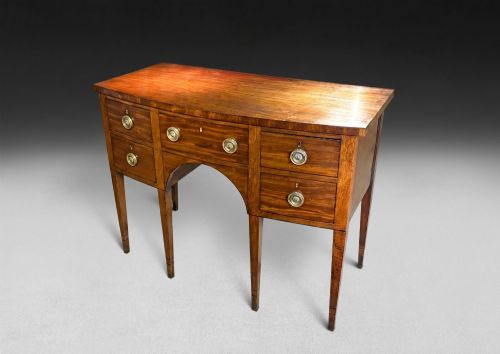
A bow fronted buffet table is a curved timber serving piece designed for dining rooms, offering generous storage and a graceful silhouette.
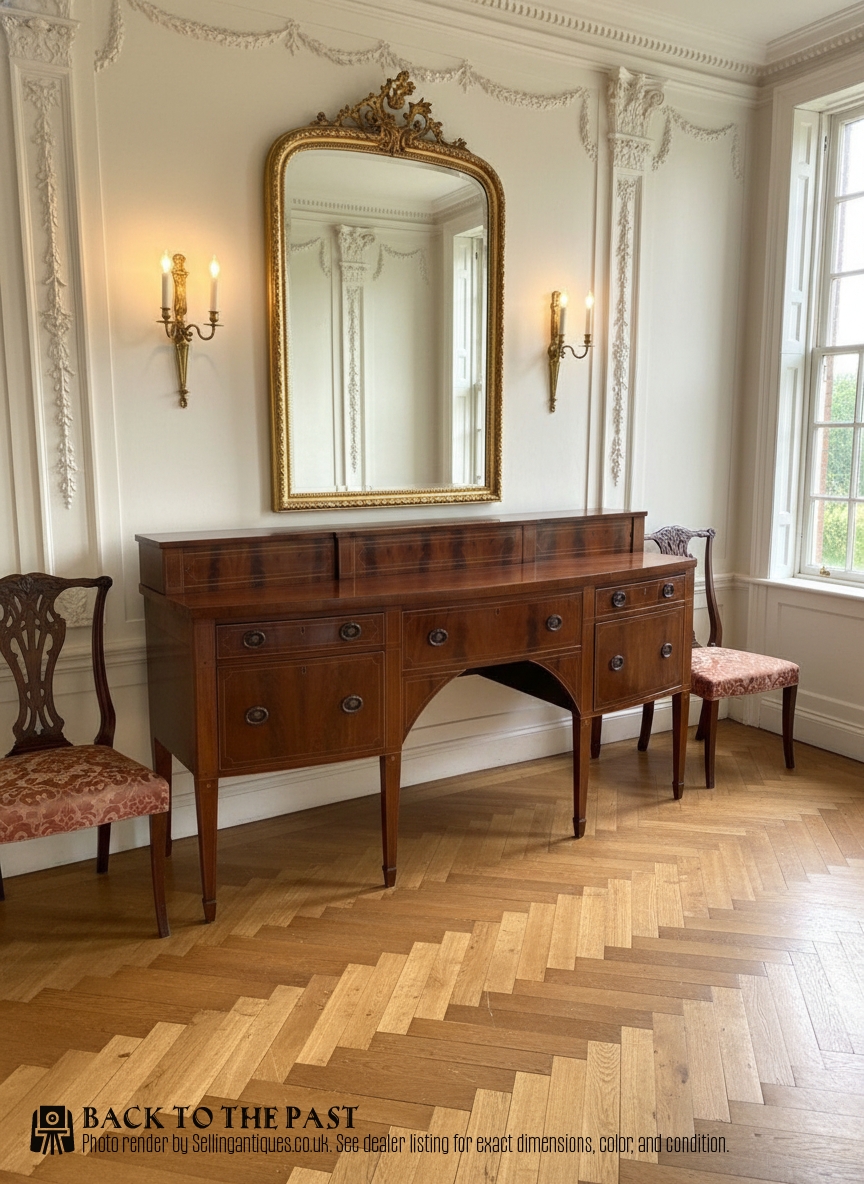
Bow Fronted Buffet Table
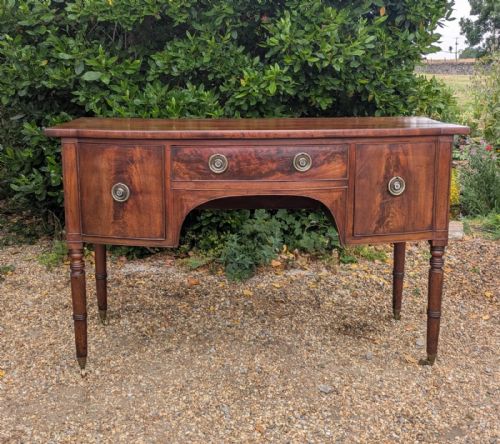
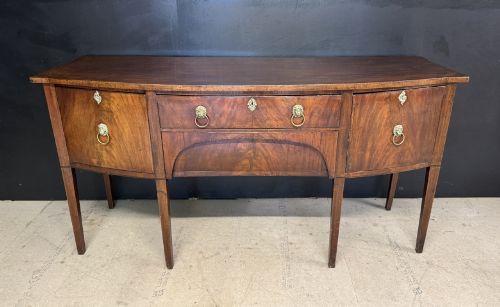
When searching for a bow fronted buffet table, buyers encounter a variety of serving pieces, sideboards, and servers spanning the Georgian, Regency, and Edwardian periods. The curved front softens the formal lines of a dining room while providing practical surface area and interior storage.
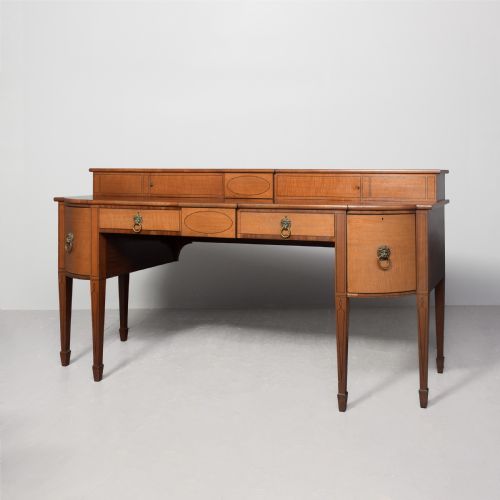
Most pieces seen on this page date from the eighteenth and nineteenth centuries, constructed predominantly in mahogany with varied proportions ranging from small sideboards to large stage-back designs. Cabinetmakers utilised the curved facade to create depth and visual interest in domestic interiors.
Materials and construction
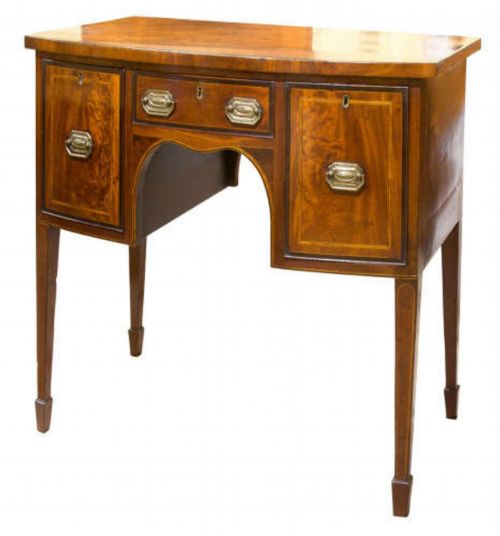
Craftsmen built these pieces primarily using solid mahogany and flame mahogany veneer, often accentuating the curved drawer fronts with contrasting boxwood stringing or satinwood inlay.
Structural elements frequently incorporated oak for drawer linings and secondary framing, while brass hardware such as ring pulls or handles completed the execution.
Listings for a bow fronted buffet table span the Georgian, Regency, Victorian, and Edwardian eras, predominantly featuring mahogany and satinwood inlay.
Distinguishing quality and execution
Superior examples exhibit carefully chosen flame mahogany veneers that match symmetrically across the curved front, showing thoughtful planning by the maker. Inferior pieces rely on plain timber without the same depth of figure.
Fine craftsmanship is evident in the precision of the inlay work, such as delicate boxwood stringing and purpleheart banding, alongside tight drawer dovetailing that ensures longevity.
The Bow Fronted Buffet Table Glossary
- Bow front
- A convex curved front profile that projects outward in the centre, commonly found on sideboards and serving tables. This shape became popular during the Georgian and Regency periods to soften room angles.
- Flame mahogany
- A distinct wood veneer figure resembling flickering flames, sliced from timber where the branches join the main trunk. Cabinetmakers prized this grain for its dramatic visual movement on primary surfaces.
- Stringing
- Narrow inlay lines of contrasting wood, such as boxwood, set into the surface to outline drawers and borders. It provides a crisp linear definition against dark mahogany.
- Stage-back
- An elevated tier or superstructure at the rear surface of certain larger sideboards. This addition offered extra display space for serving platters and silverware.
Bow Fronted Buffet Table: Frequently Asked Questions
Where should I place a bow fronted buffet table?
These pieces suit dining rooms and large hallways where their curved facade can be appreciated without obstructing heavy traffic flow.
Ensure adequate wall space exists to accommodate the outward projection of the bow shape.
How do I clean mahogany surfaces safely?
Dust regularly with a soft, dry cloth and apply a quality natural beeswax periodically to nourish the timber.
Avoid silicone-based sprays and keep the wood away from direct heat sources and strong sunlight.
Can I use a buffet table for drinks storage?
Many period sideboards and buffet cabinets feature deep drawers and cupboards originally intended for bottles and glassware.
Use protective coasters inside the drawers to prevent moisture rings on the historic timber.
How do I distinguish Georgian from Edwardian pieces?
Georgian pieces typically date from the eighteenth and early nineteenth centuries, displaying hand-cut joinery and period-specific proportions.
Edwardian reproductions and later interpretations from the twentieth century often utilise lighter internal construction methods and different secondary woods.