
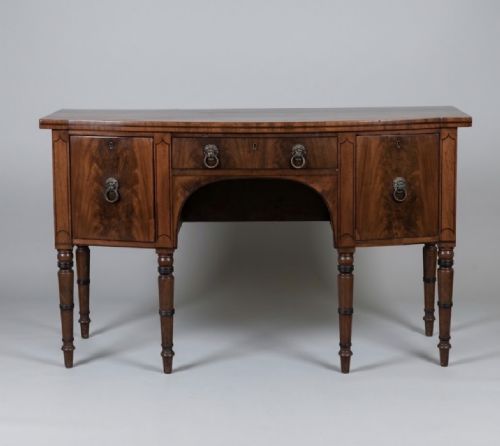
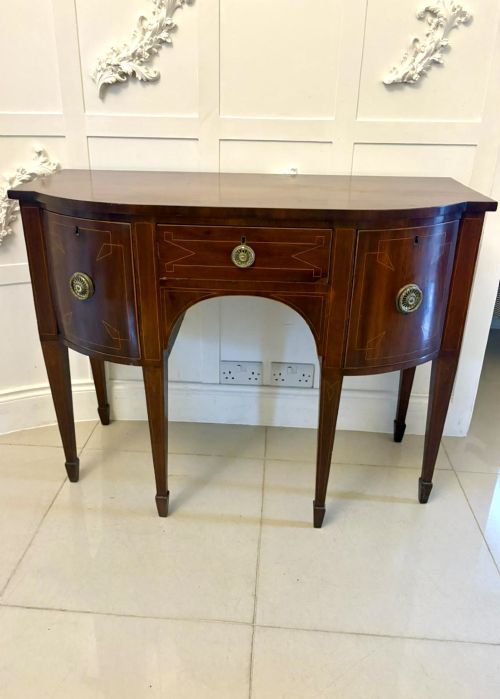
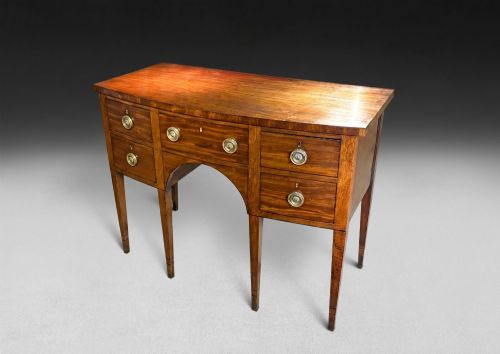
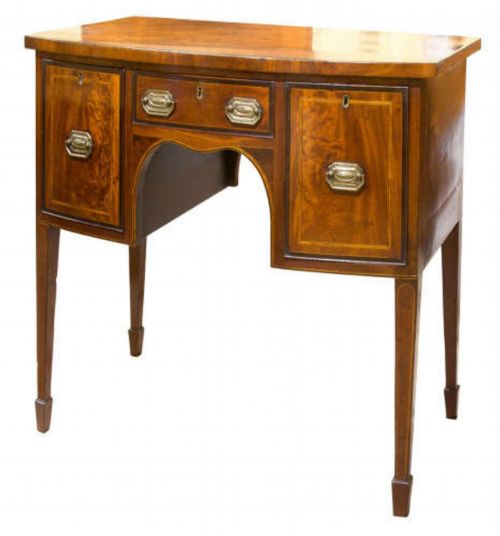


George III Bowfront Credenza
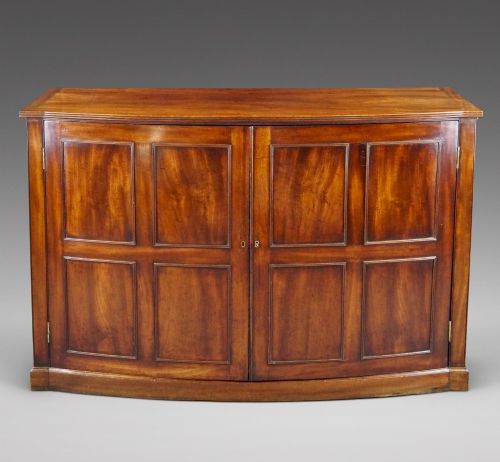
A george iii bowfront credenza combines curved timber fronts with deep storage, offering a practical centrepiece for dining rooms.
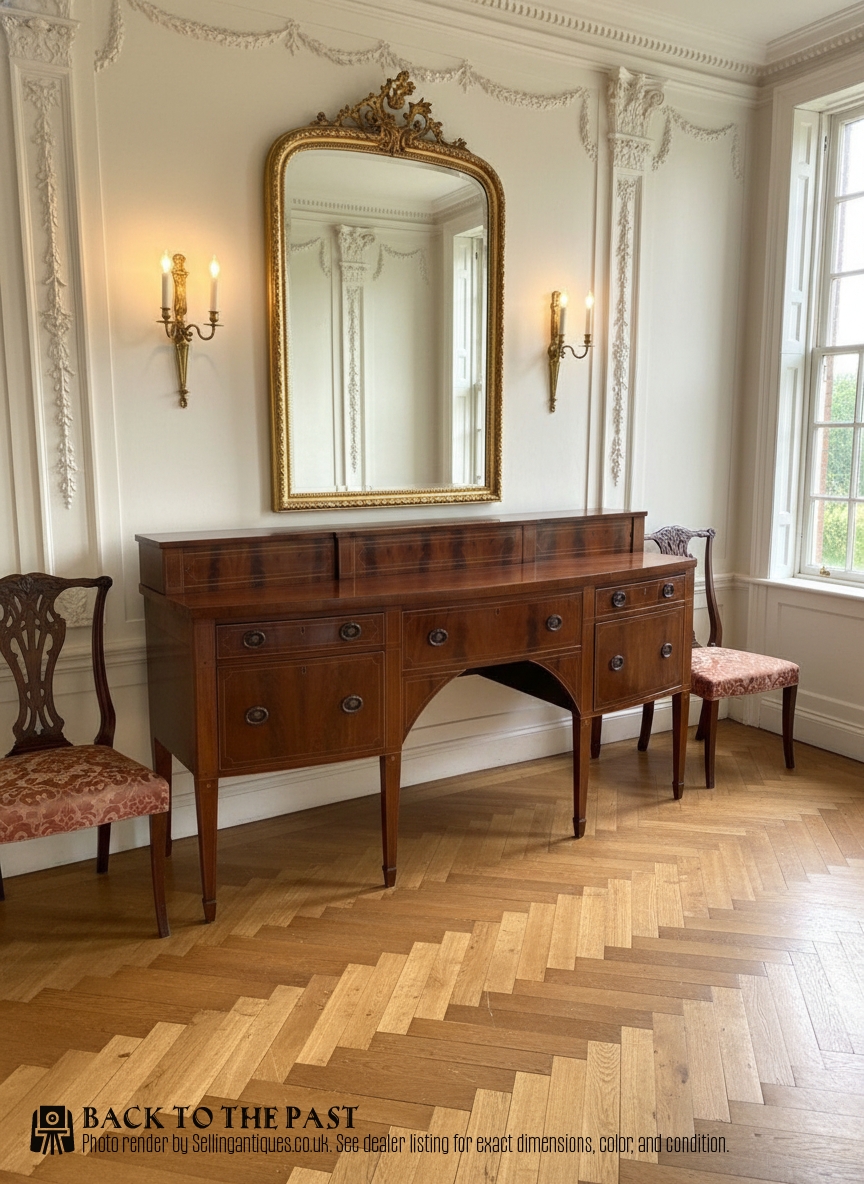
George III Bowfront Credenza
A george iii bowfront credenza usually takes the form of a bow-fronted sideboard or storage cupboard originating from the eighteenth century or later revival periods. These items provide functional storage space with a curved facade that softens the lines of a traditional dining room.
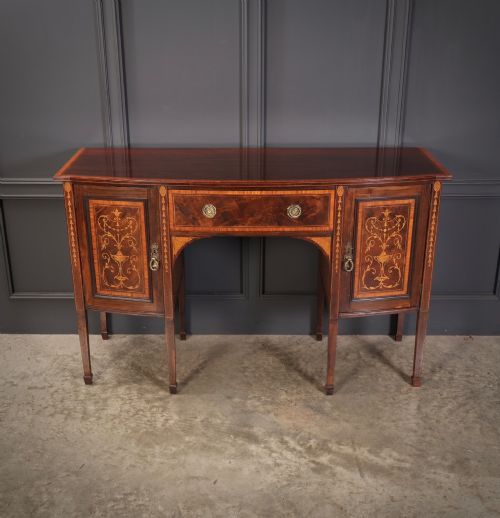
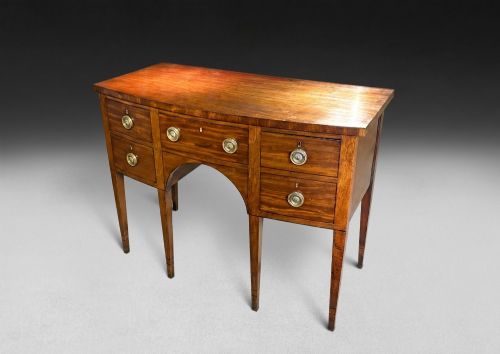
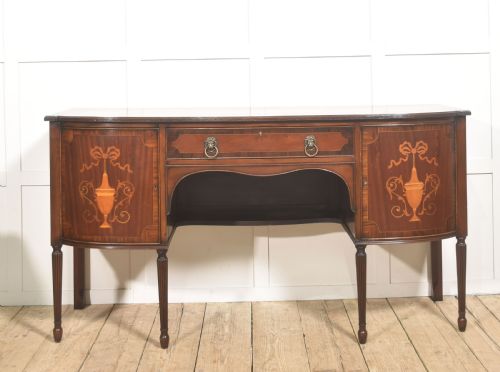
The pieces appearing under this search phrase span genuine eighteenth-century examples alongside later Sheraton revival interpretations from the early twentieth century. Most items present a mahogany carcase shaped with a convex curve at the front.
Makers and cabinetmakers constructed these forms to serve dining spaces, functioning as serving tables or storage units for tableware. Buyers encounter both compact small proportions and larger formats designed for extensive rooms.
What varies in quality
The visual impact depends heavily on the grain selection within the mahogany, where flame figures and rich natural colour elevate the appearance. Superior examples display precise alignment in the boxwood stringing and inlay work across the curved drawers.
Construction standards separate standard production from master cabinetmaking through the thickness of the drawer linings and the neatness of the dovetail joints. The proportion of smaller scaled pieces relative to their depth dictates their desirability.
Scottish workshops occasionally built these curved sideboards with unusually deep proportions to accommodate massive Scottish dining customs.
The George III Bowfront Credenza Glossary
- Bowfront
- A convex curved front cabinet design that projects outward in an arc. This shaping softens rectilinear room layouts.
- Flame mahogany
- A distinct timber figure resembling flickering flames, sliced from specific log sections. Cabinetmakers prized this grain for primary drawer fronts.
- Boxwood stringing
- Thin inlaid lines of contrasting pale wood set flush into the darker carcase. This technique frames panels and drawer edges.
- Purpleheart
- A dense American hardwood exhibiting a distinct purple hue when freshly cut, turning brown with age. Craftsmen utilised it for subtle banding accents.
- Sheraton revival
- A design movement reviving late eighteenth-century classical motifs during the late nineteenth and early twentieth centuries. These pieces emulate earlier proportions and inlay patterns.
George III Bowfront Credenza: Frequently Asked Questions
What is a george iii bowfront credenza?
These items are primarily eighteenth-century or revival mahogany sideboards featuring a curved front facade and deep internal storage.
Cabinetmakers designed them for dining rooms to hold serving dishes, cutlery, and linens.
How do I identify a genuine period piece?
Examine the secondary woods inside the drawers, such as oak, alongside the hand-cut dovetails and timber ageing characteristics.
Revival pieces from later centuries often utilise different internal construction methods and standardised fixings.
Where were these pieces used historically?
Dining rooms formed the primary location for these items, serving as functional surfaces during formal meals.
Their substantial storage capacity allowed households to keep dining accessories close at hand.
How should I care for mahogany furniture?
Keep wooden surfaces away from direct sunlight and sudden temperature shifts to prevent timber movement and fading.
Apply traditional wax polish occasionally to nourish the grain and maintain the natural lustre.