
Bow Front Dining Sideboard
A bow front dining sideboard brings curved grace to a room, offering deep storage for dining ware while softening the linear geometry of a traditional interior.
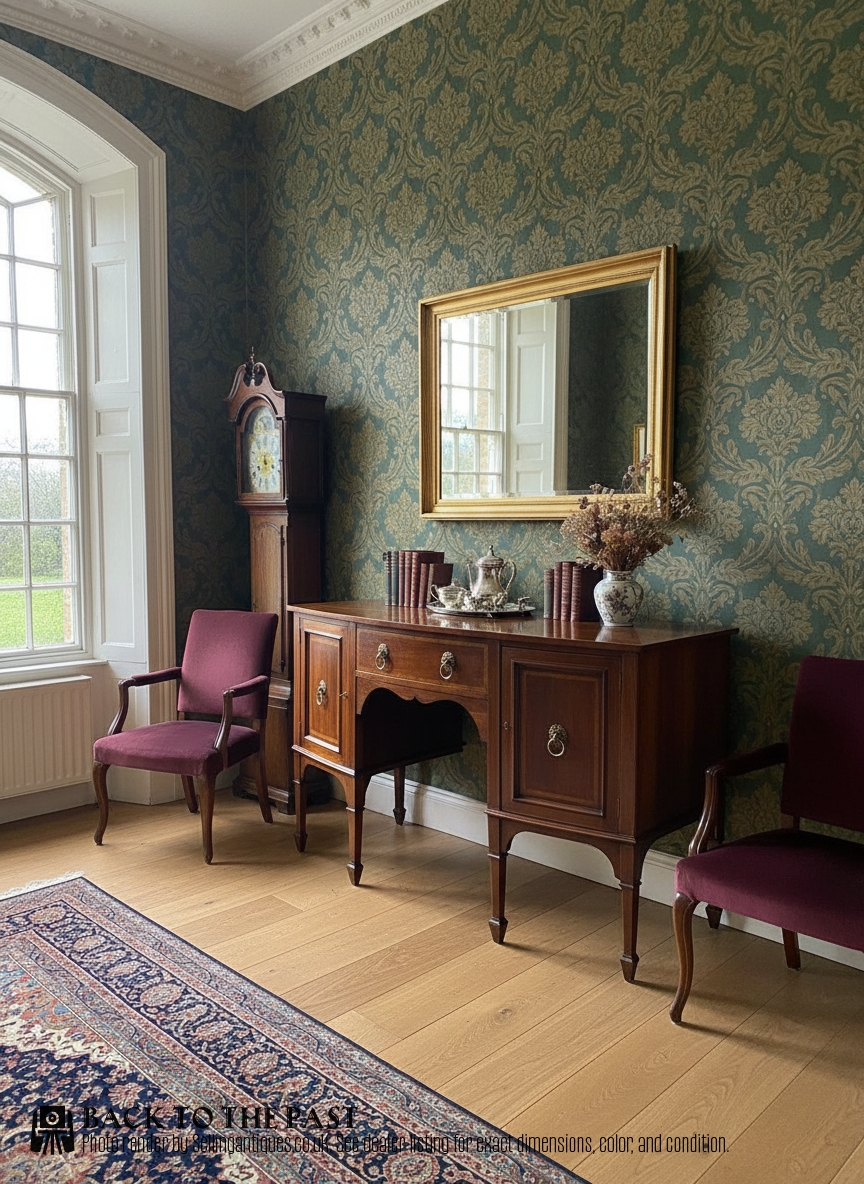
Bow Front Dining Sideboard
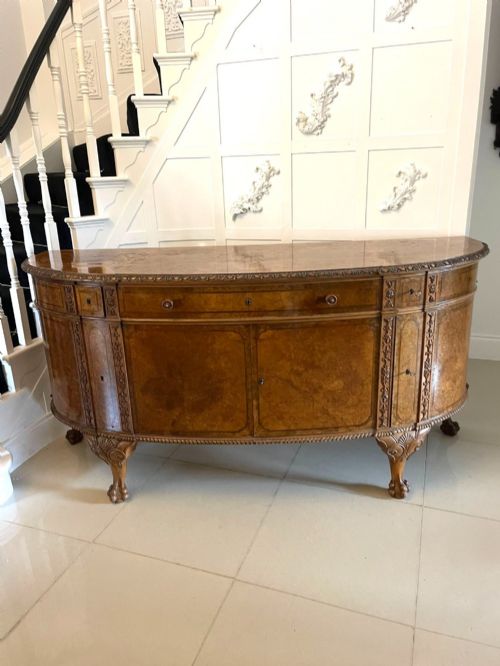
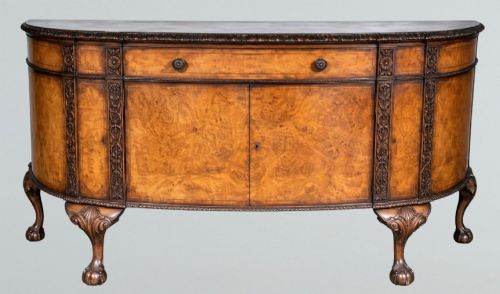
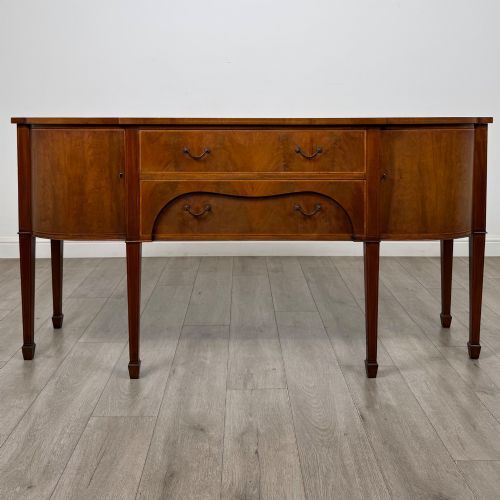
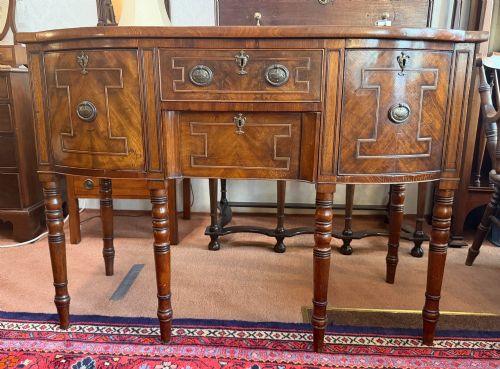
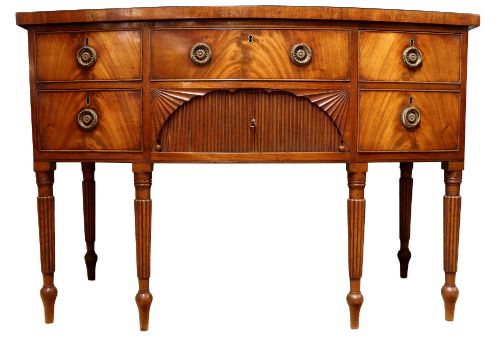
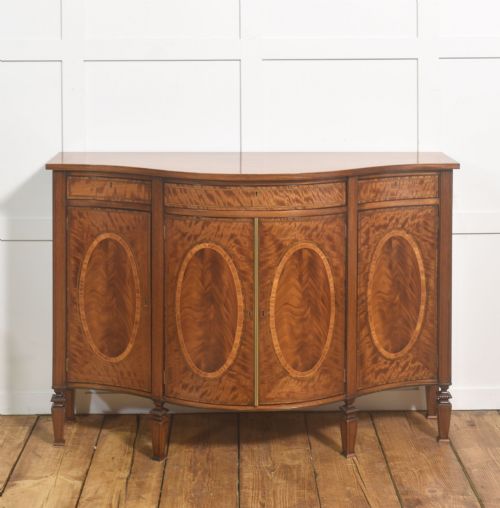
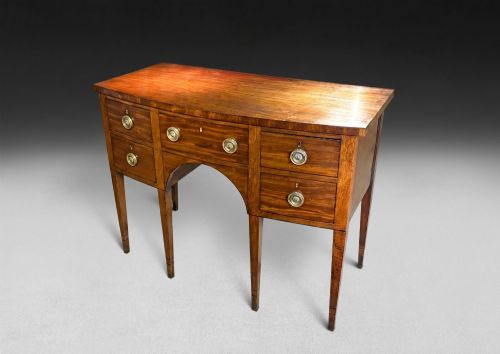
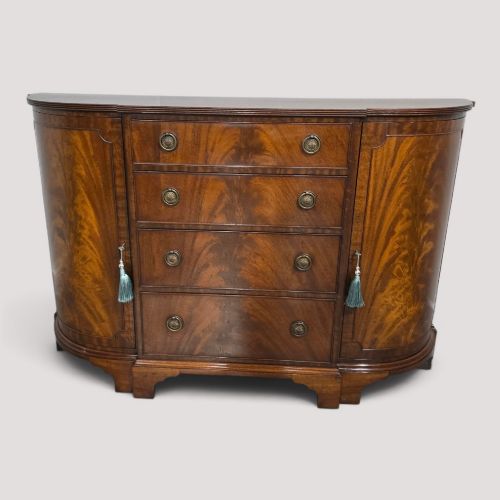
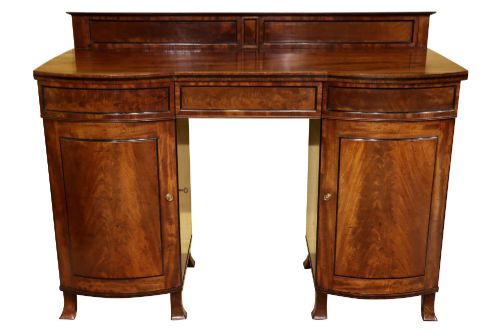
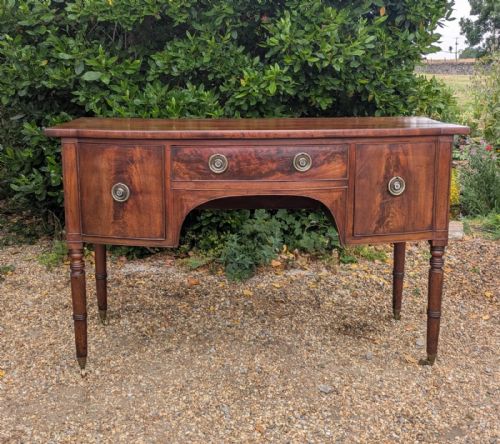
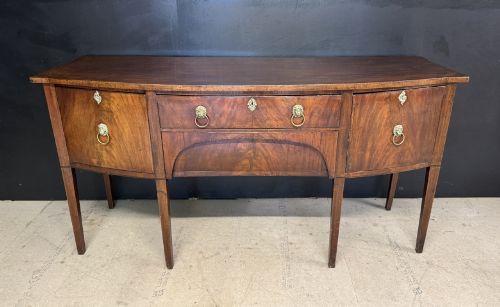
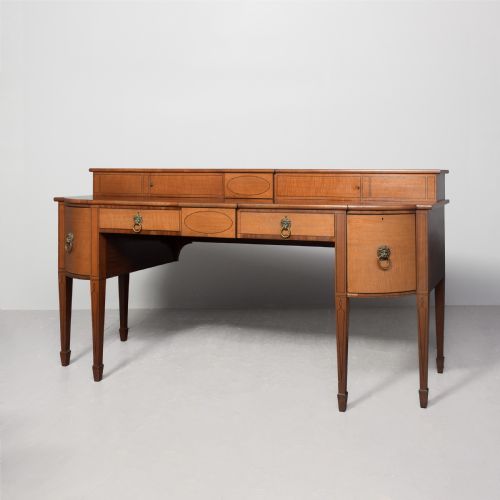
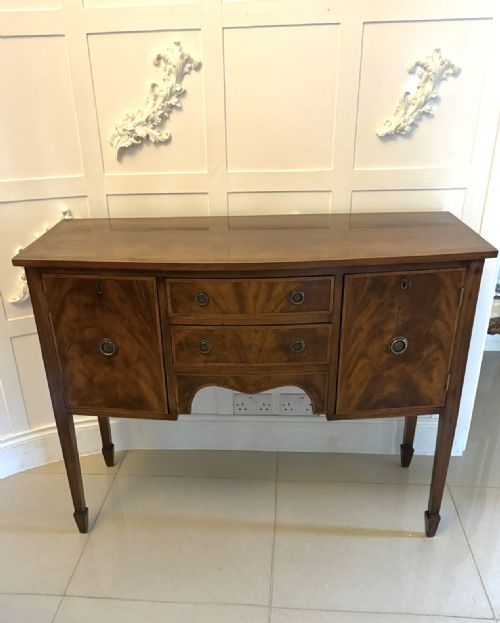
A bow front dining sideboard presents a convex curving facade designed to sit against a dining room wall. These pieces primarily date from the Georgian, Regency, and Edwardian periods, stretching into the early twentieth century.
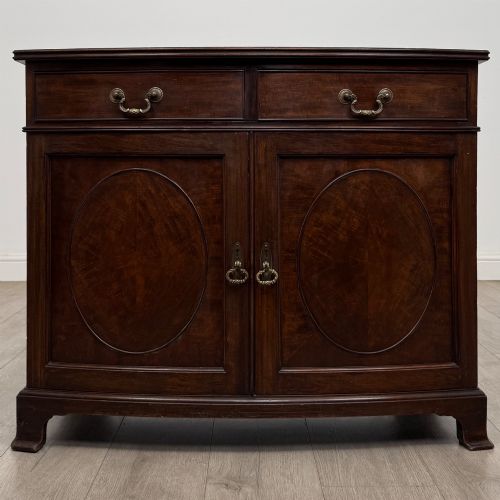
The form appears in various proportions, from small compact server units to large stage-back and pedestal formats. Makers adapted the curved line across standard sideboards, side cabinets, and cupboards.
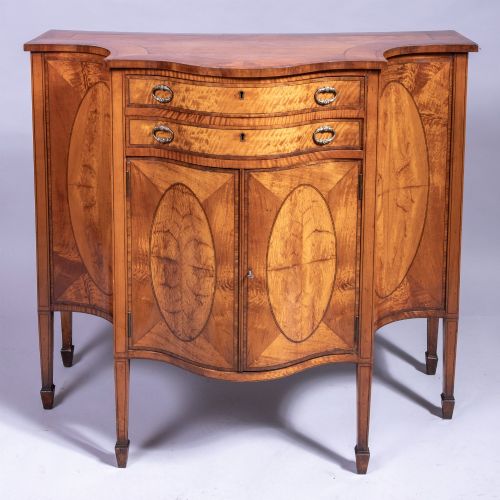
Mahogany forms the dominant timber across the selection, often enriched with satinwood, boxwood, and burr walnut. Buyers encounter both restrained eighteenth-century carcases and later revival interpretations.
Materials and Construction
Makers utilised solid timbers alongside flame mahogany veneer to create rich grain patterns across the curved doors and drawers. Boxwood and satinwood inlay provided contrasting stringing and geometric details.
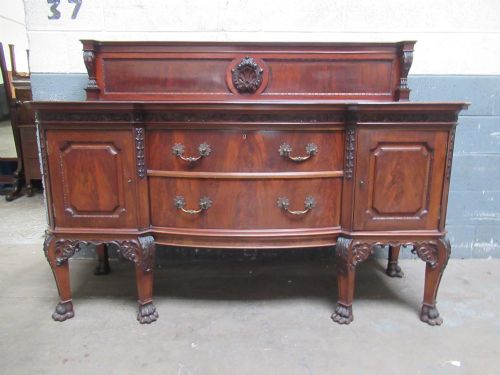
Brass hardware, including handles and sometimes gallery rails, complemented the warm tones of the wood. Carved elements and marquetry work appeared on specific revival and Edwardian examples.
Listings feature mahogany, burr walnut, and satinwood across Georgian, Victorian, and Edwardian periods.
Assessing Quality
Quality rests on the selection of figured veneers and the precision of the boxwood or satinwood inlay work. Superior examples display seamless curves in the timber without warping or cracking across the broad expanse of the front.
Interior construction, including secondary timbers used for drawer linings and the crispness of any carved decoration, separates standard utility pieces from exceptional cabinet work.
Edwards and Roberts
The Bow Front Dining Sideboard Glossary
- Bow front
- A convex curved cabinet front that projects outward in an arc. This shape softens the corners of a formal dining room.
- Inlay
- Pieces of contrasting timber fitted into a recessed surface to form a pattern. Boxwood and satinwood frequently serve this purpose on mahogany carcases.
- Pedestal sideboard
- A form featuring distinct side pedestals flanking a central section. These often date to the Regency period.
- Stage-back
- A raised rear superstructure on a sideboard used for displaying serving dishes. Scottish Georgian examples frequently incorporate this feature.
- Stringing
- Thin lines of contrasting wood inlaid around drawer edges and borders. It defines the structural lines of the furniture.
Bow Front Dining Sideboard: Frequently Asked Questions
How do I date a bow front dining sideboard?
Dating relies on timber selection, handle styles, and construction methods visible inside the drawers. Georgian and Regency pieces show hand-cut dovetails and native secondary woods.
Later Edwardian and revival pieces often reveal mechanical saw marks and different interior framing. Comparing the specific veneer types and inlay motifs against known period styles confirms the era of manufacture.
Where should I place a bow front dining sideboard?
These pieces traditionally anchor the longest wall in a dining room, opposite the table or near the doorway for serving convenience. The curved front allows easier circulation in tighter spaces than a sharp rectangular corner.
Ensure the room humidity remains stable to protect the mahogany veneers and solid timber carcase from splitting along the curves.
What is the difference between George III and Sheraton Revival?
George III pieces date from the eighteenth century and represent the original period of production. They rely on proportion and timber figure for their elegance.
Sheraton Revival furniture dates from the late nineteenth or early twentieth century. These later pieces copy earlier designs but often incorporate denser marquetry and different internal construction.
Can I use a sideboard for storage?
Sideboards were originally designed to hold cutlery, linens, and serving dishes within their deep drawers and cupboards. They serve the exact same functional purpose in a modern home.
The internal fitted compartments and cutlery sets found in some examples help organise modern dining accessories.