
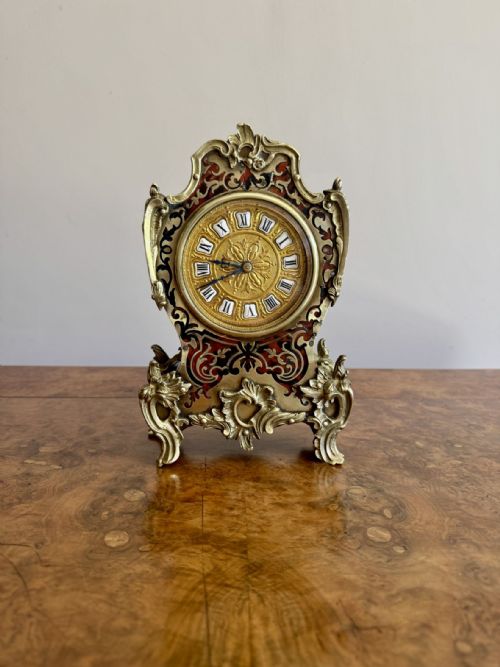


Boulle Marquetry Table
A boulle marquetry table brings together tortoiseshell, brass, and ebonised wood in a display of French decorative skill.
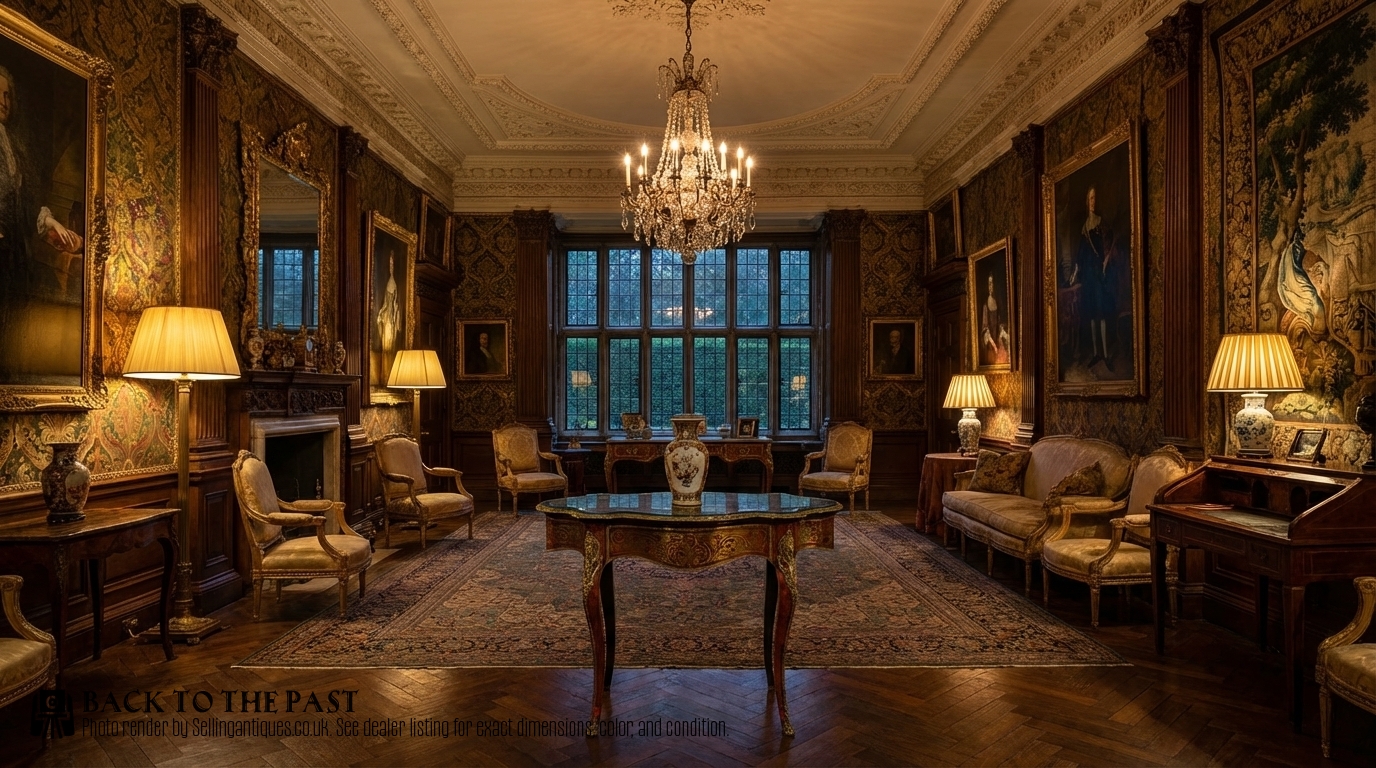
Boulle Marquetry Table
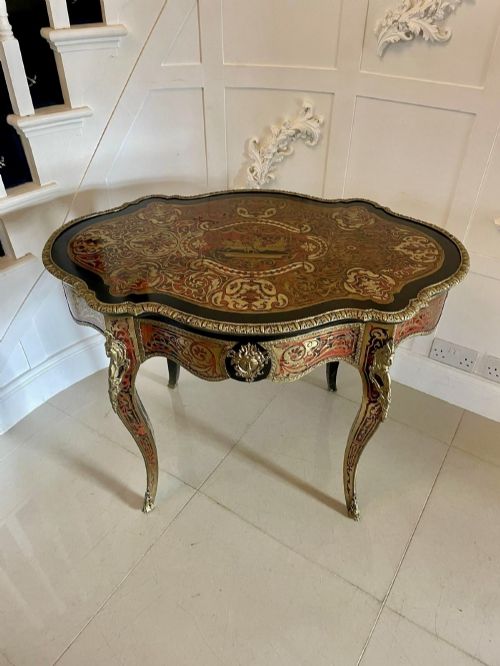
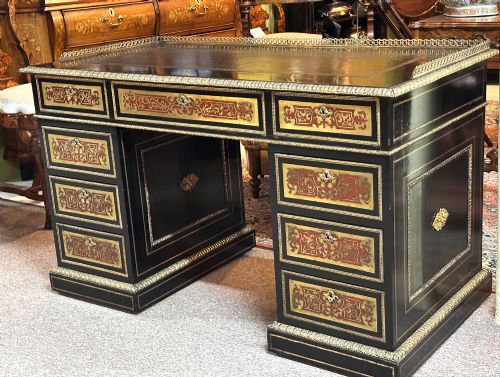
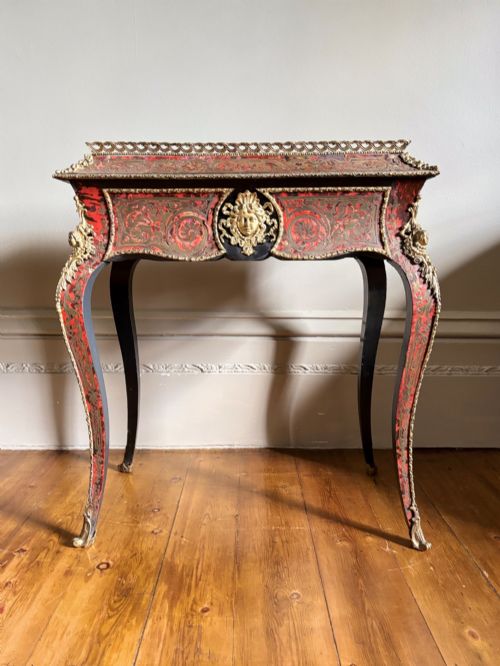
A boulle marquetry table is a striking item of French furniture designed to catch the eye in a reception room or study. When searching for a boulle marquetry table, buyers encounter various nineteenth-century forms such as centre tables, writing desks, card tables, and jardiniere stands.
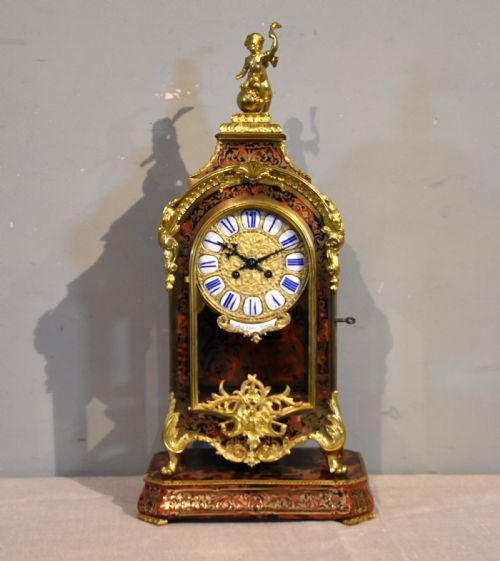
The selection on this page draws heavily from Victorian and nineteenth-century French production, particularly pieces echoing Louis XV and Louis XIV revivals. Alongside tables, the records show related mantel clocks executed in the same distinctive technique.
How they were made
Craftsmen built these pieces using ebonised wood as a dark ground to contrast with inlaid metallic and organic sheets. Brass and tortoiseshell were cut together in a stacked method to create matching positive and negative motifs.
Gilt bronze and ormolu mounts were cast and applied to edges, corners, and legs to accentuate the curvilinear profiles of the revival styles. Leather inserts occasionally appear on the writing surfaces of desks and tables.
Boulle Marquetry Table Retail Price Guide 2026
Typical asking prices for boulle marquetry table among the pieces listed under this phrase on Sellingantiques today, from the lower quarter to the upper quarter. They describe what is for sale here now, not the wider market.
Listings demonstrate a strong presence of nineteenth-century French pieces, featuring brass, tortoiseshell, and ebonised wood across tables and clocks.
What varies in quality
The distinction between standard production and the finest work lies in the crispness of the brass cutting and the depth of the tortoiseshell tones. Superior examples display minute detail in the engraved lines of the metal inlay and secure flush fitting against the wood ground.
Makers known for exceptional standards, such as Maison Millet or Edwards & Roberts, applied rigorous care to the construction of carcases and the finishing of ormolu mounts. Lower tiers of quality show simpler brass work with less refined engraving and wider joints.
Maison Millet·Edwards & Roberts·Samuel Marti
The Boulle Marquetry Table Glossary
- Boulle marquetry
- A decorative technique using cut brass and tortoiseshell inlaid into a wooden ground. It is named after André-Charles Boulle, cabinetmaker to Louis XIV.
- Ormolu
- Gilded bronze used for decorative mounts and furniture trimmings. The term derives from the French for milled gold.
- Ebonised wood
- Timber treated to resemble ebony, providing a dark background for metal and shell inlay. This finish is typical of nineteenth-century revival furniture.
- Bureau plat
- A type of writing desk with a flat top and drawers beneath the apron. These desks often feature extensive brass and tortoiseshell inlay.
- Jardiniere stand
- A decorative stand designed to hold plants or floral arrangements. In nineteenth-century French work, these often incorporated detailed marquetry and ormolu mounts.
Boulle Marquetry Table: Frequently Asked Questions
What is a boulle marquetry table?
A boulle marquetry table is an ornate nineteenth-century French table decorated with tortoiseshell and brass inlay.
These pieces reflect historic revival styles popular during the Victorian era and Napoleon III period.
How do I identify the period?
Look to the combination of ebonised wood, cast ormolu mounts, and precise brass and shell patterns.
Nineteenth-century pieces frequently emulate earlier Louis XIV and Louis XV designs with characteristic proportions.
Where were these tables placed?
These tables served as centrepieces in formal drawing rooms or as functional writing desks in private studies.
Smaller examples functioned as card tables or display stands for decorative objects.
Are clocks made in the same style?
Mantel clocks and bracket clocks frequently match the materials of these tables, utilising brass and tortoiseshell.
Clockmakers housed movements in cases decorated with identical marquetry techniques.