


Botanical Painted Porcelain Dish
When you search for a botanical painted porcelain dish, you are looking at hand-decorated tableware from the eighteenth, nineteenth, and early twentieth centuries.
Botanical Painted Porcelain Dish
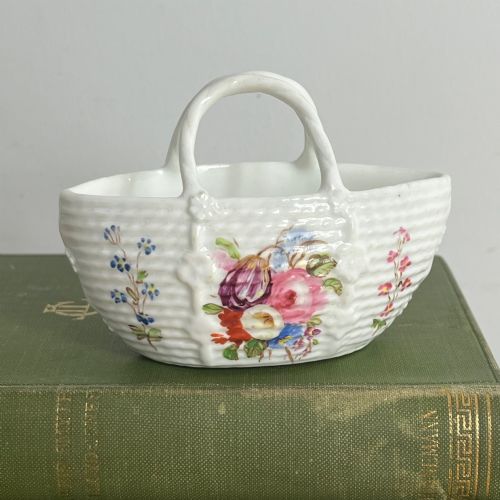
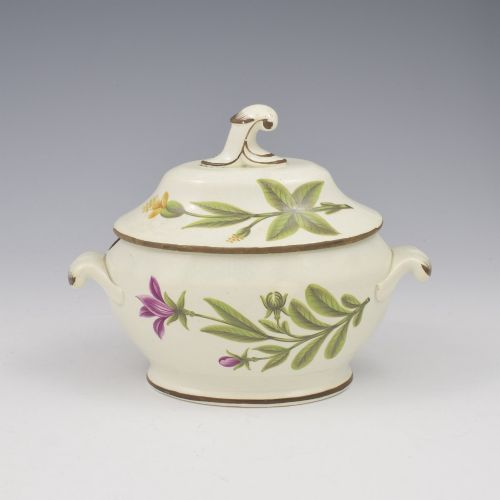
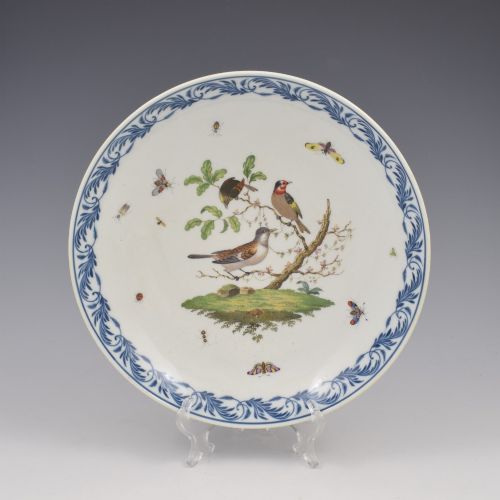
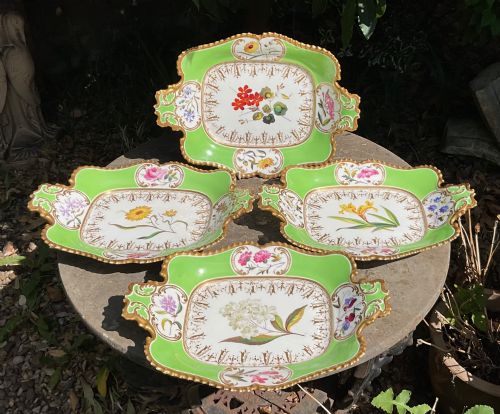
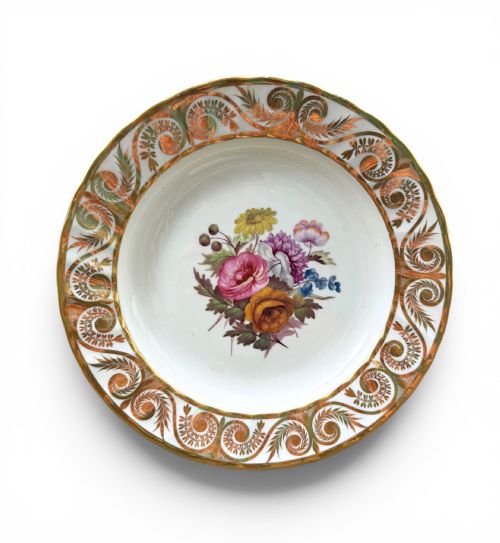
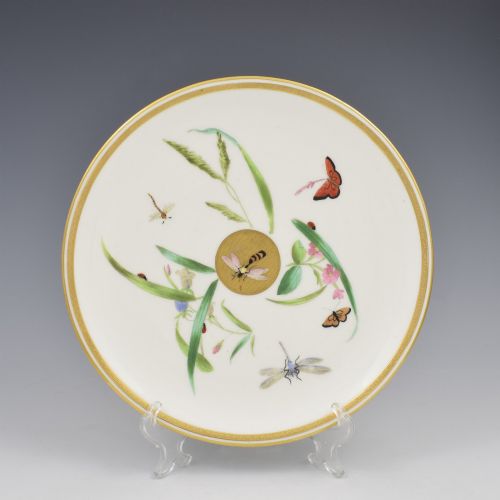
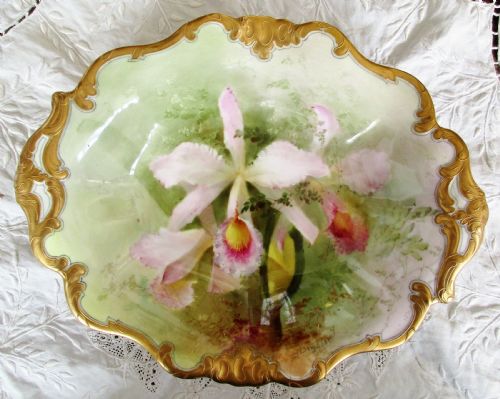
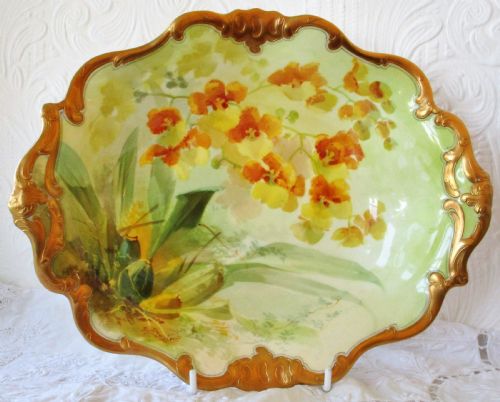
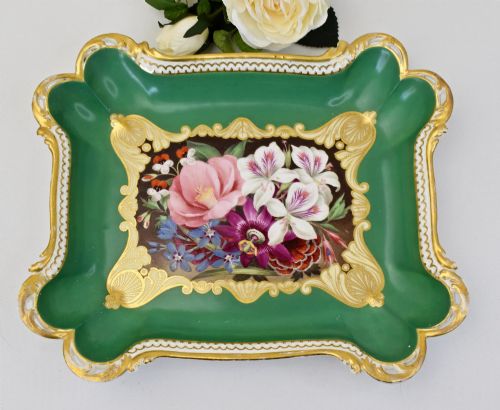
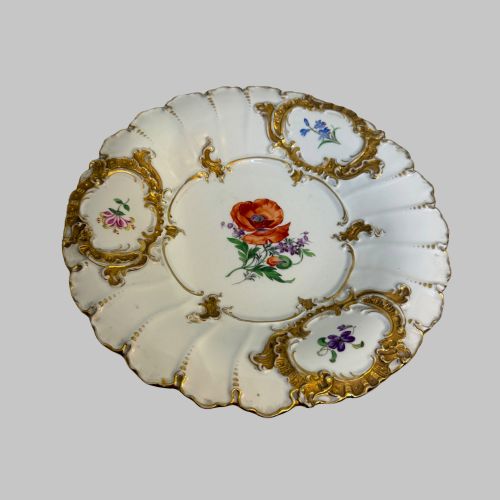
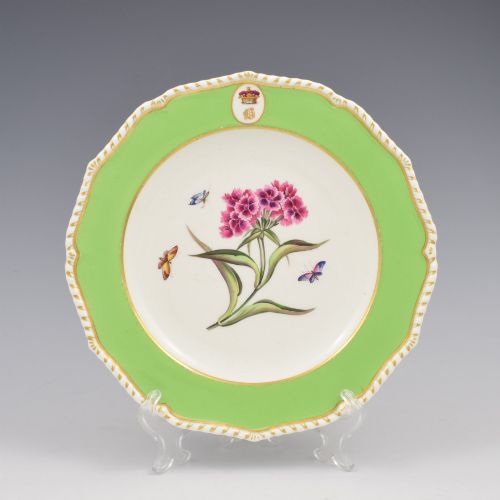
A botanical painted porcelain dish covers a broad range of domestic forms, including cabinet plates, dessert plates, serving dishes, and decorative baskets created to display painted flora, fauna, and birds. These items emerge from prominent English and continental factories spanning the Georgian, Regency, and Victorian periods.
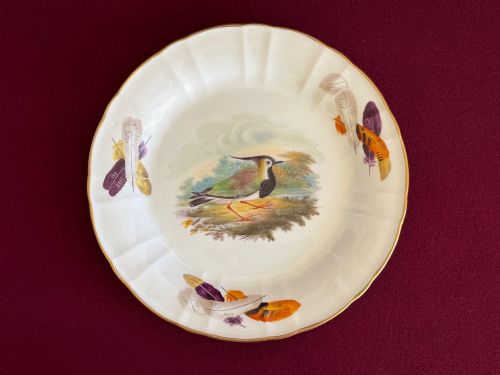
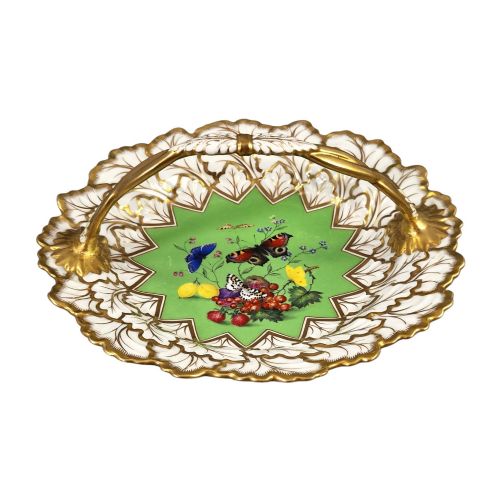
The most common versions met on this page are English factory pieces from Worcester, Coalport, and Derby dating to the early nineteenth century. They include botanical dessert services and cabinet pieces painted with individual floral specimens, native birds, and butterflies.
Continental equivalents from Meissen, Sèvres, and KPM also appear, offering alternative forms such as fluted dishes and ornithological dessert bowls. These objects served both functional roles at dining tables and decorative purposes in cabinet displays.
How they were made
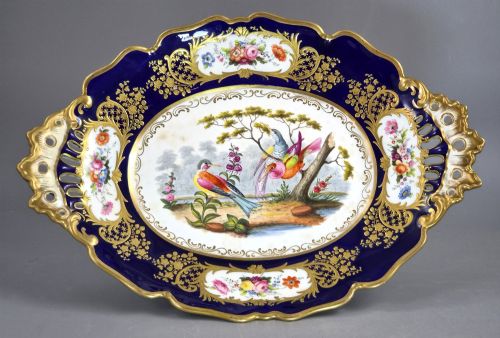
Potters shaped these objects using hard-paste porcelain, bone china, or pearlware, applying glazes before hand-painting subjects with enamels. Artisans frequently added gold leaf, gilding, and gilt accents to borders and rims.
Painting required skilled botanical and ornithological artists working directly on the glazed or unglazed porcelain surface before a secondary kiln firing to set the pigments. Factories often employed specialist painters for specific floral or bird motifs.
Some nineteenth-century botanical plates include accurate scientific labels on the back so diners could brush up on their botany between courses.
What varies in quality
The standard of a botanical painted porcelain dish depends on the precision of the hand-painting and the complexity of the porcelain body. Naturalistic floral studies rendered with botanical accuracy stand apart from generic or repetitive factory decoration.
The application of gilding and the weight of the porcelain body also distinguish finer productions. Pieces associated with named artists or documented factory decorators demonstrate higher execution levels than standard unmarked wares.
Flight Barr And Barr·Wedgwood·Coalport·Meissen·Chamberlains Worcester·Derby·Minton·Royal Doulton·Doe And Rogers·Bloor Derby·Spode·Sevres·Royal Worcester·Kornilov Brothers·New Hall·Kpm
The Botanical Painted Porcelain Dish Glossary
- Cabinet plate
- A decorative plate intended for display in a cabinet rather than for table use. These typically feature more elaborate hand-painted scenes and richer gilding than standard service wares.
- Bone china
- A type of soft-paste porcelain containing bone ash, developed in England to create a durable, brilliantly white body. It allowed makers to produce thinner walls while maintaining structural strength.
- Hard-paste porcelain
- A true porcelain composed of kaolin and petuntse, fired at very high temperatures. It yields a hard, vitrified body resistant to scratching and chemical agents.
- Gilt
- A thin layer of gold applied to the surface of the porcelain for decorative effect. It frequently outlines rims, wells, and handles.
- Pearlware
- An earthenware body developed in the late eighteenth century featuring a bluish glaze that pooled in recesses. It served as an affordable alternative to porcelain for painted services.
Botanical Painted Porcelain Dish: Frequently Asked Questions
How do I identify botanical painted porcelain dishes?
Look for hand-painted floral or bird studies in the centre of the well, often accompanied by Latin inscriptions or common names on the reverse. Factory marks and pattern numbers painted in enamel or impressed into the paste provide further identification.
Examine the quality of the brushwork and the style of the gilt borders, as these reflect the period and the workshop of origin.
Can I use these dishes for serving food?
While these pieces originally functioned as dessert plates, serving dishes, or sauce tureens, age and fragile enamels make modern dining use inadvisable. Hand-washing in lukewarm water without abrasive detergents is necessary if cleaning is required.
Displaying them in cabinets or on wall mounts preserves the painted enamels and delicate gilding from wear.
What is the difference between bone china and hard-paste porcelain?
Bone china includes bone ash in its mixture, resulting in a slightly warmer white tone and high translucency. Hard-paste porcelain uses traditional continental minerals fired at extreme temperatures, producing a harder, colder glaze.
Both materials accepted enamel botanical painting well, though English makers favoured bone china while continental factories utilised hard-paste.
How do I date a nineteenth-century botanical dish?
Dating relies on factory backstamps, pattern numbers, and the specific style of the floral painting and border decoration. Regency pieces often feature distinct cobalt blue and rich gilding, while Victorian examples introduce broader colour palettes and Japanese aesthetic influences.
Matching the physical shape of the dish and the form of the maker's mark to historical records narrows the production window.