




Botanical Cameo Glass
Botanical cameo glass pieces are layered glass vessels carved with floral and plant motifs that bring tactile depth to any room.
Botanical Cameo Glass
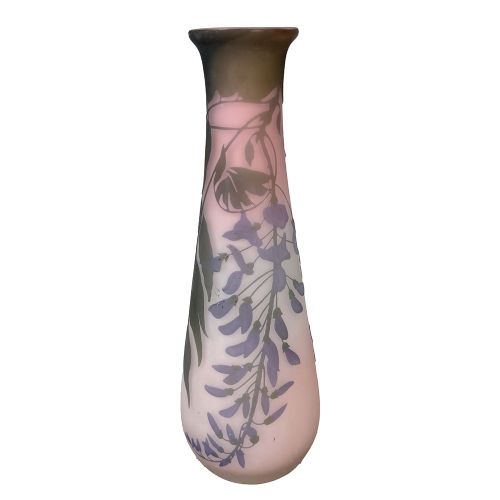
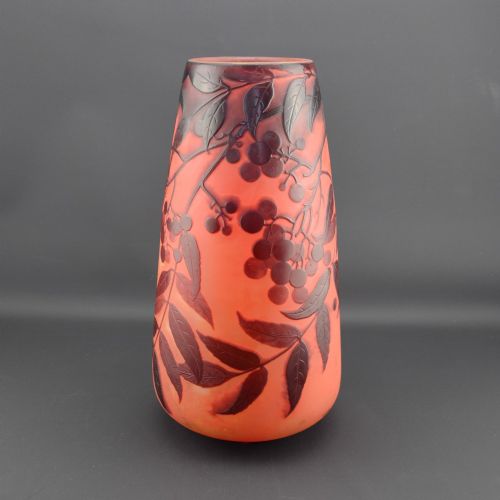
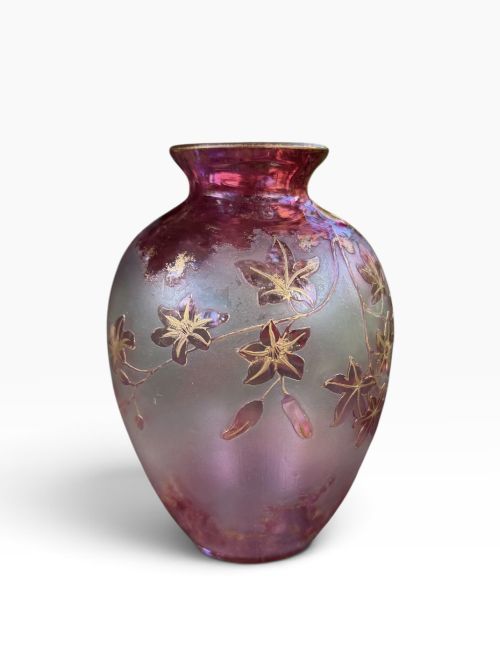
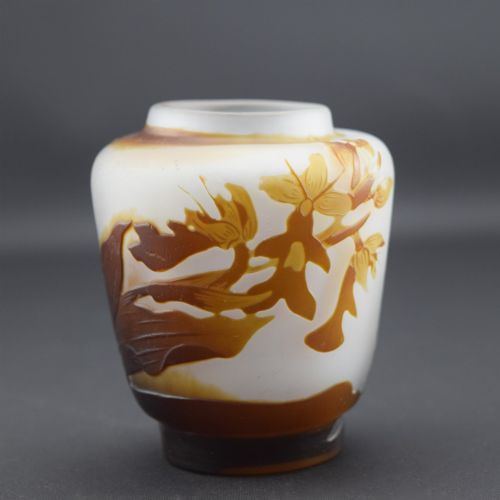
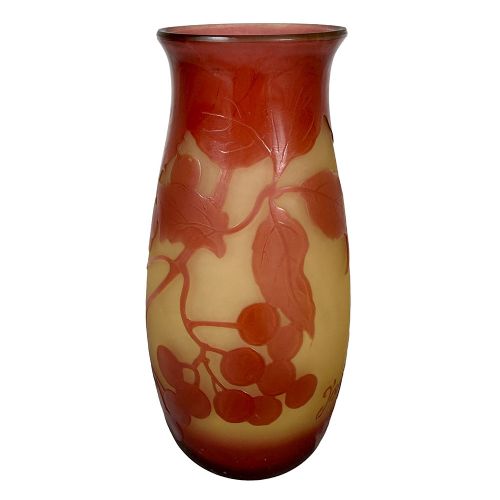
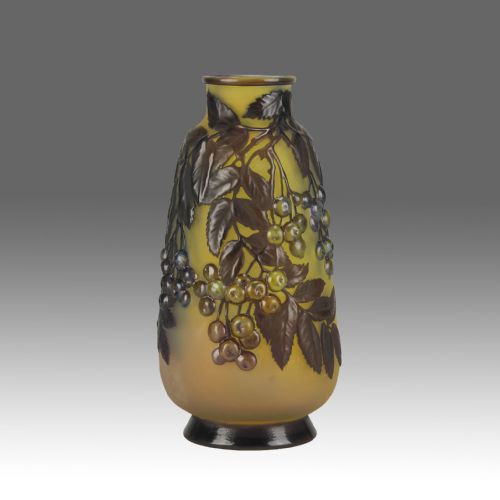
When you search for botanical cameo glass, you find vessels designed to showcase natural forms through carved layers of coloured material. These pieces take the form of vases, created during the late nineteenth and early twentieth centuries under the influence of the Art Nouveau movement.
The most common examples on this page are vases featuring floral and plant subjects such as cornflowers, irises, begonias, and blackberries. Originating predominantly from French makers, these items utilise contrasting colour layers to render stems, leaves, and blossoms in relief.
How they were made
Maker workshops built these vessels using multiple layers of glass fused together during the blowing process to create distinct colour tiers. Artisans then applied acid-etching or manual carving techniques to cut away the outer layers and reveal the contrasting background.
Some works incorporate additional decorative elements such as enamel, frosted glass surfaces, or gold leaf highlights to enhance the botanical details. This combination of glassblowing and subtractive carving required precise control over chemical treatments and hand-cutting.
Botanical Cameo Glass Retail Price Guide 2026
Typical asking prices for botanical cameo glass among the pieces listed under this phrase on Sellingantiques today, from the lower quarter to the upper quarter. They describe what is for sale here now, not the wider market.
Listings feature cameo glass, acid-etched glass, and frosted glass materials across pieces dated from 1890 to 1920.
What varies in quality
Quality in these vessels rests on the depth of the carving and the clarity of the colour separation between the layers. Superior examples display undercut details and nuanced shading that give the floral motifs a lifelike dimensionality.
The sophistication of the composition also dictates the standing of a piece, with complex botanical arrangements showing greater artistic ambition. Simpler acid-etched surfaces lack the hand-carved crispness found in the finest works of the period.
Gallé·Baccarat·D’Argental·Daum Frères·Emile Gallé
The Botanical Cameo Glass Glossary
- Cameo glass
- A vessel formed of two or more distinct layers of coloured glass fused together, where the outer layer is carved or etched away to leave a raised design. This technique imitates traditional carved stone cameos.
- Acid-etched glass
- Glass decorated by applying acid to eat away exposed surfaces, creating texture or pattern. It often served to speed up the production of cameo glass backgrounds.
- Frosted glass
- Glass treated to achieve a matte, non-reflective surface rather than a clear finish. This texture frequently forms the background of cameo vases to make the coloured design stand out.
- Art Nouveau
- An international style of art and design that flourished around 1900, characterised by fluid, organic lines and floral motifs. Much of the cameo glass from this era draws direct inspiration from natural plant forms.
Botanical Cameo Glass: Frequently Asked Questions
What is botanical cameo glass?
Botanical cameo glass consists of multi-layered glass vessels carved with plant and flower designs. Makers used this technique to produce detailed depictions of flora during the early twentieth century.
These vases rely on contrasting glass colours to make stems, leaves, and petals stand out in relief. The resulting objects combine sculptural form with naturalistic decoration.
How do I clean cameo glass?
Clean these glass vessels gently using lukewarm water and a mild, non-abrasive soap. Avoid harsh chemical cleaners or scrubbing brushes that might damage the surface.
Dry the piece carefully with a soft lint-free cloth after washing. Take particular care around delicate handles or raised cameo details.
Where were these vases made?
These decorative glass objects were produced primarily in France during the late nineteenth and early twentieth centuries. Prominent workshops operated in regions known for advanced glassmaking techniques.
French makers drove the development of cameo glass techniques during the Art Nouveau period. Their output defined the standard for multi-layered carved glass.
How do I identify Art Nouveau pieces?
Art Nouveau pieces feature flowing lines and motifs inspired by natural plant and floral forms. The design focus centres on asymmetry and organic movement rather than rigid geometric symmetry.
Look for subject matter involving flowers, seed pods, and aquatic plants rendered in layered glass. The overall aesthetic mimics the structures found in the natural world.