





Amber Cameo Glass Vessel
An amber cameo glass vessel brings rich botanical and winter landscape scenes into a room through layered, acid-etched coloured glass.
Amber Cameo Glass Vessel
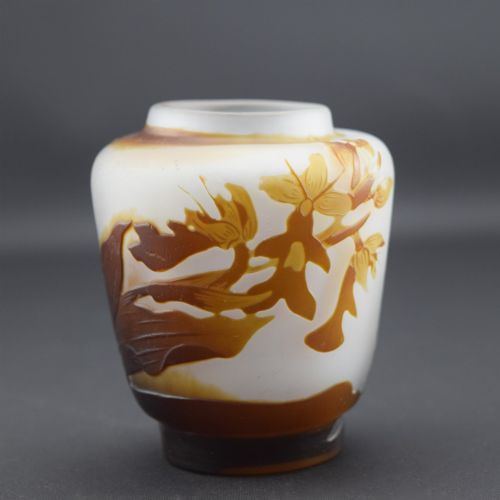
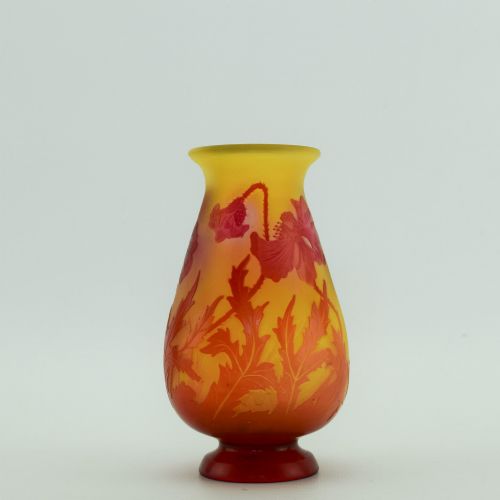
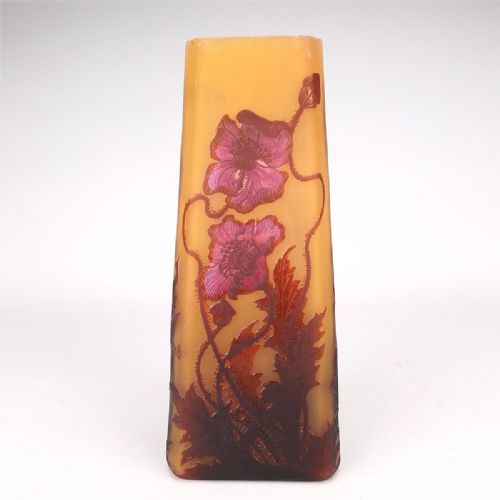
When you search for an amber cameo glass vessel, you encounter distinctive early twentieth-century decorative pieces primarily created in France during the height of the Art Nouveau movement. These works take the form of vases, footed vases, large oviform vessels, decanters, and jugs featuring intricate naturalistic motifs.
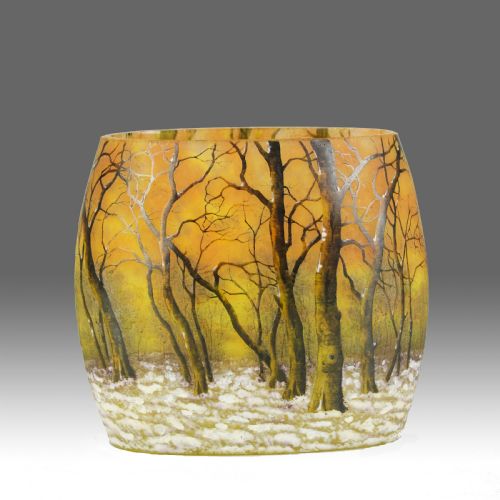
The most common examples you meet on this page date from the nineteen hundreds through to the nineteen twenties. They showcase characteristic subjects such as floral patterns, oak leaves and acorns, ferns, aquatic themes, and stark winter landscapes.
Makers utilised contrasting layers of glass to create relief designs that catch the light from every angle. Collectors seek these vessels for their sculptural quality and the atmospheric depth of their carved imagery.
Materials and construction
Makers formed an amber cameo glass vessel by fusing multiple layers of coloured and frosted glass together while hot. This multi-layered blank allowed artisans to carve or acid-etch through the outer strata to reveal the contrasting background below.
Enamel details were frequently added to enrich the surface decoration of select vases and jugs. Acid-etching provided a precise method for defining intricate foliage and distant winter trees before final hand-finishing.
Amber Cameo Glass Vessel Retail Price Guide 2026
Typical asking prices for amber cameo glass vessel among the pieces listed under this phrase on Sellingantiques today, from the lower quarter to the upper quarter. They describe what is for sale here now, not the wider market.
Current listings feature pieces exclusively from the nineteen hundreds, nineteen tens, and nineteen twenties, spanning the height of the Art Nouveau period.
Judging quality and execution
The distinction between average and exceptional pieces rests upon the depth of the carving and the complexity of the glass layers. Superior vessels display meticulous undercut relief that gives botanical subjects a lifelike three-dimensional presence.
The harmony between the amber tones and the secondary glass colours dictates the visual impact of the piece. Crisp lines in landscape and floral scenes separate the finest output of the period from standard production.
Emile Galle·Daum Freres·Legras
The Amber Cameo Glass Vessel Glossary
- Cameo glass
- A form of luxury glassware produced by fusing layers of contrasting glass and carving away the exterior layer to leave a raised design. This technique requires exceptional skill to maintain even depths across complex curves.
- Acid-etched glass
- Glass decorated by applying hydrofluoric acid to eat away exposed surfaces and create intricate patterns or frosted textures. It was often combined with manual carving on early twentieth-century French pieces.
- Art Nouveau
- An international style of art and decoration that flourished between eighteen ninety and nineteen ten, characterised by flowing natural forms, plant motifs, and stylised curves. Most cameo glass vessels reflect this aesthetic.
- Frosted glass
- Glass treated to impart a translucent, matte surface rather than a clear or polished finish. Makers utilised this effect to soften backgrounds and isolate the sharper cameo motifs.
- Oviform
- An egg-shaped vessel form that tapers gracefully towards the base and rim. This classic shape provides an expansive curved canvas for continuous landscape or floral scenes.
Amber Cameo Glass Vessel: Frequently Asked Questions
How do I display an amber cameo glass vessel safely?
Place your vessel on a stable surface away from direct, harsh sunlight to protect the integrity of the coloured glass layers. Ensure it sits out of reach of high-traffic household areas where accidental knocks might occur.
Positioning the piece near a natural light source allows daylight to pass through the translucent amber glass and illuminate the carved botanical or landscape details.
What subjects appear on these vessels?
The decoration typically draws from the natural world, featuring specific botanical studies such as ferns, poppies, oak leaves and acorns, sycamore branches, and aquatic plants. Winter landscapes also form a distinct category of decoration.
These scenes are rendered through layered glass manipulation, giving the trees and flora a striking sense of depth against frosted backgrounds.
How do I clean cameo glass?
Dust the surface gently with a soft, dry microfibre cloth to remove everyday particles. Avoid harsh chemical cleaners or abrasive scrubbing pads that might damage enamelled details or the delicate frosted glass texture.
If deeper cleaning is necessary, use lukewarm water with a mild soap solution, then dry immediately with a lint-free cloth.
How can I tell different periods apart?
Pieces originating from the early nineteen hundreds often lean heavily into organic Art Nouveau floral curves and rich multi-layered cameo carving. Works from the nineteen tens and nineteen twenties frequently incorporate atmospheric landscape scenes and varied acid-etched textures.
Examining the signature style and the specific treatment of the glass surface helps anchor each vessel within its manufacturing decade.