


Botanical Bird Porcelain
Botanical bird porcelain brings hand-painted avian and floral subjects into domestic display through plates, bowls, vases, and figures from European and Asian kilns.
Botanical Bird Porcelain
Botanical bird porcelain comprises decorative plates, cabinet plates, dishes, planters, vases, and figurines adorned with painted birds and flora. These items bridge natural history study and domestic ornamentation across the eighteenth and nineteenth centuries.
The pieces on this page span Georgian, Regency, and Victorian periods alongside Meissen, Qing Dynasty, and Meiji productions. Decorative plates and dessert dishes form the most frequent encounters in this selection.
How they were made
Manufacturers utilised hard-paste porcelain, soft-paste porcelain, and bone china as the primary ceramic bodies for these forms. Potters shaped vessels on the wheel or in moulds before firing.
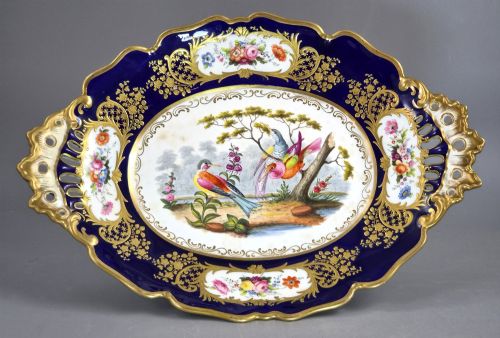
Painters applied enamel colours and gold leaf, gilding, or gilt highlights by hand. Subsequent kiln firings fixed the pigments and metallic embellishments to the glazed surfaces.
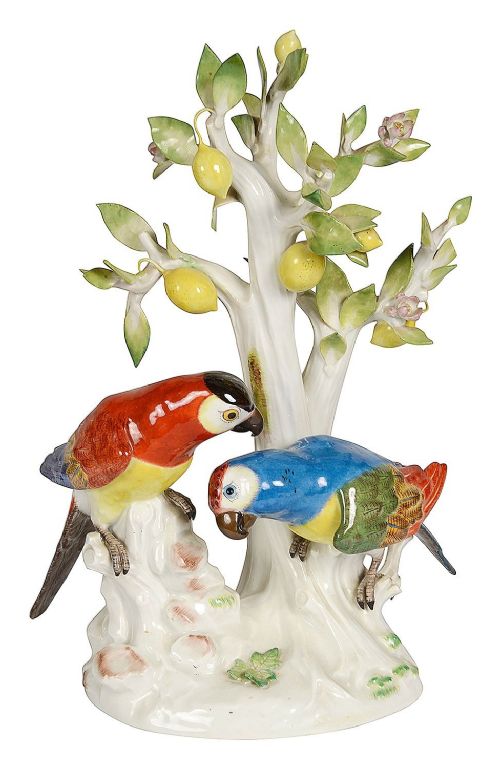
A pair of Meissen parrots keeps permanent watch from their perch beneath a painted lemon tree.
What varies in quality
Quality rests in the precision of the hand-painted avian and botanical details and the crispness of the porcelain moulding. Skilled brushwork captures plumage and leaf structures with distinct botanical accuracy.
The application of gilding and enamel depth separate standard wares from finer examples. Intact cross-swords marks or factory attributions also distinguish notable workshop output.
Wedgwood·Coalport·Meissen·Coalbrookdale·Derby Porcelain
The Botanical Bird Porcelain Glossary
- Bone china
- A type of soft-paste porcelain incorporating bone ash for strength and translucency. English factories frequently utilised this body.
- Hard-paste porcelain
- A durable ceramic made from kaolin and petuntse fired at high temperatures. European works such as Meissen relied on this formula.
- Gilding
- The application of gold leaf or powdered gold to ceramic surfaces. It frames painted bird subjects and highlights rim details.
- Enamel
- Vitreous pigments fused to the glazed porcelain during firing. These colours provide the vibrant hues found on botanical bird plates and dishes.
- Cachepot
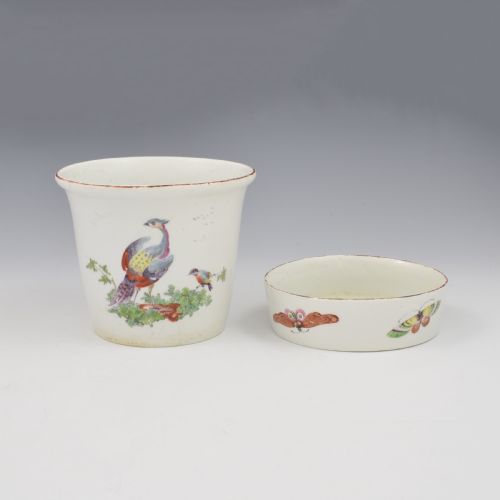
- An ornamental flowerpot container designed to hold a plant pot. Examples often feature hand-painted avian decoration.
Botanical Bird Porcelain: Frequently Asked Questions
How do I identify Meissen bird porcelain?
Meissen pieces often feature crossed swords marks painted in blue under the glaze. Hand-painted ornithological subjects appear alongside gilt flowers and rococo shaping.
German production from the nineteenth century displays detailed plumage and botanical framing typical of the manufactory's output.
What is the difference between hard-paste and soft-paste porcelain?
Hard-paste porcelain contains natural clay and rock, fired at extremely high temperatures to produce a durable, vitrified body. Soft-paste porcelain incorporates glass frit or bone ash, resulting in a warmer tone.
English makers frequently developed soft-paste and bone china bodies, while continental factories like Meissen utilised hard-paste.
How were botanical bird plates displayed?
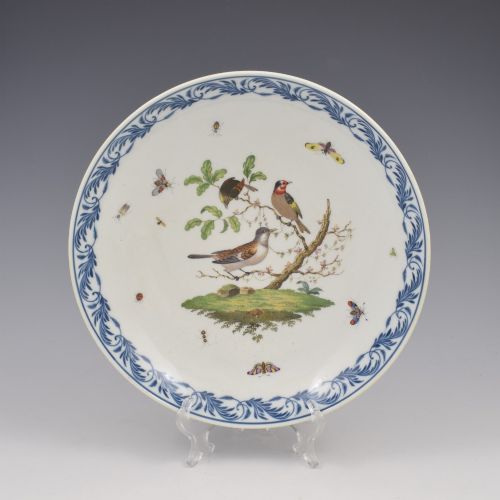
Cabinet plates and dessert dishes served functional roles during dining before transitioning to decorative display. Owners placed them in cabinets or on sideboards to showcase painted natural history subjects.
Pairs and services allowed grand rooms to exhibit coordinated ornithological motifs across multiple forms.
How do I care for antique porcelain?
Antique porcelain requires gentle hand washing in warm water with mild soap when necessary. Avoid dishwashers and harsh abrasives to protect delicate enamels and gold leaf gilding.
Stable shelving away from direct sunlight preserves the painted surfaces and ceramic bodies of nineteenth-century wares.