




Vintage Dessert Bowls
These vintage dessert bowls span Georgian porcelain to Art Deco glass, offering practical elegance for serving sweets at table.
Vintage Dessert Bowls
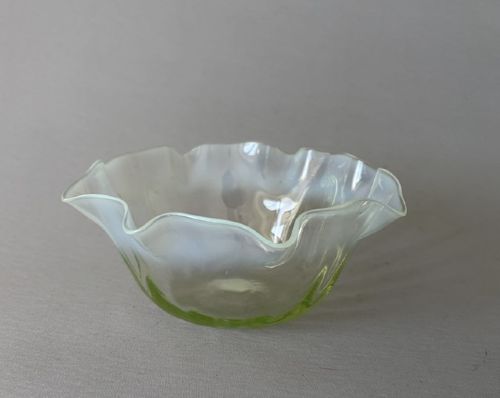
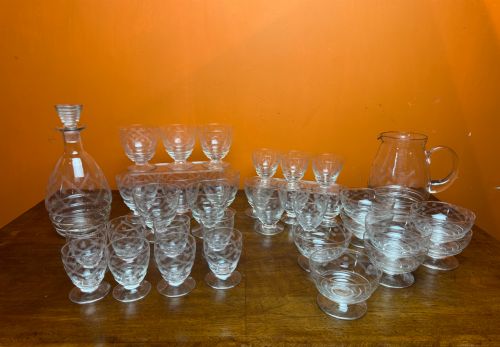
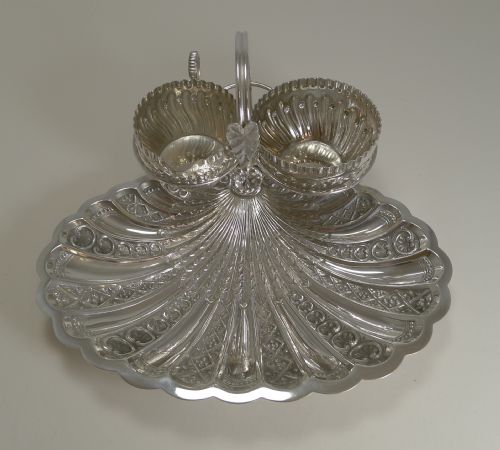
Vintage dessert bowls encompass an array of serving vessels designed specifically for post-dinner sweets, fruit, and custards across multiple centuries. When searching for vintage dessert bowls, buyers encounter everything from Georgian porcelain dishes to heavy Victorian cut crystal and sleek Art Deco silverplated sets. The forms on this page range from individual custard cups and finger bowls to larger lobed dessert dishes and champagne coupes.
Many examples originate from notable periods including the Victorian era, the 1920s, and the 18th century. Buyers most frequently meet pressed or cut glass vessels, alongside soft-paste porcelain and silverplated serving dishes. These pieces reflect the dining customs of past centuries, where presentation of fruit, jelly, and cream demanded dedicated tableware.
Materials and methods
Makers shaped these pieces using clear glass, lead crystal, and soft-paste porcelain, often enhancing the forms with wheel-engraving or painted fruit decoration. Glassware production involved blowing and cutting, creating deep facets that catch the light on ruby over crystal bowls and Regency finger bowls alike.
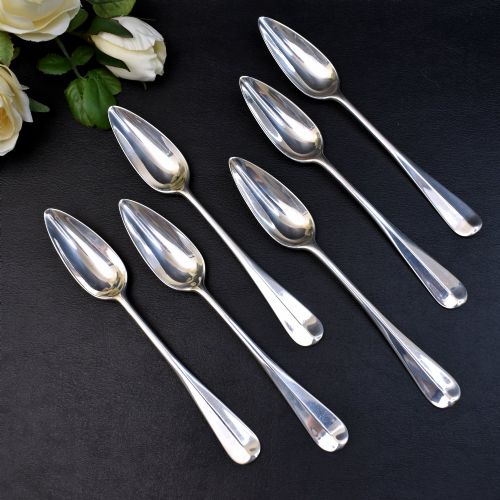
Silver plate and sterling silver components, such as sugar sifter spoons and strawberry sets, required traditional metalworking techniques including piercing and casting. Porcelain pieces, like those from Worcester and Meissen, utilised hand-painted enamel and cobalt details fired at high temperatures.
Dr Wall Worcester painters occasionally left tiny hidden brush marks under the glaze, giving modern collectors a quiet thrill when discovered.
Judging quality in vintage dessert bowls
Quality rests in the crispness of the cut glass facets, the weight of the metal, and the precision of hand-painted or engraved details. Superior glass shows sharp, clean lines in the cutting without surface blurring, while porcelain demonstrates refined potting and finely controlled enamel brushwork.
Completeness alters the value of sets, particularly when matching spoons, under-dishes, or multiple cups survive together. The clarity of the crystal and the integrity of silver plating distinguish finer examples from standard production pieces.
Hamilton & Inches·Royal Worcester·Roberts and Belk·Meissen
The Vintage Dessert Bowls Glossary
- Soft-paste porcelain
- A ceramic composition fired at lower temperatures than hard-paste, common in 18th-century English factories. It yields a warm, slightly creamy body suited to detailed enamel painting.
- Finger bowl
- A small bowl filled with water used at the table for rinsing fingers between courses. They often feature heavy cut crystal or engraved patterns.
- Custard cup
- A small vessel designed for serving individual portions of custard or cream. These frequently appear in sets dating to the Victorian period.
- Champagne coupe
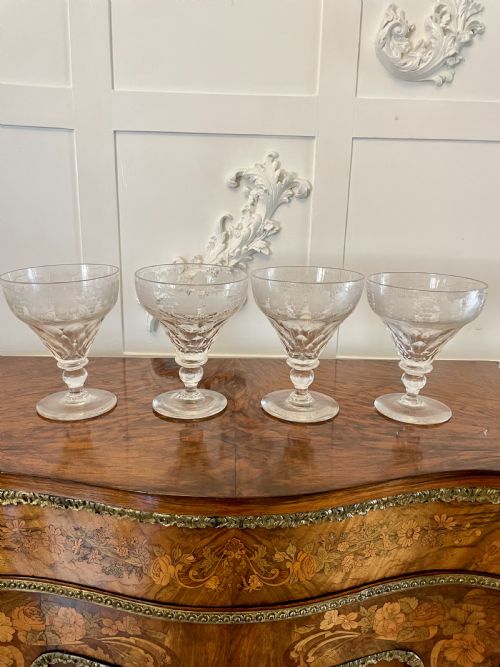
- A shallow, broad-bowled stemmed glass originally intended for sparkling wine but frequently repurposed for desserts. Engraved fruiting vines often decorate the bowl.
- Silver plate
- A base metal coated with a thin layer of silver through electroplating or older fusion methods. It provides the appearance of solid silver at a different scale of production.
Vintage Dessert Bowls: Frequently Asked Questions
What were vintage dessert bowls used for?
These vessels held various post-dinner courses, including fresh fruit, chilled creams, jellies, and sweetened custards. Wealthy households used specialised glassware for each distinct course to impress guests at formal dinners.
Over time, changing dining habits transformed bowls like finger bowls and champagne coupes into versatile vessels for modern sweet courses and side dishes.
How do I care for antique glass bowls?
Wash glass and crystal pieces by hand in warm water using a mild, non-abrasive detergent. Avoid sudden temperature changes to prevent thermal shock and potential cracking of older lead glass.
Place a towel at the bottom of the sink to cushion the bowl during washing. Dry them immediately with a lint-free cloth to maintain clarity.
Can I use silver plated dessert dishes daily?
Silver plated items withstand regular use provided you clean them gently with appropriate silver polish rather than harsh abrasives. Acidic foods left sitting on silver plate for extended periods can tarnish the surface.
Store the items dry and wrapped in acid-free tissue or anti-tarnish cloth when not in use to preserve the metal plating.
How do I date a set of dessert bowls?
Examine the base and manufacturing marks for factory stamps, painted numbers, or maker's ciphers that align with known production periods. The weight of the glass, the depth of any hand-cutting, and the style of engraving offer further clues.
Porcelain pieces often feature specific underglaze blue marks or colour palettes characteristic of 18th or 19th-century factories.