




Bombe Slant Front Desk
These bombe slant front desk examples bring together swelling outlines and fitted writing compartments from eighteenth-century and later workshops.
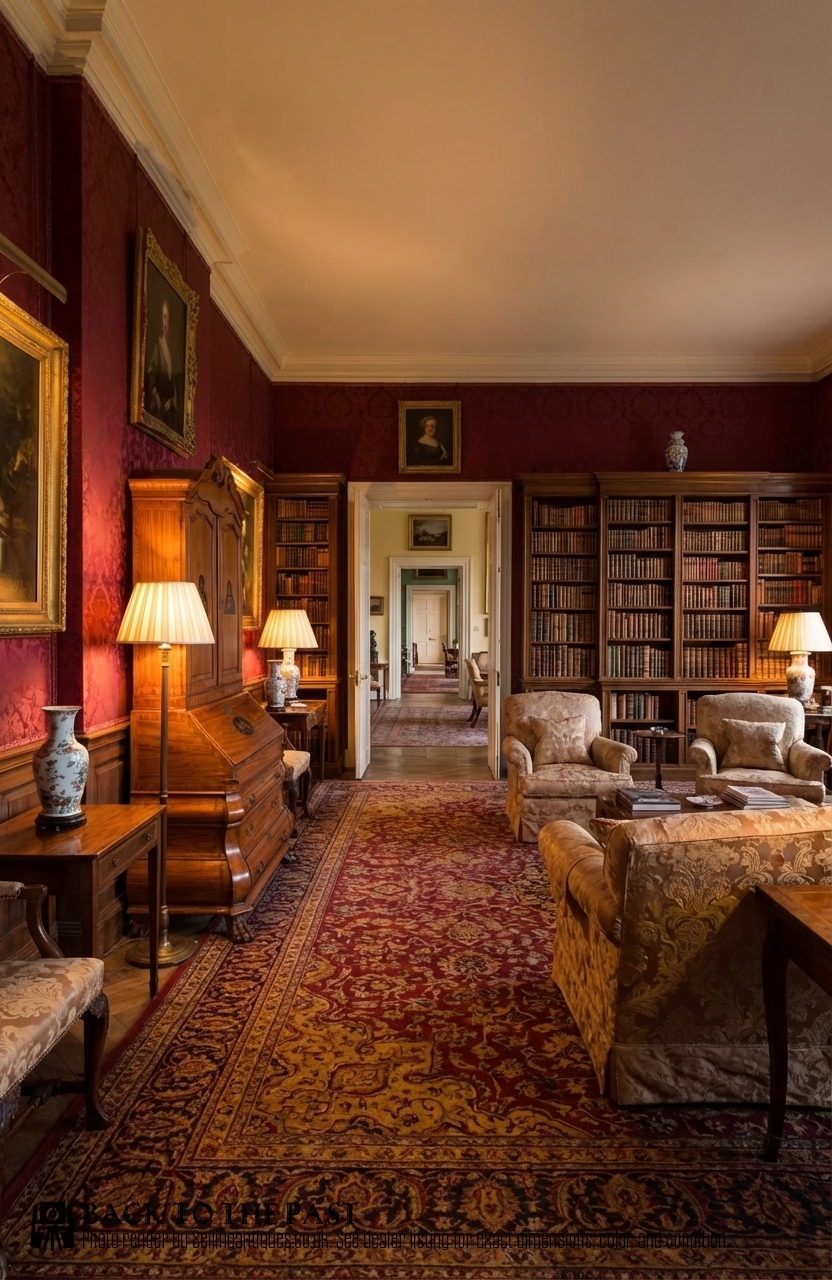
Bombe Slant Front Desk
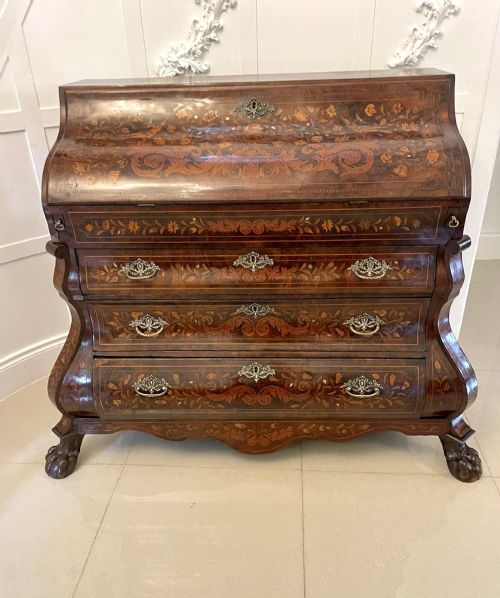
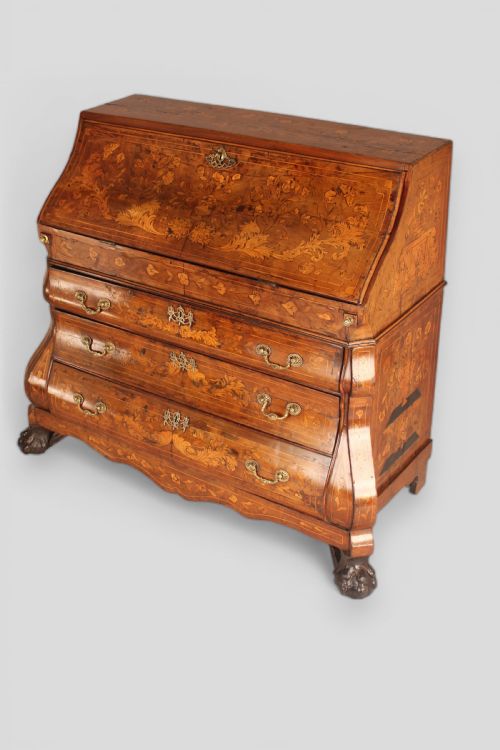
A bombe slant front desk combines a rounded, outward-swelling lower body with an angled fall-front lid that opens to reveal internal writing compartments and drawers. These pieces appear most frequently from eighteenth-century Dutch origins, executed in walnut and burr walnut with elaborate floral marquetry.
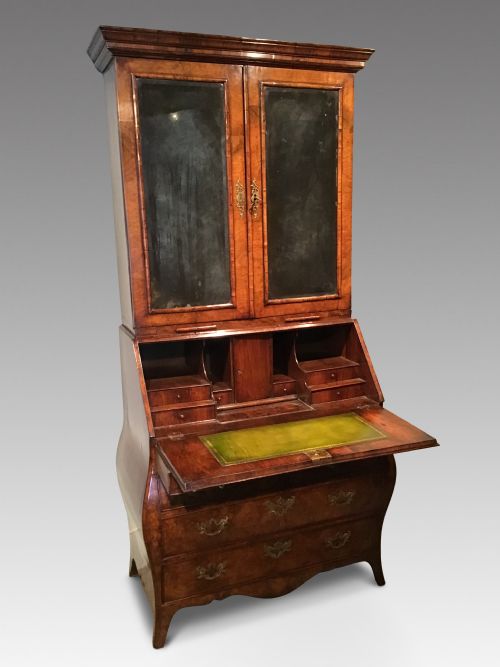
The form spans straightforward bureau desks and taller bureau bookcases, alongside occasional nineteenth-century adaptations and revival pieces. Buyers encounter variations ranging from compact single-carcass writing desks to large double-height cabinets fitted with upper bookcase doors.
How these desks were made
Cabinetmakers constructed these carcases using dense timbers like walnut, mahogany, oak, and fruitwood, often applying burr walnut veneers across the curved surfaces. Skilled hands shaped the wood to achieve the characteristic outward sweep without losing structural integrity in the drawers.
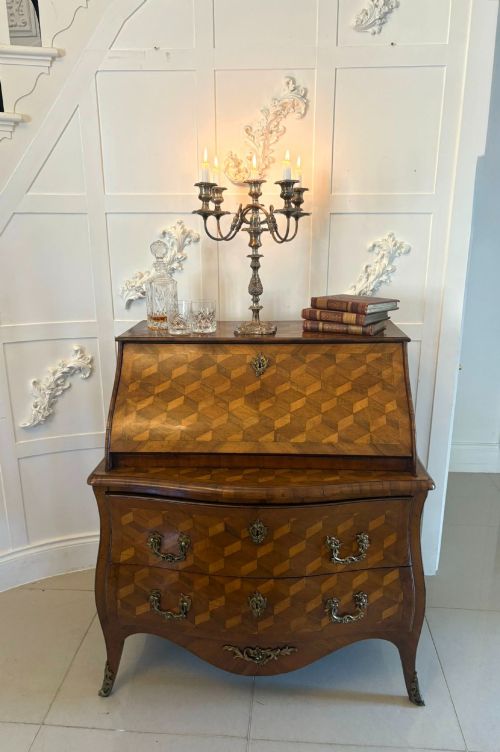
Surface decoration relies heavily on fruitwood marquetry and floral inlay, alongside occasional parquetry patterns. Brass hardware, including drop handles and escutcheons, fastens to the drawers and fall-fronts to complete the construction.
Listings feature walnut, burr walnut, mahogany, oak, fruitwood, and yew across eighteenth and nineteenth-century periods.
What separates the best from the rest
The refinement of the swelling curve across the front and sides dictates much of the visual success, alongside the precision of the floral marquetry and fruitwood inlay. Pieces that maintain crisp lines in the veneers without warping show superior initial joinery.
Internal arrangement complexity also distinguishes examples, as fitted nests of small drawers and secret compartments demand greater labour from the maker. The choice of timber grain, particularly matched burr walnut across the curved drawer fronts, elevates the overall presence.
Morison of Edinburgh
The Bombe Slant Front Desk Glossary
- Bombe
- A bulging, outward-curved shape characteristic of certain continental furniture styles. This contour requires specialised joinery to follow the rounded profile.
- Marquetry
- Decorative patterns formed by fitting together thin slices of wood veneer into pictorial designs. Floral motifs appear frequently on these surfaces.
- Parquetry
- Geometric wood-mosaic work used for flooring and furniture surfaces. It creates angular patterns contrasting with organic marquetry.
- Bureau bookcase
- A writing desk with a shelved cabinet superstructure fitted to the top. These taller forms provide dual storage and writing functions.
- Fall-front
- A hinged writing flap that drops down to create a horizontal surface for correspondence. It conceals the internal pigeonholes and small drawers when closed.
Bombe Slant Front Desk: Frequently Asked Questions
How do I use a slant front desk?
Lower the angled lid to reveal the internal writing surface and pigeonholes for correspondence. The sloping front conceals your papers when folded away.
Store larger items in the deep drawers positioned beneath the writing compartment. Ensure the fall-front rests properly on its supports before writing.
Where were bombe desks made?
Many examples originate from Dutch workshops working in walnut during the eighteenth century. Makers in other regions also adopted the form.
Regional variations appear in the choice of secondary timbers and the style of floral marquetry decoration applied to the carcase.
What woods are used on these desks?
Walnut and burr walnut dominate the construction, often accented with fruitwood inlay and marquetry. Oak and mahogany appear in carcases and drawer linings.
Elm and yew also feature in specific regional interpretations of the writing bureau form.
How do I date an antique bureau?
Examine the construction methods of the drawer linings and the timber selection in the carcase. Eighteenth-century pieces typically show hand-cut dovetails and native woods.
Stylistic shifts, such as nineteenth-century revivals or later walnut treatments, help distinguish the period of manufacture.