

Bombe Commode
A bombe commode brings sweeping, swelling lines and rich timber into a room, offering generous storage disguised by confident continental craftsmanship.
Bombe Commode
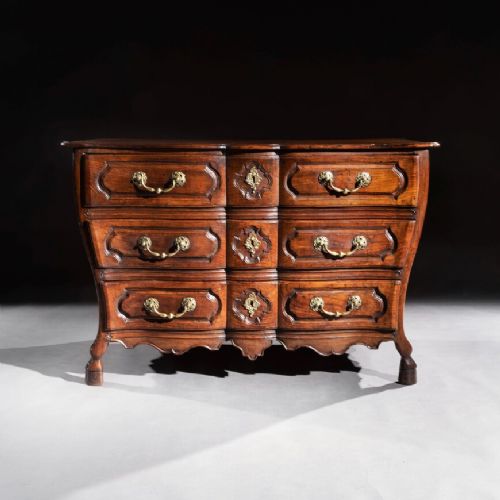
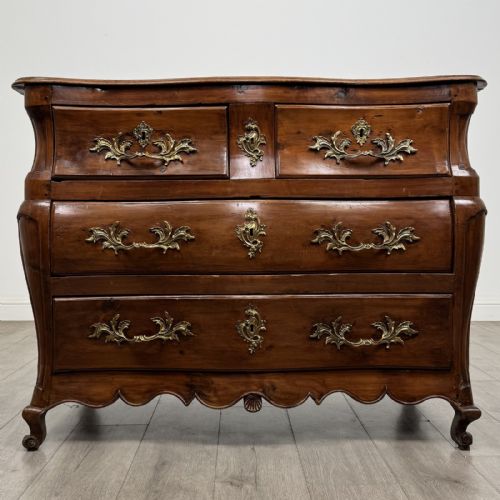
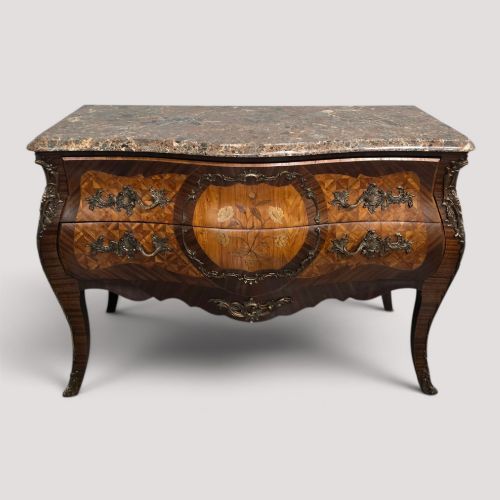
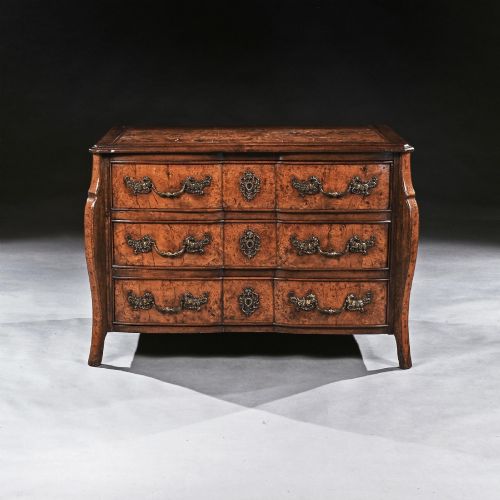
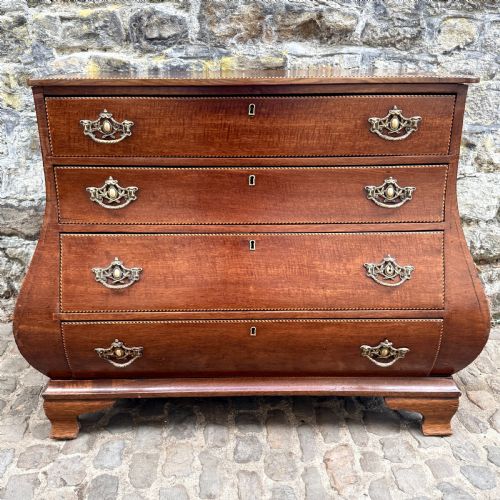
A bombe commode is a distinct type of chest of drawers defined by its convex, bulging fronts and sides, rooted in eighteenth-century cabinet making. The pieces found here span eighteenth-century origins to later revivals, crossing French, Dutch, and Swedish workshops.
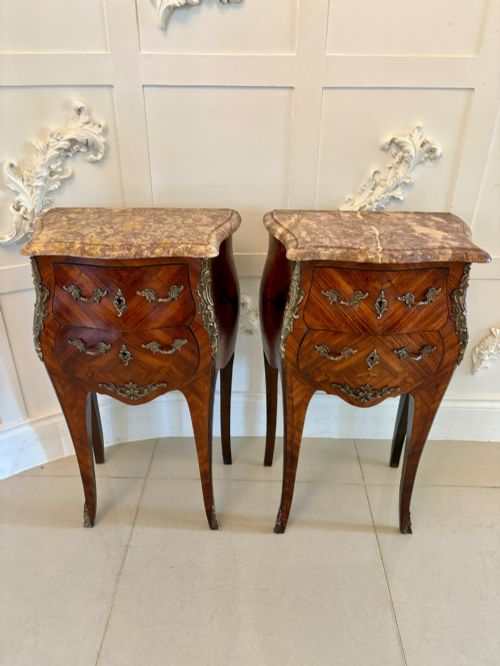
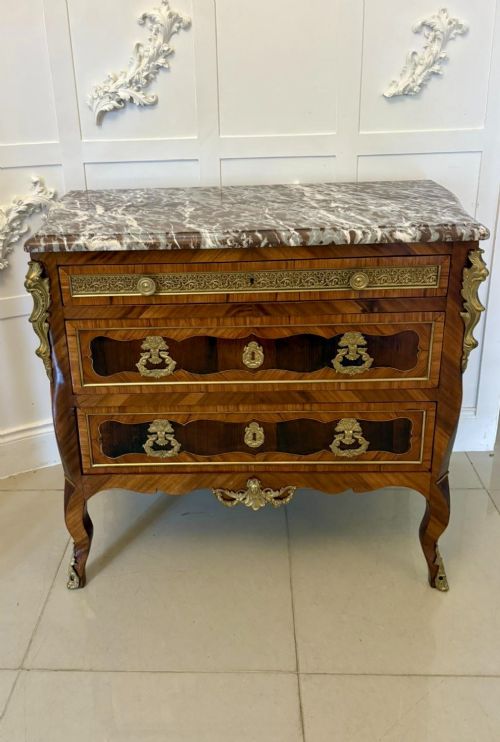
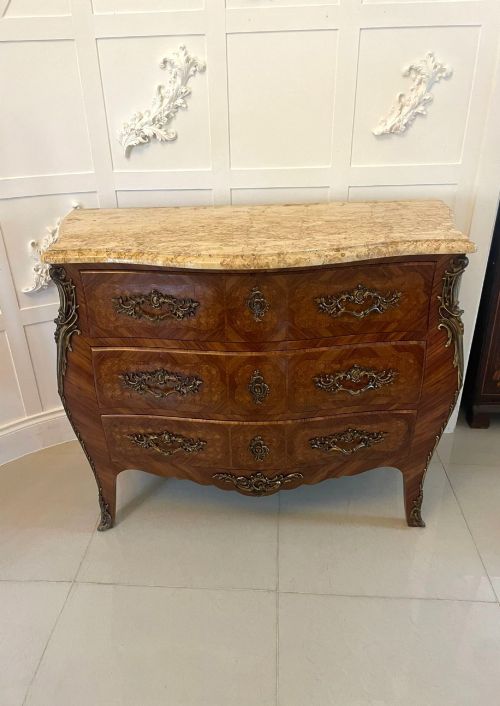
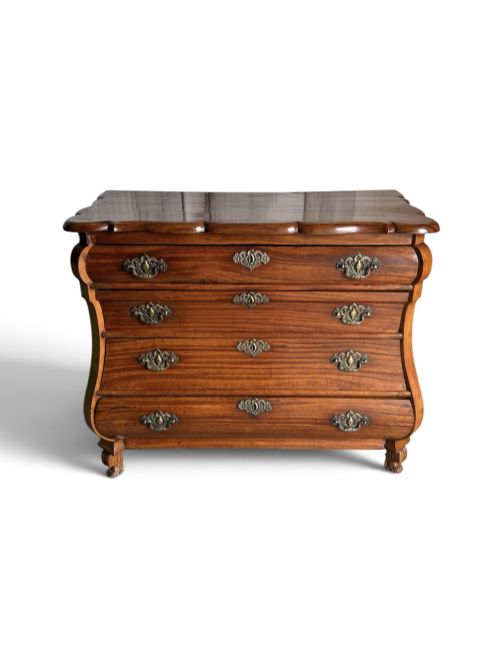
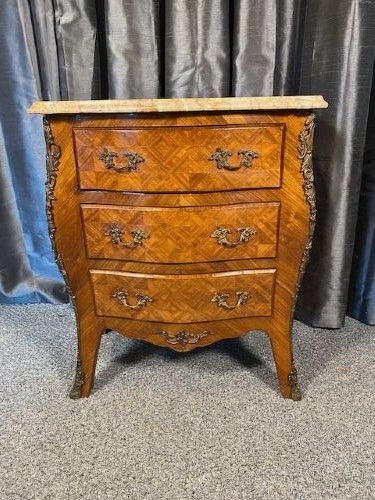
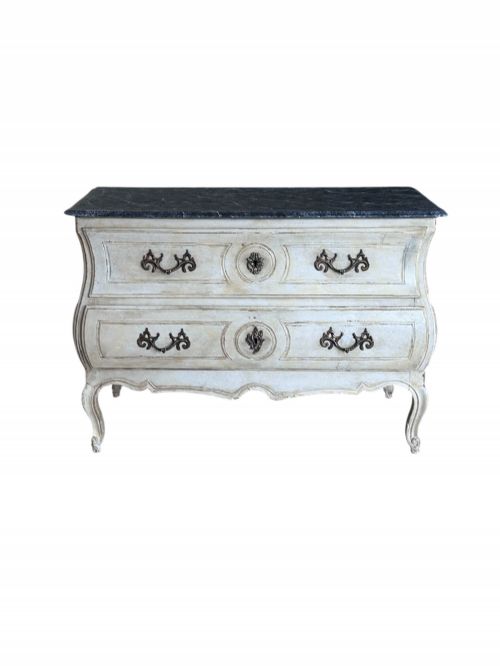
The most common forms on this page are French and Dutch variants, often surfaced in kingwood, walnut, or oak, and frequently topped with shaped marble slabs. Buyers encounter everything from grand salon commodes to smaller bedside cabinets sharing the characteristic swelling profile.
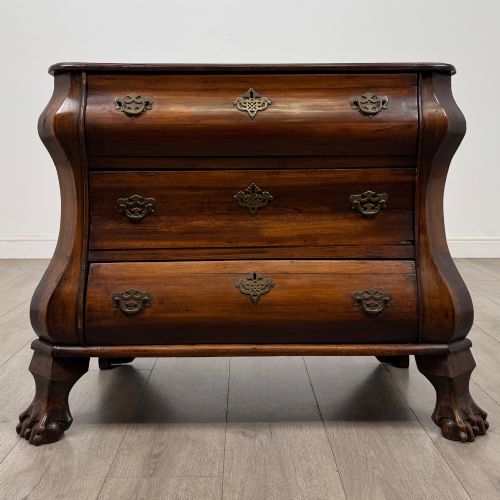
Makers and provinces adopted the shape with regional divergence, leading to Dutch examples with bold claw feet alongside refined French Louis XV interpretations. These chests serve as focal storage pieces in traditional or eclectic interiors.
How they were made
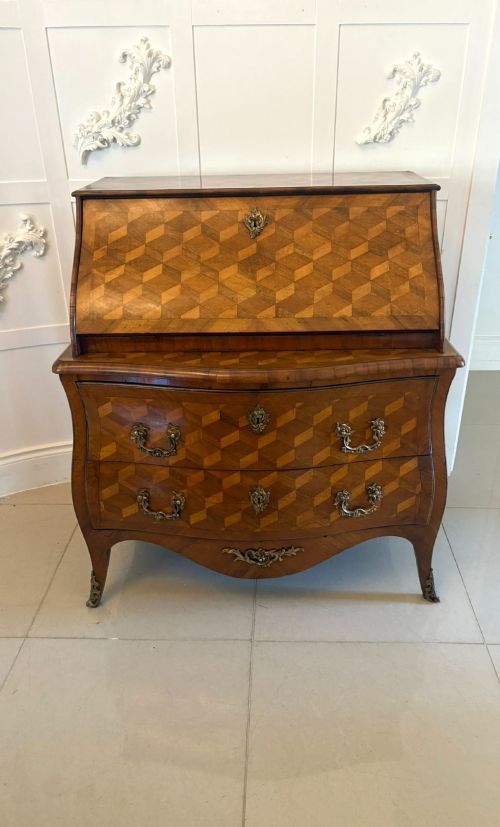
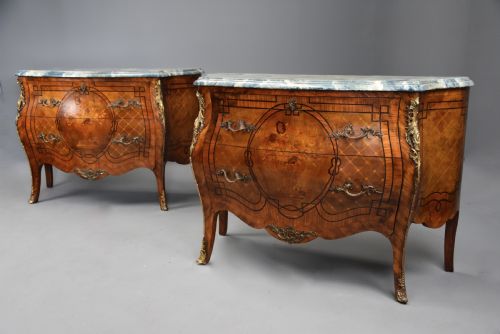
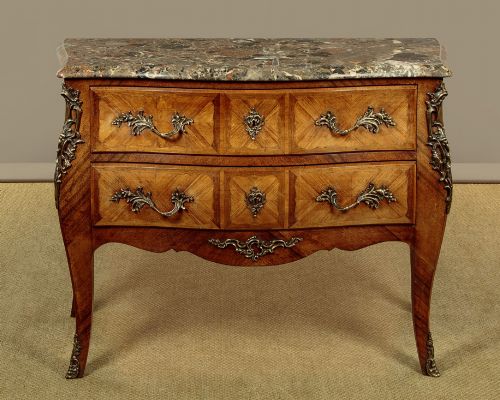
Cabinet makers built the undulating carcasses of a bombe commode using dense softwood or oak frames overlaid with elaborate veneers such as kingwood, walnut, and burr elm. Parquetry and marquetry geometric or floral patterns demanded precise cutting and fitting across curved surfaces.
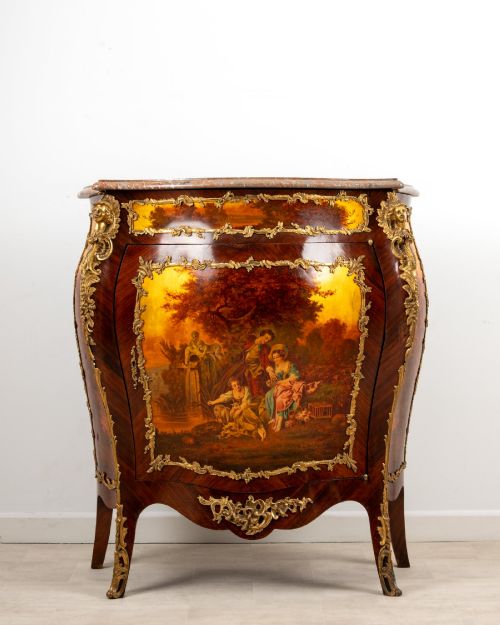
Foundations often received heavy cast or chased ormolu mounts and gilt bronze handles that followed the swell of the corners and apron. Heavy marble tops, precisely milled to match the serpentine and bulging contours, completed the primary assemblies.
Bombe Commode Retail Price Guide 2026
Typical asking prices for bombe commode among the pieces listed under this phrase on Sellingantiques today, from the lower quarter to the upper quarter. They describe what is for sale here now, not the wider market.
Listings feature eighteenth-century origins alongside nineteenth-century revivals, utilising kingwood, walnut, marble, and ormolu.
What varies in quality
The standard of a bombe commode rests upon the fluidity of its carcass shaping and the integration of its veneer work across complex curves. Master craftsmen ensured the grain flowed naturally over the swelling drawer fronts without buckling or lifting.
Quality shows in the weight and detail of the brass or ormolu mounts, where crisp chasing separates standard production from superior output. The internal timber selection and drawer construction provide further evidence of workshop pedigree.
E. Kahn
The Bombe Commode Glossary
- Bombe
- A French term describing furniture with outward-swelling or convex fronts and sides. This exuberant profile defines eighteenth-century continental case furniture.
- Ormolu
- Gilt bronze mounts applied to furniture for decoration and edge protection. Skilled artisans fire-gilded these metal fittings to create a lasting golden sheen.
- Marquetry
- The art of forming decorative patterns using thin veneers of different coloured woods. Craftsmen pieced together floral or pictorial motifs across the curved surfaces.
- Parquetry
- Geometric wood inlay forming repeating patterns such as cubes or chequers. This technique showcased the natural grain variations of kingwood and walnut.
- Vernis Martin
- A type of simulated Japanese lacquer developed in France during the eighteenth century. Artisans applied multiple layers of varnish to create luminous painted finishes.
Bombe Commode: Frequently Asked Questions
What is a bombe commode?
A bombe commode is a decorative chest of drawers characterised by its rounded, swelling sides and front profiles. Originating in continental Europe, these pieces combine sculptural wood shapes with functional drawer storage.
Craftsmen built them using diverse veneers and often paired them with marble tops and bronze mounts. They stand out as sculptural focal points in any room.
Where were they made?
Most pieces originate from continental European workshops, particularly in France, the Netherlands, and Sweden. Each region developed distinct proportions, foot designs, and timber choices.
French versions often feature delicate marquetry and ormolu, while Dutch iterations lean towards robust proportions and carved feet. Swedish makers produced pale, refined interpretations of the rococo style.
How do I style one at home?
A bombe commode works best placed against a plain wall where its swelling silhouette and grain can catch the light. It serves well in a hallway, bedroom, or living room as a statement storage piece.
Keep items on top minimal to allow the marble slab and timber work to remain visible. Pair the piece with neutral surroundings to let the historical craftsmanship take precedence.
Are eighteenth-century and later pieces different?
Eighteenth-century examples display period construction methods, hand-cut dovetails, and authentic age-related timber shrinkage. Later nineteenth and twentieth-century revivals draw directly upon those earlier Louis XV and Dutch prototypes.
Revival pieces often utilise similar luxury veneers and cast mounts but reflect the manufacturing standards of their own era. Both categories offer the distinctive visual impact of the bulging profile.