
Bombe Chest Drawers
These bombe chest drawers combine swelling, convex forms with rich timbers and decorative mounts, offering a dramatic centrepiece for traditional rooms.
Understanding bombe chest drawers
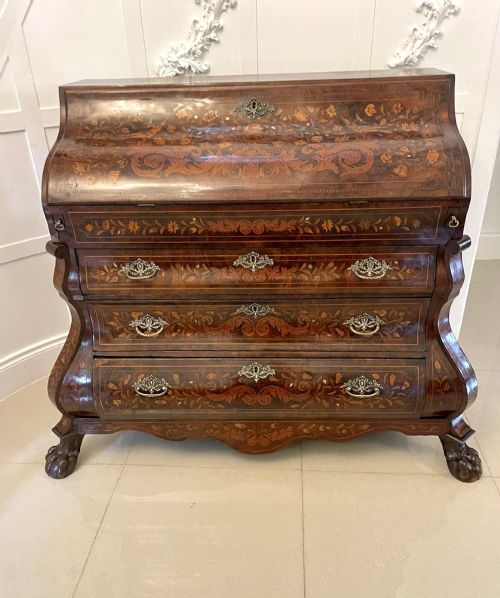
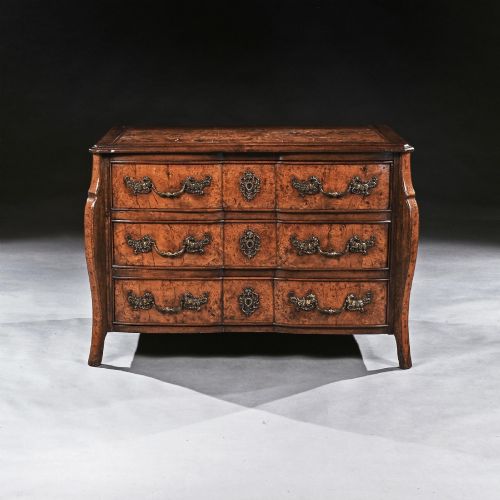
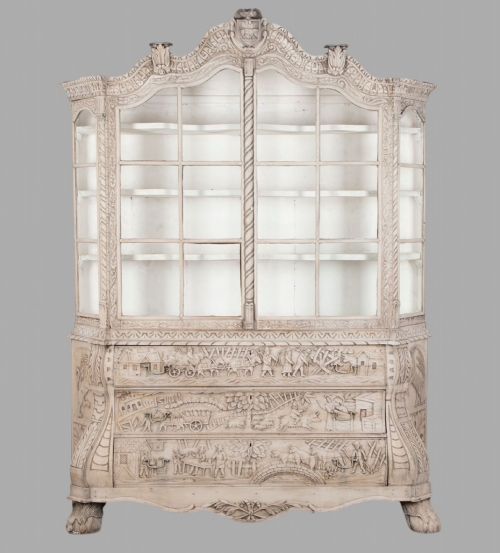
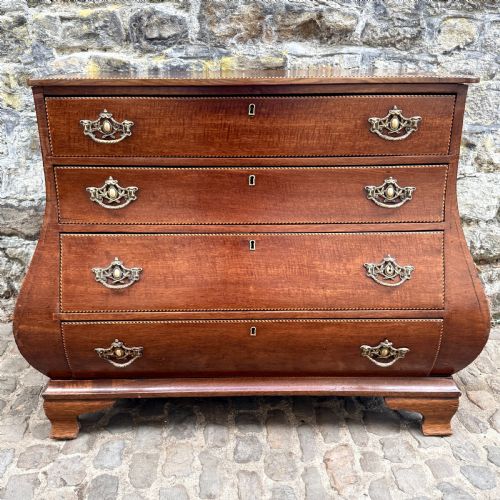
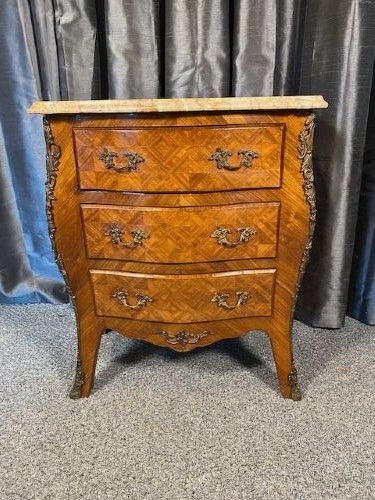
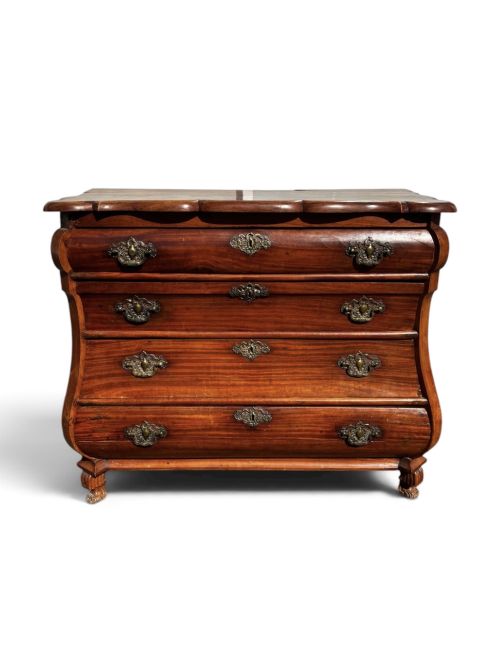
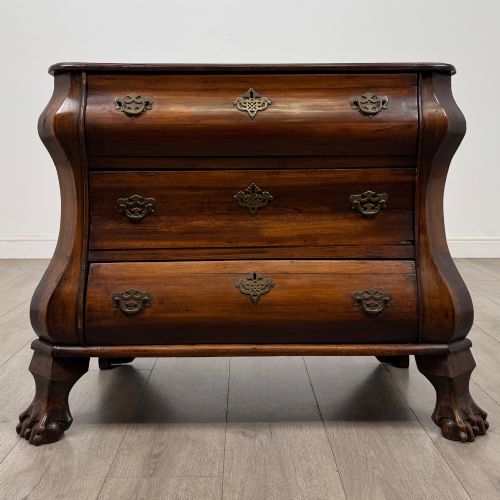
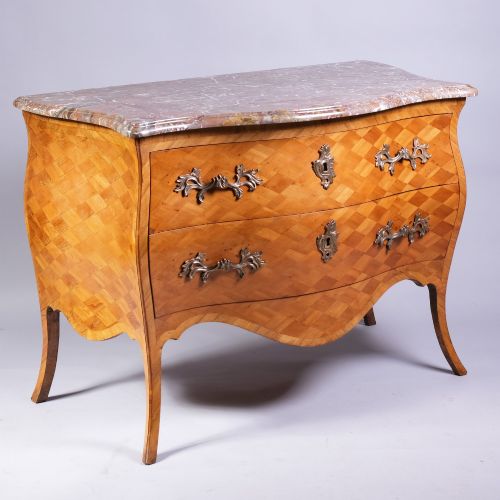
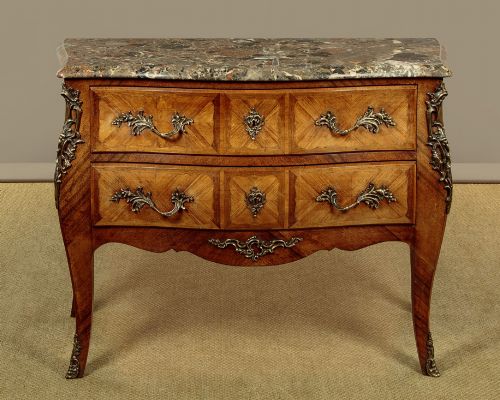
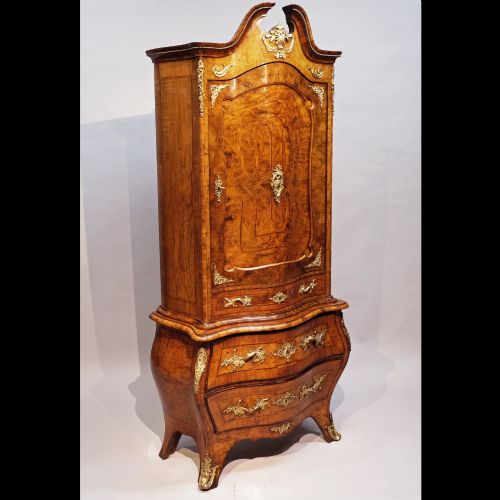
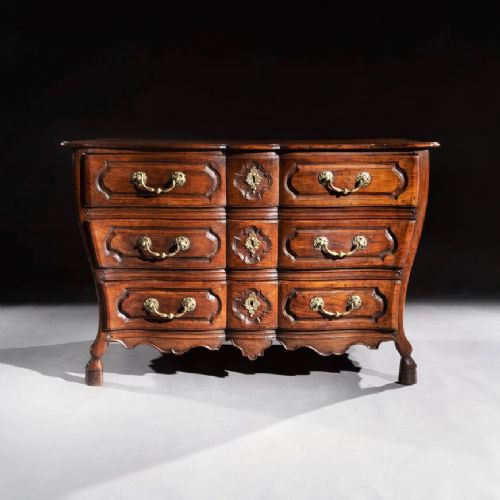
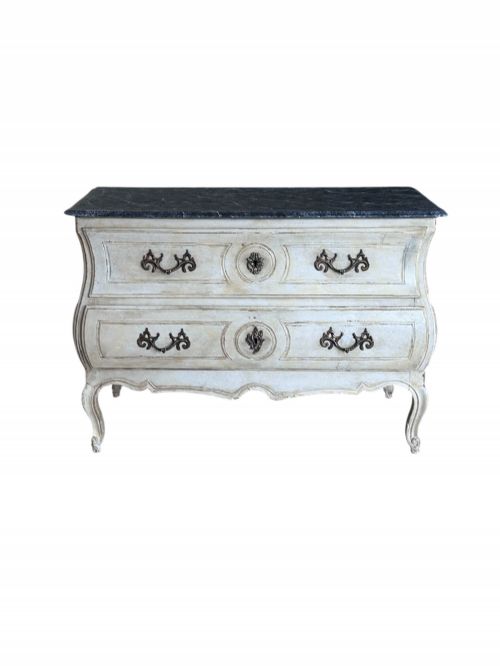
A bombe chest drawers piece defines a storage item characterised by its distinct outward-swelling sides and front, creating a dramatic silhouette. The selection ranges from 18th Century Dutch Baroque examples to later 19th Century French commodes and Louis XV style adaptations.
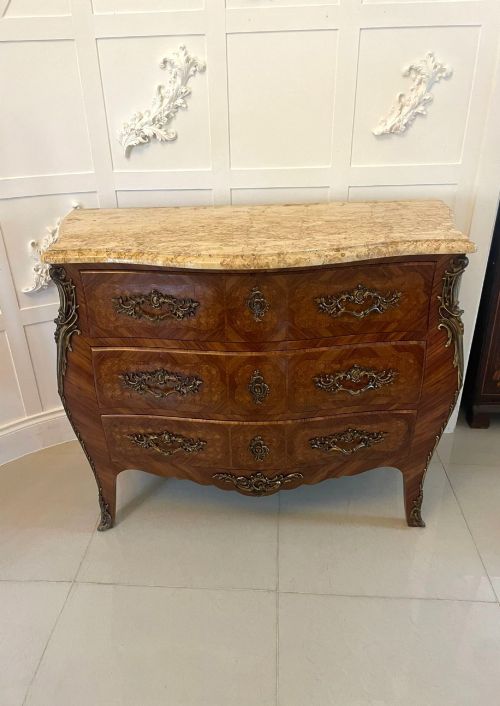
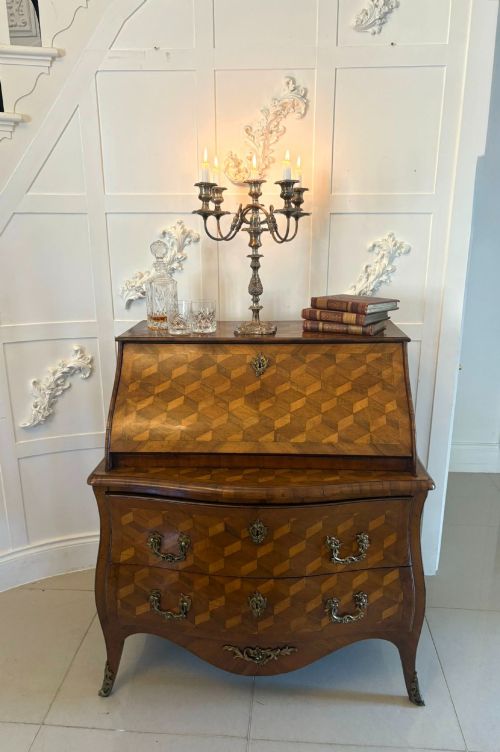
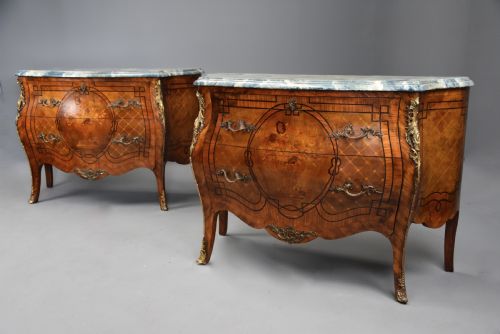
Most pieces seen here take the form of commodes, desks, or bureaus designed with shaped drawer fronts. Walnut, mahogany, and exotic veneers dominate the inventory, often accompanied by marble tops and ormolu mounts.
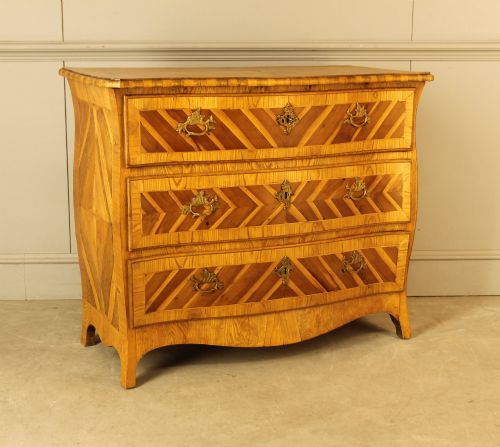
Regional variations span Dutch designs with deep, rolling curves to French provincial and chateau styles featuring intricate parquetry and marquetry inlays. Buyers encounter both substantial 18th Century workshop items and lighter 20th Century interpretations.
Assessing quality and finish
The sophistication of the timber work and the crispness of the parquetry patterns distinguish superior examples from simpler production pieces. Fine execution shows seamless grain continuity across the extreme curves and precise alignment of the inlaid veneers.
The quality of the cast ormolu mounts and the weight of the fitted marble top indicate the tier of the original workshop. Higher grade items display deeply chased metalwork and thick, heavy marble slabs meticulously contoured to match the carcase profile.
Retail Price Guide 2026
Typical UK retail prices for bombe chest drawers, calculated from the Sellingantiques database of over a million retail prices indexed since 2003. This retail price guide relies exclusively on Sellingantiques data; no external sources or auction records are used, so the figures do not describe the wider market.
Early cabinetmakers discovered that forcing straight timber to curve into a permanent belly required immense patience and very damp air.
The Bombe Chest Drawers Glossary
- Bombe
- A French term meaning bulbous or swelling, describing furniture with convex, outward-curving sides and fronts. This profile requires advanced joinery to shape the wood successfully.
- Commode
- A low French chest of drawers standing on legs, popular throughout the 18th and 19th centuries. These pieces often feature decorative marble tops and elaborate gilt-bronze mounts.
- Ormolu
- Gilded bronze used widely as decorative mounts on fine furniture during the 18th and 19th centuries. The metal is cast and chased to add bright metallic highlights to the wood carcase.
- Marquetry
- The art of applying decorative pieces of veneer to a structure to form intricate picture designs or patterns. Craftsmen use various coloured woods to create pictorial scenes on drawer fronts.
- Parquetry
- A geometric mosaic of wood pieces used for floor surfaces or furniture decoration. It differs from marquetry through its strict reliance on regular, repeating geometric angles.
Frequently Asked Questions
How do I style a bombe chest?
These prominent pieces demand space to let their sweeping curves and decorative mounts catch the light. Place them in a hallway or drawing room where the silhouette remains unobstructed.
Keep surface accessories simple so the timber grain and parquetry work stay the focal point. A large mirror or a pair of candlesticks works well above the marble or wood top.
What is the difference between Dutch and French styles?
Dutch examples tend to feature deeper, heavier swelling forms executed in solid walnut or burr walnut veneers. They often present a restrained elegance rooted in 18th Century Baroque traditions.
French commodes typically lean towards Louis XV aesthetics, incorporating lighter fruitwoods, kingwood, rosewood, intricate marquetry, and elaborate ormolu mounts.
How should I care for the wood?
Protect the polished surfaces by keeping the chest away from direct heat sources and strong sunlight that can dry out old veneers. Regular dusting with a soft, dry cloth maintains the lustre of the polish.
Avoid using modern silicone sprays or heavy waxes that build up over time. Natural beeswax applied sparingly helps preserve antique timber finishes.