


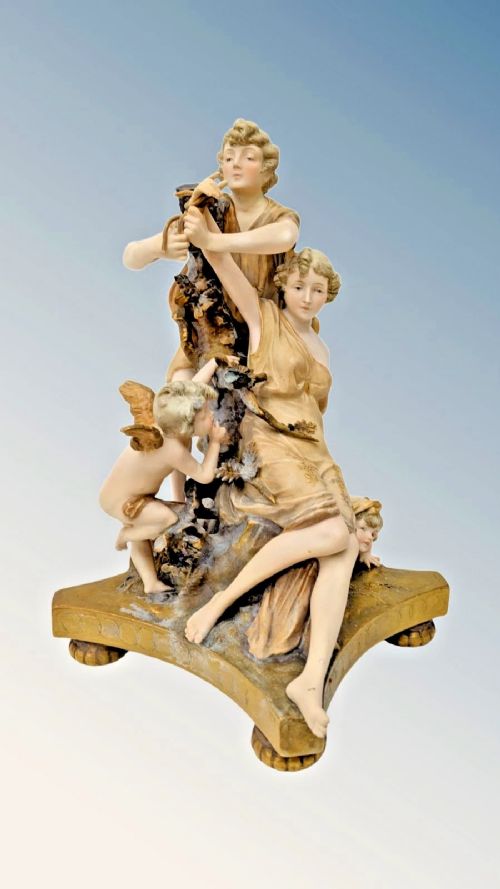


Bohemian Porcelain Figurines
These bohemian porcelain figurines bring the flowing lines of the late nineteenth and early twentieth centuries directly into a room.
Bohemian Porcelain Figurines
When you search for bohemian porcelain figurines, you encounter sculptural works originating from the Bohemian region during periods spanning the late nineteenth century through the 1930s. The selection on this page consists predominantly of figures, groups, busts, and centrepieces reflecting Victorian Orientalism, Art Nouveau, Neoclassical, and Art Deco movements.
The most common examples you meet here are produced by Royal Dux and Ernst Wahliss, depicting graceful maidens, water carriers, animals, and pastoral figures. These pieces range from standard mantle ornaments to monumental sculptures and spill vases.
Makers utilised distinct forms, such as young women with wicker baskets, maidens leaning on shells, and figures carrying puppies and kittens. The aesthetic shifts from ornate nineteenth century romanticism toward cleaner Art Deco geometry in the later eras.
What varies in quality
Quality depends on the precision of the modeling and the crispness of the applied details. Early numbered models and pieces signed by specific artists display finer hand-finished execution in the facial expressions and drapery.
The application of enamel and gilt separates standard production runs from superior artistic examples. Preservation of the original gilding and the delicate extremities of the porcelain dictates the standing of an individual sculpture.
Fishermen, maidens, hunting dogs, and kittens populate these Bohemian works.
Royal Dux Bohemia·Ernst Wahliss·Alois Hampel·H. Schubert·Eichwald
The Bohemian Porcelain Figurines Glossary
- Biscuit porcelain
- Unglazed ceramic material fired once to produce a matte, porous finish resembling marble. It is frequently employed for realistic flesh tones in nineteenth-century figures.
- Art Nouveau
- A decorative style characterised by sinuous, organic lines and floral motifs. This aesthetic heavily influences the maiden and water nymph figures from the Edwardian era.
- Turn-Teplitz
- A manufacturing location in Bohemia associated with prominent porcelain production. Works originating from this district often bear specific regional marks.
- Vide poche
- A small decorative tray or dish intended for emptying pockets. Several Bohemian porcelain models combine this functional bowl form with figural groupings.
Bohemian Porcelain Figurines: Frequently Asked Questions
What periods do these pieces date from?
The inventory spans the late nineteenth century through the Edwardian period, 1910, 1920, and into the Art Deco era of 1930.
Most items originate from the turn of the twentieth century, reflecting Art Nouveau and Victorian Orientalist design movements.
How were these figures used originally?
Owners placed these items on mantelpieces, tables, and pedestals as purely decorative sculptural objects within the home.
Certain pieces served functional purposes, operating as spill vases for matches, centrepieces for dining tables, or vide poche receptacles.
How do I identify Art Nouveau examples?
Art Nouveau items feature flowing hair, natural drapery, shell motifs, and asymmetrical poses representing maidens, water nymphs, and bathers.
These pieces typically date from the late nineteenth century to the early Edwardian decade.
What materials make up these sculptures?
Makers utilised porcelain, ceramic, earthenware, and biscuit porcelain as the primary base media for forming the figures.
Surfaces received enrichment through enamel painting, gilt highlights, and applied gold leaf.