
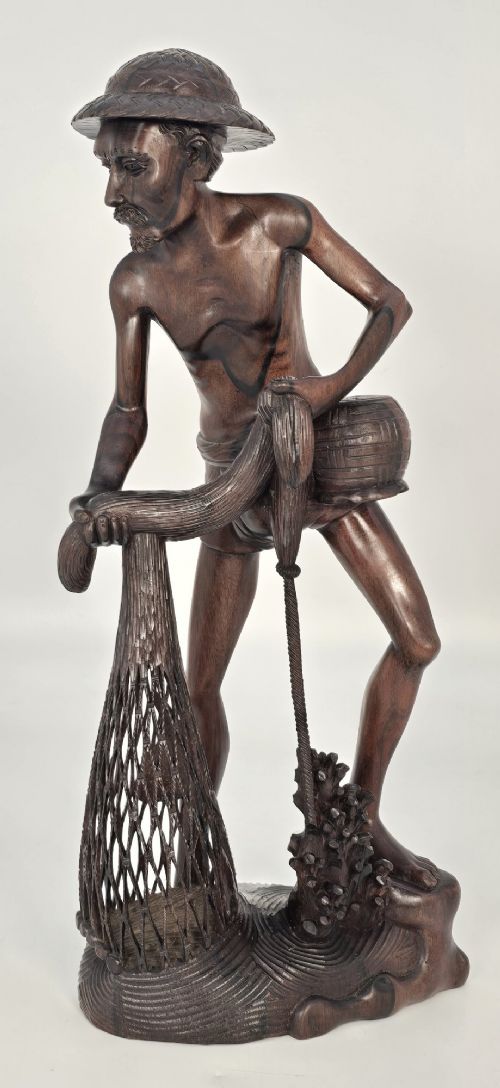


Antique Fisherman Statue
An antique fisherman statue captures coastal life with character, ranging from Japanese wood netsuke to French bronze figures.
Antique Fisherman Statue
An antique fisherman statue represents maritime subjects across global traditions, spanning the nineteenth century through the Edwardian era. You encounter carved hardwood sculptures alongside bronze figures and porcelain pieces.
The pieces on this page include Chinese folk art, Japanese Meiji period okimono, and French realism. Hardwood carvings and bronze castings form the core of what is available.
How they were made
Artisans carved these figures from hardwood or cast them in bronze, often applying dark patina or gilt finishes. Wood netsuke and okimono show intricate hand-carved detail, while bronze sculptures utilise traditional casting methods.
Porcelain figures from Bohemia employ moulded ceramic with coloured glazes. Hardwood pieces rely on skilled hand-tooling to render textured clothing and natural rock bases.
Fisher boys stand bravely upon rocky outcrops while lobsters and fish keep them company in timber and bronze.
What varies in quality
Signatures by notable makers elevate certain bronze and wood works. The depth of the patina and the crispness of the surface finish distinguish superior examples.
Carl Kauba·Lavergne·Tomochika
The Antique Fisherman Statue Glossary
- Okimono
- A Japanese freestanding carving intended for display, often depicting figures or daily scenes. These miniature sculptures demonstrate meticulous craftsmanship.
- Netsuke
- A small carved toggle used to secure a pouch on traditional Japanese clothing. They often take the form of figures and mythical subjects.
- Patina
- The surface sheen and coloration developed through age or chemical treatment on metal and wood. A dark patina is common on nineteenth-century bronzes.
- Gilt
- A thin layer of gold applied to the surface of wood, bronze, or other materials for decoration. It adds metallic highlights to carved details.
Antique Fisherman Statue: Frequently Asked Questions
What materials are used for these statues?
Makers worked primarily in bronze, hardwood, and porcelain. Some pieces feature gilt or dark patina finishes.
Japanese examples utilise wood, while European sculptures favour cast bronze and Bohemian porcelain.
How do I identify a Meiji period piece?
Meiji period items often originate from Japan and take the form of wood netsuke or okimono. They depict traditional subjects and frequently bear artist signatures.
These carvings reflect the distinct aesthetic of late nineteenth-century Japanese craftsmanship.
Where were these figures made?
Origin locations span France, China, Japan, and Bohemia. Each region brought distinct regional styles and material preferences to the subject.
European workshops produced bronze figures of boatmen and fisher boys, while Asian makers carved detailed wooden statuary.
How do I display a wooden carving?
Place hardwood figures away from direct sunlight and extreme temperature fluctuations to protect the wood. Stable indoor humidity prevents cracking in antique timber.
Position them on level surfaces where the fine hand-carved details remain visible.