




Bohemian Ceramic Figurine
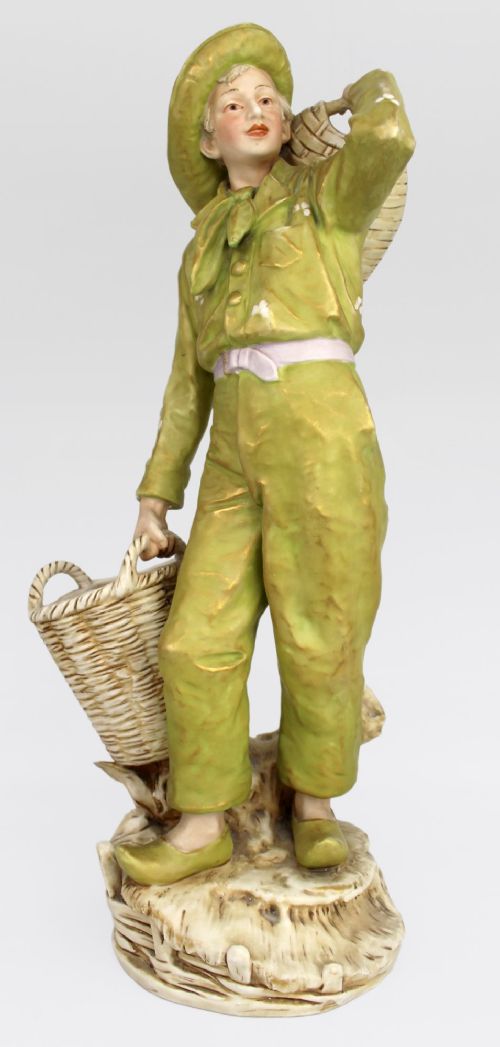
These bohemian ceramic figurine pieces offer expressive portrayals of maidens, animals, and pastoral workers originating from the late nineteenth and early twentieth centuries.
Bohemian Ceramic Figurine
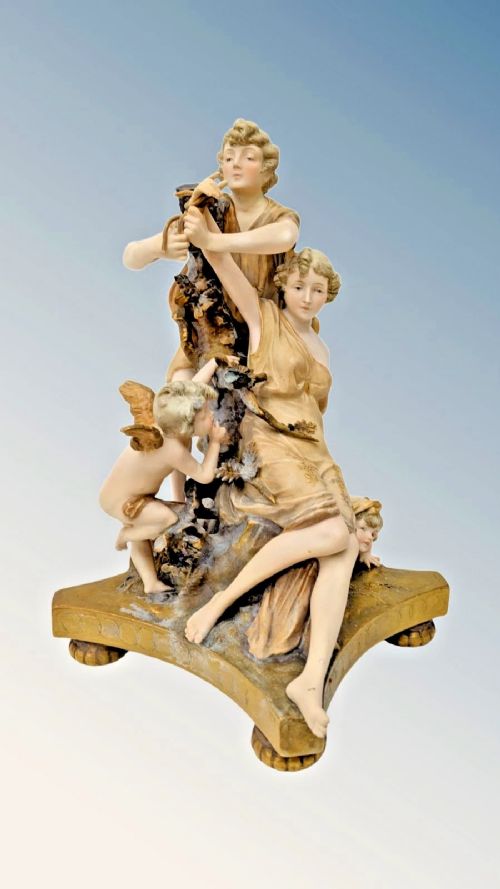
A bohemian ceramic figurine captures subjects ranging from classical water carriers and mythological nymphs to Art Nouveau maidens, fishermen, and domestic animals. These sculptural works span periods from the late nineteenth century through the Edwardian era and into the Art Deco years, reflecting shifting artistic tastes in central Europe.
Makers produced both single figures and elaborate pairs, alongside sculptural centrepieces, vide poche bowls, and spill vases. The most prominent examples on this page hail from established Bohemian factories, capturing human gestures and animal forms in porcelain and terracotta.
What varies in quality
Palette application and surface preservation dictate the visual strength of each piece. Careful brushwork in the enamels and well-preserved gilding distinguish finer examples from simpler factory output.
The documented periods span from the 1880s through the Edwardian era into the Art Deco 1930s.
Royal Dux Bohemia·Ernst Wahliss·Bernard Bloch·Eichwald·Alois Hampel
The Bohemian Ceramic Figurine Glossary
- Biscuit porcelain
- Unglazed ceramic fired once to create a matte, porous white surface resembling marble. Sculptors favoured this material for capturing soft skin textures and subtle facial expressions.
- Art Nouveau
- A decorative style characterised by flowing, organic lines and floral motifs. Figures from this movement frequently depict sweeping hair, draped scarves, and natural elements like shells and water.
- Terracotta
- A reddish-brown baked clay body used for figurative sculpture. Artists often painted or glazed this material to represent human subjects and animals with earthy realism.
- Vide poche
- A small decorative dish or bowl designed for emptying pockets. In ceramic form, these items integrate sculptural human figures alongside a shallow receptacle.
- Gilt
- A thin layer of gold applied to the surface of ceramics for decorative embellishment. It accents details such as borders, garments, and accessories.
Bohemian Ceramic Figurine: Frequently Asked Questions
What periods do these figures come from?
These ceramic works date primarily from the late nineteenth century, the Edwardian period, and the early decades of the twentieth century. Production spans from the 1880s through the Art Nouveau era and into the Art Deco period of the 1920s and 1930s.
Stylistic shifts help indicate the date of manufacture, moving from ornate Victorian Orientalism and classical Neoclassical designs to flowing organic forms and geometric 1930s silhouettes.
How were these ceramic figurines used?
Households in the late nineteenth and early twentieth centuries displayed these figural sculptures on mantelpieces, tabletops, and cabinets as decorative ornaments. Functional variants like centrepieces, vide poche trays, and spill vases also served practical roles in domestic rooms.
Larger sculptural groups often acted as focal points for interior decoration, while pairs of figures were placed symmetrically on furniture surfaces.
How do I identify Art Nouveau examples?
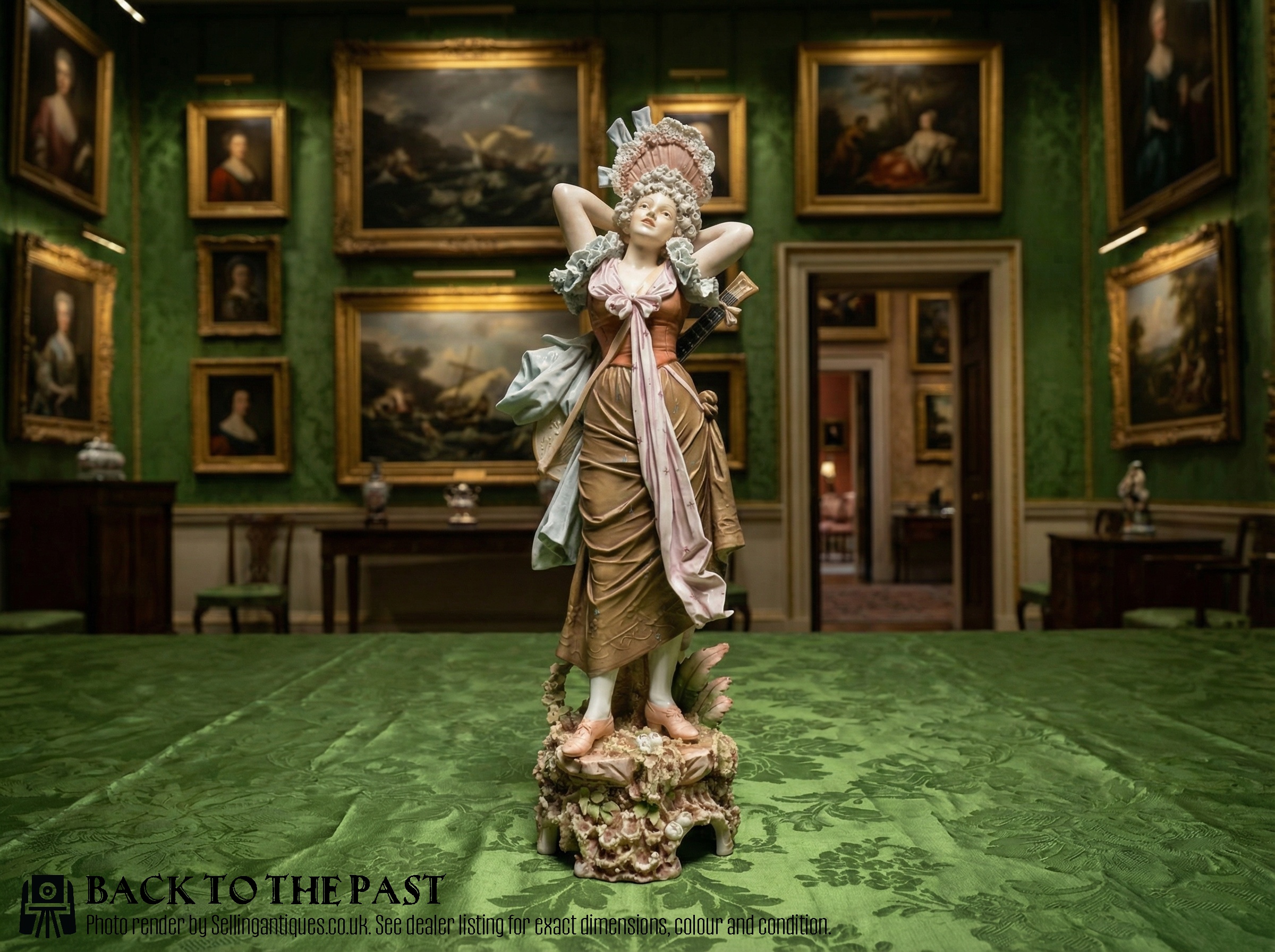
Art Nouveau examples feature stylized natural forms, asymmetric compositions, and flowing drapery or hair. Subjects like water nymphs, maidens leaning on shells, and female figures with scarves embody this aesthetic.
Makers utilised soft pastel enamel palettes and integrated natural objects such as water lilies and wicker baskets into the sculptural base.
What materials are used in these sculptures?
Makers utilised porcelain, biscuit porcelain, earthenware, and terracotta as the primary ceramic bodies for these figures. Surfaces were frequently decorated with coloured glazes, enamel paints, and gilt accents.
Terracotta pieces typically emphasise earthy tones for figures like fisherfolk and animals, while porcelain examples often feature glossy glazes and delicate hand-painted polychrome finishes.