




Boarded Coffer Box
A boarded coffer box is a sturdy timber storage piece built from thick planks, offering simple utility and enduring rustic character.
Boarded Coffer Box
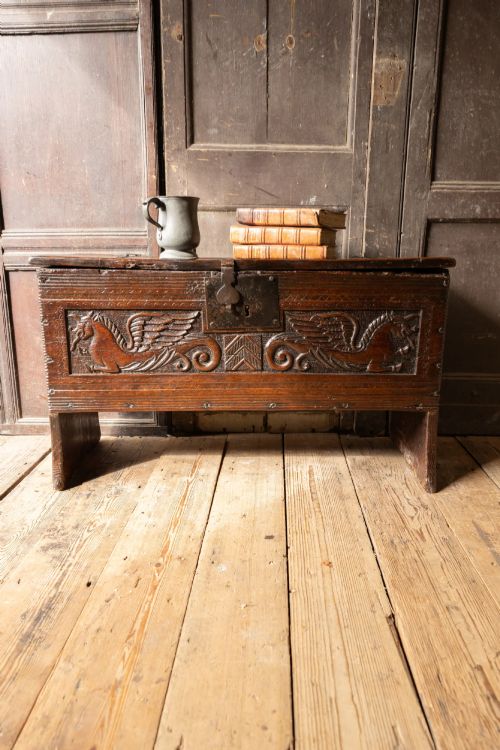
When you search for a boarded coffer box, you encounter heavy storage chests constructed primarily from solid oak and elm boards pegged or nailed together at the edges. These pieces span several centuries of British vernacular cabinet-making, originating from periods such as the sixteenth, seventeenth, and eighteenth centuries.
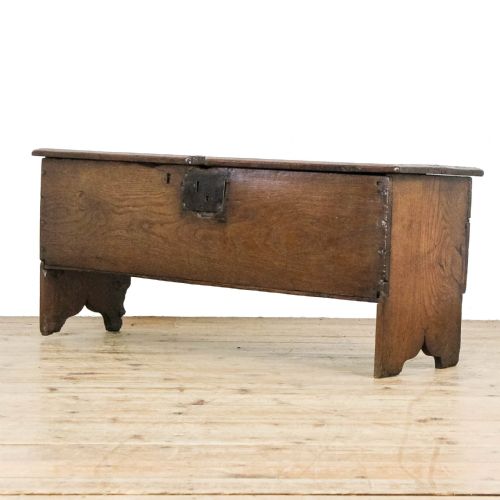
The versions most commonly met on this page are six-plank constructions and sword chests, often displaying the straightforward geometry of Elizabethan, Jacobean, and Welsh vernacular traditions. Their forms range from small utility boxes to long chests designed to hold specific items like blades.
Makers built these items for robust everyday service in domestic settings, relying on thick vertical and horizontal boards rather than complex frame-and-panel assemblies. Surviving examples demonstrate the straightforward carpentry of rural workshops across England and Wales.
How they were made
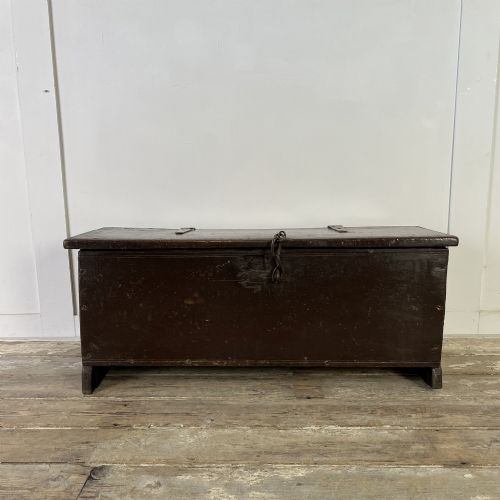
Makers constructed boarded coffer boxes by joining thick planks of native timber, predominantly oak and elm, using simple butt joints secured by wooden pegs, iron nails, or dovetails. Wrought iron strapwork, hinges, and latches frequently reinforced the structural corners and lids of these heavy containers.
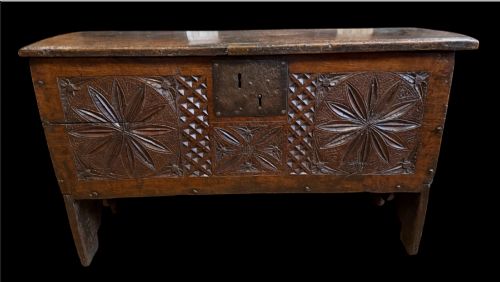
Surfaces were typically left unadorned or finished with basic hand-carved detailing, reflecting the vernacular country style of regional carpenters. The timber was worked with axes, adzes, and saws, leaving visible tool marks that indicate early hand-tool manufacturing methods.
Boarded Coffer Box Retail Price Guide 2026
Typical asking prices for boarded coffer box among the pieces listed under this phrase on Sellingantiques today, from the lower quarter to the upper quarter. They describe what is for sale here now, not the wider market.
Some seventeenth-century sword chests feature internal partitions just wide enough to keep a gentleman's blade from sliding about during transport.
What varies in quality
Quality in these pieces depends upon the integrity of the original timber boards and the survival of authentic structural fastenings like wrought iron hardware and wooden pegs. Thicker planks and minimal replacement of base or lid boards distinguish superior examples from heavily restored ones.
The presence of regional characteristics, such as early carved detailing or documented provenance from areas like Montgomeryshire, elevates the interest of a piece above standard utilitarian boxes.
The Boarded Coffer Box Glossary
- Boarded coffer box
- A storage chest constructed directly from thick wooden planks rather than a framed panel structure. These simple containers served domestic and military storage needs for centuries.
- Six-plank coffer
- A primitive chest built using a single board for each of the four sides, plus one for the bottom and one for the lid. This method represents the earliest and most direct form of chest construction.
- Sword chest
- A long, narrow variant of the coffer specifically proportioned to accommodate sidearms. They often appear in oak from the Elizabethan and seventeenth-century periods.
- Vernacular country
- A style of furniture shaped by local traditions, available materials, and practical utility rather than academic architectural design. It reflects the regional character of British rural workshops.
- Wrought iron
- Iron beaten into shape by hand while hot, producing durable hardware such as hinges, straps, and lock plates. This material frequently secures early boarded furniture.
Boarded Coffer Box: Frequently Asked Questions
What is a boarded coffer box?
A boarded coffer box is a heavy storage container built by joining thick planks of timber at right angles. These pieces rely on simple board construction rather than internal framing.
Carpenters built them for domestic storage, utilising durable native woods like oak and elm to ensure longevity.
How old are these chests?
The pieces available range from sixteenth-century Elizabethan examples through the seventeenth and eighteenth centuries up to nineteen-hundred. Earlier items often display simpler lines and heavier timber boards.
Dating relies upon construction methods, tool marks, and stylistic indicators typical of specific British periods.
Were they used for blankets?
These chests served multiple household purposes, including the storage of textiles, clothing, valuables, and weapons like swords. Their robust construction protected contents from dampness and pests.
Over time, owners repurposed them according to domestic needs, leading to various descriptive terms in historical records.
How do I identify a six-plank chest?
A six-plank chest uses precisely six boards for the entire main structure: front, back, two ends, a base, and a lid. The vertical end boards often extend downward to form feet.
This method is characteristic of early vernacular woodworking traditions across England and Wales.
How do I care for antique oak?
Antique oak benefits from stable room temperatures and protection from direct sunlight or excessive dryness. Maintaining consistent humidity prevents the timber boards from splitting.
Applying occasional appropriate wax preserves the natural finish without sealing the wood.