



Blush Ivory Ceramic
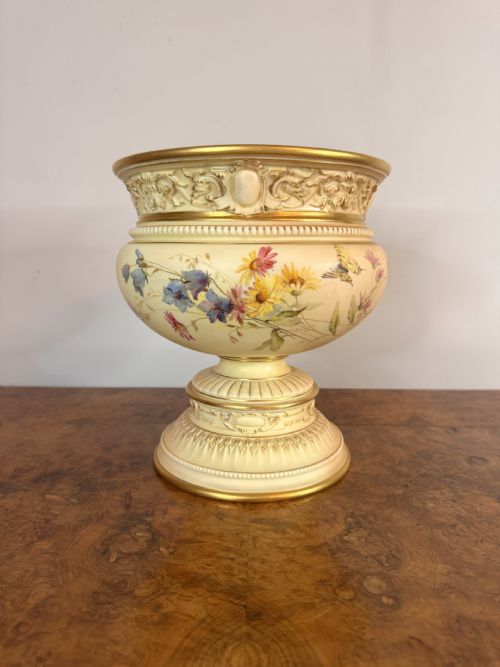
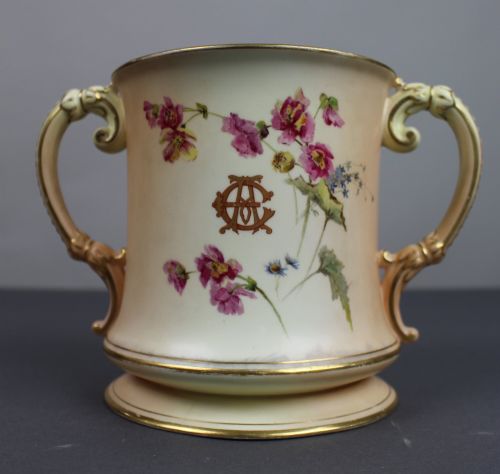
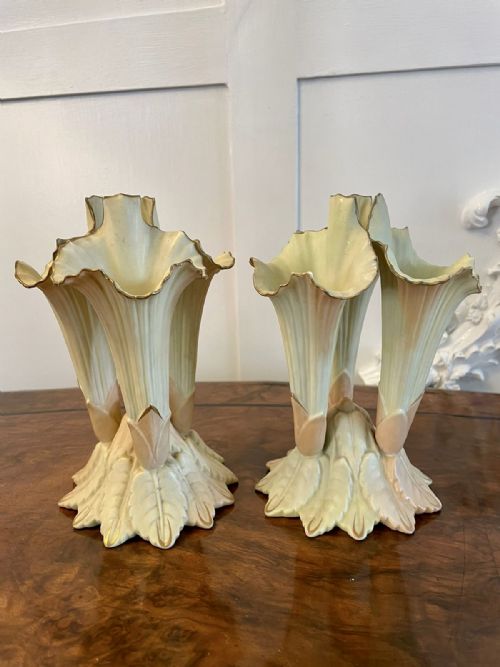
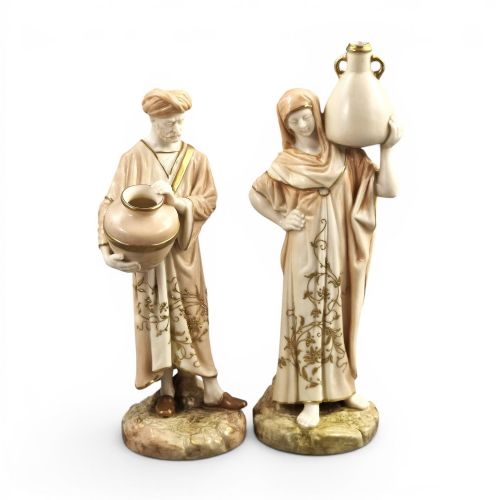
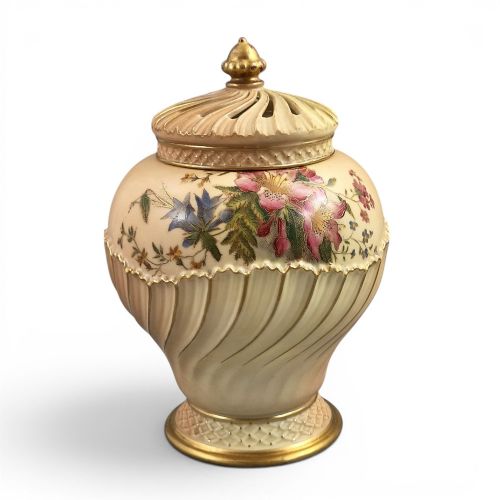
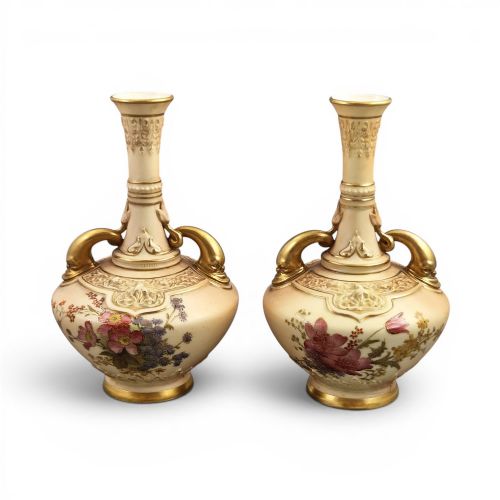
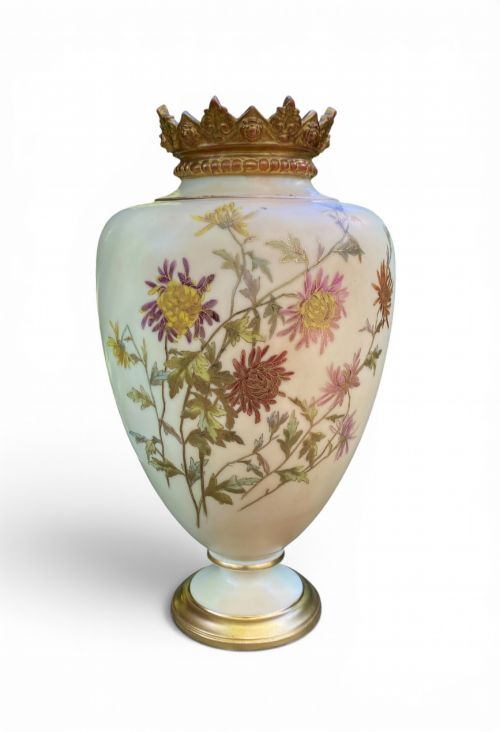
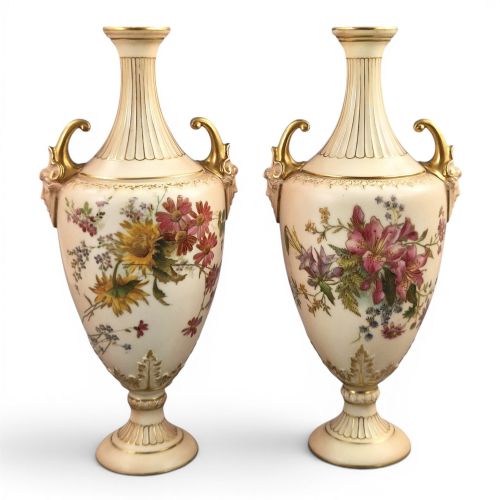
Blush ivory ceramic pieces bring soft, tinted porcelain and earthenware into domestic spaces through floral vases, ewers, and figurative works.
Blush Ivory Ceramic
Blush ivory ceramic items span the late nineteenth century through to the early decades of the twentieth century, encompassing the Victorian and Edwardian eras. Buyers exploring this category encounter domestic vessels and ornamental figures shaped in porcelain and earthenware.
The selection on this page centres heavily on works produced by Royal Worcester, alongside related pieces from factories such as Locke and Co, Carlton Ware, Doulton Burslem, and Royal Dux. Forms range from utilitarian ewers and teapots to decorative jardinieres, spill vases, and pot-pourri jars.
Figurative pieces often draw upon Orientalist or classical themes, depicting figures like water carriers, musicians, and dancers. These sculptural works sit alongside standard floral vases adorned with hand-painted details and gilt highlights.
What varies in quality
The standard of painting on floral sprays and figurative subjects dictates much of the distinction between pieces, where finer brushwork yields greater visual depth. The intricacy of moulded details, such as pierced handles and delicate animal or human forms, also marks out more accomplished manufacturing.
The integration of gilding and enamel work relative to the ivory glaze separates standard production wares from more ambitious studio pieces. Preservation of the surface finish and clarity of the original date or shape marks further distinguishes the range.
Blush Ivory Ceramic Retail Price Guide 2026
Typical asking prices for blush ivory ceramic among the pieces listed under this phrase on Sellingantiques today, from the lower quarter to the upper quarter. They describe what is for sale here now, not the wider market.
Among the dancers and water carriers, a persistent Indian trinket maker and a resolute snake charmer keep watch over the tea services.
Locke And Co·Royal Worcester·Carlton Ware·Doulton Burslem·Royal Dux
The Blush Ivory Ceramic Glossary
- Blush ivory
- A soft, pale ceramic glaze developed to imitate ivory, serving as a signature ground for late nineteenth and early twentieth-century ornamental wares. It provides a muted surface for hand-painted enamel decoration.
- Ewer
- A large jug with a wide spout and handled body, historically used for water or wine but frequently produced as a decorative ornamental piece in this category. Many examples feature elaborate handles and gilt detailing.
- Pot-pourri jar
- A perforated vessel designed to hold dried scented plant material, allowing fragrance to diffuse into a room. These items typically include a matching pierced cover.
- Jardinier
- A large ornamental pot or stand intended for holding plants or flowers. They often sit on tabletops and feature detailed figurative modelling or painted botanical scenes.
- Gilding
- The application of gold leaf or gold powder to ceramic surfaces to highlight rims, handles, and decorative motifs. This technique adds metallic contrast to the soft ivory glaze.
Blush Ivory Ceramic: Frequently Asked Questions
What is blush ivory ceramic?
Blush ivory ceramic refers to pottery and porcelain finished with a soft, tinted ivory glaze that gained popularity during the late Victorian and Edwardian periods. It serves as a warm background for hand-painted floral designs and gilt accents.
Most notable examples originate from British potteries of the era, combining classical or Orientalist forms with delicate enamel painting.
How do I date these pieces?
Dating relies on maker-specific date codes impressed or printed on the undersides of the ceramics, often using dots, letters, or symbols. Stylistic markers like Victorian revival styles or Edwardian motifs also help narrow down the production period.
Many records connect specific shape numbers and pattern numbers to exact years of manufacture.
Were these items used daily?
While some forms like teapots, jugs, and basin sets served practical functions in domestic households, many pieces were intended strictly as ornamental displays. Items like spill vases, figures, and jardiniers existed to decorate interior spaces.
Even functional vessels often prioritised decorative appeal through extensive gilding and delicate hand-painted motifs.
How should I clean blush ivory items?
Cleaning requires gentle dusting with a soft, dry cloth to protect the delicate enamel painting and surface gilding. Harsh chemical cleaners and abrasive cloths must be avoided to prevent damage to the glaze.
Water immersion should be limited, particularly for pieces with exposed earthenware or fragile applied details.