

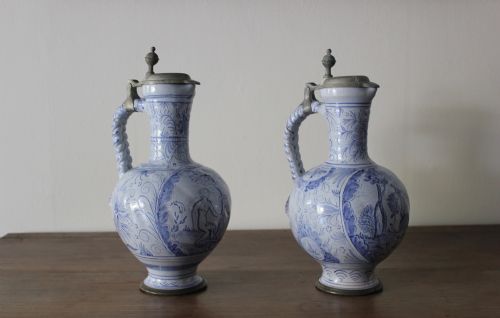


Blue White Ceramic Ewers
Blue white ceramic ewers bring sculptural form and patterned cobalt depth to interior spaces, bridging utility and display.
Blue White Ceramic Ewers
Blue white ceramic ewers encompass water jugs, wine vessels, and washstand pitchers produced across diverse global traditions. Collectors seek these objects for their striking cobalt decoration applied over pale ceramic bodies.
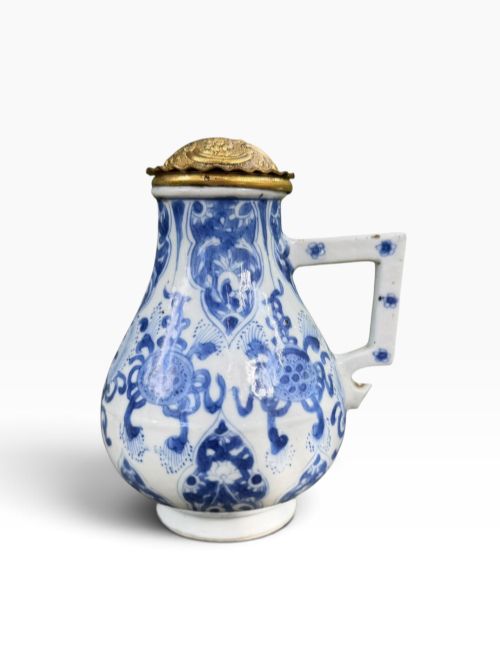
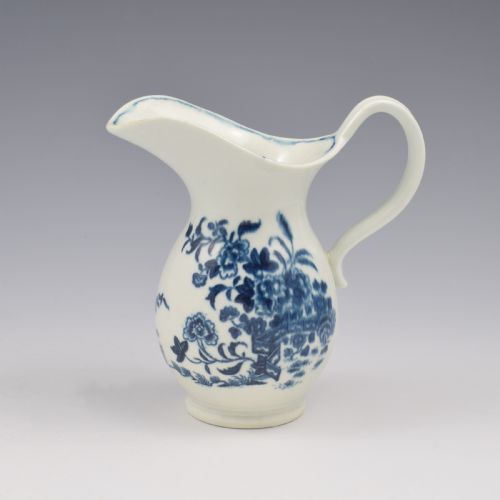
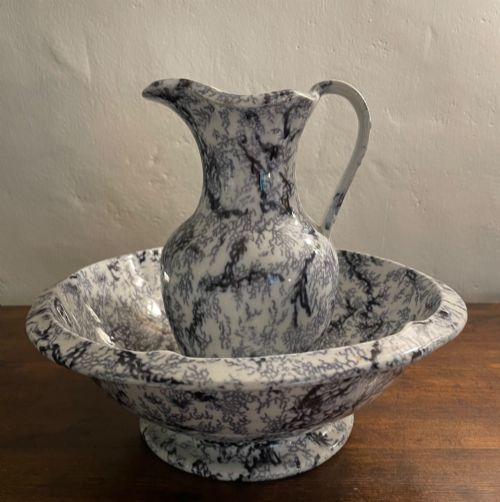
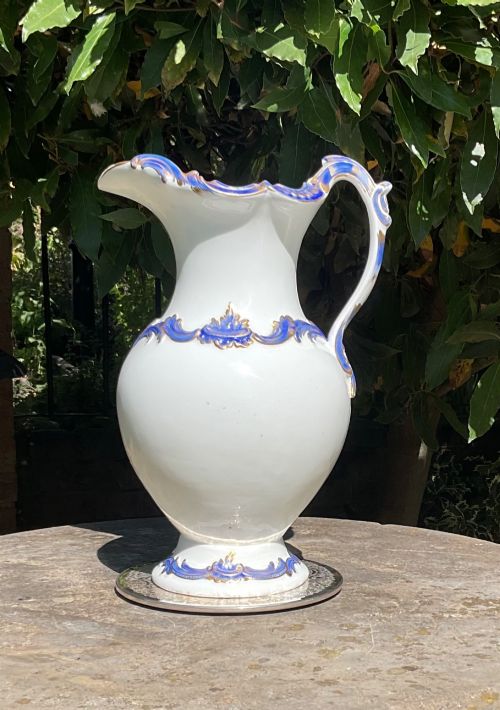
The selections on this page most frequently span the eighteenth and nineteenth centuries, including Victorian bathroom sets, Dutch Delft vessels, and Chinese export styles. Forms range from domestic washstand sets to decorative porcelain ewers.
Makers and workshops across Europe and Asia utilised distinct regional shapes, from Chinese Ming style teapots to English ironstone jugs. Each era imparted specific handle configurations and spout designs to these functional vessels.
Materials and construction
Potters shaped these vessels from porcelain, earthenware, and ironstone, applying tin glaze or clear finish over cobalt blue pigment. Firing techniques determined the brilliance of the white ground and the richness of the blue underglaze.
Certain pieces received additional enrichment through enamel, gilt highlights, or pewter mounts. Artisans threw or moulded the bodies before hand-painting intricate botanical, geometric, or figurative motifs.
Blue White Ceramic Ewers Retail Price Guide 2026
Typical asking prices for blue white ceramic ewers among the pieces listed under this phrase on Sellingantiques today, from the lower quarter to the upper quarter. They describe what is for sale here now, not the wider market.
Some nineteenth-century makers cleverly disguised ordinary washing water containers as grand Renaissance wine vessels.
Evaluating craftsmanship and condition
Quality rests in the crispness of the cobalt painting and the balance of the handle and spout relative to the body. Superior pieces display smooth glaze surfaces free from heavy firing blemishes.
The depth of the blue pigment and the precision of applied details distinguish standard domestic ware from masterworks. Intact matching basins or original lids elevate the integrity of a complete set.
Masons Ironstone·Minton·Doulton Burslem·Spode
The Blue White Ceramic Ewers Glossary
- Ewer
- A large jug with a wide spout and handle, traditionally used for holding and pouring water. These vessels often form part of a matching washstand set.
- Flow blue
- A nineteenth-century transfer printing technique where cobalt blue bleeds slightly into the surrounding glaze during firing. This effect creates a soft, hazy appearance on the ceramic surface.
- Tin glaze
- An opaque white glaze containing tin oxide, providing a smooth surface for painting in blue pigments. This technique is central to traditional Delftware production.
- Ironstone
- A heavy, durable type of earthenware patented in the nineteenth century to imitate porcelain. It provides a robust body for large domestic jugs and basins.
- Underglaze
- Pigment applied to the ceramic body before the application of a clear glaze and subsequent high-temperature firing. This method protects the blue decoration from daily wear.
Blue White Ceramic Ewers: Frequently Asked Questions
What were blue white ceramic ewers used for?
These vessels served practical roles in personal hygiene, water service, and dining before modern indoor plumbing became common.
Larger examples functioned as part of washstand sets for bedroom washing, while smaller ewers handled wine or tea service.
How do I date a blue white ewer?
Dating relies on identifying the ceramic body type, such as ironstone versus soft-paste porcelain, alongside stylistic clues in the cobalt painting.
Maker marks, registration stamps, and glaze characteristics help narrow the period of manufacture.
How should I display an antique ewer?
Ewers suit placement on sturdy sideboards, mantels, or open shelving where their sculptural profiles and cobalt patterns remain visible.
Keeping them away from direct sunlight and high-traffic edges protects the glaze and structure.
Are matching basins important for ewers?
Complete sets featuring both the ewer and its original wash basin hold greater historical and visual cohesion.
While many ewers survived independently, finding a matched pair enhances the display impact.