


Pair of Ewers
A pair of ewers brings sculptural symmetry and classical line to a room, functioning purely as decorative ornamental vessels.
Pair of Ewers
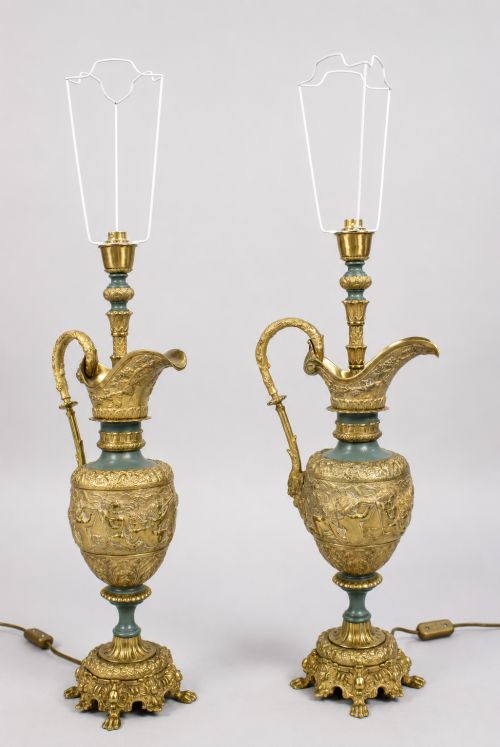
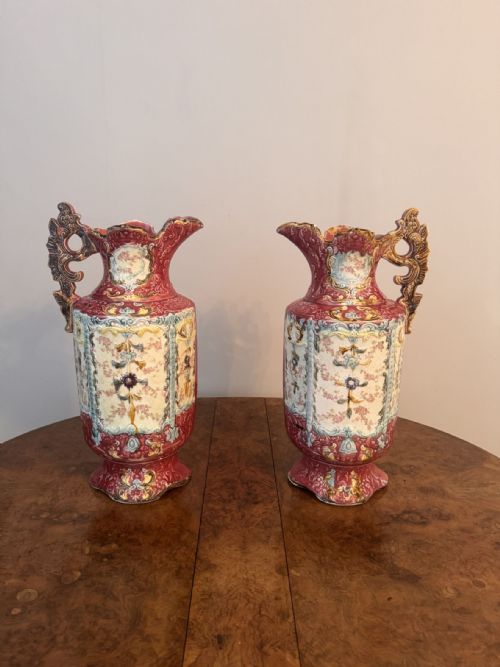
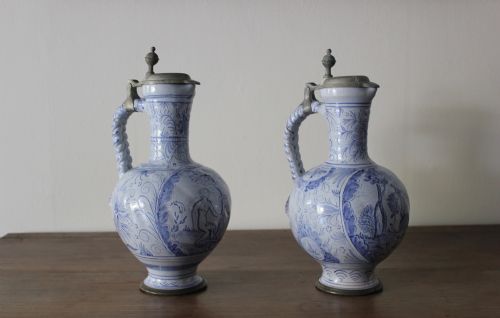
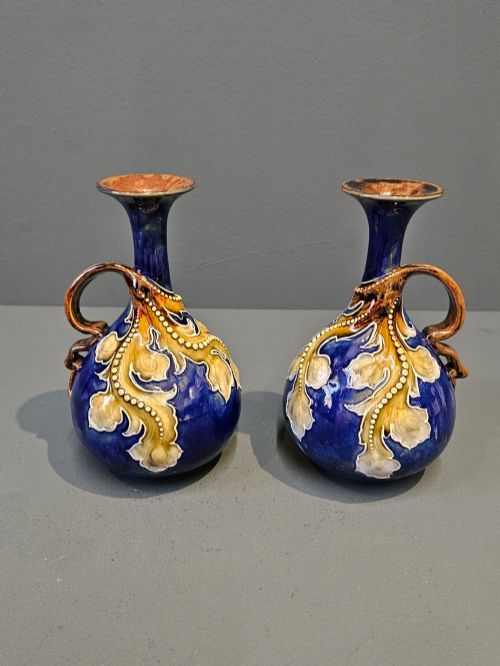
A pair of ewers comprises matched ornamental water vessels modelled on historical drinking forms, designed predominantly for display rather than utility. These pieces stem mainly from the nineteenth century, spanning Victorian production, Grand Tour souvenirs, and later aesthetic movements. Most examples found here take ceramic, bronze, or porcelain forms, often modelled in Renaissance, Neoclassical, or Art Nouveau styles.
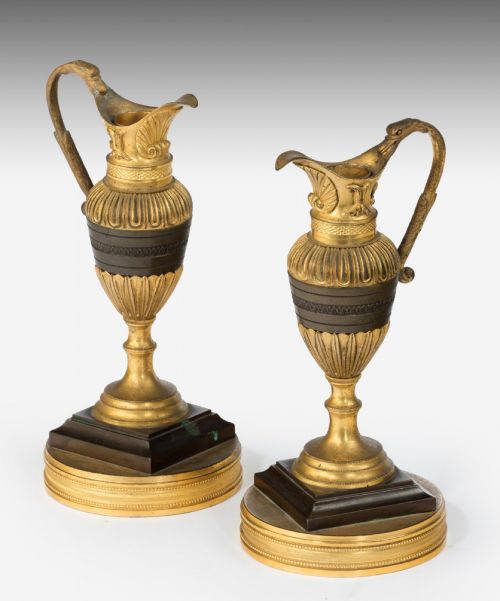
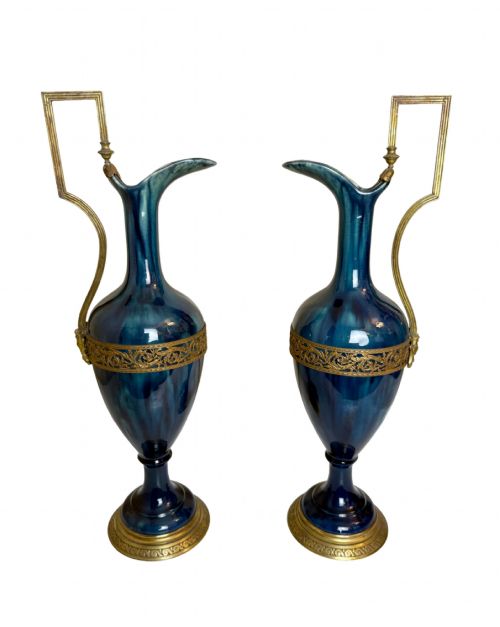
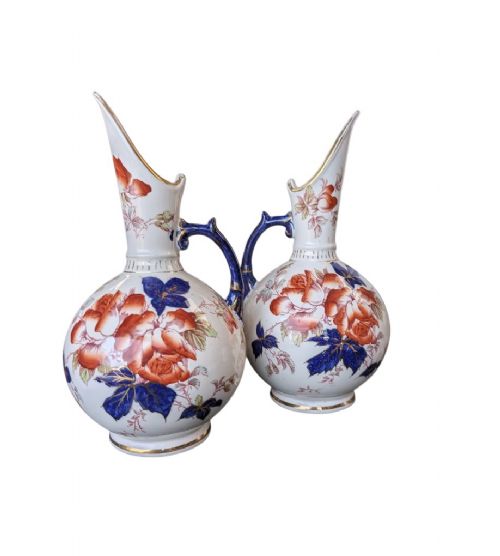
Buyers encounter everything from blush ivory Royal Worcester porcelain painted with floral details to heavy cast bronze French models and Austrian pottery. Many items serve as decorative mantel urns, while others are converted into table lamps or paired with matching dishes. The form borrows heavily from ancient shapes, featuring elongated necks, curved handles, and footed bases.
Materials and methods of construction
Makers utilised ceramic casting, hand-painting, and bronze moulding to shape these vessels. Porcelain and earthenware bodies were frequently finished with blush ivory grounds, enamel highlights, and gilding, while bronze and brass pieces employed lost-wax or sand-casting methods enhanced with ormolu mounts.
Metal versions often combine patinated bronze with gilt highlights or silver plating, following French Renaissance revival methods. Glass and ceramic examples incorporate mouth-blown elements, applied snake handles, and intricate hand-painted floral or figural compositions.
Several ewers feature applied glass snakes winding up the handles, offering a distinctly serpentine grip for imaginary water.
Distinctions in quality
Quality rests in the crispness of the casting and the fidelity of the hand-painted detail. Superior ceramic pieces exhibit delicate, artist-signed brushwork and carefully applied gilding, whereas lesser examples show flat, mechanical transfer printing.
In metalwork, the weight of the bronze and the precision of the chording and ormolu mounts separate standard production from finer foundry output. Matched symmetry between the two vessels also dictates desirability, as true pairs maintain identical proportions and patination.
Royal Worcester·Doulton Lambeth·Doulton Burslem·Royal Crown Derby·Coalport·Meissen·Minton·Vienna·Walker and Hall
The Pair of Ewers Glossary
- Ewer
- A large jug with a wide spout and curved handle, traditionally used for holding water but rendered here as a decorative object.
- Ormolu
- Finely ground high-carat gold applied to a bronze base, often used for decorative mounts and trim on nineteenth-century pieces.
- Blush Ivory
- A specialised porcelain ground developed by factories like Royal Worcester, featuring a creamy, matte finish that mimics ivory and takes floral painting.
- Grand Tour
- A nineteenth-century cultural journey undertaken by wealthy Europeans, yielding souvenirs such as bronze and marble classical ewers.
- Spelter
- A zinc alloy used as a substitute for bronze in decorative figures and vessels, typically given a patinated finish to resemble heavier metal.
Pair of Ewers: Frequently Asked Questions
Were antique ewers actually used for pouring water?
Most nineteenth-century decorative ewers were created strictly as ornamental objects, mantel garnitures, or display pieces rather than functional tableware.
While their historical predecessors served practical washing or serving purposes, the examples collected today functioned primarily as decorative art from the point of manufacture.
How should I display a pair of ewers?
A matched pair looks best balanced symmetrically on a sideboard, mantlepiece, or console table where their sculptural profiles can be appreciated from multiple angles.
Because many examples feature delicate hand-painted decoration or gilt bronze mounts, placing them away from direct sunlight protects the pigments and finishes.
How do I tell Victorian pieces from earlier versions?
Victorian pieces frequently combine historical revival styles like Neoclassical or Renaissance with industrial manufacturing techniques such as standard porcelain bodies and machine-applied gilding.
Examining the base marks, glaze consistency, and metal patination often reveals the nineteenth-century factory production methods typical of this era.
Can converted ewer lamps be wired safely?
Many nineteenth-century bronze and ceramic ewers were adapted into table lamps during the twentieth century, utilising standard electrical components fitted through the original vessel structure.
A qualified electrician can easily inspect or rewire older fixtures to ensure they meet modern safety standards without altering the antique body.