


Blue Transferware Tureen
A blue transferware tureen brings deep indigo motifs onto white ceramic tables, offering collectors rich nineteenth-century scenes and practical Victorian service.

What these pieces are
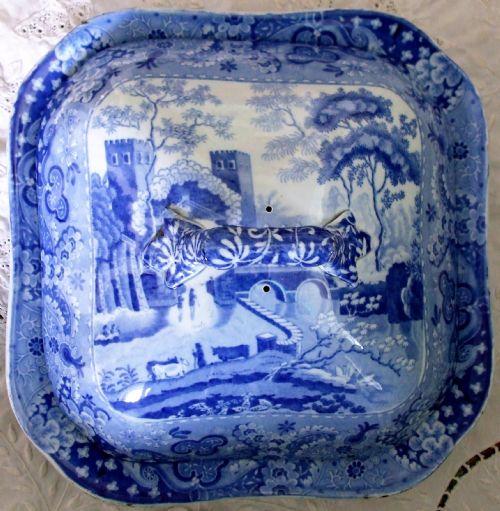
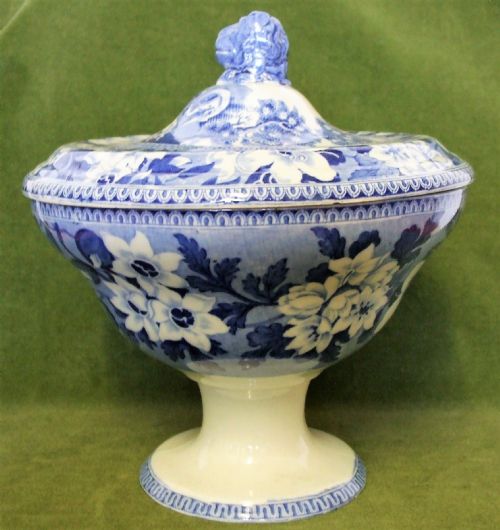
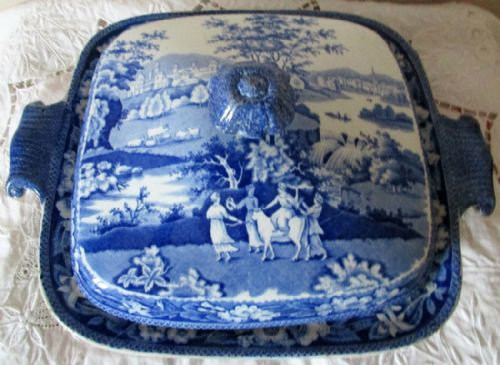
A blue transferware tureen provides a ceramic vessel designed for serving soups, vegetables, or sauces at the dining table. These pieces span the nineteenth century, including Georgian and Victorian periods, showcasing printed pictorial designs upon earthenware bodies.
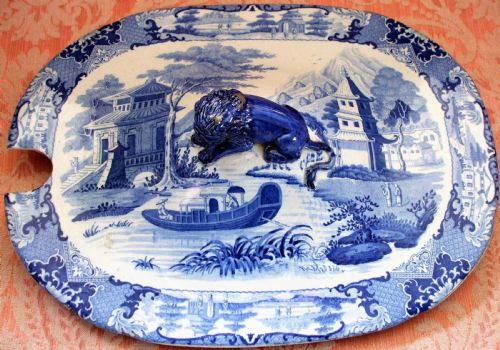
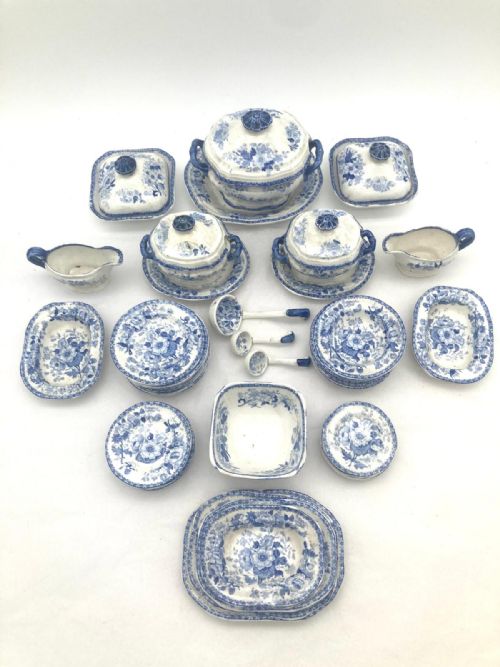
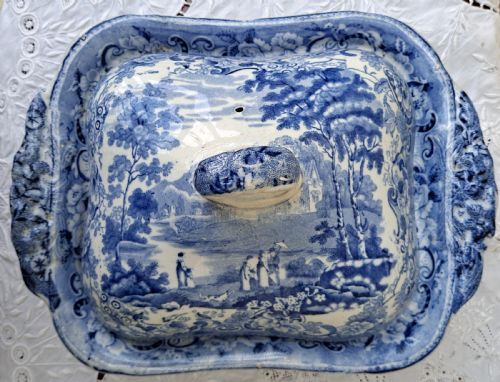
Collectors encounter various forms on this page, ranging from large lidded vegetable tureens and supper set tureens to compact sauce tureens complete with matching ladles and covers. Makers applied named pictorial patterns such as Castle, Elephant, Peacock, and Lorna across these serving vessels.
How they were made
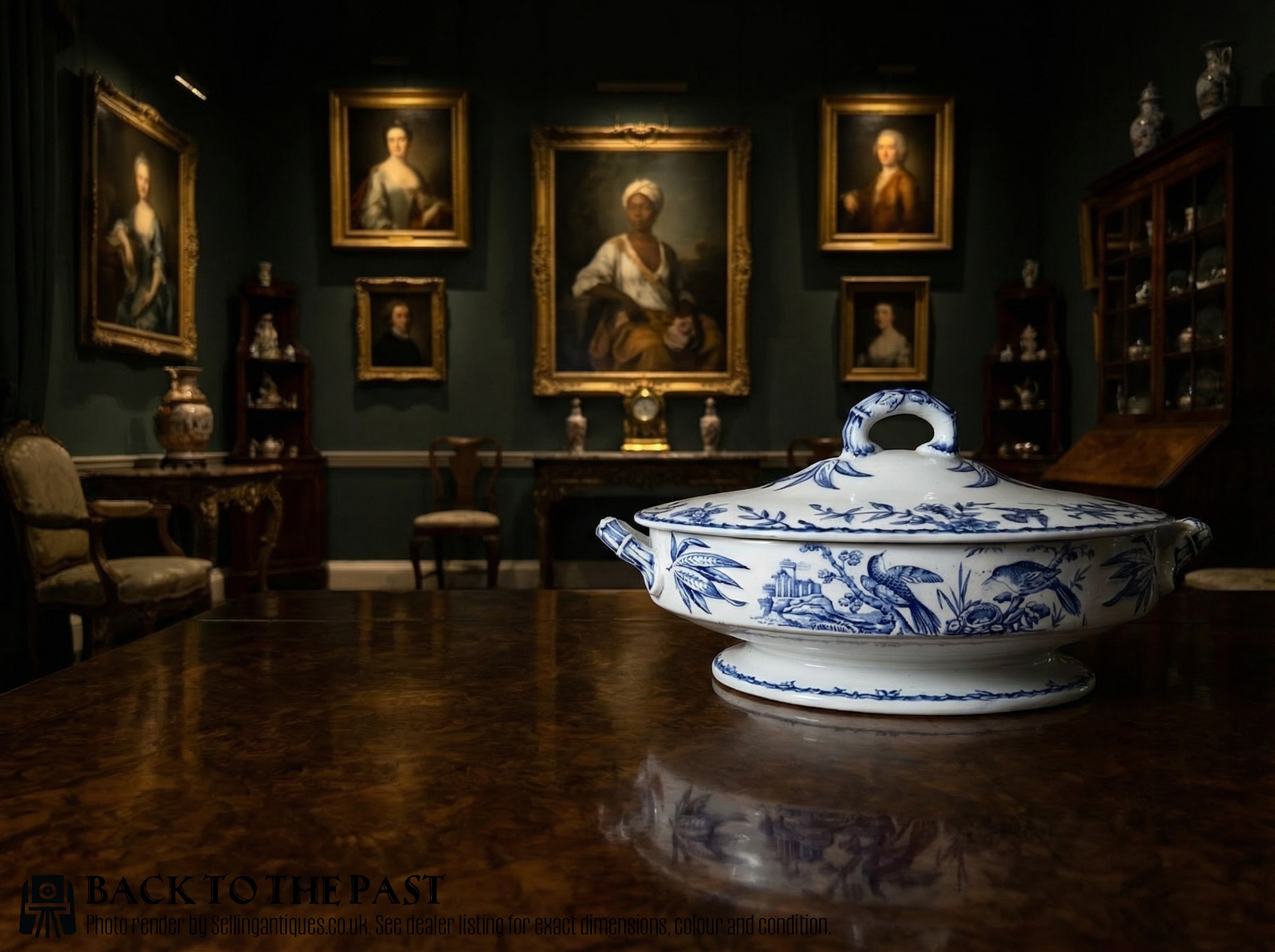
Potters formed these items from earthenware ceramic bodies, shaping the tureens, covers, and occasional matching ladles before firing. Artisans then applied transfer printing techniques to transfer intricate blue designs onto the ceramic surface from engraved copper plates.
Following the transfer print application, makers coated the pottery in a protective glaze and fired the pieces again to vitrify the surface. This process locked the blue pigment beneath a glossy finish, creating durable serving dishes intended for daily dining.
Retail Price Guide 2026
Typical UK retail prices for blue transferware tureen, calculated from the Sellingantiques database of over a million retail prices indexed since 2003. This retail price guide relies exclusively on Sellingantiques data; no external sources or auction records are used, so the figures do not describe the wider market.
Several fierce animal motifs hide in plain sight on these dining tables, featuring bold elephant designs and sculpted lion head covers.
What varies in quality
The sophistication of the transfer print distinguishes finer examples, where crisp lines and deep blue tones define complex pictorial scenes without blurring. Superior pieces maintain alignment between the printed pattern and the contours of the earthenware body.
Completeness dictates the standing of a tureen within its range, particularly when matching covers, lion head details, or original ladles accompany the base. The presence of well-preserved maker marks from established potteries further elevates the standing of an individual piece.
J. and R. Clews·John Rogers and Son·Doulton Burslem·Ridgways·Copeland and Garrett
The Blue Transferware Tureen Glossary
- Transferware
- Ceramic pottery decorated by transferring a printed design from an engraved copper plate onto the clay body using a paper tissue. This technique allowed potteries to produce detailed pictorial patterns consistently across large services.
- Tureen
- A deep covered serving dish used traditionally for soups, sauces, or vegetables at formal meals. These vessels often feature fitted lids and flanking handles or lion head motifs.
- Earthenware
- Porous pottery fired at lower temperatures than porcelain, forming the substantial ceramic body standard for nineteenth-century transfer-printed tablewares. Glaze is applied to seal this absorbent material.
- Sauce Tureen
- A smaller scale serving vessel specifically proportioned for gravies and sauces, frequently accompanied by an integral or separate matching ladle for service.
Frequently Asked Questions
What is a blue transferware tureen?
A blue transferware tureen is a nineteenth-century ceramic serving vessel decorated with printed blue pictorial designs under a glaze.
These lidded pieces were used at dining tables for holding soups, vegetables, or sauces.
How were transferware patterns applied?
Potters engraved copper plates with detailed scenes, inked them, and transferred the image onto paper before pressing it onto the ceramic body.
After printing, the earthenware was glazed and fired to seal the blue pigment permanently beneath the surface.
How do I date these tureens?
Dating relies on stylistic markers, period attribution, and recorded pottery marks stamped or printed on the base of the ceramic.
Pieces span the Georgian and Victorian eras, with specific makers operating during distinct windows in the nineteenth century.
Can I use antique tureens for dining?
Many collectors display these pieces as decorative items rather than utilising them for active food service.
Earthenware from this period can be sensitive to modern temperature shocks and vigorous washing.