

Blue Transferware Ceramic
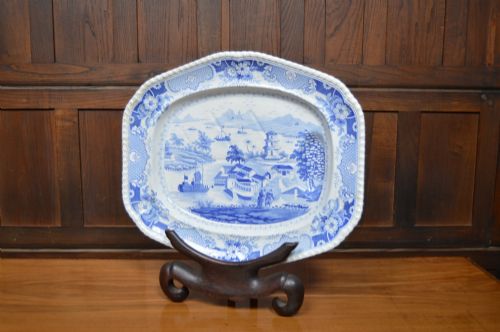
Blue transferware ceramic brings together cobalt prints and white earthenware across tables, platters, and tureens.
Blue Transferware Ceramic
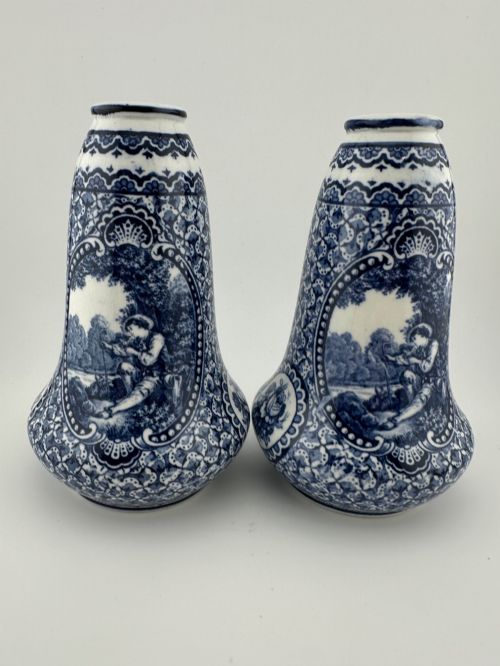
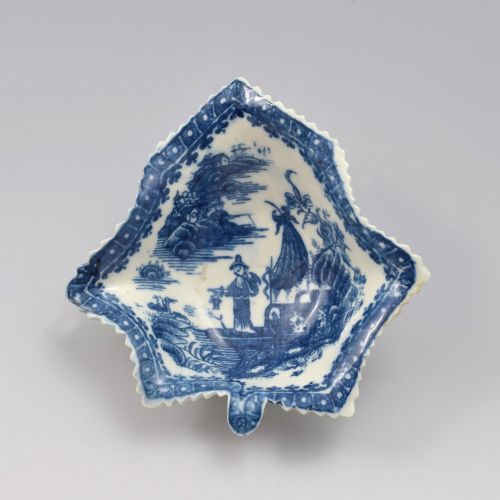
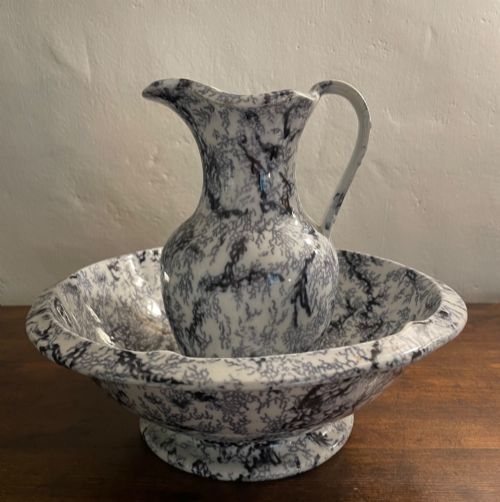
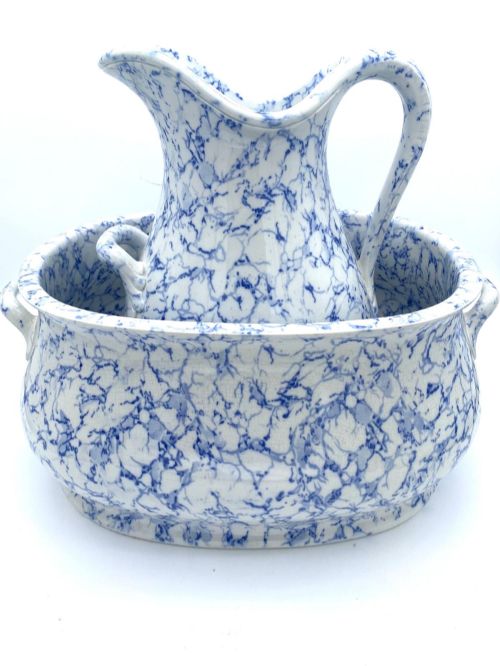
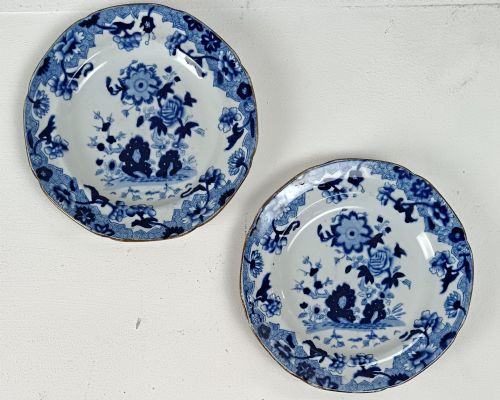
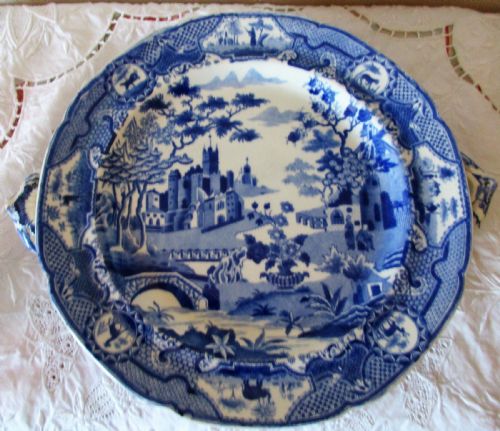
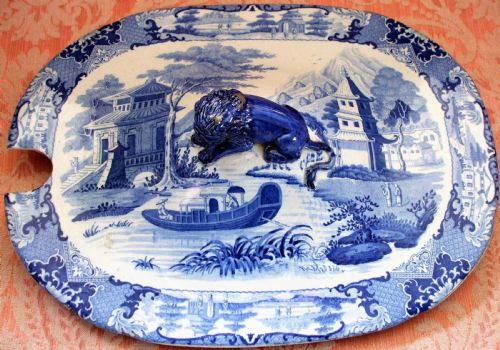
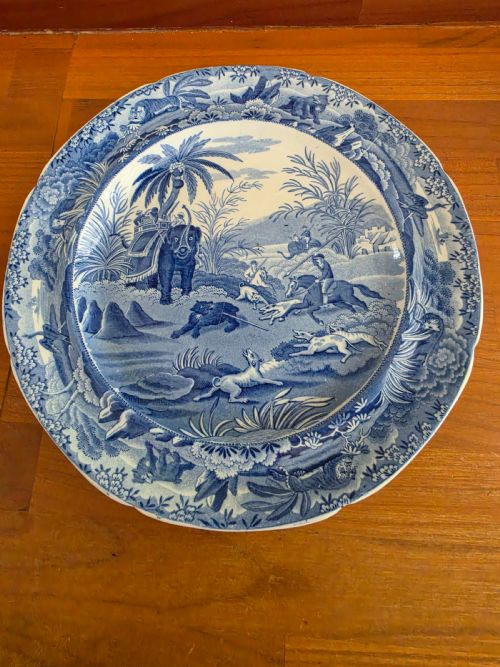
Blue transferware ceramic comprises plates, platters, tureens, and bowls decorated by applying a copperplate engraving onto paper and transferring the blue pigment onto the pottery body. Buyers encounter 18th-century porcelain alongside 19th-century earthenware, pearlware, and ironstone produced across English potteries.
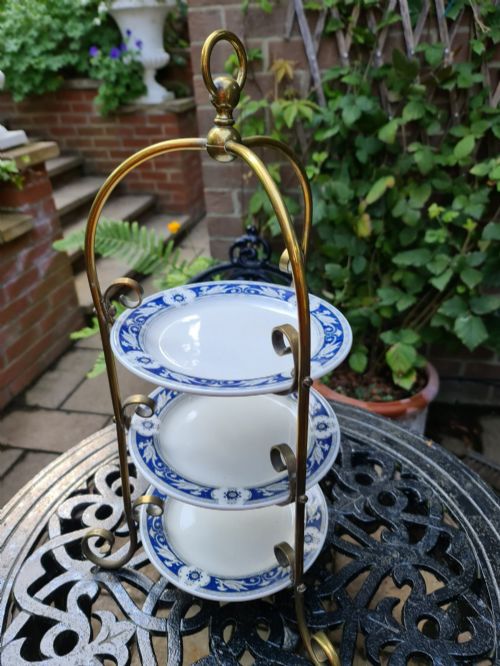
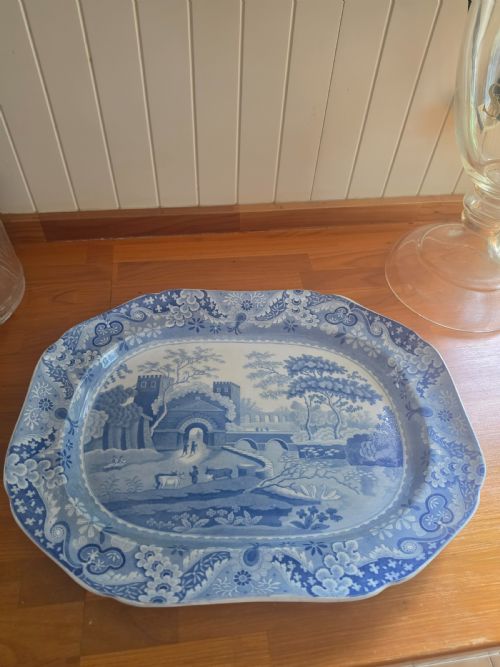
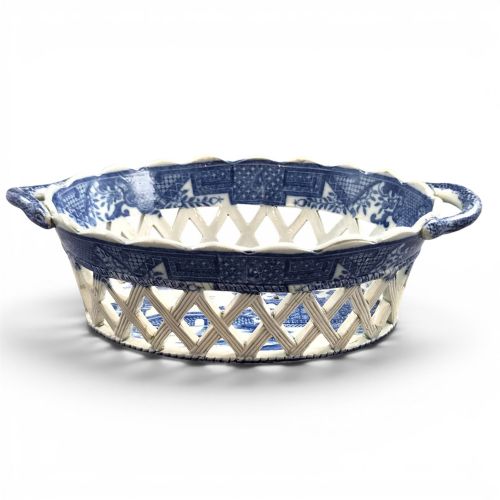
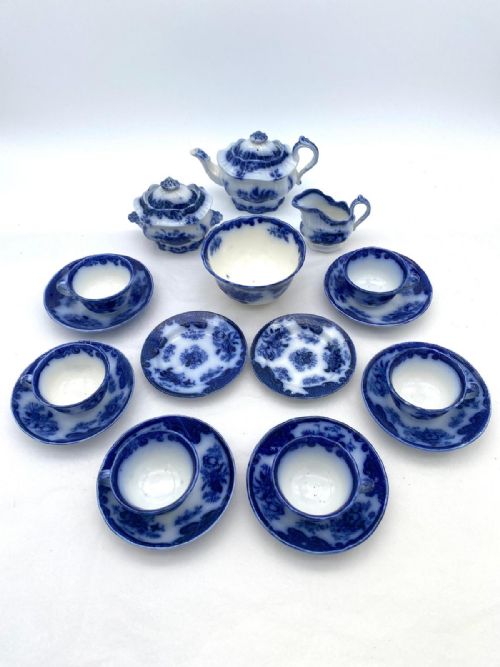
The forms span large serving platters, chestnut baskets, footed bowls, and complete children's tea services bearing topographical, architectural, or figurative patterns. Examples frequently date from the Georgian, Regency, and Victorian periods, reflecting shifting tastes from oriental scenes to pastoral English landscapes.
How blue transferware ceramic pieces were made
Makers engraved copper plates with detailed designs, inked them with cobalt blue colour, and pressed tissue paper against the plate to lift the image. This paper was smoothed onto the biscuit-fired ceramic body to transfer the pattern before glazing and high-temperature firing locked the blue pigment beneath a glossy surface.
Production utilised earthenware, pearlware, ironstone, and soft-paste porcelain, depending on the period and the factory's output. Glaze application varied from clear coatings to tinted pearlware finishes, while certain pieces incorporated enamel and gilt highlights applied over the fired glaze.
Listings span the 18th, 19th, and early 20th centuries, covering Georgian, Regency, Victorian, and Edwardian periods across earthenware, porcelain, and ironstone.
What varies in quality in blue transferware ceramic
Quality rests in the crispness of the transfer print, where fine lines remain sharp without blurring, smudging, or overlapping at the joins of the paper. Potteries achieved greater depth in the cobalt blue when the pigment saturated the glaze evenly during the kiln firing.
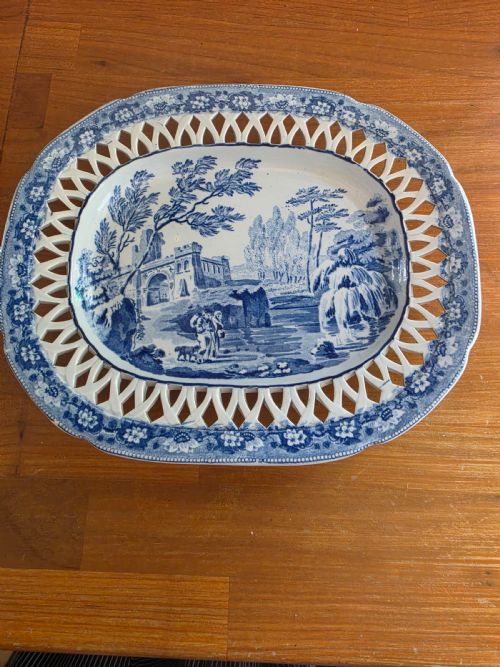
The refinement of the ceramic body itself distinguishes standard utilitarian wares from superior table pieces, seen in the thinness of pearlware and ironstone or the delicate piercing of reticulated chestnut baskets and drainers.
Minton·Spode·Davenport·John Rogers And Son·J And R Clews
The Blue Transferware Ceramic Glossary
- Transfer printing
- A method of decorating ceramics by pressing an inked copperplate engraving onto tissue paper and transferring the design onto the clay body.
- Pearlware
- A refined earthenware developed in the late 18th century featuring a bluish-tinted glaze that pooled pale blue in crevices to mimic Chinese porcelain.
- Ironstone
- A heavy, durable type of earthenware patented in the early 19th century that resisted chipping and formed a strong base for blue and white services.
- Flow blue
- A style where cobalt blue intentionally bled into the surrounding white glaze during firing, creating a soft, misty outline around the printed pattern.
- Reticulated
- Pierced or openwork pottery designs formed by cutting patterns through the damp clay before firing, often seen on baskets and serving dishes.
- Soft-paste porcelain
- An artificial porcelain mixture fired at lower temperatures than hard-paste, common in 18th-century English factories like Caughley and Worcester.
Blue Transferware Ceramic: Frequently Asked Questions
What is blue transferware ceramic?
Blue transferware ceramic is pottery decorated with copperplate engravings printed in cobalt blue onto the clay body under a clear glaze. The technique allowed potteries to produce intricate pictorial scenes efficiently across tableware and decorative vessels.
Items range from large meat platters and soup tureens to small tea bowls and children's services. The resulting pieces combined domestic utility with detailed depictions of landscapes, historical events, and architectural views.
How do I care for antique transferware?
Antique transferware requires gentle hand washing in lukewarm water with mild soap to protect the glaze and any delicate applied gilding. Dishwashers and abrasive scourers cause damage to the historic ceramic body and fade the cobalt decoration.
Storing pieces safely involves avoiding stacking heavy items directly on top of each other without protective padding between rims and surfaces. Displaying them away from direct sunlight preserves the glaze integrity over time.
How do I date blue and white pottery?
Dating blue and white pottery involves examining the ceramic body, the shade of the cobalt blue, factory backstamps, and the style of the printed border. Early pieces from the 18th century often utilise soft-paste porcelain or early pearlware, while mid-19th-century items frequently employ heavier ironstone or feature flow blue glazes.
Maker marks pressed or printed on the reverse provide specific clues, though unmarked early pieces rely on stylistic comparisons with dated pattern books. Border designs changed across decades, helping narrow down the period of production.
What are flow blue pieces?
Flow blue pieces are ceramics where the cobalt blue pigment intentionally diffused into the surrounding white glaze during the kiln firing. This chemical reaction was encouraged by introducing lime or chloride vapours into the kiln atmosphere.
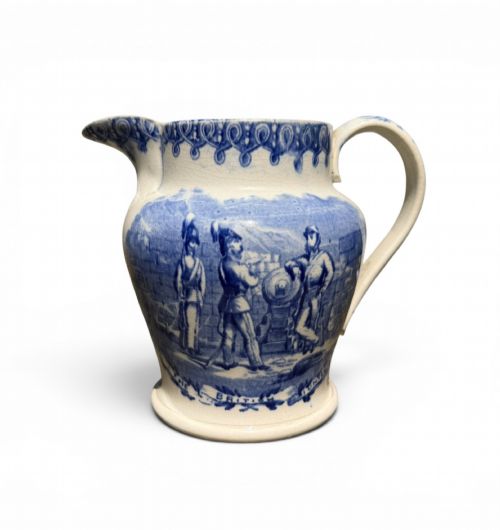
The resulting hazy, smoky effect softened the printed lines of the pattern. This style gained popularity during the Victorian era, particularly on large jugs, footbaths, and dinner services.