
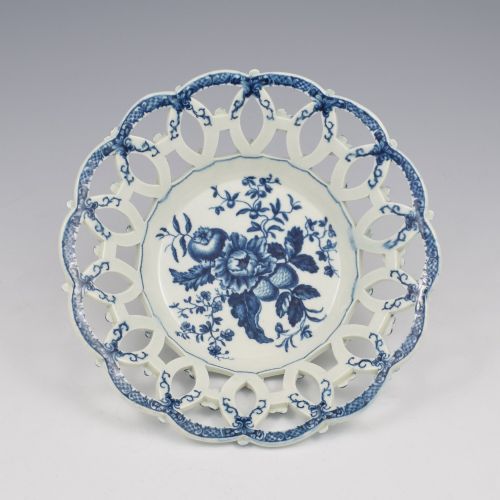


Blue Transfer Printed Dish
A blue transfer printed dish brings pictorial narrative to the table through rich cobalt pigments fired onto earthenware and porcelain.
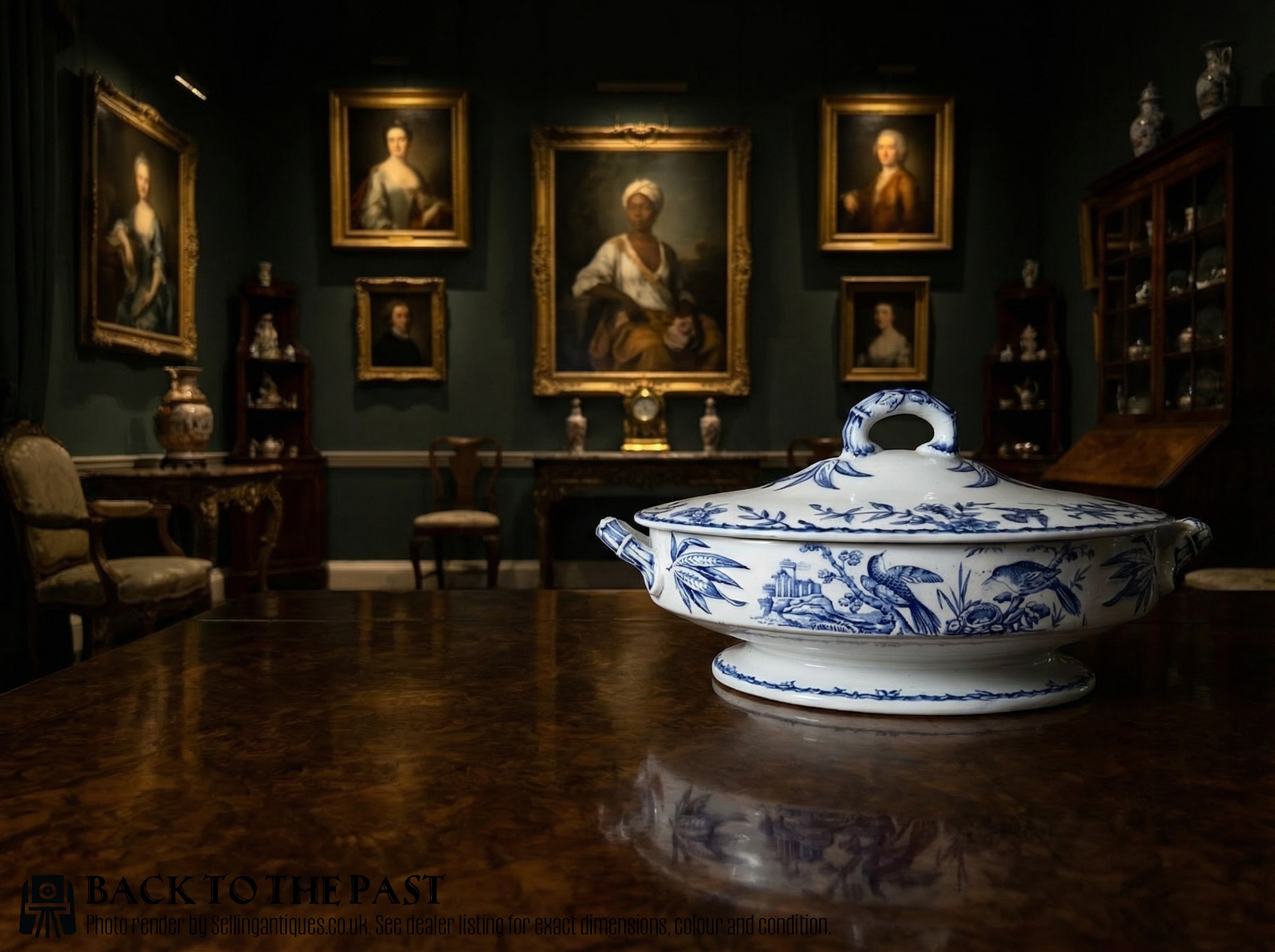
Blue Transfer Printed Dish
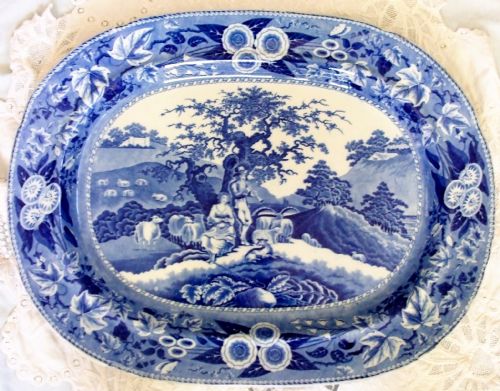
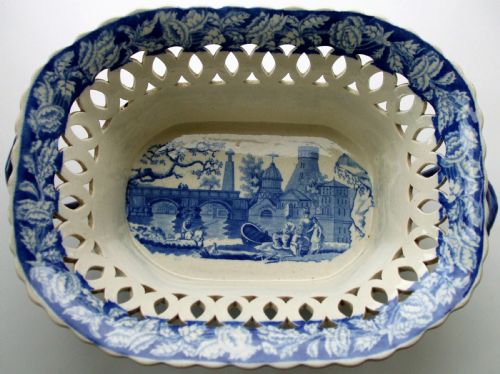
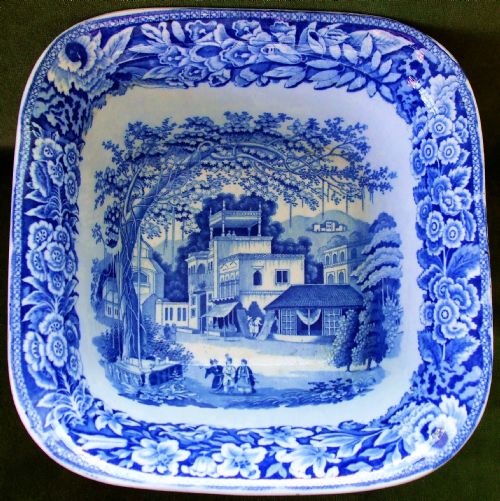
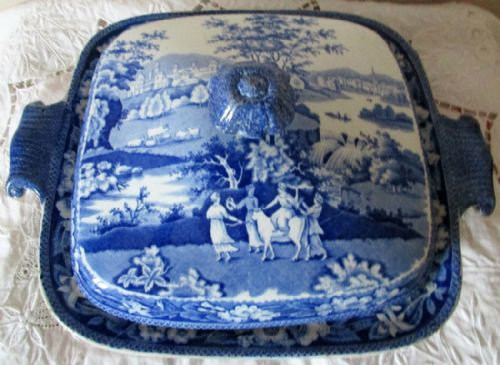
A blue transfer printed dish encompasses serving platters, meat plates, vegetable tureens, and chestnut baskets created during the Georgian and Victorian eras. These items typically feature pastoral, classical, or Chinoiserie scenes rendered in deep shades of blue upon ceramic bodies.
The pieces encountered most frequently on this page date from the nineteenth century and originate from Staffordshire potteries. Common forms range from simple flat plates to large meat dishes equipped with gravy wells and decorative pierced baskets.
How they were made
Potters formed these items from earthenware, pearlware, soft-paste porcelain, or pottery, then applied the design using a paper transfer pulled from an engraved copper plate. Cobalt pigment provided the deep blue colour that sank into the ceramic body during the kiln firing.
A transparent lead glaze was applied over the transferred print to seal the surface and impart a glossy finish. This glazing process heightened the contrast of the blue design against the white or pale ceramic ground.
Form categories include serving platters, vegetable tureens, chestnut baskets, pickle dishes, and decorative plates.
What varies in quality
Quality in a blue transfer printed dish rests on the crispness of the engraved pattern and the depth of the cobalt pigment. Superior examples display sharp architectural lines and clear landscape details without blurring or smudging in the ink transfer.
The elegance of the ceramic form itself distinguishes finer pieces, such as moulded edge details on meat platters or pierced work on chestnut baskets. The evenness of the glaze application and the clarity of the underlying paste further separate standard production wares from exceptional studio output.
J. and R. Clews·J. and R. Riley·John and Richard Riley·Caughley·Spode·Thomas Lakin·Brameld and Co.·Rogers·Ridgways·Mason·John Rogers and Son·James Wallace and Co.
The Blue Transfer Printed Dish Glossary
- Transfer printing
- A method of decorating ceramics by engraving a copper plate, inking it with cobalt pigment, and transferring the image to paper before pressing it onto the ceramic body. This technique allowed for intricate pictorial designs to be replicated consistently across multiple pieces.
- Pearlware
- An refined earthenware developed by Staffordshire potters around the late eighteenth century, featuring a thin glaze with a slight bluish tinge that made the ceramic base appear whiter. It served as a primary substrate for early blue and white tableware.
- Soft-paste porcelain
- A ceramic composition made from white clay and glass frit, fired at lower temperatures than hard-paste porcelain. It produced a warm, slightly translucent body common in eighteenth century pickle dishes and baskets.
- Cobalt pigment
- A metallic oxide used to achieve the deep blue colour in transfer printed wares. It withstood high kiln temperatures without burning away or changing hue.
- Lead glaze
- A glassy coating containing lead oxide applied to pottery before a final firing to render it waterproof and glossy. It protected the underlying ceramic body and enhanced the brilliance of the blue print.
Blue Transfer Printed Dish: Frequently Asked Questions
What periods do these dishes come from?
The pieces span the eighteenth, nineteenth, and early twentieth centuries, with a heavy concentration from the Georgian and Victorian periods. Staffordshire potteries produced the majority of these wares during the height of the industrial transfer printing boom.
Dates range from eighteenth century porcelain items up to late Victorian domestic service platters and plates. Each era brought subtle shifts in ceramic bodies, from pearlware to heavier ironstone and earthenware.
How were these dishes used originally?
These items functioned as practical tableware for serving and presenting food at formal and domestic dining tables. Large platters held meats, while tureens and chestnut baskets contained vegetables, sauces, or fruit.
Smaller plates and pickle dishes served individual diners during multi-course meals. Over time, many transitioned from functional dining items to decorative wall plates and display pieces.
How do I care for antique blue transferware?
Wash these pieces gently by hand using warm water and mild soap rather than placing them in a dishwasher. The old glaze can be fragile, and harsh detergents or thermal shock may cause crazing or damage to the ceramic body.
Store platters and dishes securely on edge in plate racks or stacked with protective felt dividers between them. Avoid exposing them to sudden temperature changes or abrasive scrubbing materials.