



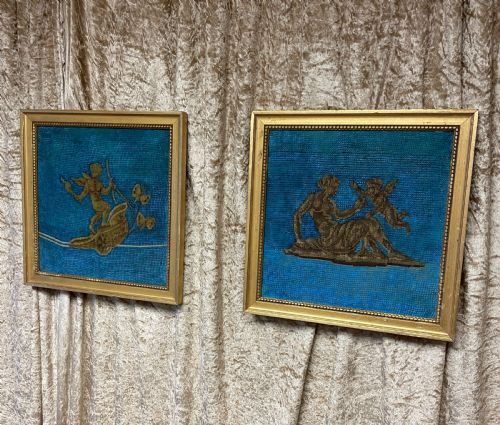

Blue Silk Tapestry
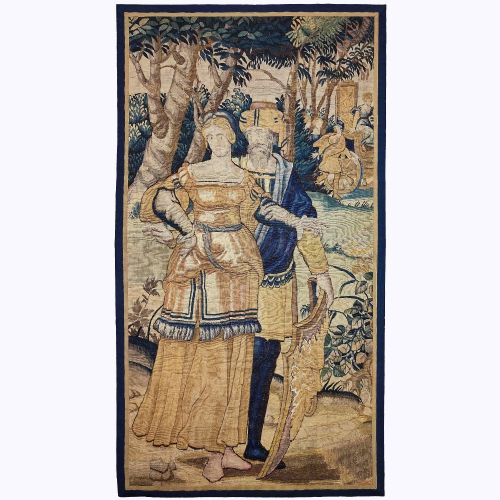
These pieces of blue silk tapestry bring historic textile art into a room, offering centuries of woven narrative and rich decorative colour.
Blue Silk Tapestry
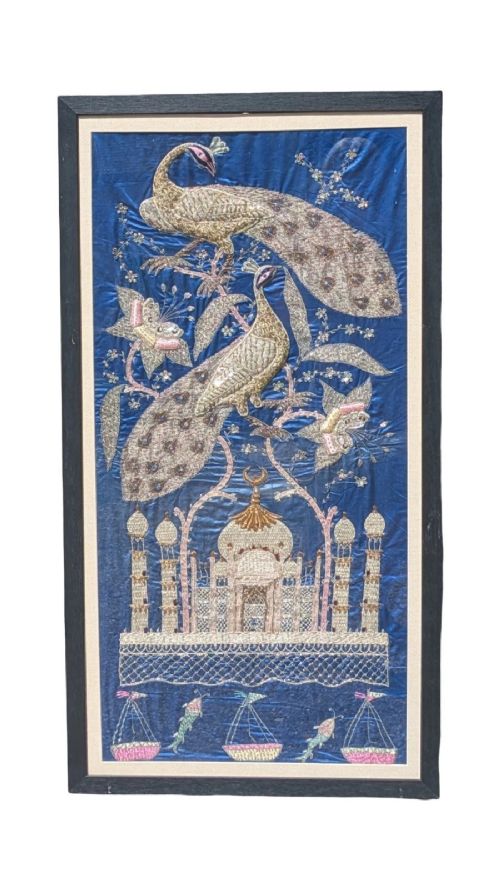
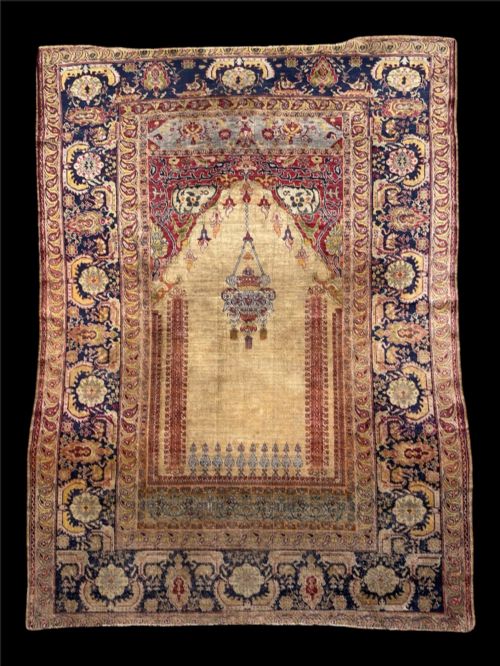
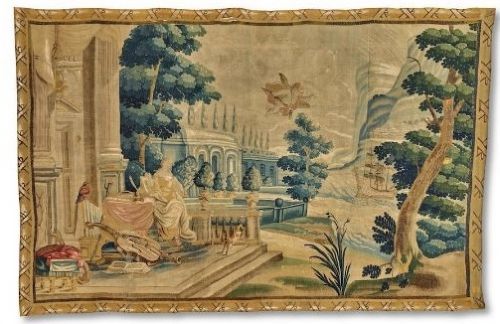
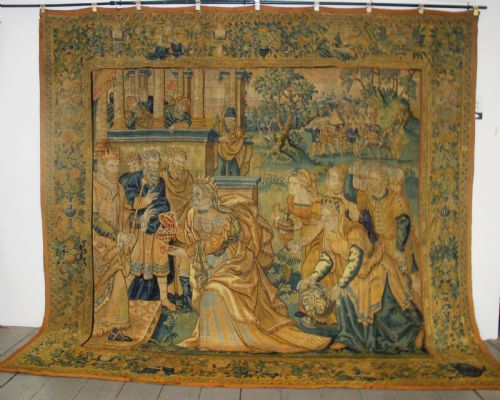
A blue silk tapestry encompasses woven wall hangings, framed textile art, and historic panels originating from various European and Asian traditions. Buyers searching this phrase encounter everything from grand seventeenth-century Flemish mythologies to nineteenth-century prayer rugs and embroidered silk panels.
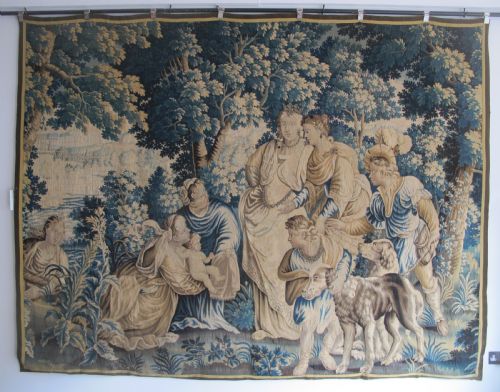
The selections span sixteenth-century fragments to twentieth-century Indian and Chinese works, reflecting diverse regional techniques and decorative styles. Verdure scenes, biblical narratives, and pictorial compositions dominate the varied forms available on this page.
Materials and construction
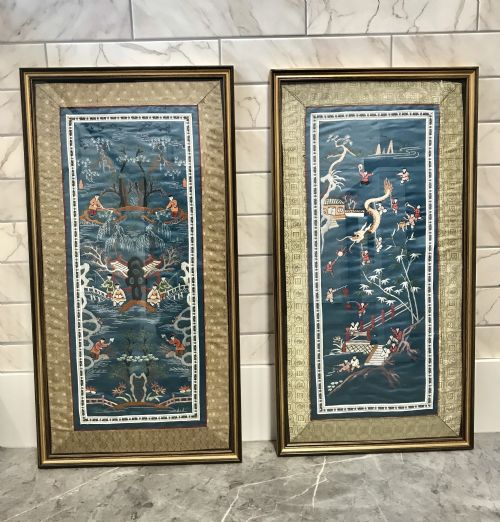
These textiles utilise silk, wool, and metallic thread combined with linen or cotton foundations to create dense pictorial surfaces. Artisans wove intricate designs on vertical or horizontal looms, occasionally incorporating hand-sewn embroidery under glass for framed display.
Giltwood frames frequently house smaller textile panels and needlework pictures, protecting fragile fibres from environmental wear while enhancing their presentation.
Listings feature items from the sixteenth century through to nineteen-thirty, incorporating silk, wool, giltwood, and metallic thread.
Assessing quality and condition
The density of the weave and the complexity of the pictorial composition dictate the visual depth of each textile. Superior examples demonstrate meticulous dye consistency in the blue silk threads alongside secure structural integrity across large expanses.
Preservation of early metal threads and the clarity of landscape details or figural motifs distinguish exceptional historic panels from simpler utilitarian fragments.
The Blue Silk Tapestry Glossary
- Verdure tapestry
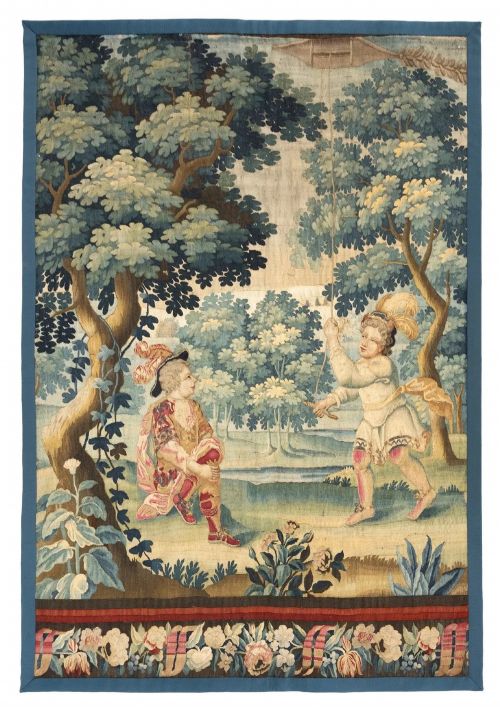
- A wall hanging dominated by lush foliage, trees, and garden scenery, often featuring muted greens and blues. These landscapes were popular in European weaving centres during the seventeenth and eighteenth centuries.
- Audenaarde
- A Flemish town renowned for producing tapestries characterised by verdant landscapes and detailed verdure designs. Workshops here exported heavy woven wall hangings across Europe.
- Aubusson
- A French town famous for its tapestry production, particularly grand narrative scenes and floral compositions. These pieces often hang flat against walls as decorative art.
- Prayer rug
- A small textile featuring a mihrab design, intended for devotional use. Anatolian and Persian examples frequently incorporate fine silk foundations.
- Needlework picture
- A stitched panel created with thread on a fabric ground, frequently framed for domestic display. These decorative pieces imitate the pictorial qualities of larger woven works.
Blue Silk Tapestry: Frequently Asked Questions
How do I hang a large tapestry?
Heavy wall hangings require a weight-distributing support system, such as a lined fabric sleeve stitched along the upper reverse edge. A concealed metal or wooden rod slides through this channel to mount securely against the wall.
Smaller framed textile panels utilise standard picture-hanging hardware suited to the weight of the timber or giltwood frame. Avoid suspending tapestries directly from isolated loops or nails that strain individual threads.
What is a verdure tapestry?
A verdure tapestry depicts natural foliage, woodlands, and garden landscapes with minimal human figures. These pieces served as decorative wall coverings that brought the appearance of gardens inside manor houses.
Blues and greens typically dominate the colour palette of these historic landscape scenes, which evolved significantly across the seventeenth and eighteenth centuries.
How do I clean an antique tapestry?
Historic textiles demand gentle maintenance and professional conservation rather than standard domestic washing. Regular light vacuuming through a protective mesh screen removes surface dust without catching loose fibres.
Water and chemical cleaning agents risk causing dye transfer or fibre shrinkage in aged silk and wool. Specialist textile conservators should handle any deep cleaning or structural repairs.
Where were these tapestries made?
Production centres span traditional European weaving hubs in Flanders and France alongside Asian textile workshops in Turkey, China, India, and Persia. European examples often date from the sixteenth to the eighteenth centuries and focus on mythological or verdure themes.
Asian pieces range from framed silk embroideries to finely knotted pictorial rugs produced during the nineteenth and twentieth centuries.