



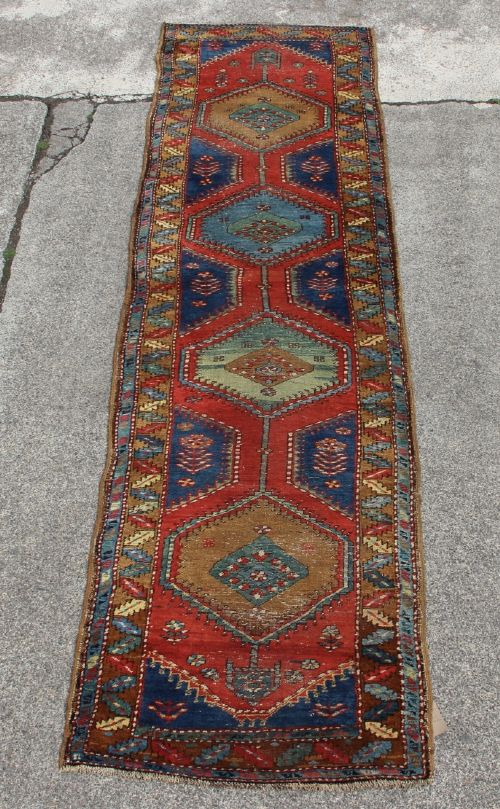

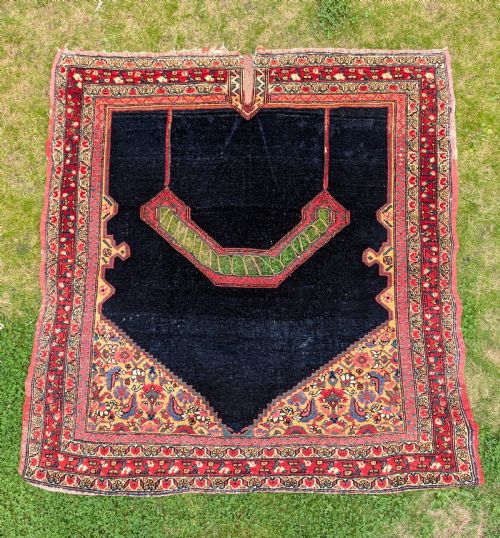

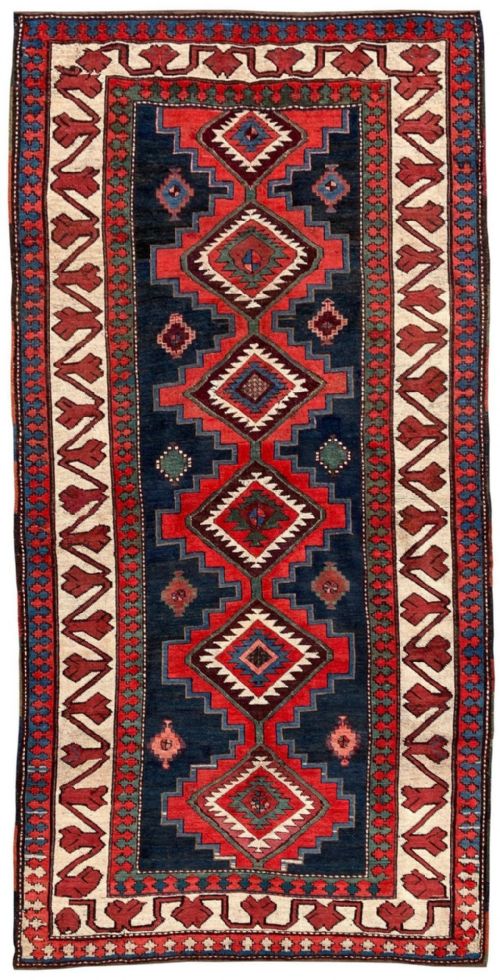

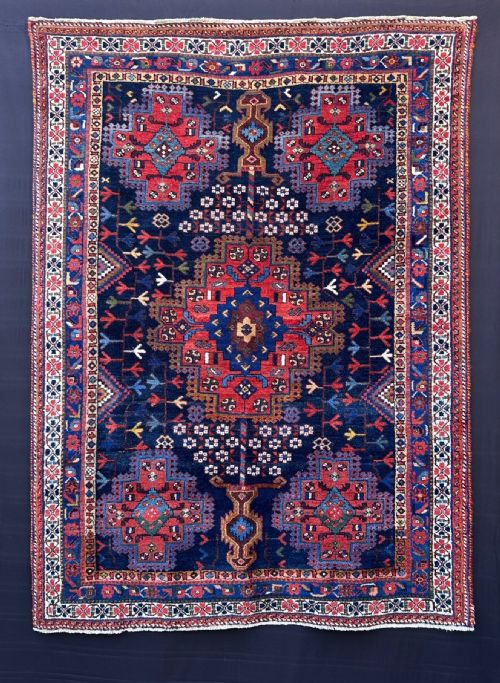
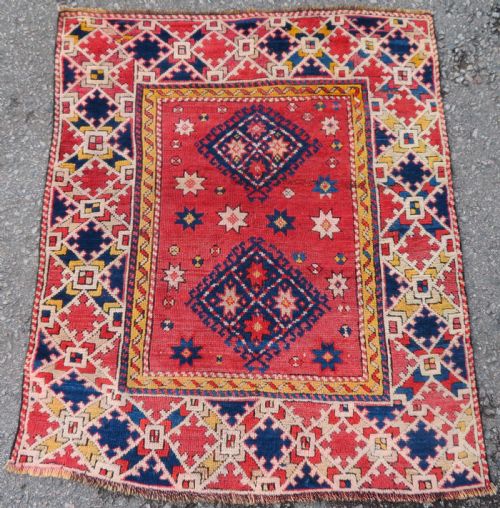
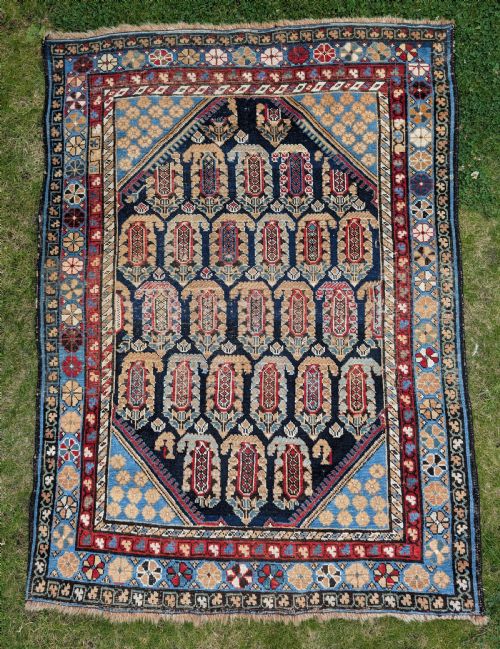
Blue Red Tribal Rug
These blue red tribal rug examples bring geometric discipline and rich vegetable dyes from nineteenth and early twentieth century looms directly onto the floor.
Blue Red Tribal Rug
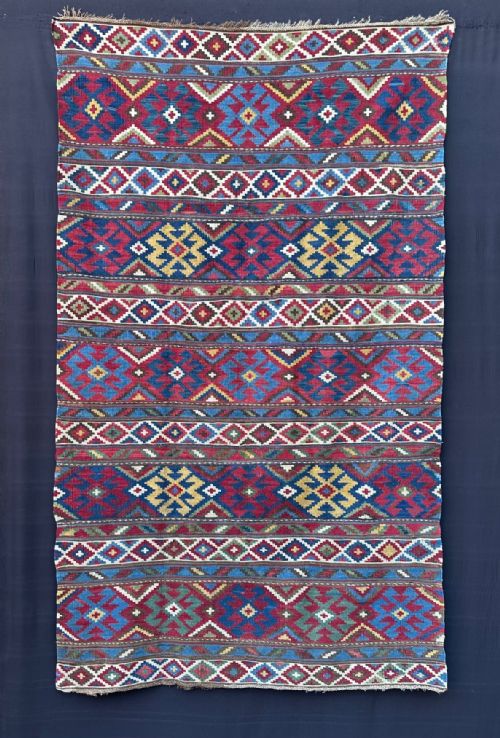
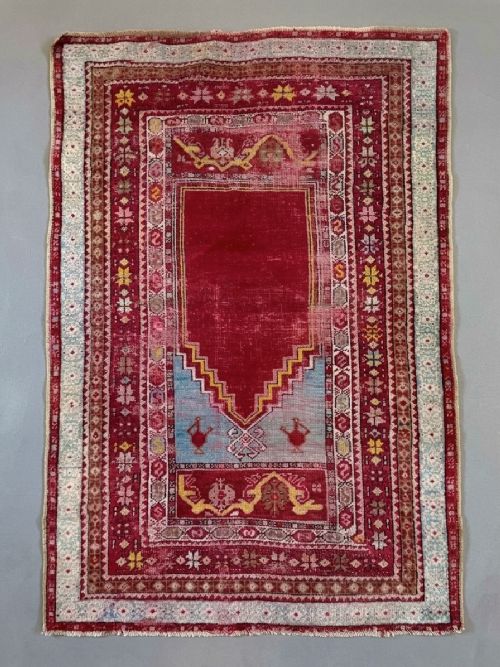
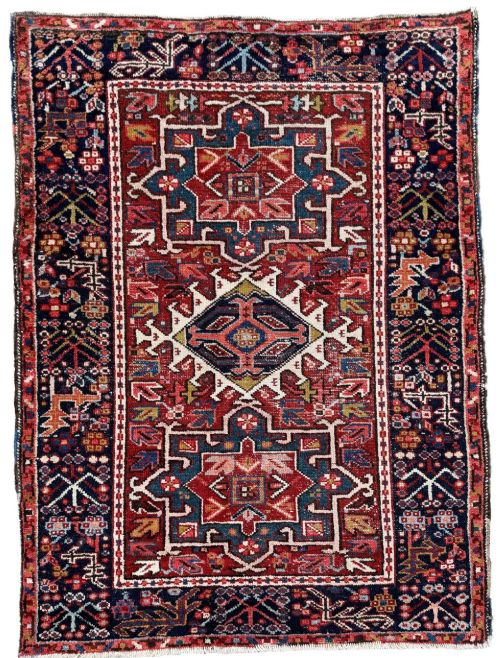
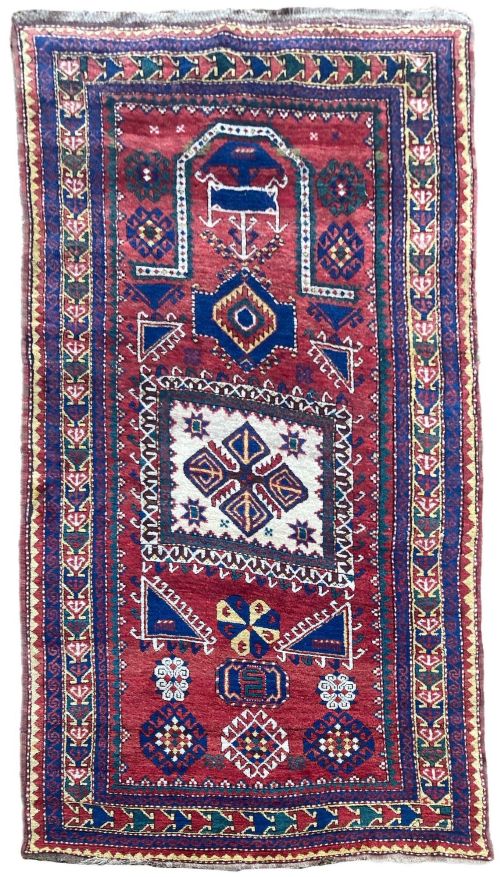
A blue red tribal rug combines bold crimson and indigo fields with geometric medallions, animal motifs, and tribal symbols. When searching this phrase, a buyer encounters woven floor coverings and nomadic textiles originating from Persian, Caucasian, Anatolian, and Turkmen regions.
The pieces appearing on this page span from the nineteenth century into the 1930s, taking the form of area rugs, long runners, prayer rugs, and smaller utilitarian bags. Nomadic weavers produced these textiles for daily functional use within village and tribal settings rather than for formal urban export.
Materials and construction
Weavers relied principally on wool and hand-spun wool for the pile and foundation yarns, sometimes incorporating cotton for structural warp and weft threads. Hand-knotting techniques secured the dense wool pile to create durable floor coverings designed to withstand heavy everyday wear.
Natural dyestuffs yielded the characteristic deep blues from indigo and rich reds from madder root. These traditional dying methods produced subtle variations in tone across a single field, giving the textiles their characteristic depth.
Blue Red Tribal Rug Retail Price Guide 2026
Typical asking prices for blue red tribal rug among the pieces listed under this phrase on Sellingantiques today, from the lower quarter to the upper quarter. They describe what is for sale here now, not the wider market.
Materials recorded across current inventory consist exclusively of wool, cotton, and hand-spun wool.
Judging quality and integrity
Knot density and structural tightness dictate the resilience and longevity of the textile. Tighter knotting allows sharper geometric definition in medallions and border patterns.
The integrity of the original wool pile and the survival of natural edges and borders determine the preservation state. Finer examples maintain crisp drawing in the motifs and balanced proportions between the central field and guard stripes.
Afshar tribes·Bakhtiar weavers·Khamseh tribes·Yomut tribes·Kordi tribes
The Blue Red Tribal Rug Glossary
- Kilim
- A flat-woven textile produced without a pile. These pieces rely on interlocking weft techniques to create sharp geometric patterns.
- Kazak
- A style of rug originating from the Caucasus region. Known for bold primary colours, large geometric medallions, and strong rectilinear designs.
- Runner
- A long, narrow carpet format designed for hallways and corridors. These pieces frequently feature repeating medallions or lattice designs.
- Prayer rug
- A small format textile featuring a distinctive architectural mihrab arch design at one end. Historically used for daily ritual Islamic prayers.
- Medallion
- A central ornamental motif set within the field of the rug. It forms the primary focal point of the geometric design composition.
Blue Red Tribal Rug: Frequently Asked Questions
Where were these tribal textiles made?
Weavers produced these pieces across scattered nomadic and village settlements in Persia, the Caucasus, Anatolia, and Turkmenistan. Each region developed distinct palettes and geometric vocabularies.
Local tribal groups passed down specific border patterns and medallion structures through generations of family workshops.
Are these rugs suitable for high traffic?
Dense hand-spun wool construction provides natural resilience against heavy foot traffic in hallways and living spaces. The lanolin naturally present in traditional wool helps repel dirt.
Underlays prevent slipping and reduce friction against hard floors, extending the functional lifespan of antique woven carpets.
How do I identify a prayer rug?
Prayer rugs feature a distinctive pointed arch motif at one end, known as a mihrab, which pointed toward Mecca during worship. The format is typically smaller and portable.
Unlike large room carpets, the central field often contains a single niche design without repeating medallion layouts.