
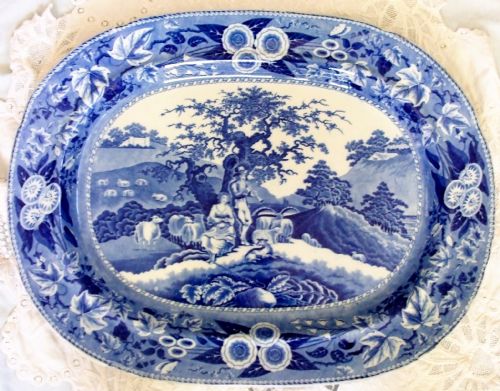


Blue Printed Ceramic Platter
A blue printed ceramic platter brings landscape scenes and architectural views to the table through cobalt pigment fired onto earthenware.
Blue Printed Ceramic Platter
A blue printed ceramic platter is a serving dish produced primarily during the nineteenth century in various British potteries. These pieces range from meat plates and large serving dishes to bread stands and asparagus dishes, carrying transfer-printed scenes in deep blue.
The version you meet most often on this page dates from the Georgian and Victorian eras, displaying patterns such as architectural views, classical ruins, and pastoral landscapes. They served practical dining functions in large households before becoming decorative items.
Pottery centres in Staffordshire produced the bulk of these wares, alongside works from Yorkshire potteries. Forms vary from simple round plates to large meat dishes equipped with gravy wells for practical carving.
Materials and production methods
These items rely on earthenware, pearlware, and ceramic bodies finished with lead glazes to create a smooth, protective surface over the porous clay. Potters applied finely ground cobalt pigment to paper from a copperplate engraving, transferring the inked design onto the biscuity ceramic body before glazing and firing.
The high temperatures of the kiln fused the cobalt pigment permanently into the glaze, producing the characteristic deep blue hue associated with nineteenth-century transferware. Controlled firing determined whether the glaze achieved an even, glossy finish across the large surface of a platter.
Object forms include meat plates, asparagus dishes, bread stands, and serving platters featuring regional British and classical patterns.
Assessing quality in transferware
The crispness of the transfer print separates finer examples from standard production, as worn copperplates or hurried applications result in blurred edges and smudged pigment. Well-executed pieces maintain sharp lines across complex pastoral or architectural scenes.
The depth of the glaze and the clarity of the underlying earthenware body also dictate distinction. Superior platters display an even, glossy surface that enhances the cobalt pigment without obscuring the fine details of the engraved pattern.
Spode·Copeland and Garrett·Thomas Lakin·Brameld and Co·Mason·John Rogers and Son·Don Pottery
The Blue Printed Ceramic Platter Glossary
- Transferware
- Pottery decorated by transferring a design from an engraved copper plate onto paper, which is then pressed onto the ceramic body. This technique allowed intricate pictorial scenes to be produced rapidly.
- Pearlware
- A refined earthenware body developed in the late eighteenth century featuring a subtle bluish glaze that created a whiter appearance than standard creamware. It forms the basis of many early nineteenth-century blue and white pieces.
- Gravy well
- A depression or recessed channel set into the surface of a meat platter to collect juices during carving. This practical addition appears on larger nineteenth-century serving dishes.
- Cobalt pigment
- A metallic oxide used by potters to achieve a durable blue colour under the glaze. It withstands high kiln temperatures without losing its depth of tone.
Blue Printed Ceramic Platter: Frequently Asked Questions
How do I date a blue and white platter?
Dating relies on the ceramic body type, such as early pearlware compared to later Victorian earthenware, alongside stylistic clues in the printed borders and scenes. Maker marks stamped or printed on the reverse also help narrow the period of production.
Potters often registered specific patterns, providing a reliable window between the early nineteenth century and the late Victorian era.
Can I use these platters for serving food?
While these antique pieces remain structurally sound for holding items, nineteenth-century glazes and earthenware bodies require careful handling. Modern dishwashers and microwaves should be avoided to protect the historic glaze and ceramic material.
Hand washing in warm water preserves the lead glaze and keeps the cobalt transfer print intact for display or light use.
Why is the blue colour different on each piece?
Variations in the cobalt pigment, the thickness of the lead glaze, and the temperature inside the kiln during firing created different shades of blue. Early nineteenth-century pieces often display a deep, inky tone.
Later Victorian production techniques sometimes yielded lighter or brighter hues depending on the specific pottery and the preparation of the glaze.