
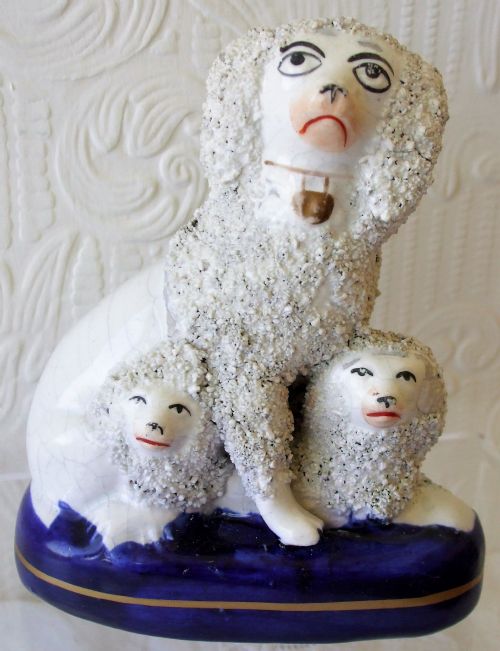
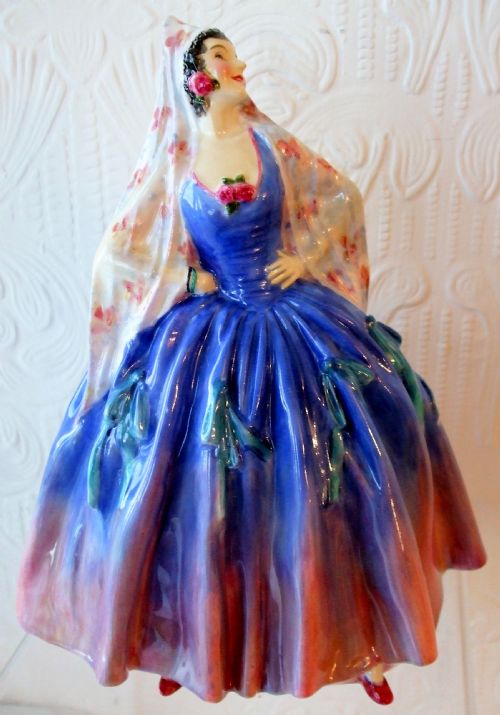


Blue Porcelain Statuette
A blue porcelain statuette brings sculptural form and delicate colour to a room, ranging from eighteenth-century Meissen figures to nineteenth-century continental groups.
Blue Porcelain Statuette
A blue porcelain statuette encompasses decorative figures, figurines, and sculptural groups modelled in hard-paste porcelain, earthenware, and bone china. The pieces span periods from the eighteenth century through the Victorian era into the twentieth century, reflecting diverse European and Japanese traditions.
Most examples encountered here are porcelain figurines and decorative figures depicting human subjects, mythological scenes, and animals. These include historical Meissen and Derby works alongside French biscuit figures and Japanese Kutani pieces.
Materials and construction
The pieces are shaped from porcelain or earthenware bodies, frequently finished with coloured glaze and hand-painted enamel details. Gold leaf, gilt, and hard-paste porcelain define the more ornate examples from major European factories.
Makers utilised slip-casting or manual moulding techniques to form the figures before applying underglaze blue and overglaze enamel pigments. Firing in kilns set the vitreous body and sealed the surface glaze.
The listings span from the eighteenth century to the twentieth century, featuring bone china, earthenware, and hard-paste porcelain.
Markers of quality
The sophistication of the design and the reputation of the manufacturing source distinguish the finer pieces. Elaborate mythological groups and carefully painted nineteenth-century figures stand apart from simpler commercial output.
Meissen·Royal Doulton·Samson Paris·Bloor Derby·Vion and Baury·Ernst Bohne and Sohne·Royal Capodimonte Factory
The Blue Porcelain Statuette Glossary
- Hard-paste porcelain
- A durable ceramic material composed of kaolin and petuntse fired at high temperatures. It forms a dense, vitrified body typical of European works.
- Biscuit porcelain
- Unglazed porcelain fired once to produce a matte, white surface resembling marble. It became popular for French figures.
- Enamel
- Opaque glass-like pigments applied over the glaze and refired to bond with the surface. This technique allows rich, lasting colour decoration.
- Gilt
- A thin layer of gold applied to the porcelain surface for decorative accent. It highlights drapery, bases, and uniform details.
Blue Porcelain Statuette: Frequently Asked Questions
How do I clean an antique figurine?
Dust the surface gently with a soft, dry brush to prevent the accumulation of dirt in intricate crevices.
Avoid using water or chemical cleaners, as moisture can damage old enamel and exposed clay bodies.
Where were these porcelain figures made?
The pieces originate from prominent European factories in Germany, France, and England, alongside Japanese kilns.
Each region developed distinct regional styles and modelling traditions over the eighteenth and nineteenth centuries.
How can I tell the period?
Examine the base for factory marks, glaze characteristics, and the style of modelling employed by the maker.
Eighty-century works often show softer hand-painting, while nineteenth-century pieces display different paste formulations and polychrome palettes.
Are these pieces fragile?
Ceramic figures possess delicate protrusions such as fingers, drapery, and floral elements that break easily upon impact.
Display them on stable surfaces away from high-traffic areas and direct handling.