


Blue Porcelain Dessert Plates
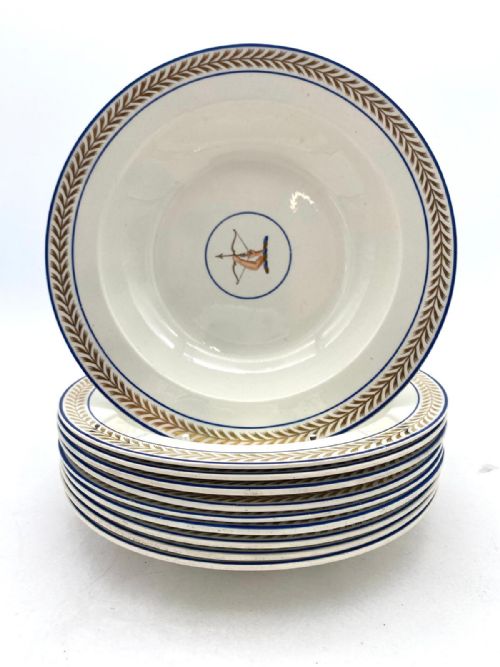
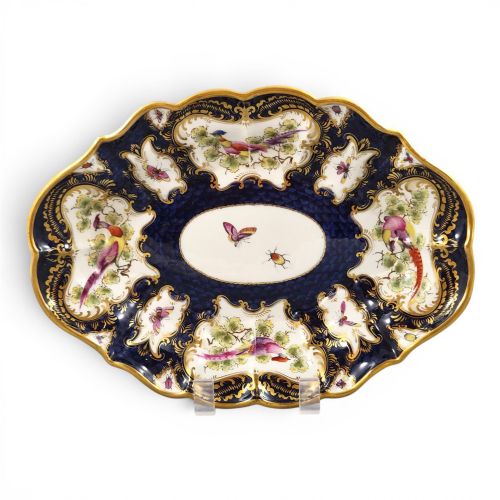
Blue porcelain dessert plates bring 18th-century and 19th-century elegance to the table with hand-painted botanicals, armorial crests and rich cobalt ground colours.

Blue Porcelain Dessert Plates
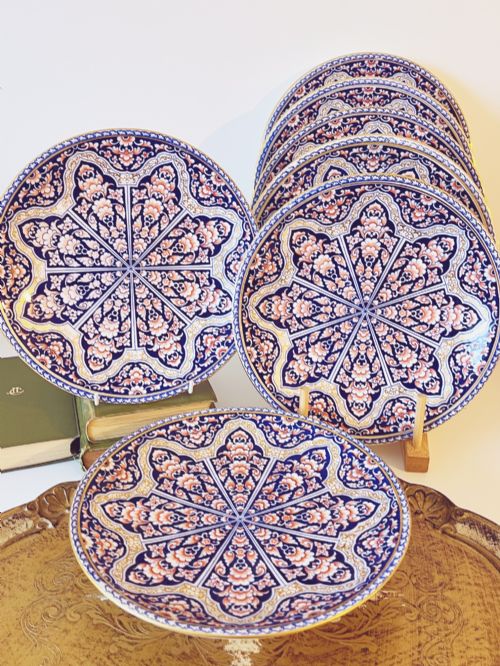
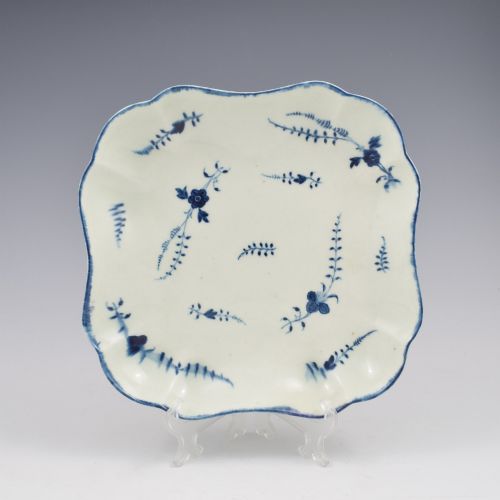
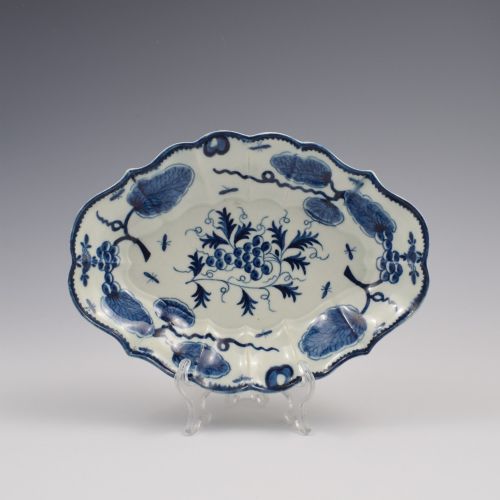
Blue porcelain dessert plates encompass serving dishes, cabinet plates and dessert services originating primarily from the eighteenth and nineteenth centuries. Buyers searching for blue porcelain dessert plates encounter forms ranging from scalloped leaf dishes to square dessert pieces and standard dining plates.
The selections span Georgian, Regency and Victorian periods, with works attributed to factories such as Worcester, Royal Crown Derby and Coalport. Common aesthetic influences include French Rococo Revival styles alongside traditional Japanese Kakiemon motifs rendered in blue and white or polychrome palettes.
Many examples arrive as matched or assembled sets, while others survive as individual cabinet plates or paired serving dishes. Soft-paste porcelain, bone china, creamware and ironstone all appear across the different eras of manufacture.
How they were made
Potters shaped these dessert plates using soft-paste porcelain, bone china, creamware or ironstone, fired at varying temperatures to achieve dense ceramic bodies. Underglaze blue transfer printing and hand-painted cobalt blue pigments formed the foundation of the decoration, often enhanced by additional enamels.
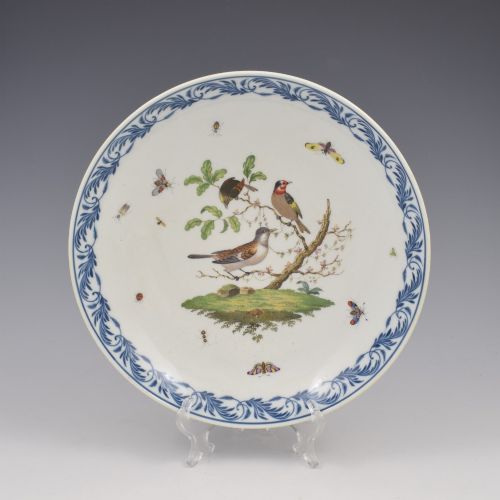
Gilding and gold leaf were applied by hand to rims, borders and central motifs, then fixed in a muffle kiln to secure the metallic sheen. Skilled artisans executed botanical studies, ornithological scenes and armorial crests directly onto the glazed surfaces before final firing.
Listings feature porcelain, bone china, ironstone and creamware plates spanning the Georgian, Victorian and Edwardian eras.
What varies in quality
Quality rests in the precision of the hand-painted brushwork, particularly within complex botanical studies, bird illustrations and armorial details. Crispness in the cobalt blue scale ground patterns and the stability of the porcelain body distinguish finer studio outputs.
The application and preservation of gold leaf or gilding play a major role in the overall standard of a piece. Pieces featuring hand-signed artist work or robust factory marks indicate higher manufacturing provenance during their respective periods.
Royal Crown Derby·Dr Wall Worcester·Meissen Porcelain·Wedgwood·Royal Worcester·Coalport·Chamberlain Worcester·Sevres·Kerr and Binns·Masons Patent Ironstone·Bloor Derby·Davenport Stone China
The Blue Porcelain Dessert Plates Glossary
- Soft-paste porcelain
- An artificial ceramic composition made from white clay, glass and frit, fired at lower temperatures than hard paste. This material yields a warm, slightly translucent body common in eighteenth-century English works.
- Armorial
- A ceramic design incorporating heraldic coats of arms or family crests. Commissioned chiefly by wealthy patrons, these pieces display specific lineage markings.
- Bone china
- A type of porcelain incorporating bone ash into the paste, developed to provide increased strength and a bright white surface. It became a standard medium for nineteenth-century British dessert services.
- Gilding
- The application of gold leaf or powdered gold to ceramic surfaces, typically highlighting rims and handles. It requires careful kiln firing to bond securely with the glaze.
- Kakiemon
- A style of Japanese porcelain decoration featuring asymmetric floral and bird motifs, widely imitated by European factories. The palette often combines underglaze blue with iron red, green and yellow enamels.
Blue Porcelain Dessert Plates: Frequently Asked Questions
What were dessert plates used for?
These plates served the final course of a formal meal, which typically included fruit, sweetmeats, jellies and small cakes. They were often part of a larger dessert service that included comports and specialised serving dishes.
Because they were handled by guests at the end of the meal, dessert plates frequently received more artistic and decorative attention from factories than standard dinner plates.
How do I date an antique plate?
Dating relies on factory backstamps, shape characteristics, paste composition and painting styles. Eighteenth-century pieces often feature crescent or disguised numerals, while Victorian examples utilise registration diamonds or specific maker ciphers.
Consulting period pattern numbers recorded in factory archives helps narrow down the exact decade of production for manufacturers like Worcester and Coalport.
Can I use antique plates for dining?
Using antique soft-paste or ironstone plates for daily dining is generally discouraged due to the fragility of the ceramic and potential wear to historic gilding. Hand-washing in lukewarm water without harsh detergents is necessary if they are used.
Most collectors prefer to display these items on walls or in cabinets using appropriate plate hangers to preserve their surface decoration.
What is blue scale porcelain?
Blue scale is an underglaze blue pattern resembling fish scales, popularized by eighteenth-century factories like Worcester. The intricate pattern was hand-applied using a sponge-stippling technique before being filled with cobalt blue.
Panels of birds, flowers or insects were often reserved within the scale ground and painted in polychrome enamels or gilt cartouches.