




Blue Persian Floor Carpet
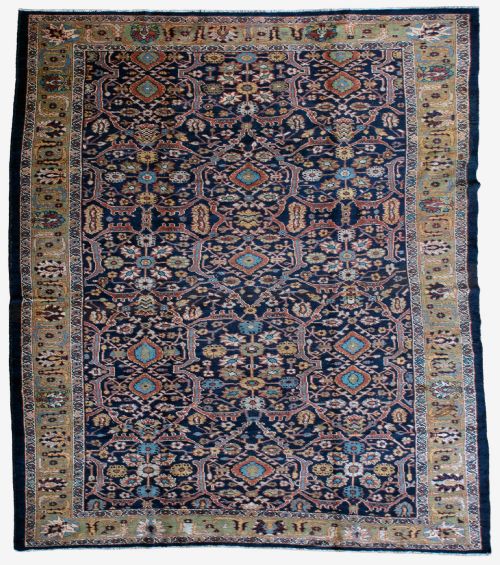
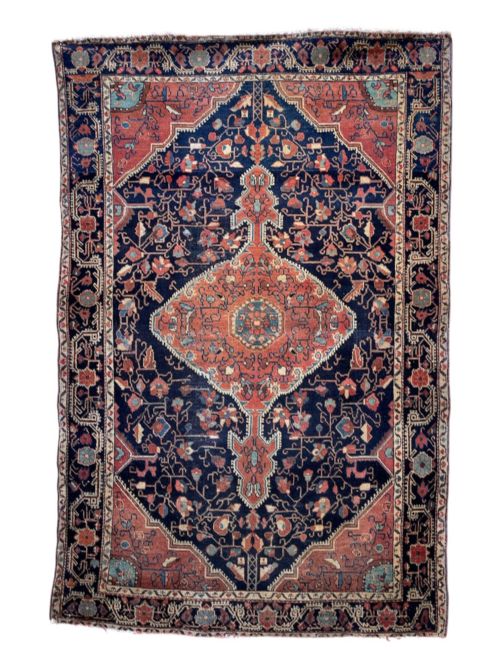
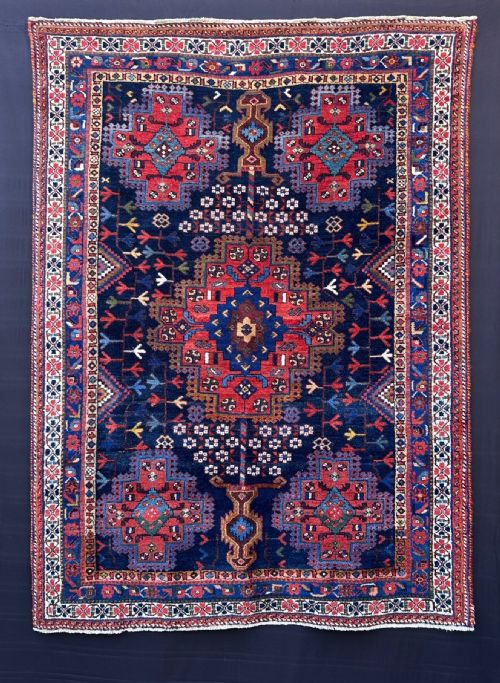
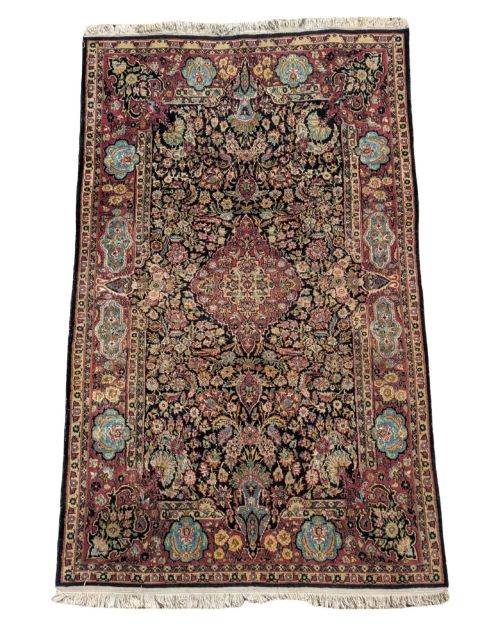
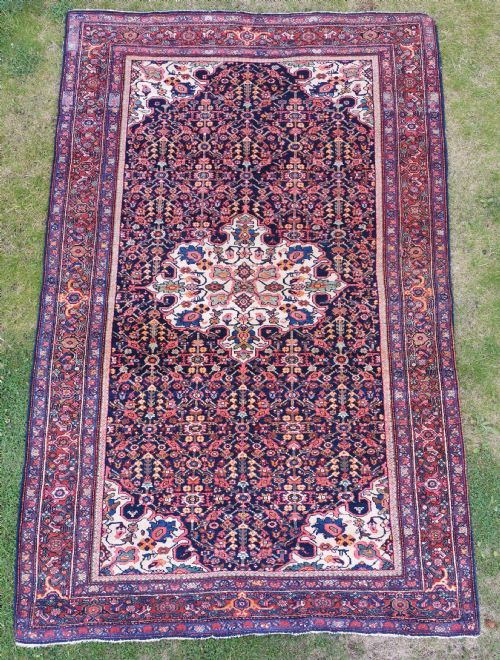
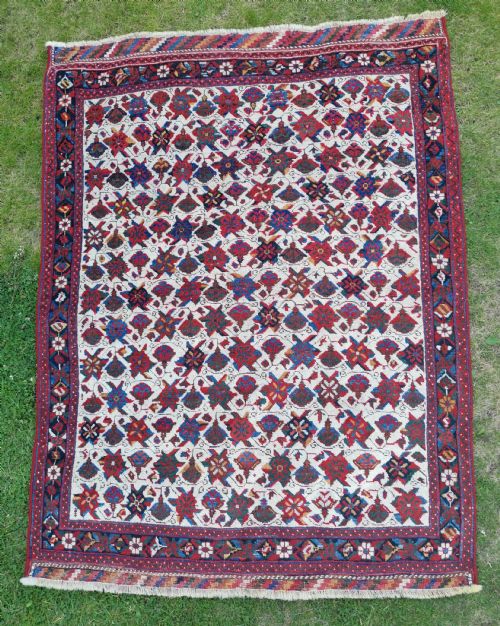
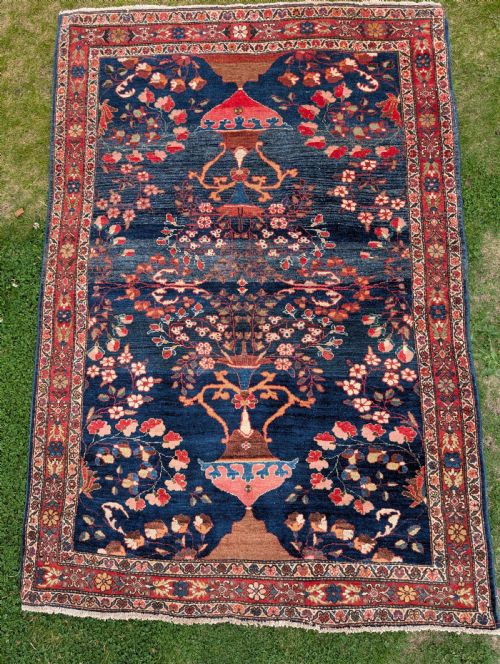
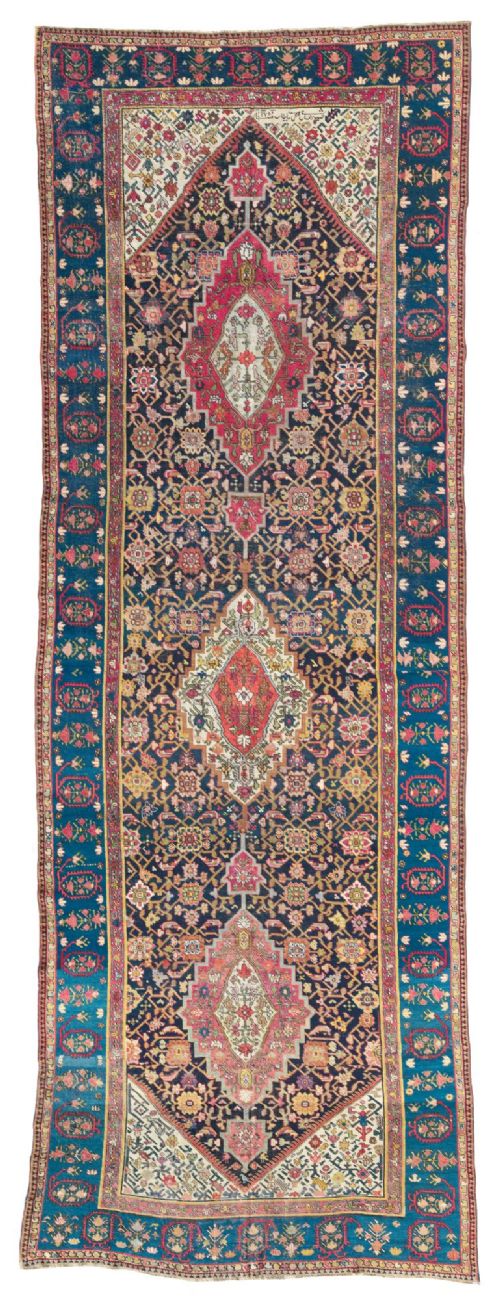
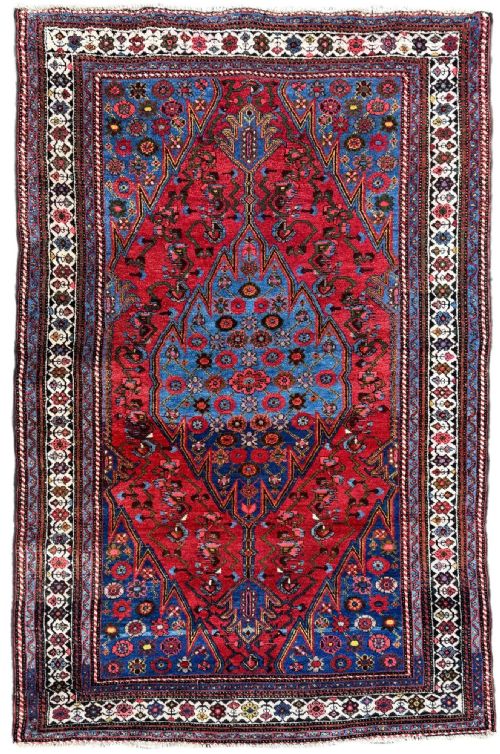
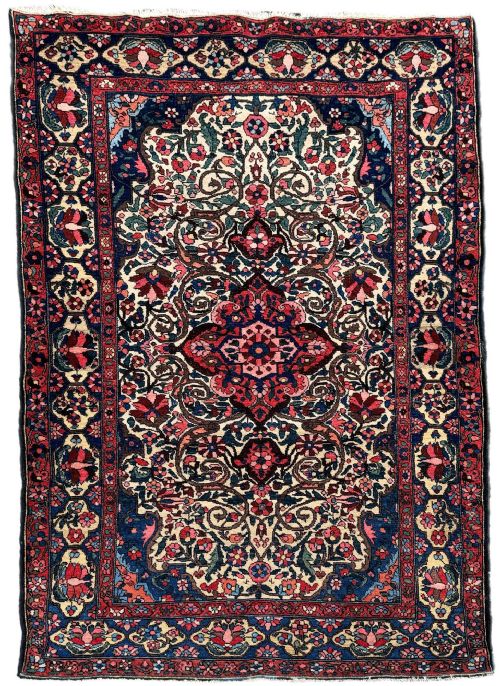
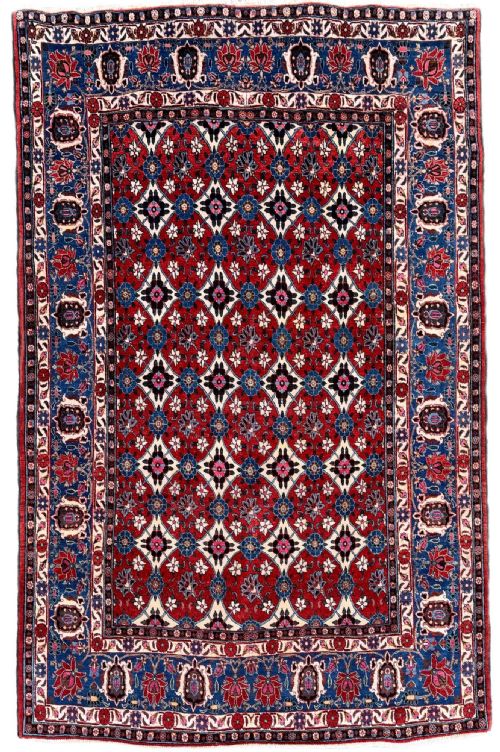
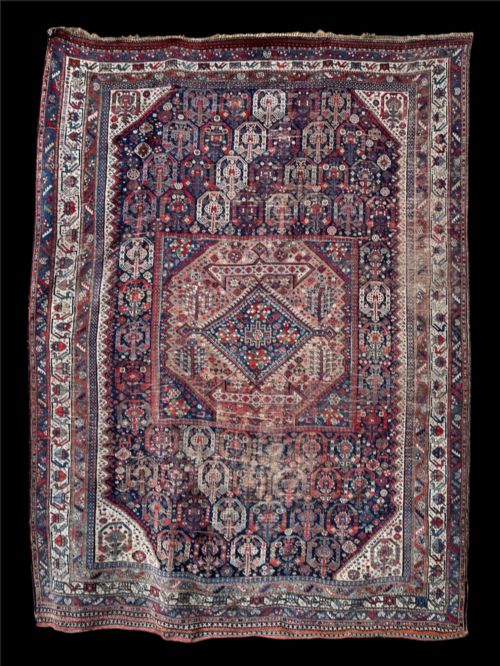
A blue persian floor carpet brings grounded depth and heritage to a room, ranging from large Heriz room sizes to compact tribal runners.
Blue Persian Floor Carpet
A blue persian floor carpet encompasses hand-knotted room-sized carpets, large area rugs, and narrow hallway runners originating from various Persian regions. The inventory spans pieces produced from the mid nineteenth century through to the mid twentieth century, covering traditional city workshops and tribal weaving traditions alike.
Buyers will encounter specific regional types such as Heriz, Bakhtiar, Afshar, Kashan, and Tabriz. These range from substantial architectural carpets designed for formal drawing rooms to smaller, idiosyncratic tribal rugs produced by confederacies and village weavers.
How they were made
The foundation of a blue persian floor carpet relies primarily on natural wool, supplemented by cotton for structural warps and occasional silk highlights to emphasise specific motifs. Weavers utilised hand-knotting techniques on vertical looms, building dense piles that provided durability for heavy domestic foot traffic.
Colour palettes were achieved through natural dyes, yielding deep indigos and soft sky blues that interact with madder reds and ivory grounds. These organic colourants respond to light with varied tonal shifts across the surface of the pile.
Some antique rugs harbour slight asymmetrical wobbles in their central medallions, left by weavers who deliberately introduced tiny flaws to avert evil spirits.
What varies in quality
Quality in a blue persian floor carpet depends upon knot density, the precision of the design execution, and the handling of the wool. Finer city carpets demonstrate intricate floral curves and precise symmetry, whereas tribal pieces show greater spontaneity in geometric layouts.
The integrity of the foundation warps and wefts alongside the preservation of original selvedges and end finishes determine the structural longevity of the piece. The depth and stability of the natural indigo blue dyes further distinguish superior examples.
The Blue Persian Floor Carpet Glossary
- Heriz
- A style originating from north-west Persia known for bold geometric medallions and robust structural wool. These large carpets often incorporate strong blues and terracotta tones.
- Knot density
- The count of individual knots per square unit, which dictates the fineness of the detail and the overall weight of the carpet. Higher counts typically correlate with sophisticated urban workshops.
- Kelleh
- A specific format of long carpet, narrower than a standard room size but wider than a runner. These proportions suited traditional Persian interior layouts.
- Natural dyes
- Colourants derived from plant and insect sources prior to the widespread introduction of synthetic alternatives in the late nineteenth century. They produce complex, mellow patinas as they age.
- Warps
- The vertical threads stretched lengthwise on the loom that form the structural skeleton of the carpet. Fringe ends typically emerge from these parallel strands.
Blue Persian Floor Carpet: Frequently Asked Questions
How do I choose the right size?
Measure your floor space to allow a uniform border of exposed timber or stone around the edges of the carpet. Room sizes suit central living areas, while narrower formats function effectively in hallways.
Consider the placement of furniture legs in relation to the perimeter of the rug to maintain visual balance within the room.
How do I care for my carpet?
Vacuum gently using a suction-only attachment without a rotating brush roll to protect the wool pile and fringe ends. Rotate the piece periodically to ensure even exposure to foot traffic and sunlight.
Address accidental spills immediately by blotting with a clean, dry cloth rather than rubbing the fibres.
What indicates a tribal origin?
Tribal rugs display geometric motifs, memory-woven patterns, and asymmetric layouts rather than the formal symmetrical curves of city workshops. They often feature coarser wool and heavier structural foundations.
These pieces reflect the specific nomadic or village heritage of regional confederacies such as the Bakhtiar, Afshar, or Khamseh.
How do I identify different regional types?
Examine the distinct palette, structural density, and signature motifs characteristic of specific weaving centres like Tabriz, Kashan, or Heriz. Regional traditions dictate the specific arrangement of central medallions and border guards.
Comparing the wool texture and knotting style provides further clues regarding the geographic provenance of the piece.