


Cream and Navy Rug
A cream and navy rug brings grounded contrast to a room through traditional woven motifs and enduring wool structures.
Cream and Navy Rug
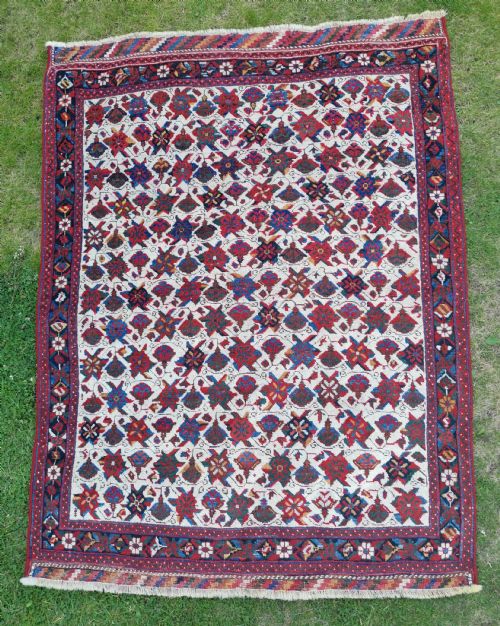
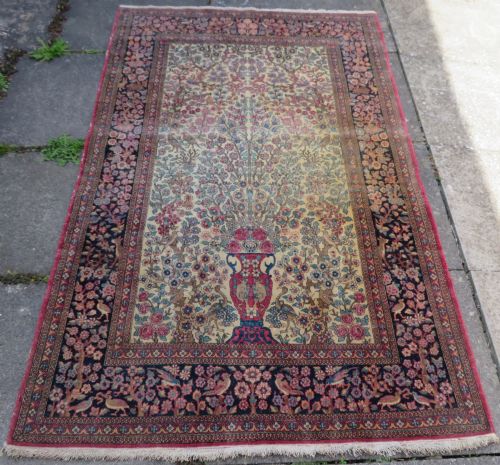
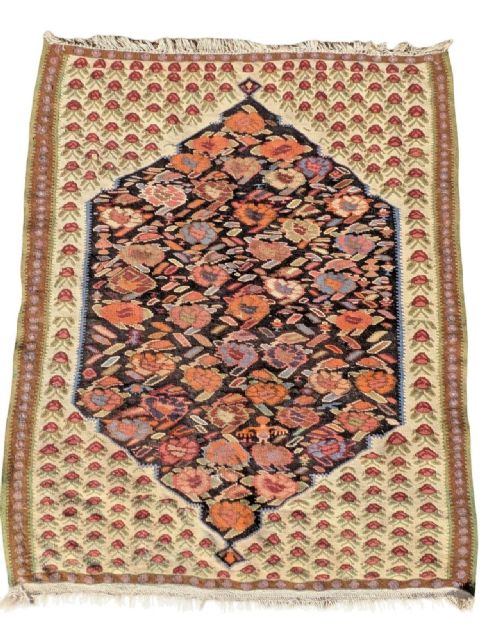
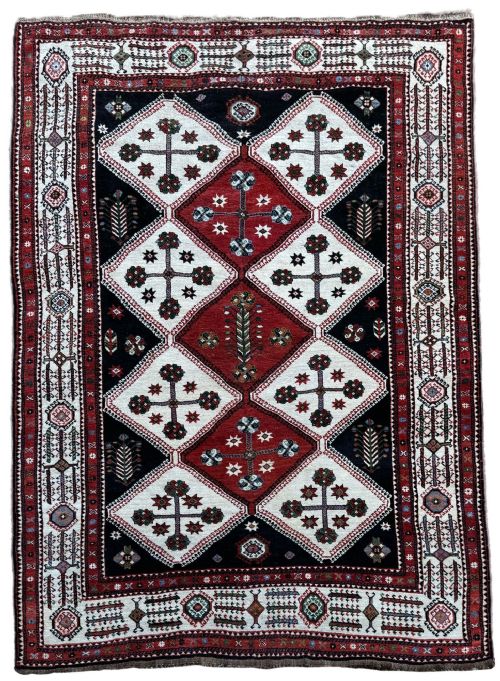
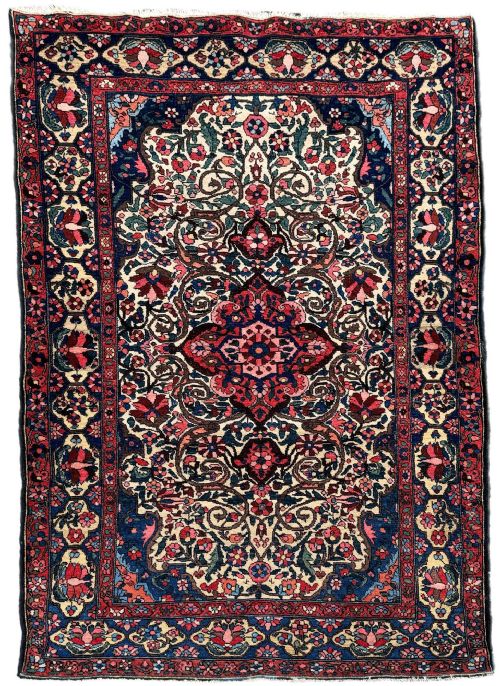
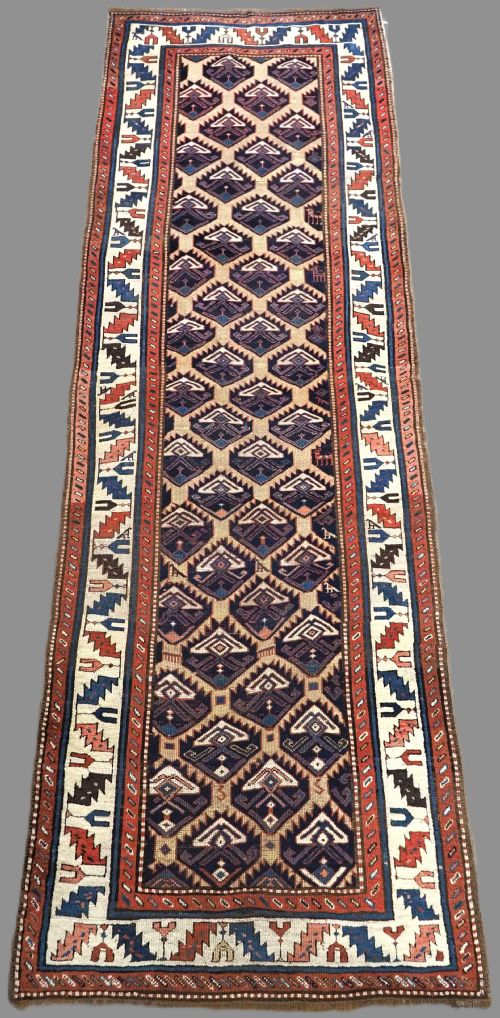
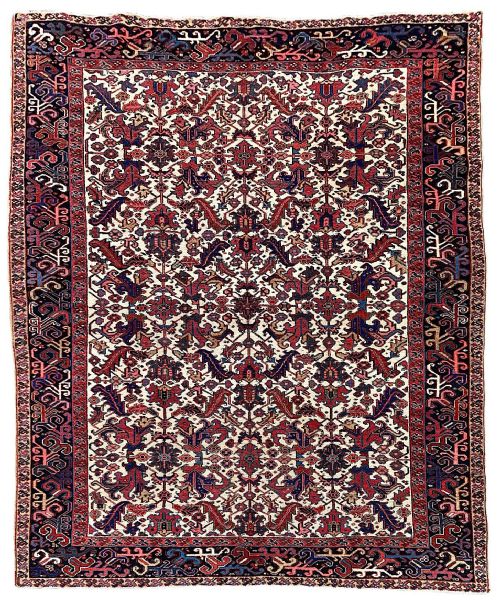
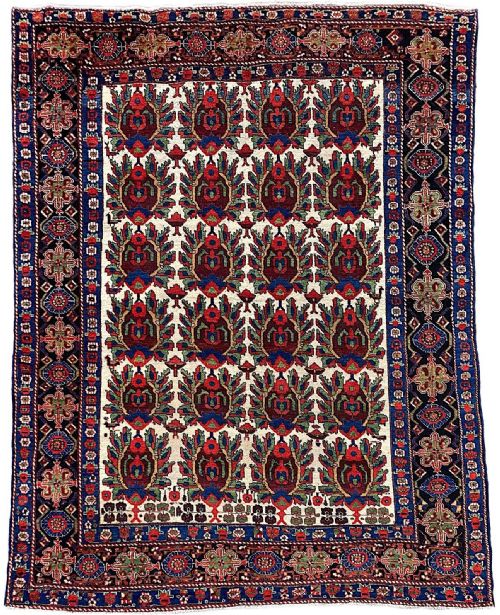
A cream and navy rug selection comprises hand-knotted and flat-woven floor coverings originating primarily from Persia and the Caucasus. These pieces span from the mid-nineteenth century through the early twentieth century, taking the form of area rugs, carpets, and hallway runners.
The inventory on this page relies heavily on traditional village and tribal weaving traditions, including Heriz, Bidjar, Afshar, and Caucasian workshops. Buyers encounter formats ranging from small scatter sizes to large room-sized carpets.
Woven structures include both pile carpets utilising thick wool knots and flat-woven kilims. The palette typically pairs neutral ivory or cream fields with deep indigo and navy blue details.
How they were made
The pieces on this page are constructed predominantly from wool pile knotted onto cotton or wool foundation warps and wefts. Weavers utilised hand-spun wool for the pile, which absorbs natural dye variations across the navy and cream fields.
Flat-woven kilims and carpets rely on interlocking or slit-tapestry weave techniques without a raised pile. Structural integrity comes from dense warp and weft packing, executed on traditional vertical or horizontal village looms.
Some nineteenth-century weavers hid tiny stray knots in the border as a quiet nod to human imperfection.
What varies in quality
Knot density and structural tightness dictate the precision of the design and the durability of the textile. Tighter knotting on cotton foundations allows intricate geometric and floral lattices to hold their shape over decades of use.
The depth and consistency of the dye work differentiate standard village productions from master workshop outputs. Natural dye saturation gives navy and ivory tones a rich variation that develops patina rather than fading flatly.
The Cream and Navy Rug Glossary
- Kilim
- A flat-woven carpet or rug produced without a pile by tightly interweaving warp and weft threads. These textiles often display sharp geometric patterns.
- Warp
- The vertical foundation threads stretched tightly on the loom before knotting begins. Cotton or wool warps form the structural skeleton of the rug.
- Weft
- The horizontal threads passed through the warps after each row of knots to bind the structure together. Weft tension determines the suppleness of the finished rug.
- Medallion
- A central ornamental motif placed in the middle of the field. Many traditional village designs anchor the composition around this focal point.
Cream and Navy Rug: Frequently Asked Questions
Where were these rugs made?
The pieces originate from various weaving centres and nomadic tribes across Persia and the Caucasus.
Specific regions represented include Heriz, Tabriz, Isfahan, Hamadan, and Shirvan.
What materials are used?
The construction relies almost entirely on wool and cotton.
Wool forms the soft pile and sometimes the foundation, while cotton is frequently used for durable warps and wefts.
How do I choose the right size?
Consider whether you need a narrow hallway runner, a compact scatter rug, or a large room-size carpet.
Dimensions vary significantly from small village mats to expansive carpets exceeding three metres.
How do I date an antique rug?
Dating relies on stylistic markers, structure, dye types, and historical attribution recorded in the inventory.
Pieces on this page generally date from the mid-nineteenth century through the 1930s.